
Where to Stay at White Sands: Inside the Park, Gateway Towns & Campgrounds
The short answer: White Sands has no hotels or lodges within its boundaries. The only way to sleep in the park is through backcountry camping, deep in the gypsum dunes. For a standard room, Alamogordo, 15 miles from the entrance, is the natural base. Plan on one or two nights to explore the park at your own pace and enjoy sunrise and sunset light.
Where to stay: towns, lodges and campgrounds (1)
- Campground Backcountry Camping first come, first served · 10 sites Directions ↗
 Base map © OpenStreetMap · © CARTO
 ⚠ Gateway town & Lodge data is undergoing editorial review.
Staying Inside or Outside the Park?
White Sands is different from the big national parks that have lodges, developed campgrounds, and restaurants on-site. Here, the choice is simple.
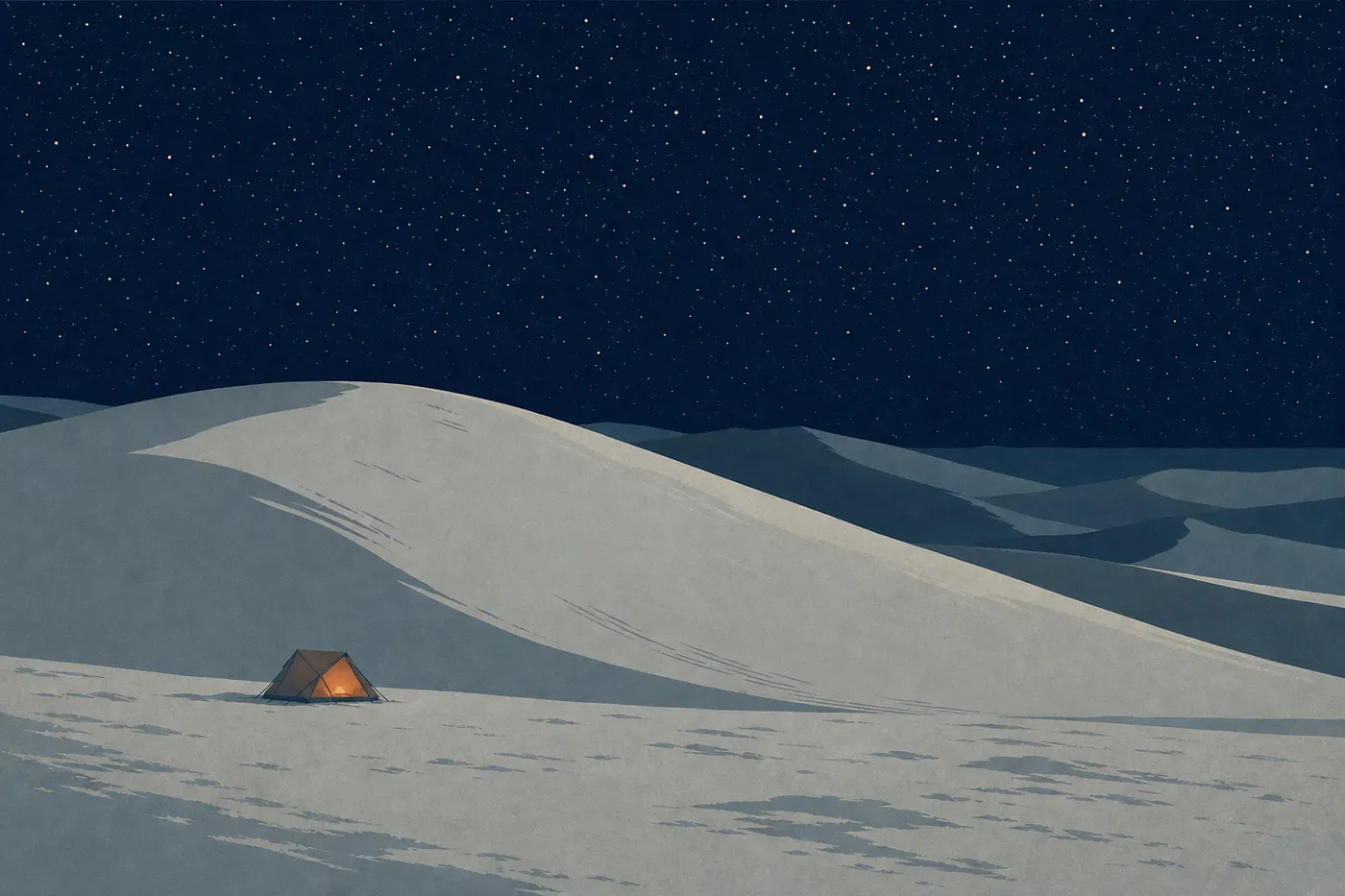
Option 1: sleep in the dunes. Backcountry camping lets you pitch your tent at designated sites in the middle of the park. It's a rare experience, with complete silence and star-filled skies free of light pollution. The tradeoff is that there are no facilities, so you carry everything out with you, including water, food, and trash. Summer heat is intense, and you need a permit.
Option 2: stay outside the park. Alamogordo offers a full range of lodging 15 miles from the main entrance. Las Cruces, 52 miles west, makes sense if you're including White Sands in a longer trip toward El Paso or southern New Mexico.
The best choice often depends on what time of day you want to be there. The park opens at 7 a.m. and closes 30 minutes after local sunset. If you want to catch sunrise in the dunes without getting up at 4 a.m. in Alamogordo, a night of backcountry camping solves the problem. For everything else, Alamogordo works well.
Staying at White Sands: No Lodge, but the Dunes Are Yours Alone
White Sands has no concessioner-operated lodging. There are no lodges, cabins, or glamping sites. That's intentional. The park is young, having received National Park status only in 2019, and it's hemmed in by White Sands Missile Range and federal highways. Development inside the park is deliberately limited.
Backcountry Camping: A Night in the White Dunes
Backcountry camping is the only way to spend the night in the park. Here's how it works:
- Permit: Pick it up at the Visitor Center the same day, before it closes for the evening. It's first-come, first-served. Online reservations aren't available.
- Sites: Designated sites are marked in the dunes. Walk to one, set up your tent, and you'll have the park to yourself.
- Water: There are no water sources along the route or at the sites. Bring at least 4 liters per person for the night, and more in summer.
- Heat: July and August bring daytime temperatures close to 100°F. Fall and winter offer much better camping conditions.
- Military closures: White Sands Missile Range may temporarily close US Highway 70, the park's only access road, sometimes for several hours. Check the planned closure windows on the park website before planning an overnight stay. Getting stuck outside with your valid permit inside has happened before.
During a November visit, the dunes at dawn were pink in the low light and completely deserted. They made the loaded backpack and 6 a.m. wake-up well worth it.
Camping Near White Sands: Options Close to the Park
The park has no developed campground with restrooms, electrical hookups, or sites that can be reserved in advance. The backcountry camping described above is the only option inside the park.
For established campgrounds, look in and around Alamogordo, less than 30 minutes from the park entrance. A few sites accommodate tents and RVs. The campgrounds near the park are listed with their amenities and rates in the dedicated guide. For RVs, RV parks around White Sands are covered separately, which is useful if you're traveling in a camper van or converted van.
Where to Stay Around White Sands: Gateway Towns
Alamogordo: The Natural Base
Alamogordo is the closest town to the park, about 15 miles east via US Highway 70. It's a modest, practical town with everything you need: national-chain hotels, independent motels, supermarkets for stocking up, and a few restaurants. Don't expect exceptional food or much charm, but it's remarkably efficient for a White Sands-focused trip.
Who it's for: every type of visitor, from families to solo travelers and from budget travelers to those seeking standard comfort. It's the default choice for one or two nights.
One practical thing to keep in mind is that military closures on US 70 can block the road between Alamogordo and the park for several hours. Check the planned closure windows before scheduling your day, especially if you have a flight the next morning.
Las Cruces: For a Longer Stay or Regional Itinerary
Las Cruces is about 52 miles west of the park. This lively college town, home to New Mexico State University, has a broader hotel selection, more varied restaurants, and a more cosmopolitan feel than Alamogordo. It's also a natural springboard to El Paso, Texas, about an hour away by car.
Who it's for: travelers combining White Sands with southern New Mexico or looking for higher-quality lodging. The round trip from Las Cruces to White Sands is about 105 miles per day. That's doable, but less convenient if White Sands is your only destination.
The guide to hotels in Alamogordo and Las Cruces compares accommodations by budget category.
Tularosa: The Low-Key Village
The village of Tularosa lies between Alamogordo and the park entrance. A few guesthouses operate there in a quiet setting, away from standardized hotel areas. It's about as close to the park as Alamogordo. This niche option suits travelers who want a local atmosphere without giving up easy access.
When to Book Your White Sands Lodging
White Sands puts less pressure on lodging than Zion or Yellowstone, but certain periods create real demand in Alamogordo.
October and November are the busiest months for travelers seeking exceptional photographic light and pleasant temperatures, mild during the day and cool at night. Hotels fill up quickly on weekends. Book two to three weeks ahead for this period.
Summer, from June through August, brings heavy visitation despite the heat. Visitors concentrate in the early morning and late afternoon, creating demand spikes for Friday and Saturday nights. Budget accommodations sell out faster than you might expect.
Winter, from December through February, is the quietest period. Days are mild, around 59 to 68°F, and nights are cool. You can usually find a room the night before without trouble.
For backcountry camping, get your permit the same day at the Visitor Center. Arrive early during the busy season to make sure you get a site.
The White Sands seasons guide explains the benefits of each period so you can plan your visit.
Lodging Budget: How Much Does It Cost to Stay at White Sands?
| Option | Approximate nightly range |
|---|---|
| Backcountry camping (park permit) | A few dollars (small fee at the Visitor Center) |
| Budget motel / hotel in Alamogordo | $65 to $100 |
| Mid-range hotel in Alamogordo | $100 to $160 |
| Hotel in Las Cruces (mid-range) | $110 to $200 |
| Guesthouse in Tularosa | Varies by availability |
Park entrance fees are added to these amounts: $25 per vehicle for the day, or $45 for the park's annual pass. The America the Beautiful Pass, available for $80 per year, covers more than 2,000 federal sites and lets you enter White Sands without an additional fee each time. For entrance fees and annual passes, see the National Parks Fees & Passes page.
Our Recommendation Based on Your Travel Style
First visit, one day only: Spend one night in Alamogordo. Arrive when the park opens at 7 a.m., walk through the dunes for two to three hours, and stay for sunset if your schedule allows. You don't need more time to get a feel for the place.
Family with kids: Alamogordo, without question. Kids love sledding on the dunes, and plastic sleds are available to buy or rent at the park entrance. Backcountry camping isn't a good fit for young children. The White Sands family guide lists activities and practical advice for a successful visit with kids.
Solo traveler or couple on a budget: Spend one night at a motel in Alamogordo and one night backcountry camping if you have the gear. This combination gives you the best experience for the cost, with two completely different atmospheres.
Full immersion in nature: Backcountry camping is for you. Bring a wind-resistant tent, since spring is windy, plenty of water, and choose fall or winter to avoid summer heat. A night in the dunes beneath a sky free of light pollution, surrounded by the silence of New Mexico's deserts, is the kind of experience you'll still be talking about long after you get home.
A broader Southwest itinerary: Base yourself in Las Cruces if you're combining White Sands with El Paso, Big Bend in Texas, or Carlsbad Caverns. The White Sands itinerary guide suggests combinations for structuring your trip around the region.
For an overview of the park before you book, see the complete White Sands guide, which covers all the main visits, activities, and practical information.
Frequently Asked Questions
Can you spend the night at White Sands National Park?
Yes. You can spend the night at White Sands National Park through backcountry camping at designated sites deep in the dunes. There are no lodges or developed campgrounds inside the park, however. Get your permit at the Visitor Center the same day for a small fee.
How many days do you need at White Sands?
How many days you need at White Sands depends on your pace. Half a day is enough for a quick look, a full day lets you enjoy both sunrise and sunset, and two days make sense if you include a night of backcountry camping. The White Sands itinerary guide can help you tailor your stay to your interests.
What's the closest town to White Sands National Park?
The closest town is Alamogordo, about 15 miles east of the main entrance via US Highway 70. It's the natural base for most visitors.
Where is the White Sands desert?
The white sand desert is in southern New Mexico, along US Highway 70, between Alamogordo to the east and Las Cruces to the west. The park is about 56 miles north of El Paso, Texas.