
White Sands with Kids: What to Do and How to Plan Your Visit
Picture your kids racing down brilliant white dunes, plastic saucers under them, laughing all the way. That image sums up White Sands, and it’s exactly what you’ll find here.
White Sands works for kids as young as 3 or 4. The gypsum sand stays cool underfoot even in midsummer, which is unusual in a desert, sledding the dunes feels intuitive right away at any age, and the Interdune Boardwalk is stroller-friendly. One well-planned day is enough for a first visit. For a complete look at the park, see our complete White Sands guide.
Why Visit White Sands with Kids
White Sands brings together three qualities that few national parks offer families at the same time.
The sand is gypsum, not quartz. Gypsum doesn’t hold onto the sun’s heat, so your kids can walk barefoot on the dunes without burning their feet, even in July. That’s a feature of the site, not a marketing promise.
The main activity starts right away. No explanation needed. Buy a plastic saucer at the Visitor Center gift shop for about $15, climb a ridge, and slide down. Kids get it in two seconds.
The terrain is forgiving. The larger dunes have gentle slopes, with no drop-offs or dangerous areas. A child who rolls in the sand isn’t in danger. The landscape is open, easy to read, and manageable.
For teenagers who worry about a “too much nature” park, the endless white dunes are often enough to pull them away from their phones. We’ve seen it happen more than once.
Is White Sands Good for Kids? What Age Is Best
White Sands is a good fit for kids as young as 3 or 4 for sledding and free-form exploration. The Interdune Boardwalk (0.4 miles, completely flat, with a boardwalk surface) works even for toddlers in strollers.
For babies, the boardwalk works with a stroller with wide wheels, but loose sand makes it hard to get around beyond this trail. A backpack carrier is much more practical for the other trails.
For ages 5 to 12, Playa Trail and Dune Life Nature Trail (1 mile each) are easy to walk and have no particular technical difficulty. The challenge comes from loose sand and heat, not elevation gain.
For teenagers, every trail is doable, including the 4.6-mile Alkali Flat Trail for more athletic kids. Sledding is just as appealing at 15 as it is at 6.
When to Go as a Family (The Easiest Season with Kids)
Fall is the most comfortable season for families. Daytime temperatures range from 68 to 77°F, nights are cool, and wind is almost nonexistent. With kids, this is the window to prioritize.
Spring is the windy season in New Mexico. Sand in your eyes is no fun at any age.
Summer works because the sand stays cool, but outdoor temperatures regularly top 100 to 104°F. If you visit in July or August, plan to arrive when the park opens at 7 a.m. and leave before noon.
Winter brings smaller crowds and mild days, but evenings cool off quickly. Pack extra layers for the kids.
The White Sands seasonal guide covers conditions month by month, along with practical advice for each season.
How Many Days to Plan for a Family Visit
One well-planned day is enough for a first visit. If you arrive at opening, you’ll have time for sledding, a trail, a picnic, and sunset without rushing. Plan on 5 to 6 hours of actual activities.
Two days let you take a different pace. Spend the first day in free-exploration mode with sledding, the boardwalk, and the ridges. Use the second day for a longer trail and, depending on the season, the moonlight night hike, an NPS program described below. Kids like this format because there’s less pressure and more time in the dunes.
White Sands pairs well with other New Mexico sites. The White Sands itinerary guide offers practical plans based on the length of your trip.
What to Do at White Sands with Kids: Our Picks
Sledding the Dunes
This is the park’s main activity. Soft sleds, or saucers, are available to rent or buy at the Visitor Center. If you plan to spend more than two hours in the dunes, buying is the better deal, and you won’t have to return to the shop.
The best slopes for little kids are along Dunes Drive, around the Playa Trail parking area. The farther you go toward the Heart of the Dunes, the higher and faster the ridges become.
The Interdune Boardwalk
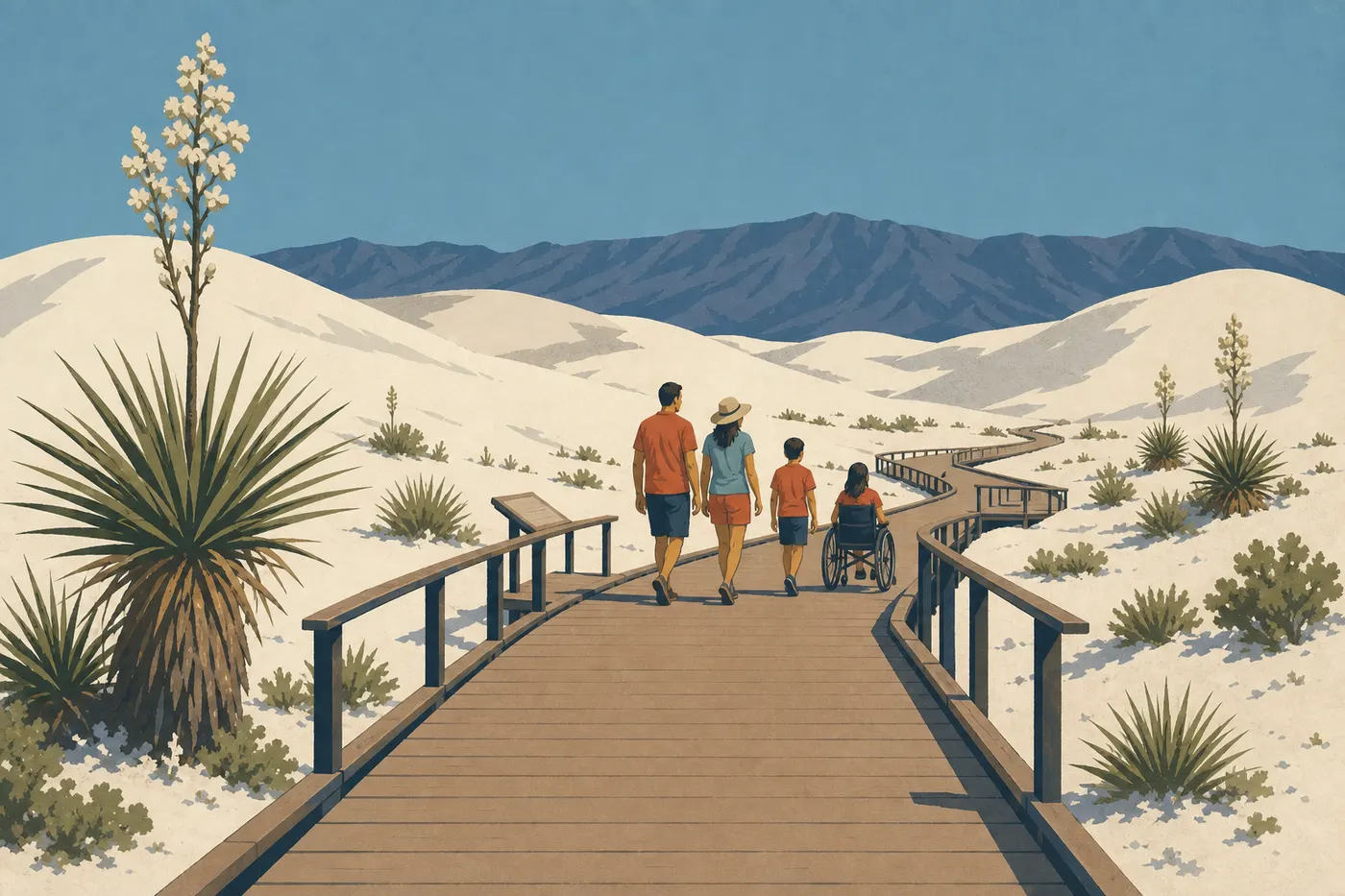
This 0.4-mile boardwalk crosses the space between the dunes, where gypsum-adapted plants grow, including yuccas, dune cottonwoods, and halophytic plants. It’s fully accessible to strollers and wheelchairs. Interpretive signs explain how the dunes form, which makes this a good activity for curious kids ages 6 and up.
Moonlight Night Hikes
The NPS organizes nighttime walks on some evenings around the full moon. The white dunes under moonlight make you feel as if you’re on another planet. For kids 6 and older, it’s hard to forget. Space is limited, and registration is through recreation.gov. Check the calendar before your visit.
For the complete list of activities, the White Sands activities guide covers all available NPS programs.
Easy Family Hikes (Short, Little Elevation Gain, Stroller-Friendly)
White Sands trails aren’t technically difficult. The real challenge is heat, sun, and walking through loose sand. These are the trails that work best for families.
Interdune Boardwalk (0.4 miles, round-trip, flat, stroller-accessible). Starts along Dunes Drive. Ideal for toddlers. Allow 20 to 30 relaxed minutes.
Playa Trail (1 mile, loop, easy). This trail crosses the playa, a flat, cracked surface between the dunes. There’s little elevation gain and clear signage. It works for kids as young as 5 or 6. There’s no shade, so hats and water are essential.
Dune Life Nature Trail (1 mile, loop, easy to moderate). Fifteen interpretive signs line the trail. It’s ideal for kids who like to learn as they walk. The elevation gain in loose sand is more tiring than it looks. It works for kids as young as 6 or 7; allow 45 minutes to 1 hour.
Alkali Flat Trail (4.6 miles, loop, difficult): for families with well-conditioned teenagers only. There are few visual landmarks, full sun exposure, and no shelter. It isn’t suitable for children under 12 and isn’t recommended in summer.
The White Sands hiking guide lists every trail, current conditions, and recommended gear.
The Junior Ranger Program
The Junior Ranger program is one of the NPS’s most effective ways to get kids involved in a visit. At White Sands, it’s simple.
Pick up the booklet for free at the Visitor Center, at the park entrance. It’s available in several age-appropriate levels.
The booklet includes observation activities, such as spotting the fringe-toed lizard, an iconic dune animal, diagrams to complete about gypsum formation, and questions about plants and wildlife. Allow 45 minutes to 1 hour to finish it, depending on the child’s age and curiosity.
Return the completed booklet to a ranger to receive the official White Sands badge. Rangers have the child take a pledge to protect the park, respect wildlife, and so on. This small ceremony makes a lasting impression.
Practical tip: do the program in the morning, before your sledding session. Kids are more attentive, and rangers are available. Lines can get longer late in the afternoon.
Safety with Kids
White Sands has no major dangerous wildlife and no rough terrain. Three specific risks still deserve extra attention with children.
Heat and sun. White sand reflects ultraviolet light intensely. Kids burn faster here than at the beach. Apply SPF 50 or higher, reapply every 90 minutes, and cover their heads and shoulders. In summer, avoid staying in the dunes between 10 a.m. and 4 p.m. Cool sand underfoot can create a false sense of comfort. The air is still scorching.
Hydration. There’s no water inside the park. Only the Visitor Center at the entrance has water. Bring all the water you’ll need before entering the dunes. In summer, plan on at least 1 liter per child per hour; the rest of the year, 0.5 liters per hour. Don’t count on “finishing what’s left in the car.” The car could be a 30-minute walk away.
Getting disoriented in the dunes. In the Heart of the Dunes, every ridge looks alike. A child who walks a few dozen yards away can become disoriented in less than five minutes. Before entering the dunes, set one simple rule: everyone stays within sight of everyone else, always. Adults need to keep a constant eye on the youngest children, no exceptions.
Temporary closures for military testing. White Sands borders White Sands Missile Range. Dunes Drive may close, usually for 2 to 3 hours, without much advance public notice. Check alerts on the NPS website the day before your visit. If the road is closed when you arrive, wait in Alamogordo or Las Cruces.
The park’s specific rules are also posted at the Visitor Center entrance and on the NPS website.
Where to Stay with Kids (In or Around the Park)
White Sands offers no lodging inside the park. Backcountry camping is available, but it requires managing without water or restrooms, so it isn’t recommended with young children.
The two practical bases for families are:
Alamogordo (about 15.5 miles, 20 minutes). Several hotels and motels line US Highway 70. It’s a functional town with supermarkets and restaurants, and it’s the closest option.
Las Cruces (about 53 miles, 1 hour). This larger city offers more choices, including hotel chains with pools and a wider range of restaurants. It’s a good base if you’re combining White Sands with other sites in southern New Mexico.
The White Sands lodging guide compares family-friendly options based on features such as a pool, included breakfast, and Wi-Fi access.
Meals and Breaks with Kids
Food service inside the park is limited to a vending machine and a small snack shop at the Visitor Center. Don’t count on a full meal on-site.
A picnic is the most practical solution. Picnic tables are available at the Visitor Center and several stops along Dunes Drive. Prepare your meal before entering the park, in Alamogordo or Las Cruces. In summer, bring a cooler.
Never leave food in the car. Heat melts chocolate, ferments drinks, and spoils food in less than an hour under the New Mexico sun. Keep your provisions with you in an insulated bag.
For snacks in the dunes, choose crackers, dried fruit, and granola bars. They hold up to the heat better than fresh foods.
Family Budget
Entrance costs $25 per vehicle, regardless of the size of the group inside. That’s the best deal for a family of 3 or 4. Children under 15 enter free, under the federal policy that applies in all U.S. national parks.
The America the Beautiful pass ($80 per year) pays for itself after 4 parks in a year. It covers White Sands and all NPS federal sites. For a family road trip through the American Southwest, it quickly becomes worthwhile.
Plan to buy a saucer: a plastic sled costs about $15 to $20 at the Visitor Center. It’s reusable and fits easily in a trunk.
Plan ahead for water, sunscreen, and hats. These expenses are modest if you prepare before leaving and expensive if you buy them at the last minute in shops around the park.
For entrance fees and annual passes, see the National Parks fees and passes page.
Places to Combine with White Sands for a Family Trip
New Mexico offers several family-friendly sites within reach of White Sands.
Carlsbad Caverns National Park (about 2.5 hours east): enormous, cool, spectacular caves. The elevator ride down to the Big Room works for all ages. The seasonal evening bat flight program captivates kids.
El Paso, Texas (about 1.5 hours west): a large city with a range of lodging, family-friendly museums, and convenient logistics. It can serve as a base for a visit to White Sands.
The New Mexico Farm and Ranch Heritage Museum in Las Cruces: affordable admission, live animals, and craft demonstrations. It works for kids ages 4 to 12 and fits easily into a day without overloading the schedule.
The Region and Road Trip guides offer ideas for including White Sands in a broader trip through the American Southwest.
White Sands with Kids: Is It Worth It?
Yes, without a doubt. White Sands isn’t a park families visit just to check another item off a list. Sledding the dunes creates real memories that kids still talk about months later. The landscape, pure white beneath a deep blue sky, stays with adults too.
The key to a successful visit with kids is simple: arrive early, bring all the water you need, and let the kids take their time in the dunes instead of rushing from trail to trail. Our White Sands map helps you see the different areas and plan your route before you leave. White Sands is something you experience more than something you sightsee.
Frequently Asked Questions
Is White Sands good for kids?
White Sands works for kids as young as 3 or 4. The gypsum sand stays cool even in summer, the Interdune Boardwalk is stroller-accessible, and sledding the dunes works for all ages. With young children, planning for hydration and sun protection is essential.
How long does it take to visit White Sands?
A full day is enough for a family. If you start at opening, 7 a.m., you’ll have time for sledding, one or two trails, a picnic, and sunset. Two days let you add a moonlight night hike.
Where is White Sands located?
White Sands National Park is in New Mexico, along US Highway 70, between Alamogordo, about 15.5 miles east, or 20 minutes, and Las Cruces, about 53 miles west, or 1 hour.
What is there to do at White Sands with kids?
The main activities at White Sands with kids are sledding the dunes, with saucers available at the Visitor Center, walking the Interdune Boardwalk, hiking the signed Playa Trail and Dune Life Nature Trail, completing the Junior Ranger program, and, depending on the season, joining the ranger-led moonlight night hikes.