
White Sands Wildlife: Animals to See and Where to Find Them
White Sands looks like nowhere else, and its wildlife is just as unusual. The white gypsum dunes of New Mexico have created rare evolutionary pressure: several animal species independently developed pale coloring to blend into the pristine sand. Five animals capture what makes the park unique: the bleached earless lizard, Apache pocket mouse, coyote, greater roadrunner, and gemsbok, the African antelope that wanders through this science-fiction landscape. White Sands offers a living lesson in evolution, visible to the naked eye.
White Sands' Signature Animals
The Bleached Earless Lizard
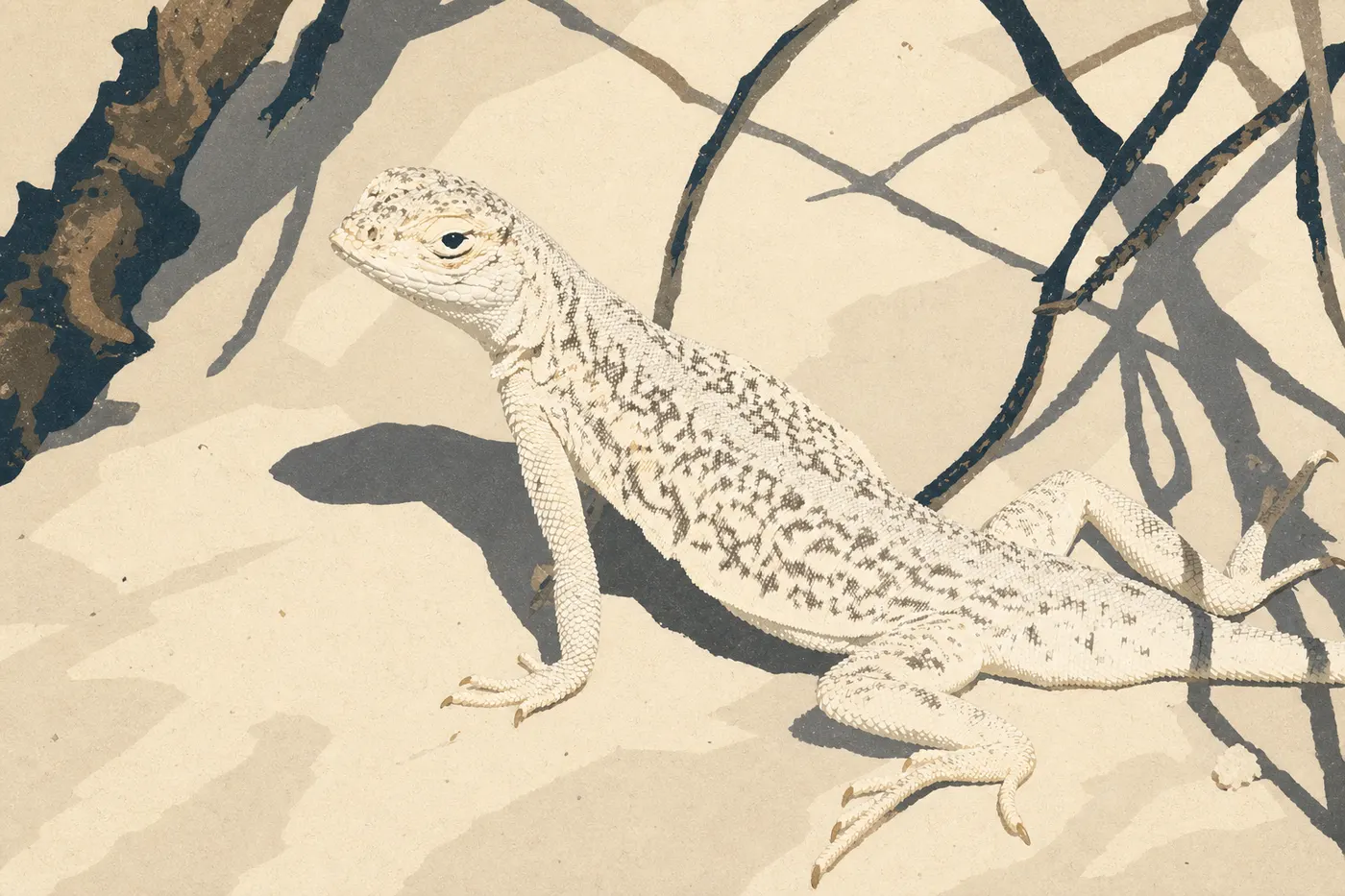
The bleached earless lizard (Holbrookia maculata ruthveni) is probably the most iconic animal in the White Sands dunes. This local subspecies has an almost white coat, a stark contrast to the brown-gray coloring of its cousins on the dark soils nearby, even though they live only a few miles apart. Natural selection has done its work with remarkable efficiency. In an environment as exposed as these dunes, being pale means survival. You can spot it easily in midmorning, when the dune surface is still cool and it heads out to hunt insects in the open.
The Apache Pocket Mouse
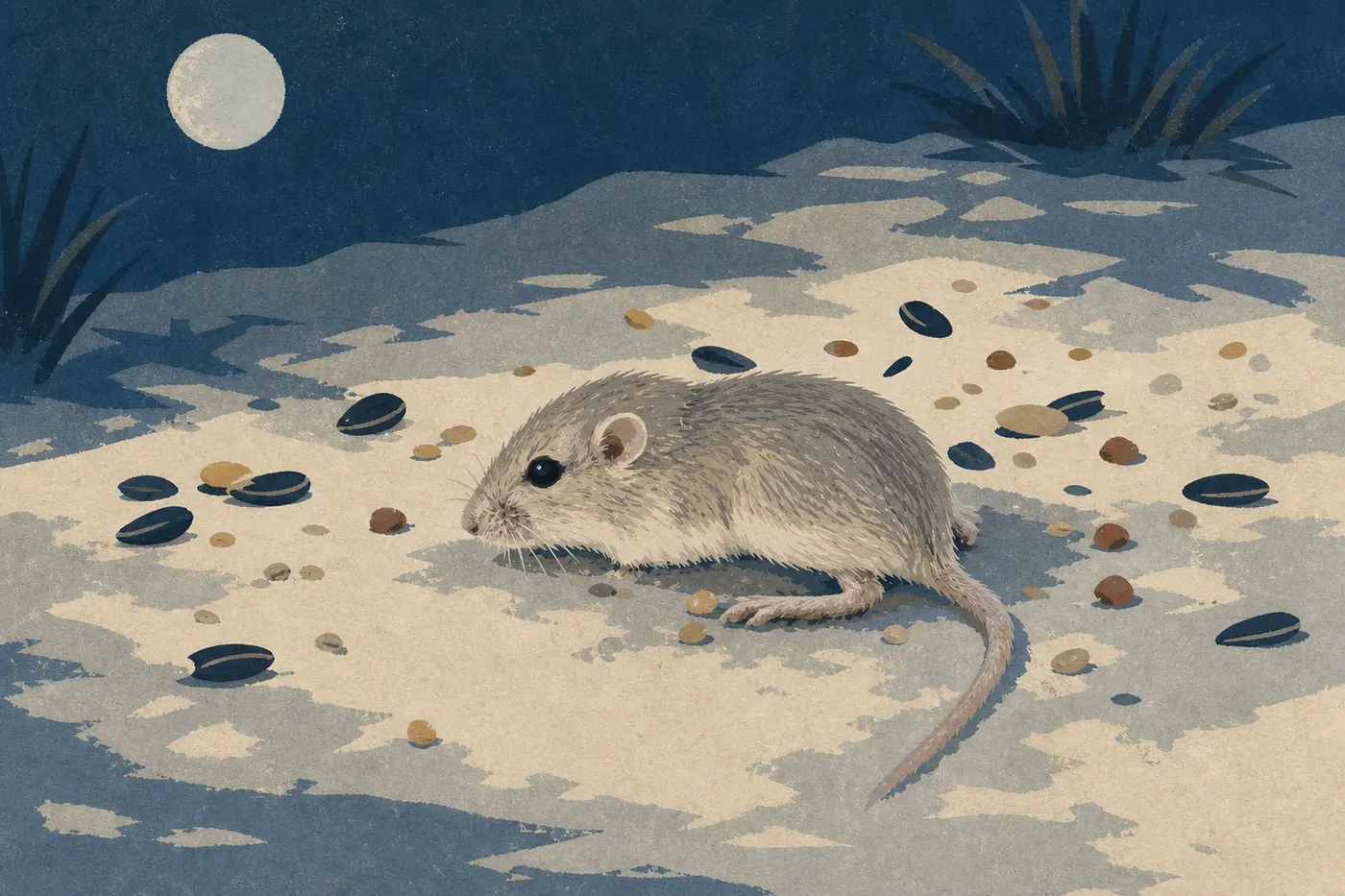
The Apache pocket mouse (Chaetodipus intermedius) has followed the same evolutionary path. Populations living in the White Sands dunes are noticeably lighter than their cousins on the nearby dark, rocky slopes. It spends the day in its burrow and comes out at night to collect seeds and plant fragments, storing them in its cheek pouches. You probably won't see it during the day, but knowing it's there, generation after generation a fraction paler than its cousins, changes the way you see these quiet dunes.
The Gemsbok
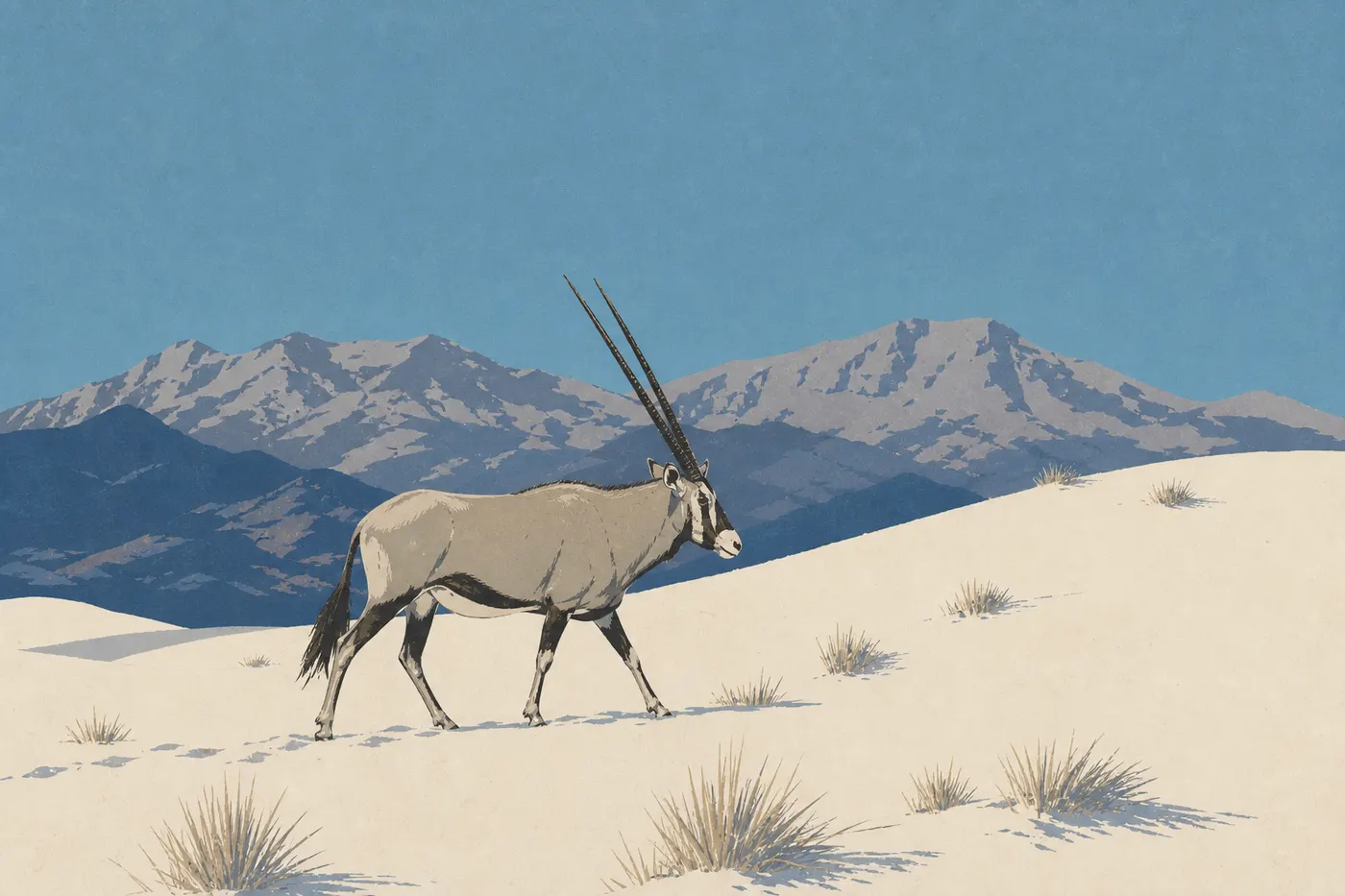
The gemsbok (Oryx gazella) is not a New Mexico native. This large African antelope was introduced in the 1960s as game on White Sands Missile Range, the military area next to the park. Some animals have since crossed the fences and roam freely in the national park. Seeing a four-foot-tall animal with two long, straight horns appear against white dunes and blue sky is an unforgettable sight. It's also the park's largest animal.
The Coyote
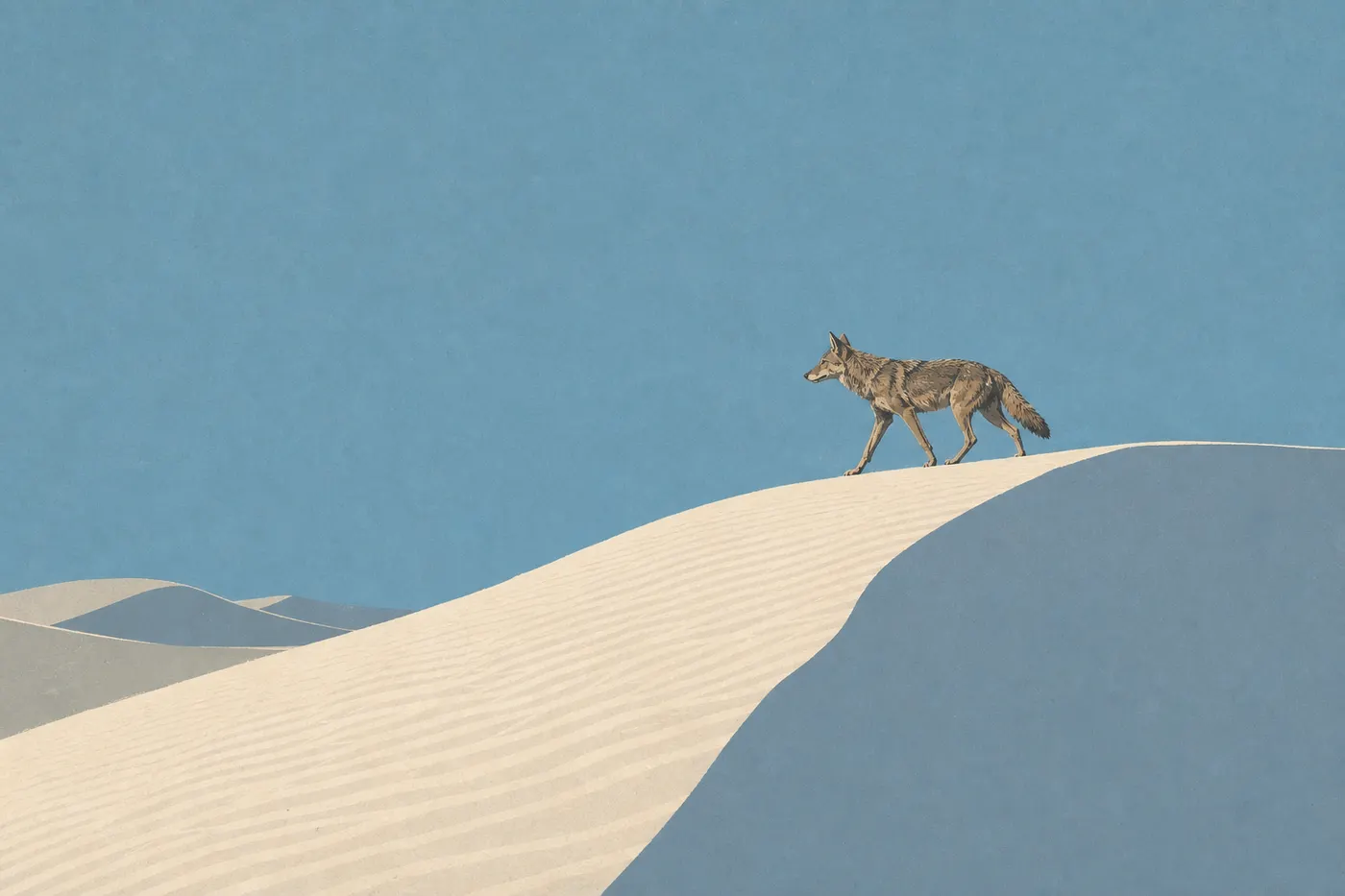
Coyotes (Canis latrans) live throughout the American Southwest, and White Sands is no exception. You'll often see one early in the morning or late in the afternoon, usually alone, trotting along a dune ridge in search of rodents, lizards, or scraps. Its slender shape, pointed ears, and low-hanging tail distinguish it from the smaller, strictly nocturnal kit fox. Here's a simple trick: in the morning, its chain of tracks in the cool sand tells the story of its nighttime rounds better than any direct sighting.
The Greater Roadrunner
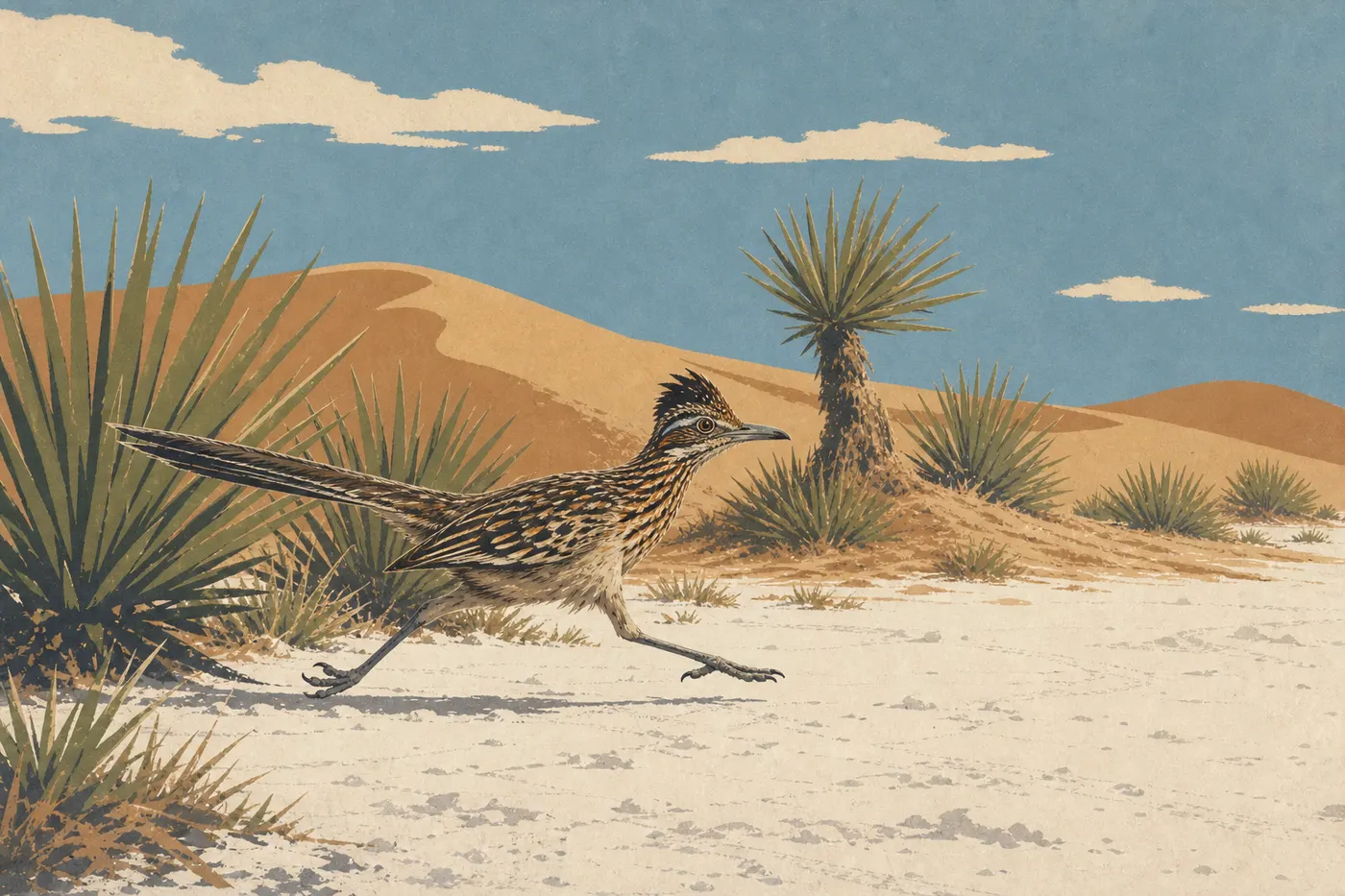
The greater roadrunner (Geococcyx californianus) barely flies. It runs. Fast and inquisitive, it can swallow a lizard or small snake without hesitation, embodying the practical nature of desert wildlife. You'll often see one near vegetation, along Dune Life Nature Trail, or around the Visitor Center. Its shaggy crest, long legs, and determined stride make it instantly recognizable. It's hard to mistake it for anything else.
Where to See Wildlife in White Sands
Wildlife gathers where vegetation grows: in the interdunes, the corridors between dunes where yuccas, Rio Grande cottonwoods, and desert grasses take hold. The dunes themselves, although they hold lizards and signs of nighttime activity, are too exposed for most species to linger during the day.
Dune Life Nature Trail (1.0 mile round-trip): the best trail for seeing dune-adapted species, especially bleached earless lizards and roadrunners. Early in the morning, fresh tracks in the sand draw your eye toward burrows and hunting grounds. Find this trail and the park's other marked trails in the White Sands hiking guide.
Interdune Boardwalk (0.25 mile, wheelchair accessible): a boardwalk over an interdune corridor. It's ideal for birds and reptiles without ever leaving a marked path. Roadrunners and lizards are common here.
Alkali Flat Trail (5 miles round-trip): the most demanding trail, deep in the dunes. You'll see fewer species but more tracks, and sometimes a gemsbok on the horizon. Save it for a morning outing and bring plenty of water.
Dunes Drive (8 miles): the main road remains an excellent place to watch wildlife from your car, with the window open, at dawn or dusk. Coyotes in particular are often visible from the road early and late in the day.
When to See Wildlife: Seasons and Daily Patterns
Heat controls the schedule of all desert wildlife. In summer, when daytime temperatures can exceed 104°F, most animals shelter or cut their activity to a minimum. The best viewing takes place at dawn, during the first 30 to 45 minutes after the gates open at 7 a.m., or during the hour before the park closes at sunset.
In fall and spring, mild temperatures keep wildlife active for longer stretches of the day. These are the most comfortable windows for seeing both reptiles and mammals.
In winter, cold nights slow reptiles and insects, but mammals such as coyotes, jackrabbits, and mule deer remain active in the morning.
For nocturnal species such as pocket mice, scorpions, rattlesnakes, and kit foxes, evening outings or the Full Moon Hikes regularly organized by the park offer a safe, guided setting. The best times to visit White Sands guide explains the advantages of each season based on your travel priorities.
Predators and Large Animals at White Sands
The gemsbok is by far the park's largest animal, weighing up to 440 pounds. It's impressive to see, but poses no real danger if you keep a reasonable distance and don't approach it.
The coyote is the main land predator. It generally avoids contact with people, but never feed one. A coyote that becomes accustomed to humans inevitably ends up being euthanized. The kit fox (Vulpes macrotis), smaller and exclusively nocturnal, rounds out the park's carnivores.
Rattlesnakes live in the park, primarily the western diamondback rattlesnake (Crotalus atrox). They aren't looking for a confrontation. Most incidents happen when people don't watch where they step or reach into brush or under a rock. The risk is low on open dunes. Pay extra attention in areas with vegetation.
The scorpion, including several species such as the bark scorpion (Centruroides sculpturatus), whose sting may require medical attention, is active at night. If you're camping at White Sands, shake out your shoes and clothes before putting them on in the morning. It's a golden rule throughout the American Southwest.
How to Watch Wildlife Safely
The rules are simple and apply to all wildlife, regardless of size.
Don't feed wildlife. Any animal, ever. Feeding a wild animal changes its eating habits, makes it dependent on people, and eventually puts its life at risk.
Keep your distance. For mammals such as deer, gemsbok, and coyotes, stay at least 100 feet away. For birds, stay 65 feet away. If an animal stops eating, stares at you, or moves away, you're too close. Back up.
Don't touch reptiles. Even a snake that appears to be fleeing can turn around. Let it cross the trail and wait until it disappears.
Stay on marked trails. Outside the open dunes, interdune vegetation shelters snakes and scorpions. Stepping off-trail in these areas increases the risks for no good reason.
For the park's general guidance, including what to do in case of a bite or sting, see the complete White Sands guide.
In Brief: Species Not to Miss and Where to Find Them
| Species | Best time | Best spot |
|---|---|---|
| Bleached earless lizard | Morning (9 to 11 a.m.) | Dune Life Nature Trail |
| Gemsbok | Dawn, dusk | Dunes Drive, Alkali Flat Trail |
| Coyote | Dawn, late afternoon | Dunes Drive |
| Greater roadrunner | All day | Visitor Center, Interdune Boardwalk |
| Apache pocket mouse | Night | Vegetated areas |
| Western diamondback rattlesnake | Dusk, night | Areas with vegetation |
For everything related to access, fees, and park rules, the complete White Sands guide brings the essentials together in one place.
Frequently Asked Questions
What animals live in White Sands?
White Sands is home to the bleached earless lizard (Holbrookia maculata ruthveni), Apache pocket mouse, coyote, kit fox, greater roadrunner, gemsbok, which was introduced here, western diamondback rattlesnake, and several scorpion species. What sets the park's wildlife apart isn't the number of species but their adaptations. Several independently developed pale coloring to camouflage themselves in the dunes' white gypsum.
Are there snakes at White Sands, New Mexico?
Yes. Rattlesnakes live at White Sands, primarily the western diamondback rattlesnake (Crotalus atrox). They mainly frequent areas with vegetation and ground cover. The risk is low on open dunes. Always watch where you step, and never try to touch a snake, even if it's motionless.
What is the largest animal at White Sands?
The park's largest animal is the gemsbok (Oryx gazella), an African antelope introduced in the 1960s on the adjacent White Sands Missile Range. Some animals roam freely in the national park, especially at dawn and dusk.
What are the predators at White Sands?
The park's main predators are the coyote and kit fox among mammals, the western diamondback rattlesnake among reptiles, and the greater roadrunner, which preys on lizards and small snakes. No large cats have been documented in the park.
What animals are active at night at White Sands?
The most active nocturnal species are the Apache pocket mouse, kit fox, scorpion, and western diamondback rattlesnake. Coyotes are also active under cover of night. The park's Full Moon Hikes are a good opportunity to see this twilight wildlife in a guided setting.
What is the most common animal at White Sands?
The bleached earless lizard is probably the easiest animal to spot during the day on the dunes and marked trails. Coyotes, although elusive, are also widespread throughout the park.