
What to Do at White Sands: The Must-See Highlights
At White Sands, the essential experiences come down to three things: driving Dunes Drive at sunset as the dunes turn orange, sledding down the white gypsum slopes, and hiking out to Alkali Flat, where you'll find yourself facing a crystal desert with no vegetation and no sound. These three experiences define the park. Everything else depends on how much time you have.
White Sands doesn't look like any other American national park. Its 230 square miles of gypsum dunes form the world's largest gypsum dune field, in a closed basin in New Mexico where water has evaporated for millennia, leaving its crystals behind. The result is white sand that stays cool to the touch even when temperatures reach 104°F, along with a landscape that changes dramatically with the light. There's only one road through the park, Dunes Drive, with marked stops all along it. No complicated loops or separate districts. Just one road, a series of stops, and a lot of white sand.
White Sands at a Glance: Location, Access, and Getting Around
White Sands National Park is in southern New Mexico, on US Highway 70, between Alamogordo, 15 miles east, and Las Cruces, 52 miles west. The park entrance is directly off the main highway. There's no obscure turnoff or secondary section. You pay, enter, and drive in.
Entrance fees: $25 per vehicle, $20 per motorcycle, or $15 per person entering on foot or by bike. The park's annual pass costs $45, and the America the Beautiful pass ($80) covers all federal sites. For entrance fees and annual passes, see the National Parks Fees & Passes page.
Hours: The park opens at 7 a.m. every morning. It closes 30 minutes after local sunset, which occurs about 8 minutes before the time listed for Alamogordo. In practice, check the exact time posted at the visitor center when you arrive. It changes every week.
One logistical detail to plan for: White Sands Missile Range surrounds the park and causes occasional closures of US Highway 70 several times a year, usually for a few hours at a time. These closures affect the access road and can significantly delay your arrival. Check NPS alerts the day before your visit, especially if you're coming from El Paso.
Getting around the park: Dunes Drive is the only road open to vehicles. It covers about 8 miles round-trip from the visitor center to the Alkali Flat parking area. The main section is paved and suitable for an ordinary car. The final section near Alkali Flat is sandy and can become slippery after rain.
Travel options from Albuquerque, El Paso, and Tucson are covered in the White Sands access guide, along with driving times and public transportation connections.
How Much Time Do You Need to Visit White Sands?
Half a day, 3 to 4 hours: Drive all of Dunes Drive, walk the Interdune Boardwalk, go sledding in the Heart of the Dunes, and watch the sunset from a ridge. That's the minimum for a satisfying visit.
A full day: Add the Alkali Flat Trail in the morning, before 10 a.m. in summer, then take a nature walk in the playa area and return in the late afternoon for the evening light.
Two days: Backcountry camping in the dunes is the only way to see the park at night under a relatively dark sky. It's a very different, more contemplative experience, and we recommend it if you have the right gear.
Many visitors settle on another option without really planning it: two visits in one day. Arrive when the park opens at 7 a.m. for the cool morning light, take a midday break in Alamogordo for restaurants, air conditioning, and a museum, then return in the late afternoon for sunset. It's the best balance of light and effort over a 24-hour period.
Hour-by-hour itineraries for every type of visitor, from a quick stop to a stay with an overnight campout, are available in the White Sands itinerary guide.
The Must-See Areas, One by One
Dunes Drive starts at the visitor center and heads northwest into the heart of the dune field, with marked trailheads every 1 to 2 miles. You can drive it, which takes 20 minutes without stopping, or walk from any point along the road. Here are the four key areas, in order along the route.
The Visitor Center: Gateway to the Park and Essential Facilities
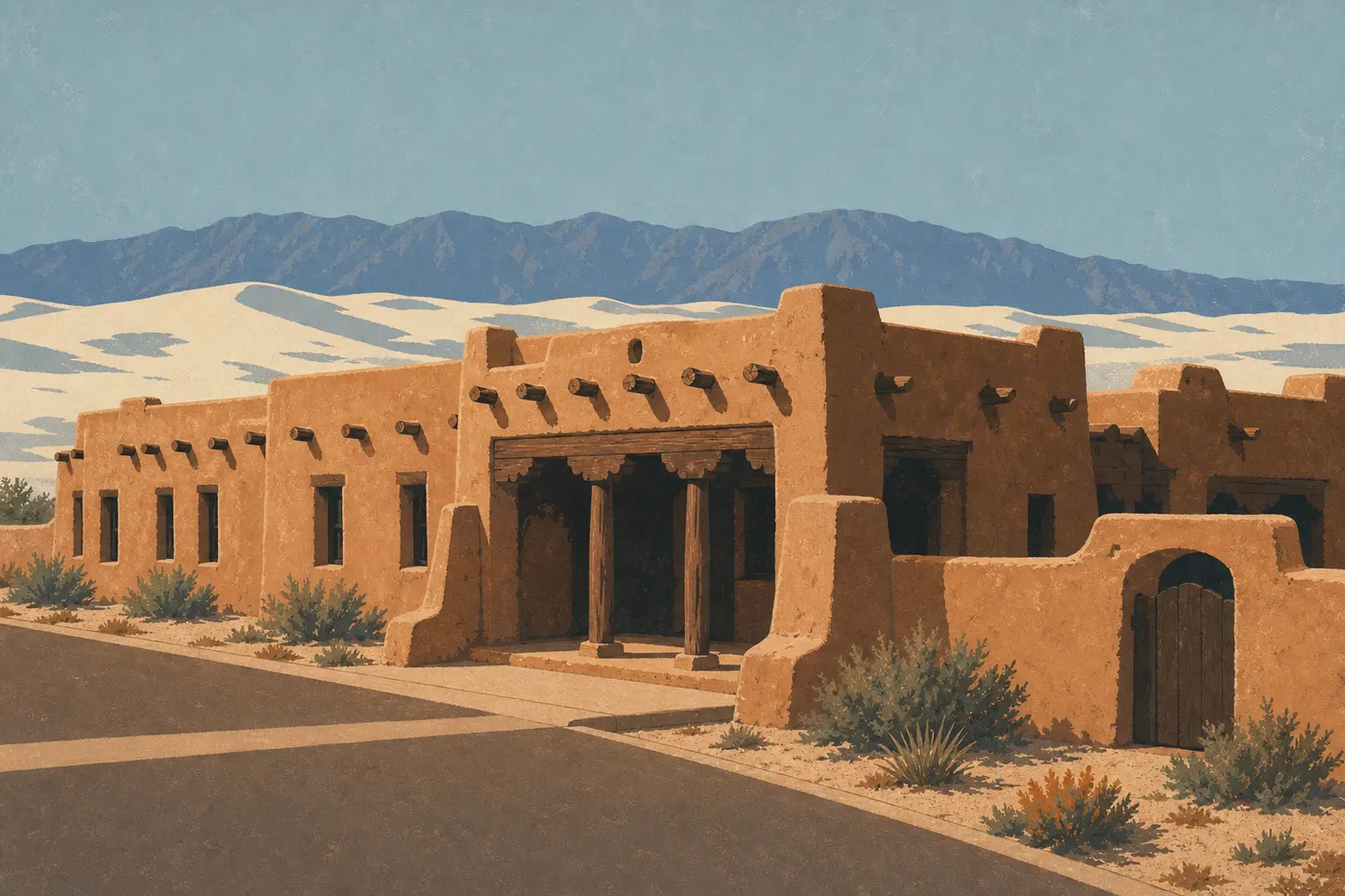
The visitor center is the park's only building with restrooms, drinking water, and a shop. This is where you can rent the plastic sleds essential for the Heart of the Dunes and pick up backcountry camping permits. The 15-minute film about the Tularosa Basin's geology is worth watching. It explains how rain carries dissolved gypsum from the surrounding mountains into the closed basin, where the water evaporates and leaves the crystals behind. Wind then breaks up and polishes those crystals into dunes. The dune field advances 3 to 6 feet a year toward the northeast.
Here's one nonnegotiable rule before you hit the trail: bring water. None of the park's trails has water available, and summer temperatures can reach 104°F or higher.
The Playa Area: First Trails and Adapted Wildlife
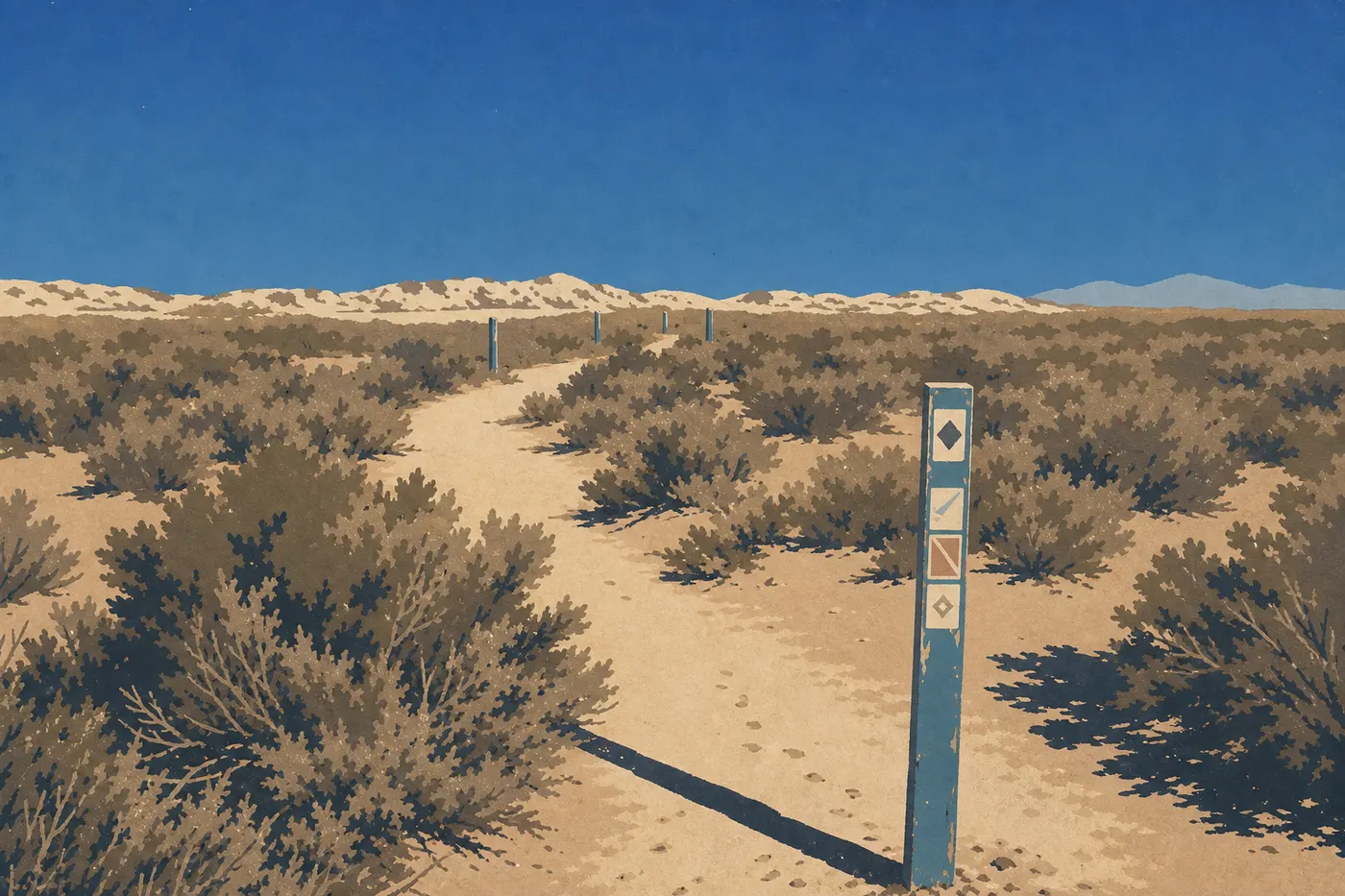
About 1.2 miles past the visitor center, two short loops explore the transition between the playa, a flat area with salty soil, and the first dunes.
Playa Trail, 1 mile, loop: This trail follows the playa, which is wet in winter and early spring and cracked the rest of the year. You'll see pioneer plants colonizing the interdunes, including dune cottonwoods, yuccas, and iodine bush. It isn't the most visually dramatic trail, but it provides useful ecological context before you head deeper into the dunes.
Dune Life Nature Trail, 1 mile, loop: This interpretive trail has signs about local wildlife. This is your best chance to spot the bleached earless lizard, a park endemic whose skin became nearly translucent over a few thousand generations, helping it blend into the white gypsum. It's a rare example of recent evolution that you can observe directly in the field. Early in the morning, tracks from kit foxes are still visible in the fine sand.
These two trails are worth adding if you have time or if you're visiting with curious kids. On a short visit, you can skip them and go straight to the heart of the dunes.
The Heart of the Dunes: Sledding, Boardwalks, and Sunsets

This is where the visit really comes alive.
Interdune Boardwalk, 0.4 miles, flat and accessible: This elevated wooden boardwalk runs between two lines of dunes. You walk above the sand instead of sinking into it, with signs explaining dune dynamics, endemic species, and the basin's geology. It's wheelchair- and stroller-accessible. It's also the best place to see the dune patterns without much physical effort.
Heart of the Dunes, sledding area: A few miles farther on, the dunes reach their maximum height and their slopes are steep enough for sledding. Walk uphill for 5 to 8 minutes, depending on which ridge you choose, then sled back down in about 20 seconds. Gypsum is slower than ordinary beach sand, but it's fast enough to make the experience real. The plastic discs rented at the visitor center work well. Flattening the sand slightly at the bottom of the slope before you start will improve your speed. Kids love it. Adults do too, as long as they're willing to look like a living cumulonimbus cloud after three runs.
Sunsets on the dunes: The low evening light turns shadows into crisp lines across the white gypsum. The dunes shift from cream to orange, then pink and purple. During a visit in October, I watched the sand take on an almost fluorescent color during the 10 minutes before the park closed. Arrive at least 30 minutes before sunset so you can choose a ridge and settle in.
Backcountry Camping Trail, 2 miles round-trip: This trail leads to 10 campsites in the middle of the gypsum desert, accessible only on foot. Pick up your permit at the visitor center the same day. You'll sleep in the dunes under a sky with little artificial light. In summer, the nighttime wind cools things down quickly; in winter, temperatures drop to just a few degrees above freezing. Recommended gear and backcountry rules are covered in the White Sands camping guide.
Alkali Flat: The Desert in Its Rawest Form

At the end of Dunes Drive, the Alkali Flat Trail is the park's longest and most demanding trail.
Alkali Flat Trail, 5 miles round-trip: The route crosses the tallest dunes, then opens onto cracked ground where gypsum lies exposed in sheets. Vegetation almost completely disappears. You walk across salt and pure gypsum, 2.5 miles from the parking area, with no natural landmark except the orange posts marking the route. After a windstorm, some posts may be buried, so check trail conditions at the visitor center before you set out.
Two nonnegotiable rules apply. Don't start between 11 a.m. and 4 p.m. in summer. The gypsum reflects the heat, there's no shade, and dehydration comes on quickly. Also, carry at least 2 liters of water per person for the full loop. Conditions are much more comfortable in fall and spring, and the view at the end is striking. Elevation profiles, route markers, and seasonal conditions are detailed in the White Sands hiking guide.
The Best Hikes at White Sands
White Sands has five marked trails, from the accessible boardwalk, 0.4 miles, to the Alkali Flat Trail, 5 miles round-trip and difficult in summer. Our Hiking page covers every route with elevation profiles, route markers, and seasonal advice.
Other Activities for Different Interests
Photography

White Sands makes an exceptional photography setting for a practical reason: the white surface reflects light in every direction, eliminating the harsh shadows you often get in the middle of the day. The best times are dawn, with cool light, soft contrast, and almost no visitors, and sunset, with warm colors against the white sand. Midday light is harsh, but the geometric shadows along the ridges create strong graphic images.
With a digital camera, remember that the exposure meter tends to underexpose against a white background. Add +1 to +1.5 EV to bring back the gypsum's texture.
Stargazing

The Tularosa Basin is one of the areas least affected by light pollution in the American Southwest. You can see the Milky Way with the naked eye on moonless nights. The park hosts ranger-led astronomy programs at certain times of year. Ask at the visitor center for the schedule. The seasons with the best chances of clear nights are covered in the White Sands weather guide.
Full Moon Hike

Around the full moon each month, the park offers a guided nighttime hike across the dunes. White gypsum reflects enough moonlight to let you walk without a headlamp. It's a very different experience from a daytime visit: quieter, stranger, and filled with shadows that exist only at night. Reservations fill within hours of opening. Check the NPS calendar if you're planning your visit around a full moon.
Families and the Junior Ranger Program
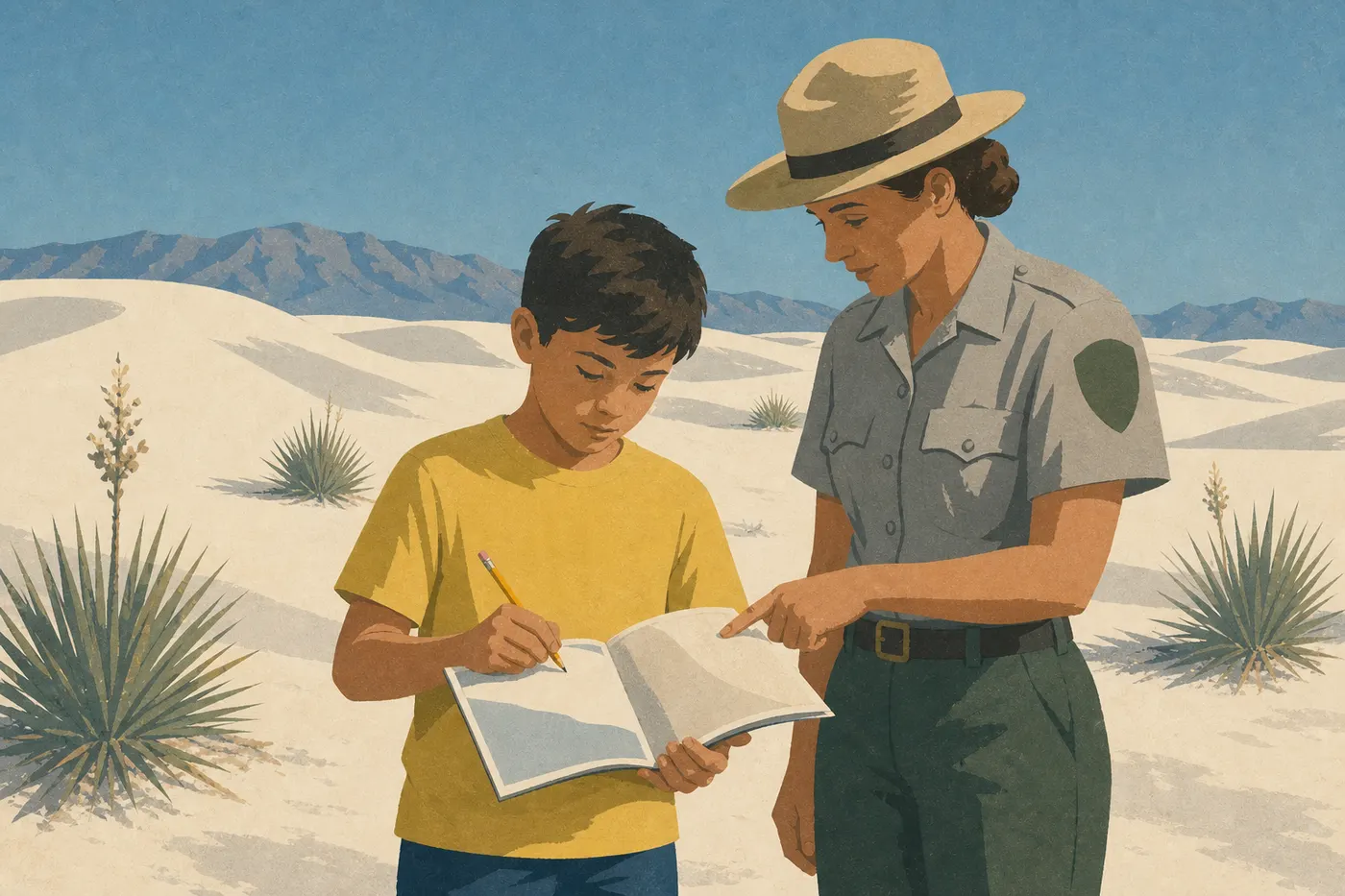
Sledding in the Heart of the Dunes works for kids as young as 4 or 5 and requires no previous experience. The park also offers a Junior Ranger booklet, available at the visitor center, with activities suited to the landscape: identifying animal tracks, observing pioneer plants, and noting how dune shapes change with wind exposure. Once the child completes the booklet, a ranger certifies it and gives them an official badge. Practical tips for visiting with young children are collected in the White Sands family guide.
Wildlife Watching
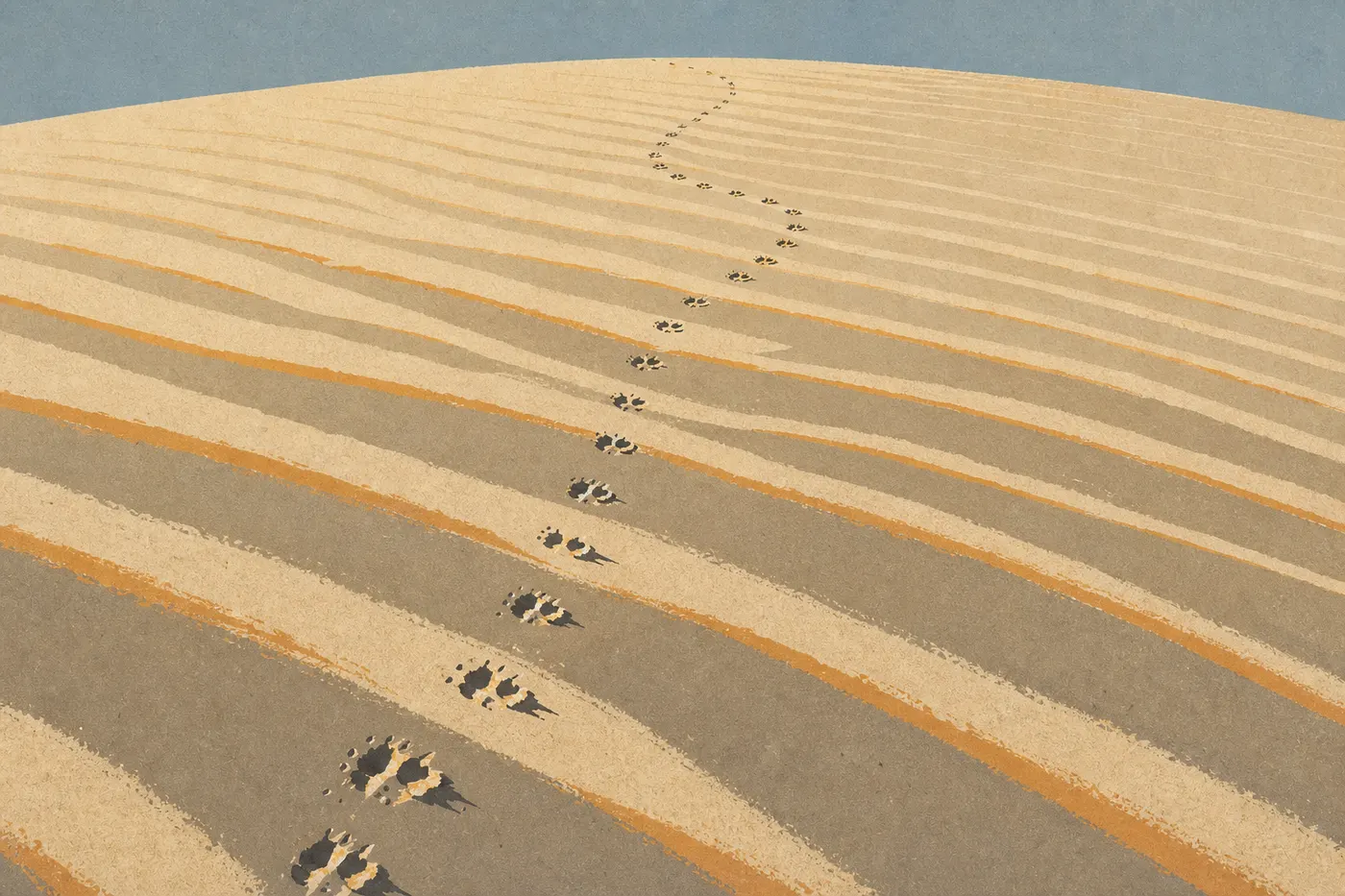
White Sands isn't a park known for spectacular large animals, but a few species are worth looking for. Oryx, an African antelope also known as gemsbok, were introduced to the region for sport hunting in the 1960s and have since gone feral. You can often see them around the dunes, especially at dawn and dusk. Roadrunners, kit foxes, and coyotes round out the list. The bleached earless lizard, endemic to the park, is the species to look for on the Dune Life Nature Trail. Our Wildlife page lists the species found here and the best seasonal conditions for spotting them.
Things to Do Around White Sands
Alamogordo, 15 miles east, is the closest base, with hotels, restaurants, and gas stations. The New Mexico Museum of Space History is worth a two-hour visit. Four floors trace the history of space exploration, from the first rocket tests at White Sands Missile Range to an outdoor missile garden and a planetarium. Admission is charged, and it's family-friendly.
Trinity Site, about 81 miles north, is where the first atomic bomb was detonated on July 16, 1945. The site is on White Sands Missile Range and is open only two days a year: the first Saturday in April and the first Saturday in October. If your visit falls on one of those dates, this is a historical detour that's hard to justify skipping.
Las Cruces, 52 miles west, is the region's college town, with considerably more lodging and dining options than Alamogordo. The old village of Mesilla, 2 miles from downtown, is a 19th-century adobe district listed as a historic landmark and makes a pleasant one-hour stroll.
El Paso, Texas, about 87 miles west, is the most convenient logistical base if you're flying in. Its international airport serves major American cities, and fares are often lower than those to Albuquerque.
Carlsbad Caverns National Park, about 3 hours east, works well as part of a weeklong trip through southern New Mexico. The caves and the gypsum desert offer two radically different experiences within the same broad region. Our Road Trip guide offers several itineraries combining these destinations with Guadalupe Mountains National Park.
The Bottom Line: What to See First at White Sands
White Sands is a park you can visit quickly but spend a long time taking in. Dunes Drive takes 20 minutes without stopping, but you can easily spend a full day along it.
If you only have 3 hours: Drive Dunes Drive to the Heart of the Dunes, go sledding, and watch the sunset from a ridge. You'll see the heart of the park and leave with photos you couldn't have taken anywhere else.
If you have a full day: Add the Alkali Flat Trail in the morning, before 10 a.m., then come back for the evening light. That's the ideal plan.
Yes, White Sands is worth the detour. The landscape has no equivalent on the American continent, you can visit in an ordinary car without technical gear, and the $25 vehicle entrance fee is reasonable for the experience. The only condition is to avoid the middle of the day in summer and bring more water than you think you'll need.
Frequently Asked Questions
What is there to do at White Sands?
At White Sands, you can drive Dunes Drive, an 8-mile scenic route; hike five marked trails, including the 5-mile round-trip Alkali Flat Trail; sled down the white gypsum slopes; photograph the sunsets; join guided nighttime hikes during the full moon; and look for endemic wildlife, including the bleached earless lizard.
How long does it take to visit White Sands?
Allow 3 to 4 hours for the highlights: Dunes Drive, sledding in the Heart of the Dunes, one short trail, and sunset. A full day gives you time to add the Alkali Flat Trail. With two days, you can camp in the dunes with a permit picked up at the visitor center.
Is White Sands worth visiting?
Yes. White Sands is the only place in the world where you can walk across a gypsum dune field this large. The landscape is extraordinary, the park is accessible by ordinary car, and the $25 vehicle entrance fee is reasonable. If you're crossing southern New Mexico, it's a stop that's hard to justify skipping.
What are the must-do activities at White Sands?
The essentials are Dunes Drive at sunset, sledding in the Heart of the Dunes, and the Alkali Flat Trail for a look at the raw gypsum desert. Add the guided Full Moon Hike if the dates line up with your visit.
Which hike should you do at White Sands?
For an easy introduction, take the Interdune Boardwalk, 0.4 miles and accessible. For a nature hike, choose the 1-mile Dune Life Nature Trail. For the most demanding experience, take the 5-mile round-trip Alkali Flat Trail, avoiding 11 a.m. to 4 p.m. in summer. Our Hiking page covers every trail with seasonal advice.
Can you camp at White Sands?
Yes, but only in the backcountry. The 10 campsites are 1 mile from the Dunes Drive parking area and accessible on foot. Pick up your permit at the visitor center the same day. Sites can't be reserved online in advance. This is the only way to spend the night in the dunes.
Do you need a reservation to enter White Sands?
No reservation is required to enter the park. The Full Moon Hike does require a reservation, and spots fill very quickly when registration opens. Backcountry camping requires a permit picked up on-site the same day.
Is White Sands sand dangerous to walk on barefoot?
No. Gypsum doesn't hold heat the way ordinary quartz sand does, so even at 104°F, the dune surface remains comfortable to the touch. You can safely walk barefoot outside the hottest part of the day. Cacti and plant debris are the only hazards to watch for on trails along the edge of the dunes.