
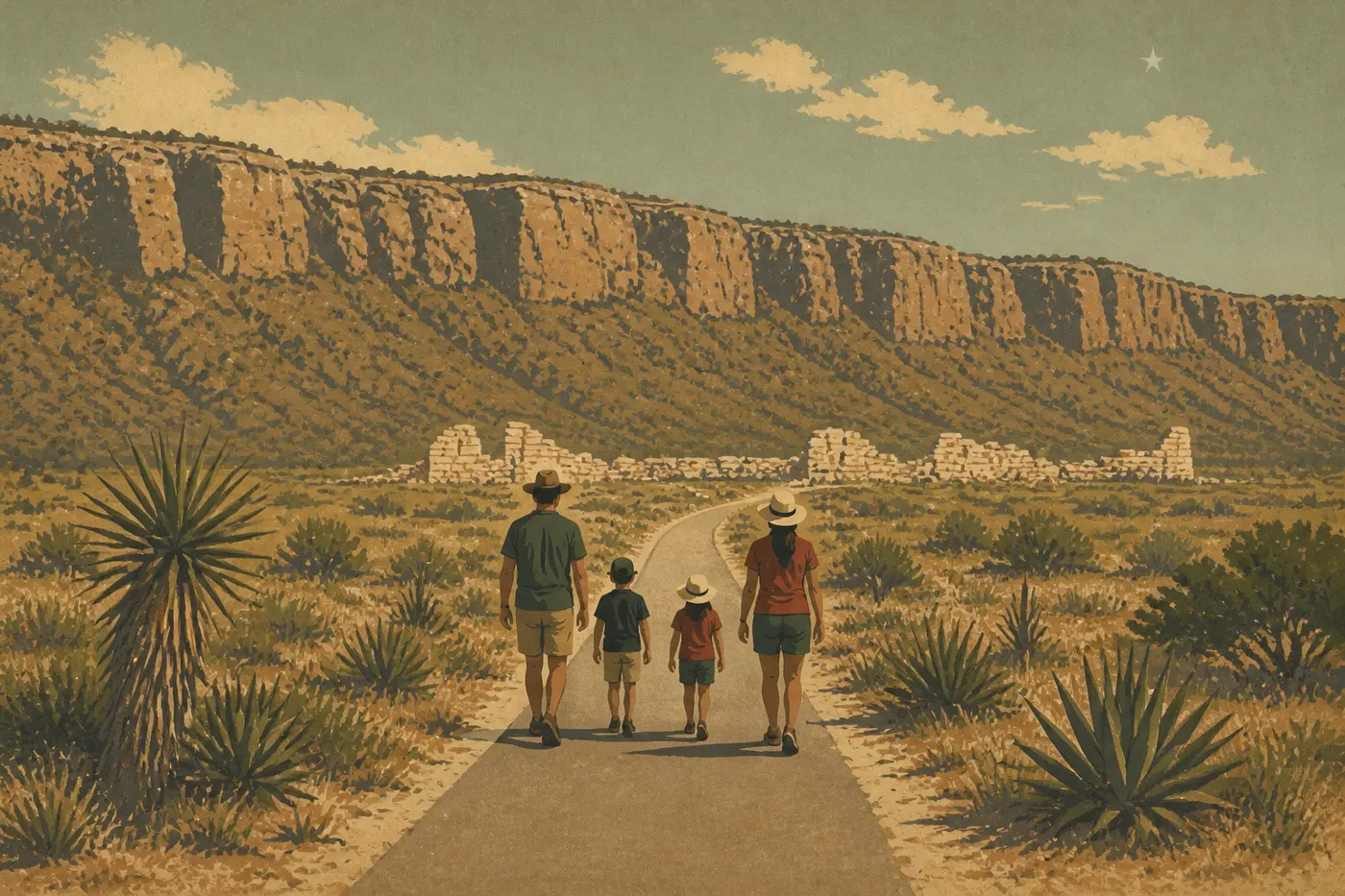
Guadalupe Mountains with Kids: What to Do and How to Plan Your Visit
Guadalupe Mountains works well for families with kids ages 6 and up, as long as you choose the right activities and season. The landscape is wild, the wind is ever-present, and strenuous hikes dominate the park's offerings. But the salt dunes, historic ruins, abundant wildlife, and Junior Ranger program make it a memorable destination for families who appreciate the raw side of Texas.
Why Visit Guadalupe Mountains with Kids
The biggest draw is the space. Guadalupe Mountains is one of the least-visited parks in the NPS system. You won't find crowds or traffic on the trails, just a genuine immersion in the Chihuahuan Desert. For kids used to amusement parks, the contrast is striking, in the best possible way.
On a practical level, the park offers several experiences kids remember for years. Salt Basin Dunes lets them walk, slide, and play in white sand that feels more like an alien beach than a corner of Texas. In fall, McKittrick Canyon puts on brilliant colors that rival the forests of New England. And on almost every trail, mule deer can appear out of nowhere, just a few feet away.
The park also offers a hands-on geology lesson. The limestone reef of the Guadalupe Mountains is one of the best-preserved fossil reefs on the planet, a remnant of an inland sea that existed 265 million years ago. It gives families plenty to talk about around the campfire.
Is Guadalupe Mountains Good for Kids? What Age Should They Be?
Guadalupe Mountains is a good fit for families with kids 6 and older. With younger children, the challenges start to add up. Strollers won't work on the main trails because of the rocky terrain, the wind can be fierce, summer heat is intense, and the distances between areas of the park are significant.
There are still options for ages 3 to 5. You can reach Salt Basin Dunes on foot over flat ground. The Pine Springs area offers a short outing without much physical commitment. Just expect to carry the little ones for much of the way.
Once kids are 8 to 10, moderate trails become realistic. The Junior Ranger program works for kids as young as 5 or 6 and keeps them engaged all day.
Kids who've already done some hiking and don't mind dry heat tend to thrive here. Those who need immediate comfort, constant shade, and plenty of activities may have a harder time.
When to Visit with Kids (The Easiest Season for Families)
The best windows for families are March through April and October through November. Temperatures are mild, around 50 to 70°F during the day, the trails aren't scorching, and the risk of rapid dehydration is much lower.
Avoid July and August with young kids. Valley temperatures often top 100 to 104°F, and hot winds make the heat feel worse instead of providing relief. Elevations above 7,900 feet stay about 11°F cooler, but they're also the areas most exposed to strong gusts.
Fall is our favorite season for families. McKittrick Canyon shows off its colors, the light is beautiful, and evenings are mild. The weather in Guadalupe Mountains and best time to visit guides break conditions down month by month so you can plan with confidence.
How Many Days to Plan for a Family Visit
Two full days cover the family highlights without feeling rushed. An optional third day gives you time for a moderate hike or a visit to Dog Canyon, the park's more remote northern area.
Here's a realistic breakdown:
- Day 1: Pine Springs (visitor center and Junior Ranger program), Pinery Trail, sunset from the ridges
- Day 2: McKittrick Canyon in the morning (start early to beat the heat), Salt Basin Dunes in the afternoon if the road is passable
- Day 3 (optional): Dog Canyon or the Smith Spring Loop
The park is remote, about 112 miles east of El Paso, so make it part of a larger road trip instead of a stand-alone destination. Detailed Guadalupe Mountains itineraries can help you plan each day around the length of your stay.
Things to Do in Guadalupe Mountains with Kids: Our Picks
Salt Basin Dunes
This is the activity every kid votes for. On the park's west side, these white gypsum dunes cover nearly 3.1 square miles. Walk across the flat ground, climb the dunes, and run back down. You won't need special gear, just closed-toe shoes because the ground can get hot, and plenty of water.
Keep in mind that the access road is made of clay and becomes impassable after rain. Check conditions before you go at the visitor center or on the NPS website. The area is open from sunrise until 30 minutes after sunset, and camping isn't allowed.
McKittrick Canyon
This is the park's signature outing, and you can tailor it to each child's ability. Turn around early for a short, shady walk, or continue to Pratt Cabin, a former vacation home in the canyon, if your family is up for more. In fall, bigtooth maples and black walnuts fill the canyon with red, orange, and yellow. It's postcard beautiful, and kids remember it.
Pinery Trail and the Butterfield Ruins
This short trail from Pine Springs Visitor Center leads to the ruins of a Butterfield Overland Mail station, part of an 1850s stagecoach line. It's easy, well interpreted, and a great way to spark kids' interest in history before they go get their passport stamp.
Wildlife Watching
Mule deer roam freely around Pine Springs, often in the late afternoon. Watchful kids may also spot collared lizards, ground squirrels, and, after dark, foxes and skunks. On a fall visit, I came across a herd of elk near Dog Canyon that no one in the family has forgotten. The Guadalupe Mountains wildlife guide lists the species found in each area and season.
Easy Family Hikes (Short and With Little Elevation Gain)
Guadalupe Mountains isn't naturally an easy-hiking park. Most trails are rocky and offer very little shade. Here are the most accessible options for families:
Pinery Trail (1.5 miles round-trip, almost no elevation gain): A good choice for kids as young as 3 or 4 if they can walk for a while. Firm ground, historical interpretation, and no exposure.
Salt Basin Dunes (distance is up to you, flat terrain): This isn't a marked trail in the usual sense, but an open walking area on sand. It works for all ages.
Smith Spring Loop (about 2.3 miles, moderate elevation gain): A spring, thicker vegetation, maples, and a great variety of birds. Best for kids 8 and up who are used to walking. Parts of the ground are rocky.
McKittrick Canyon (short version, slight elevation gain): The lower canyon is shaded and ideal for families. Adjust the distance to the group's energy and turn around when the kids start to tire.
Save the Guadalupe Peak Trail (8.4 miles round-trip, 3,000 feet of elevation gain) and Bush Mountain for experienced hikers ages 12 and up. The Guadalupe Mountains hiking guide sorts every trail by difficulty and area.
The Junior Ranger Program
It's the most effective nature-education tool the NPS has come up with. At Pine Springs Visitor Center, kids receive an activity booklet with questions about the park's geology, wildlife, and history. They fill in the pages during their visit, then return to show their booklet to a ranger.
In return, they get an official badge and take the Junior Ranger oath. It sounds simple, but it turns a passive child into an active observer for the whole day. We've watched 6-year-olds study every rock and shrub with a level of focus we'd never seen from them before.
The booklet is free. You can also download it from the NPS website if you'd like to get started before you arrive. The program works for kids as young as 5 or 6, and rangers tailor the questions to the age listed.
Safety with Kids
The Wind
This is the most underestimated factor at Guadalupe Mountains. Gusts of 50 to 62 mph aren't unusual, even on sunny days. On exposed ridges, a lightweight child can lose their balance. A useful rule of thumb is that if the wind is strong at Pine Springs, it'll be even stronger at higher elevations. Check the forecast every morning and stay in sheltered areas if conditions are poor.
Heat and Hydration
From May through October, temperatures can top 100°F. The standard rule in desert parks is to bring 4 liters of water per person for a day of hiking, even a short one. Kids dehydrate faster than adults. Start early, before 9 a.m., take a shady break in the middle of the day, and resume your activity in the late afternoon.
Rattlesnakes
The park is home to several rattlesnake species. Give kids a few simple rules. Never put a hand under a rock or into a crevice. Watch where you step on rocky ground. Never approach a snake, even if it isn't moving. Bites are rare but serious. Before heading out on a trail, note the location of Pine Springs Visitor Center. That's where to go for help in an emergency.
Wild Animals
Black bears and mountain lions live in the park, though sightings are rare. When camping, store food in the bear-resistant storage lockers provided and don't leave food in your tent or vehicle. Keep kids close in wooded areas, especially at dusk.
Where to Stay with Kids (In or Around the Park)
Inside the park, you have two options. Pine Springs Campground, with hard-surface sites, drinking water, and restrooms, is a two-minute walk from the visitor center. It's the obvious choice for families with young kids. Dog Canyon Campground, more isolated in the north, is accessible only by an unpaved road from New Mexico, so it's better suited to families with older children and the right equipment.
A night under the Texas stars, far from light pollution, is an experience in itself. Outside the park, Carlsbad, New Mexico, about 56 miles away, is the most convenient option if you're continuing to Carlsbad Caverns. El Paso, Texas, 112 miles away, offers a full range of hotels if you've just arrived or are heading west.
The Guadalupe Mountains lodging guide and the Camping guide cover all your options with up-to-date booking information.
Meals and Breaks with Kids
There isn't a restaurant in the park, and the visitor center doesn't have a cafeteria. This matters when you're planning your family logistics, so bring all your meals and snacks before you enter.
The nearest place with grocery stores is about 34 miles east, toward Carlsbad Caverns. Stock up in Carlsbad or El Paso before you hit the road. A hot meal in thermoses, dried fruit, energy bars, and plenty of water are the basics for a desert picnic with kids. Pine Springs has shaded picnic tables. Arrive early in summer to find an open one.
Family Budget
Park entry costs $10 per adult on foot or by bicycle. Kids under 16 enter free. The fee is per person rather than per vehicle, which works out well for larger families. The park-specific annual pass costs $35 if you plan to return.
If your road trip includes several national parks, the America the Beautiful pass ($80 per vehicle) covers unlimited entry to all federal recreation sites for a year. For a Guadalupe Mountains, White Sands, and Carlsbad Caverns loop, it pays for itself in two stops.
For entry fees and annual passes, see the National Parks Fees & Passes page.
Places to Combine with Guadalupe Mountains on a Family Trip
Geography makes the route fairly obvious. Guadalupe Mountains pairs naturally with Carlsbad Caverns, about 56 miles east in New Mexico. The caves are a huge hit with kids, with passages 820 feet underground, stalactites and stalagmites, and, in summer, Brazilian free-tailed bats flying out at sunset. Up to 400,000 bats take off each evening. Together, the park and caves make a solid four-day road trip.
About 99 miles northwest, White Sands in New Mexico is another natural family stop. Its white gypsum dunes are perfect for sledding and create a lunar landscape kids love. All three sites make a cohesive and memorable Southwest deserts road trip.
The site's Road Trips and Regions sections offer ideas for expanding the route.
Guadalupe Mountains with Kids: Is It Worth It?
Yes, as long as you come prepared. Guadalupe Mountains isn't an easy park in terms of comfort. There are no shuttles, restaurants, or Wi-Fi, the areas are far apart, and the wind shows no mercy. What you do get is an authentic, uncrowded park that gives kids something rare: the feeling of truly being somewhere wild.
The families who leave happy are the ones who picked the right season, spring or fall, packed their meals and water, and got the kids involved in the Junior Ranger program on the first morning. The families who struggled were there in July without enough supplies.
If you're planning a Texas–New Mexico road trip with kids, Guadalupe Mountains deserves a two-day stop. It isn't a park that stands alone. It's the place that gives a larger loop its meaning.
Frequently Asked Questions
Where should families go in Texas?
Texas offers several family-friendly options depending on your interests. Guadalupe Mountains and Big Bend are great for wild landscapes and desert scenery, San Antonio offers culture and the famous River Walk, and Galveston has beaches. If you'd like to combine nature, geology, and the history of the American West, Guadalupe Mountains pairs especially well with Carlsbad Caverns in New Mexico and White Sands for a four- to five-day desert road trip.
How much time should you plan to visit Guadalupe Mountains National Park?
Two full days are enough to cover the family highlights: Pine Springs, McKittrick Canyon, and Salt Basin Dunes. A third day gives you time for Dog Canyon or a moderate hike. If you're adding Carlsbad Caverns, plan four to five days for the full loop. Our Itinerary & Length page offers schedules for different trip lengths.
Is Guadalupe Mountains good for kids?
Guadalupe Mountains is a good fit for kids 6 and up who want to experience the park fully. Kids as young as 3 or 4 can visit Salt Basin Dunes. Younger children may find the rocky terrain and wind difficult to manage. The Junior Ranger program works for kids as young as 5 or 6 and turns the day into an adventure.
What's the best time to visit Guadalupe Mountains with kids?
March through April and October through November are ideal. The heat is manageable, the trails are in good shape, and the wind is less extreme than in the middle of winter. Avoid July and August with young kids because temperatures regularly top 100°F. Our When to Visit page breaks down conditions month by month.