
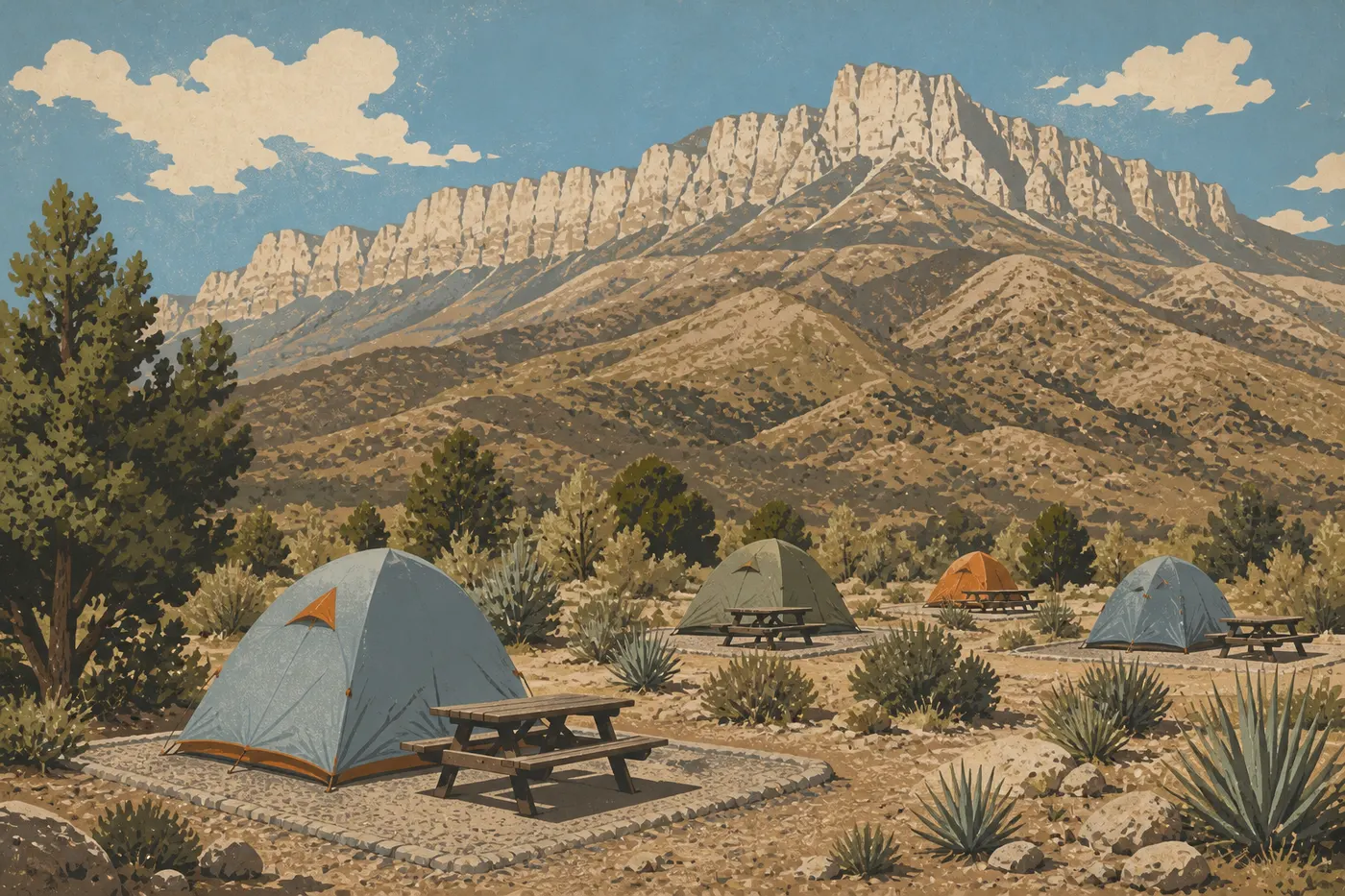
Camping in Guadalupe Mountains: Which Campground to Choose, Reservations & Fees
Guadalupe Mountains National Park has 13 campgrounds managed by the NPS, with 110 sites in all. There is no lodge in the park, so camping is practically the only lodging option inside the park. Every site requires a reservation. Fees range from $6 per night in the backcountry to $20 at Pine Springs and Frijole Horse Corral. Two main campgrounds stay open year-round, while the wilderness campgrounds may close in exceptional circumstances.
Campgrounds in the park (12)
- Campground Dog Canyon Campground recreation.gov · 15 sites Directions ↗
- Campground Pine Springs Campground recreation.gov · 35 sites Directions ↗
- Campground Guadalupe Peak Wilderness Campground recreation.gov · 5 sites Directions ↗
- Campground Pine Top Wilderness Campground recreation.gov · 8 sites Directions ↗
- Campground Bush Mountain Wilderness Campground recreation.gov · 5 sites Directions ↗
- Campground Blue Ridge Wilderness Campground recreation.gov · 5 sites Directions ↗
- Campground Mescalero Wilderness Campground recreation.gov · 8 sites Directions ↗
- Campground Marcus Wilderness Campground recreation.gov · 5 sites Directions ↗
- Campground McKittrick Ridge Wilderness Campground recreation.gov · 8 sites Directions ↗
- Campground Wilderness Ridge Wilderness Campground recreation.gov · 5 sites Directions ↗
- Campground Shumard Canyon Wilderness Campground recreation.gov · 5 sites Directions ↗
- Campground Tejas Wilderness Campground recreation.gov · 5 sites Directions ↗
 Base map © OpenStreetMap · © CARTO
 Guadalupe Mountains campgrounds by the numbers
13 official campgrounds inside the park, 110 campsites in total, 110 of them reservable.
| Campground | Sites | Booking | Fee / night | Open | Amenities |
|---|---|---|---|---|---|
| Pine Springs Campground | 35 (20 tent only, 13 RV only, 2 group) | Reservation | from $20 | Year round | toilets, potable water |
| Dog Canyon Campground | 15 (9 tent only, 4 RV only, 1 group) | Reservation | from $20 | Year round | toilets, potable water |
| McKittrick Ridge Wilderness Campground | 8 (8 tent only) | Reservation | from $6 | Year round | toilets |
| Mescalero Wilderness Campground | 8 (8 tent only) | Reservation | from $6 | Year round | toilets |
| Pine Top Wilderness Campground | 8 (8 tent only) | Reservation | from $6 | Year round | toilets |
| Blue Ridge Wilderness Campground | 5 (5 tent only) | Reservation | from $6 | Year round | toilets |
| Bush Mountain Wilderness Campground | 5 (5 tent only) | Reservation | from $6 | Year round | toilets |
| Guadalupe Peak Wilderness Campground | 5 (5 tent only) | Reservation | from $6 | Year round | toilets, cell service |
| Marcus Wilderness Campground | 5 (5 tent only) | Reservation | from $6 | Year round | toilets |
| Shumard Canyon Wilderness Campground | 5 (5 tent only) | Reservation | from $6 | Year round | toilets |
| Tejas Wilderness Campground | 5 (5 tent only) | Reservation | from $6 | Year round | toilets |
| Wilderness Ridge Wilderness Campground | 5 (5 tent only) | Reservation | from $6 | Year round | toilets |
| Frijole Horse Corral Campground | 1 (1 tent only, 1 RV only) | Reservation | from $20 | Year round | toilets, potable water, cell service |
Source: National Park Service (NPS API), retrieved October 6, 2026. Fees and dates change: check the campground page before you go.
Can You Camp Inside Guadalupe Mountains?
Yes. The park has two developed campgrounds: Pine Springs, by the main entrance, and Dog Canyon, more isolated on the north side. Eleven wilderness campgrounds round out the options, and you can reach them only on foot with a permit. Camping outside a designated site is strictly prohibited. Salt Basin Dunes, to the west, is open for day use only, so camping there is expressly prohibited.
Campgrounds in the Park
Pine Springs Campground
Pine Springs is the park's main campground, at the foot of the Pine Springs Visitor Center and directly accessible from US 62/180. Its 35 sites include 20 tent sites, 13 RV sites, and 2 group sites. RVs up to 50 feet long are welcome. The campground has restrooms and running water. There are no showers anywhere in the park. The fee is $20 per night, and reservations are required through recreation.gov.
The location is ideal: the trailheads for Guadalupe Peak, the highest point in Texas at 8,750 feet, and Devil's Hall are a two-minute walk away. In the fall, you can glimpse the colors of McKittrick Canyon from camp at sunset.
Dog Canyon Campground
Dog Canyon sits on the park's north side and is accessible via NM 408 from New Mexico. From Pine Springs, expect about 100 miles of driving, even though the two campgrounds are close as the crow flies. The campground has 15 sites, including 9 tent sites, 4 RV sites for vehicles up to 50 feet long, and 1 group site, for $15 per night. It's the choice for travelers seeking solitude, with less traffic, more wildlife at sunrise, and direct access to trails on the north side. The campground is open year-round, 24 hours a day.
RV vs. Tent: Which Site Should You Choose?
Pine Springs and Dog Canyon accept RVs, but neither offers hookups for electricity, water, or sewage. Frijole Horse Corral, reserved for horseback riders, also accommodates one vehicle up to 40 feet long for $20 per night, with water and hookups. If you're traveling in a large vehicle and need full hookups, see our RV camping page for developed options near the park. Generators are allowed only during limited hours, which are posted at the campground entrance.
For tent campers, wind is the main challenge. Gusts regularly reach 50 to 62 mph in Guadalupe Mountains, especially from March through April. Secure your tent stakes and use extra guy lines.
Camping Nearby: Private Campgrounds Outside the Park
When Pine Springs is full, the closest options are in Whites City, New Mexico, about 25 miles northeast, or in Carlsbad, New Mexico, roughly 37 miles farther. El Paso, Texas, offers more choices but is about 112 miles west. For a complete selection of lodging around the park, see our Where to Stay page.
Backcountry Camping and Wilderness Camping
The park has 11 wilderness campgrounds with a total of 69 tent sites. Every site requires a reservation and costs $6 per night through recreation.gov with a wilderness permit. The names to remember for your itinerary are McKittrick Ridge, with 8 sites; Mescalero and Pine Top, with 8 sites each; and Blue Ridge, Bush Mountain, Guadalupe Peak, Marcus, Shumard Canyon, Tejas, and Wilderness Ridge, with 5 sites each. The Guadalupe Peak campground also has cell service, which is rare at elevation. Every campground has restrooms only, with no water along the trails. Plan on carrying at least 4 liters per person for each day of hiking.
A wilderness permit is required for every night in the backcountry. Campgrounds may close without notice for emergencies, construction, or resource protection. Campfires are prohibited. Whatever you bring in, you must carry out under the Leave No Trace principle. For the list of routes and backcountry sites, see our Hiking page.
How and When to Reserve a Campsite in Guadalupe Mountains
Reservations are made through recreation.gov, up to six months in advance. Every site in the park requires a reservation, and none are available on a first-come, first-served basis.
The peak season falls mainly in October and November, when McKittrick Canyon puts on its fall colors. Hikers and photographers flock to the park then, so reserve two to three months ahead. Summer, from June through August, is hot during the day, but nighttime temperatures drop to 39 to 61°F and visitation is lighter. Winter snowfall is occasional and rarely sticks around. Our When to Go page breaks down conditions month by month.
Fees: How Much Does a Night of Camping Cost in Guadalupe Mountains?
The park entrance fee is $10 per person entering on foot or by bicycle. Camping fees are added based on the site type: $20 per night at Pine Springs and Frijole Horse Corral, $15 per night at Dog Canyon, and $6 per night at the 11 wilderness campgrounds. The wilderness permit is included in that fee, with no additional charge.
The America the Beautiful Pass, an $80 annual pass, covers entrance to all national parks in the United States and can pay for itself after visiting two or three parks in a year. For entrance fees and annual passes, see the National Park Fees & Passes page.
Safety and Best Practices
Wind and temperatures. Gusts regularly exceed 50 mph year-round, so put away any lightweight items in your vehicle before bed. From May through October, daytime highs range from 81 to 100°F. Start your hike at dawn and avoid the middle of the day. Above 7,900 feet, temperatures are about 9°F cooler than at the visitor center, with wind making it feel even colder.
Desert wildlife. Rattlesnakes and scorpions live in the park. Follow this basic rule: never put your hands under a rock or into a crevice without checking first. Shake out your shoes and sleeping bag every morning. Mountain lions roam the park, but direct sightings are rare. Keep a safe distance from all wildlife, and never run if you encounter one.
Food storage. Store all food and scented products, such as soap and toothpaste, in your vehicle or in the campgrounds' metal lockers. Don't leave anything outside overnight. For the park's complete rules, see our Practical Information, Rules & Safety page.
Which Campground Is Right for You?
| Profile | Recommended campground |
|---|---|
| First visit, family | Pine Springs (immediate access, visitor center on site) |
| Solitude, wildlife watching | Dog Canyon (quiet, lightly visited north side) |
| RV without hookups | Pine Springs (RV sites available, direct road access) |
| Horseback riders | Frijole Horse Corral (corral, water, and cell service on site) |
| Outdoor adventure, minimal budget | Backcountry wilderness ( $6 per night, total immersion) |
Frequently Asked Questions
Are there showers in Guadalupe Mountains National Park?
No. None of the park's 13 campgrounds has showers. Pine Springs and Dog Canyon have restrooms and running water. The closest showers are at private campgrounds in Whites City, New Mexico, or Carlsbad.
Can you camp inside Guadalupe Mountains?
Yes, at either of the two developed campgrounds, Pine Springs and Dog Canyon, or at one of the 11 wilderness campgrounds with a permit reserved through recreation.gov. Camping outside an official site is prohibited.
Which campground should you choose in Guadalupe Mountains?
Pine Springs, with 35 sites at $20 per night, works for most visitors because of its direct access and proximity to the main trailheads. Dog Canyon, with 15 sites at $15 per night, is for travelers who prioritize solitude and wildlife on the north side. For a budget-friendly wilderness stay, the $6-per-night campgrounds offer total immersion in the park.
When should you reserve a campsite in Guadalupe Mountains?
Reserve through recreation.gov two to three months ahead for October and November. Every site in the park requires a reservation, so don't count on finding a first-come, first-served site. Pine Springs and Dog Canyon fill up quickly during fall color season.
How many days should you plan for the park?
Two full days let you combine the summit of Guadalupe Peak with a walk through McKittrick Canyon. Three days give you time to explore Dog Canyon and the backcountry trails. For a detailed itinerary, see our Guadalupe Mountains Itineraries guide.
Where are the Guadalupe Mountains?
The park is in Texas, about 112 miles east of El Paso, along the northern edge of US 62/180. The Pine Springs Visitor Center is the main entrance point.