
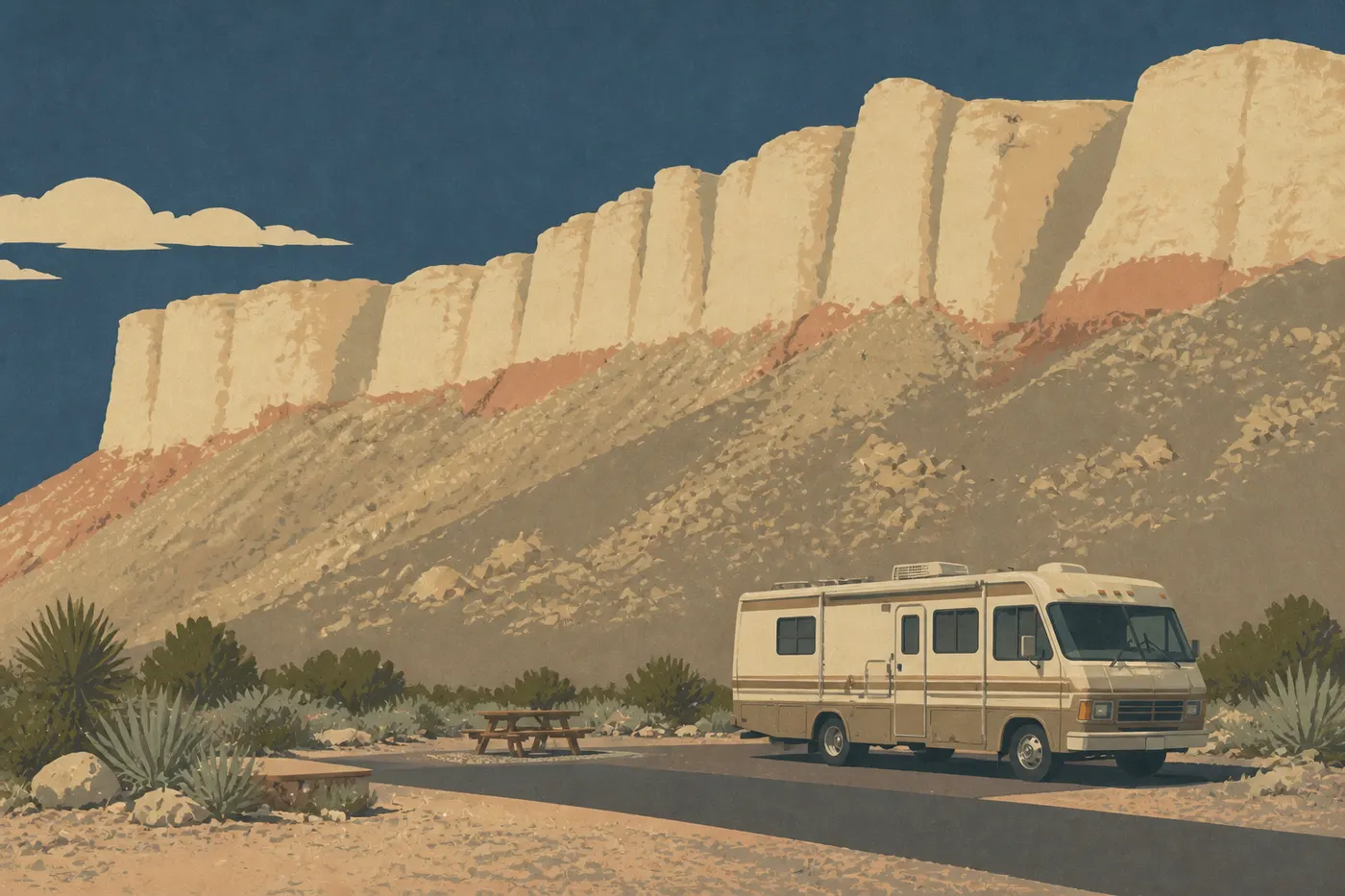
Guadalupe Mountains by RV: Campgrounds, Rules, and Tips
Guadalupe Mountains National Park works well for an RV trip. The park has two official campgrounds, and the adjacent BLM lands offer good options for free boondocking. The main limitation to keep in mind before you go is that there are no electrical or water hookups anywhere. You'll need to be fully self-sufficient from start to finish.
Can You Drive and Camp an RV in Guadalupe Mountains?
Yes. The park is accessible via US 62/180, a wide federal highway with no size restrictions for typical recreational vehicles. The main entrance is through the Pine Springs Visitor Center, 110 miles east of El Paso, Texas. No scenic driving loop crosses the park's interior. The interior roads are short, and you'll explore the Guadalupe Mountains on foot. Your RV stays at the campground while you hit the trails.
RV Restrictions and Regulated Roads
There are no permit-only tunnels or hairpin turns here. You need to watch three things.
Site length. Pine Springs Campground has a maximum length that you should check on Recreation.gov before booking. RV sites aren't designed for large Class A motorhomes longer than 30 to 33 feet.
The Salt Basin Dunes road. This area on the park's west side is open only during the day, from sunrise until 30 minutes after sunset. The surface is clay. In wet weather, the road becomes dangerous even for a 4WD vehicle, and a heavy RV can get stuck easily. Camping is strictly prohibited there.
Wind. This is the real driving challenge in Guadalupe Mountains. Gusts of 60 mph or more are common year-round on US 62/180. High-profile RVs and Class A motorhomes can be seriously destabilized. Plan to drive early in the morning, before the daytime winds pick up. The Guadalupe Mountains weather guide covers the calmest months.
The Park's Official Campgrounds
Pine Springs Campground
This is the park's natural base camp. The campground sits next to the visitor center and the trailheads for the main hikes, including Guadalupe Peak, the highest point in Texas at 8,751 feet. RV sites have no water, electricity, or dump station. Arrive with your tanks full.
The rate is affordable. Check Recreation.gov for the current price, and reserve your site online in advance. Pine Springs stays open year-round during normal park operations.
Dog Canyon Campground
Dog Canyon occupies the northern end of the park and is accessible from New Mexico via State Road 137. The campground is noticeably quieter than Pine Springs, with fewer visitors, a remote feel, and direct access to less-traveled trails. There are no hookups here either, and the access road is narrower and more winding than US 62/180. It's a good fit for a Class B campervan or a compact Class C, but a large Class A is not recommended.
Boondocking and Areas Around the Park
Bureau of Land Management (BLM) lands ring Guadalupe Mountains on several sides and are a favorite setting for boondockers. These areas are legal and free, and they let you combine park access with a night beneath an exceptional star-filled sky. The basic rule is simple: stay off BLM land after rain. The same clay found on the Salt Basin Dunes road can turn a drivable road into a trap.
For supplies, plan on Carlsbad, New Mexico, about 34 miles north. It has gas stations, supermarkets, and a few basic amenities. El Paso, 110 miles west, is the main city for a full resupply before you enter the area.
Dump Stations, Water, and Services
Here's the tricky part: Guadalupe Mountains has no dump station or hookups at either campground. You're responsible for all of the logistics.
Keep these points in mind:
- Fill your water tanks before you arrive. A fountain is available at the Pine Springs Visitor Center during operating hours, but it isn't suitable for filling a large tank.
- For gray and black water, plan to dump in Carlsbad at the KOA or a municipal station, in El Paso, or at Whites City, depending on your route.
- There are no showers in the park. The closest pay showers are in Carlsbad.
If your itinerary includes Carlsbad Caverns after Guadalupe Mountains, as many two-park trips do, use that stop to dump your tanks and refill before heading back out.
Which Campground Fits Your Travel Style?
You want to hit the trail at 6 a.m. Choose Pine Springs. Its sites are a two-minute walk from the Guadalupe Peak and McKittrick Canyon trailheads.
You want solitude and fewer crowds. Choose Dog Canyon, provided you arrive in a reasonably sized vehicle.
You prefer freedom without a reservation. Try BLM boondocking near the park, with some of the darkest night skies in Texas.
Renting an RV to Visit Guadalupe Mountains
Guadalupe Mountains is best suited to small and medium-sized vehicles. A Class B campervan or a compact Class C handles all the access roads comfortably, including the road to Dog Canyon. A large Class A longer than 30 to 33 feet should stay at Pine Springs, and you should check the available site length before booking.
The best rental options are in El Paso, Texas, 110 miles west, with a good selection of vehicles and competitive rates. A few agencies also operate out of Carlsbad, New Mexico. Book two to three months ahead if you're aiming for spring, from March through May, or fall, from September through October. These are the two busiest travel windows in this part of Texas.
RVs, Pets, Budget, and Reservations: What to Know
Pets. Dogs are allowed in the campgrounds on a short leash, no longer than 6 feet, but they're not allowed on park trails. Guadalupe Mountains gets intense sun and wind. Your pet needs to be able to stay cool inside the vehicle while you hike.
Budget. Admission costs $10 per person and is valid for 7 days. A couple therefore pays $20 at the entrance, while a family of four pays $40. The park's annual pass costs $35. If your road trip includes other national parks, the America the Beautiful pass, at $80, covers all federal recreation sites and quickly pays for itself. The National Parks Fees and Passes page explains entrance fees and pass options.
Reservations. Reserve sites at Pine Springs and Dog Canyon through Recreation.gov. Outside school breaks and federal holiday weekends, the park rarely feels crowded. One notable exception is Thanksgiving weekend in November, when the campgrounds fill up. For a spring trip, reserve four to six weeks ahead.
Best season. March through May and September through November bring comfortable daytime temperatures of 50 to 70°F and somewhat less severe winds. Summer temperatures in the desert can easily rise above 100°F. Our Weather page covers each month.
Our Guadalupe Mountains RV Camping Plan
Guadalupe Mountains is a genuinely wild park without the tourist infrastructure found at Zion or Grand Canyon. An RV trip works very well here as long as you plan ahead. Arrive with full tanks from El Paso or Carlsbad, base yourself at Pine Springs for the signature trails, and dump your tanks on the way back. If you want complete freedom, BLM boondocking near the park gives you a free night beneath one of the most remarkable star-filled skies in Texas. Wind remains the biggest variable, so check the forecast and drive early in the morning.
Frequently Asked Questions
Can you tent camp in Guadalupe Mountains National Park?
Yes. Tents are allowed at both official campgrounds, Pine Springs and Dog Canyon, in designated sites. There are no showers or electricity. The Guadalupe Mountains camping guide explains the requirements and reservation process.
Can you visit Guadalupe Mountains by RV?
Yes. The main entrance via US 62/180 can accommodate RVs of all sizes. The only concerns are the clay road to Salt Basin Dunes, which should be avoided in wet weather and by heavy vehicles, and the sometimes fierce winds that affect high-profile vehicles.
Can you park an RV anywhere in the park?
No. Parking is allowed only in designated areas: Pine Springs Visitor Center, Pine Springs Campground, and Dog Canyon Campground. Dispersed parking is not allowed within the park boundaries.
Are there showers in Guadalupe Mountains National Park?
No. Guadalupe Mountains has no showers or hookups at its campgrounds. The closest pay showers are in Carlsbad, New Mexico, about 34 miles north.
How many days should you plan for Guadalupe Mountains?
Two full days let you combine the climb to Guadalupe Peak, an 8.4-mile round-trip hike, with an outing in McKittrick Canyon. A third day gives you time to explore Dog Canyon or the dunes area. The Guadalupe Mountains itinerary guide offers plans for different paces.
How much does an RV site cost?
Check Recreation.gov for the current rate, which varies by site type. You also need to pay the park entrance fee, $10 per person. The park annual pass, $35, or the America the Beautiful Pass, $80, can save you money if you visit several parks during the year.