
Guadalupe Mountains Weather: Forecasts, Climate, and Current Conditions
Guadalupe Mountains National Park has a high-elevation desert climate with two defining features: strong winds year-round and wide temperature swings between day and night. In short, fall is the best time to hike, summer is hot with afternoon thunderstorms starting in July, spring is windy, and winter is cool but sunny.
Current readings are unavailable. See the seasonal averages farther down this page.
Open-Meteo readings · updating… · park time zone
Guadalupe Mountains Climate Month by Month
The table below reflects climate averages at the Pine Springs Visitor Center, at about 5,700 feet above sea level. On trails above 7,900 feet, expect temperatures about 11°F lower, along with generally stronger winds.
| Month | Low (°F) | High (°F) | Precip. (in.) | In Brief |
|---|---|---|---|---|
| January | 28 | 54 | 0.6 | Occasional snow on the ridges |
| February | 32 | 57 | 0.5 | Winds gradually pick up |
| March | 37 | 64 | 0.5 | Windiest month of the year |
| April | 46 | 72 | 0.5 | Persistent gusts, mild days |
| May | 55 | 84 | 0.6 | Heat settles in, bright sunshine |
| June | 64 | 97 | 0.6 | Very dry, intense daytime heat |
| July | 68 | 93 | 1.8 | Afternoon monsoon thunderstorms |
| August | 66 | 91 | 2.0 | Peak of the rainy season |
| September | 59 | 86 | 1.7 | End of monsoon season, first fall colors |
| October | 48 | 79 | 0.9 | Ideal hiking conditions |
| November | 36 | 61 | 0.6 | Noticeably cooler evenings |
| December | 30 | 54 | 0.6 | Snow possible, cold nights |
Is Guadalupe Mountains Cold or Hot? Records and Extremes
Both, depending on the season and elevation. At Pine Springs, June days approach or exceed 97°F. Winter nights drop below 23°F at high elevations on the ridges. Wind is the variable you can't underestimate. With gusts of 60 mph or more, it can make it feel 10 to 15°F colder, in any season. Above 7,900 feet, especially on the Guadalupe Peak Trail, temperatures remain about 11°F lower than at the bottom of the park. Always bring an extra layer.
What to Wear at Guadalupe Mountains by Season
Summer (June to September): lightweight, breathable clothing, a wide-brimmed hat, SPF 50+ sunscreen, and sunglasses. Always pack a light rain jacket for afternoon monsoon storms. Get off the summits before 2 p.m.
Spring and fall: layers are essential. A breathable base layer, fleece, and waterproof windbreaker cover nearly every situation. For high-elevation camping, a sleeping bag rated for 32°F comfort or lower is necessary.
Winter: a durable windbreaker, hat, gloves, and waterproof hiking shoes. Snow is rare at low elevations, but nights in a tent are cold. Expect 23°F or lower on the ridges.
All seasons: at least 2 liters of water per person. The air is dry, elevation speeds up dehydration, and water resupply points are very rare outside Pine Springs.
Alerts and Conditions to Watch
Strong winds. The park may close ridge trails without notice during extreme gusts. Check conditions at the Pine Springs Visitor Center before setting out on exposed trails. The Guadalupe Mountains guide reports current closures.
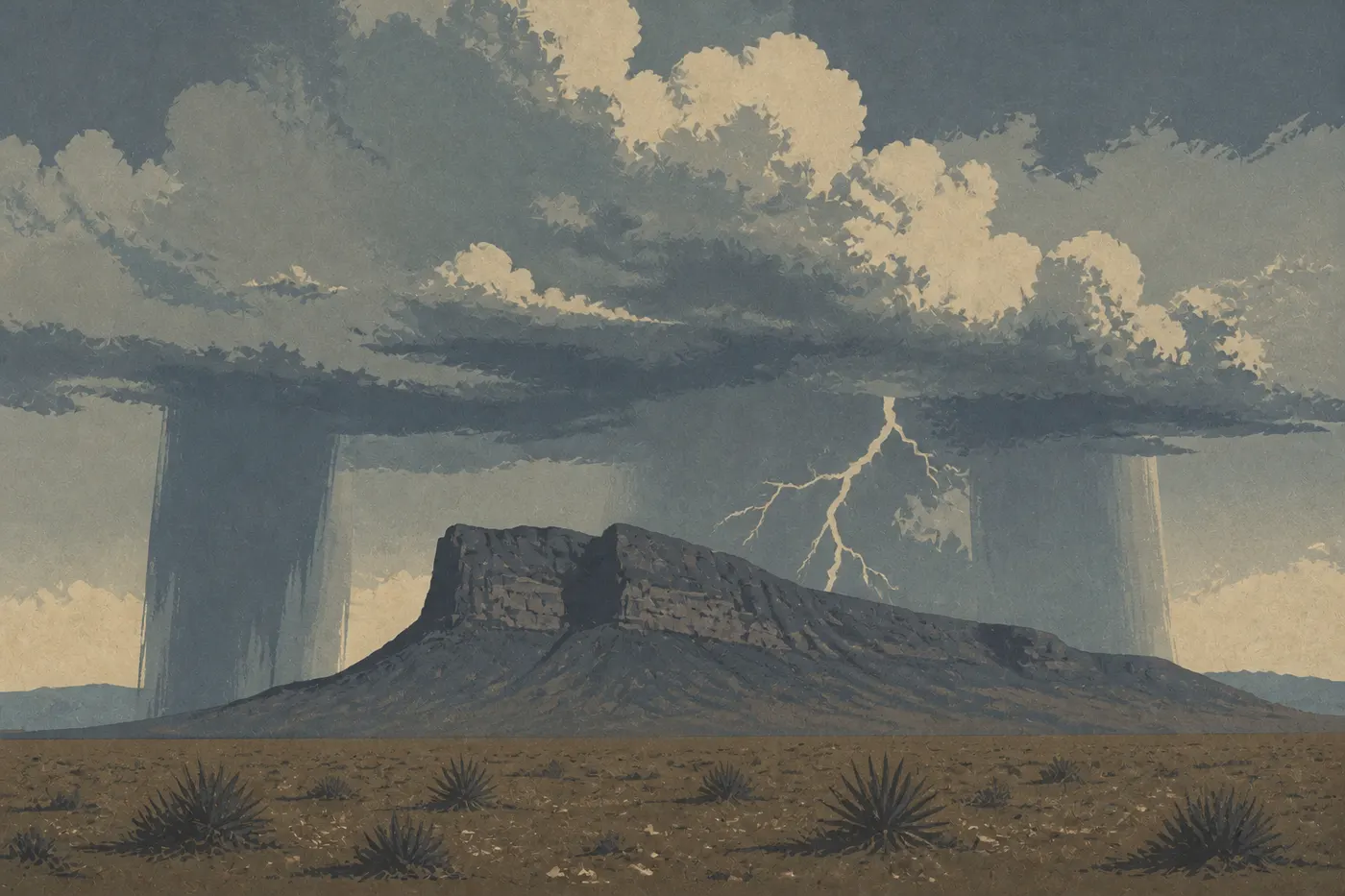
Monsoon thunderstorms (July to September). Lightning is the main danger at high elevations. Don't stay on the summit of Guadalupe Peak after 1 p.m. during monsoon season. Storms form quickly, and there's nowhere to hide.
Salt Basin Dunes Road. The access road to these white sand dunes west of the park is clay-based. After even a small amount of rain, it becomes dangerous, even for four-wheel-drive vehicles. Check conditions before heading out.
Vehicles in the sun. In summer, the inside of a car parked in direct sun can top 140°F within minutes. Never leave a child or pet alone inside, even for “five minutes.”
Frequently Asked Questions
What's the weather like at Guadalupe Mountains right now?
Real-time conditions appear in the weather widget at the top of this page, along with the current temperature and a 14-day forecast.
What's the current temperature at Guadalupe Mountains?
Temperatures vary widely with elevation. Expect it to be about 11°F colder above 7,900 feet than at Pine Springs (5,700 feet). The widget at the top of the page shows the current reading at the park entrance.
Does it snow in Texas and at Guadalupe Mountains?
Yes. Snow falls on the mountain ridges every winter, from December through February. It often surprises visitors to a Texas park. At lower elevations, it is usually light and lasts no more than a day. At higher elevations, snow can persist for several days.
What's the highest temperature in Texas, and at Guadalupe Mountains?
Texas can see highs near 113°F in its lowest and driest areas. At Guadalupe Mountains, elevation protects the park from the most severe heat. June days at Pine Springs generally top out around 97 to 100°F, with wind that intensifies the dry heat.
Where does it rain the most in the United States, and what is rainfall like at Guadalupe Mountains?
Guadalupe Mountains is a dry park, with about 16 to 20 inches of precipitation per year at Pine Springs, far below the country's wettest areas, including the Pacific Northwest and Louisiana. Rainfall is concentrated from July through September during the Southwest monsoon, making summer paradoxically wetter than spring.