
When to Visit Guadalupe Mountains: Best Time, Weather, and Seasons
Guadalupe Mountains hits you with one surprise right away: the wind. Gusts topping 60 mph can blow through any month of the year, and you need to account for them when packing. The best time to visit Guadalupe Mountains is October for the fall color in McKittrick Canyon, or March-April for hiking without extreme heat or cold.
Apart from that constant, spring (March through May) and fall (September through November) offer mild temperatures and dry trails. In October, McKittrick Canyon lights up with red and orange maples, enough to justify the 110-mile drive from El Paso by itself.
Guadalupe Mountains Climate Month by Month
The park has two distinct levels: the valley floor around 4,900 feet and the peaks between 7,900 and 8,750 feet. The temperature difference between them can reach 9 to 11°F, which radically changes hiking conditions depending on the trail you choose.
| Period | Typical high | Typical low | Conditions |
|---|---|---|---|
| December, February | 50-59°F | 30-41°F | Cold, strong winds, occasional snow at higher elevations |
| March, April | 59-72°F | 41-54°F | Mild, steady winds, cactus blooms |
| May | 75-82°F | 54-61°F | Warm during the day, cool at night |
| June | 86-93°F | 63-68°F | Rising heat, start early |
| July, August | 91-100°F+ | 64-72°F | Heat wave at lower elevations, afternoon monsoon storms |
| September | 81-90°F | 59-64°F | Heat eases toward the end of the month |
| October | 72-82°F | 48-57°F | Ideal, fall color in McKittrick Canyon |
| November | 57-68°F | 37-48°F | Gentle transition into winter |
These figures are approximate and based on NPS data. For weekly forecasts and detailed month-by-month climate information, see our Weather page.
Guadalupe Mountains in January
January is the coldest and quietest month. Highs struggle to rise above 54°F, and nighttime temperatures drop below freezing at higher elevations. Snow can cover the ridges for several days at a time, though it melts quickly at lower elevations. Pine Springs Visitor Center stays open, and the campgrounds run at very low occupancy. With serious winter gear, the atmosphere is striking: low light on the white limestone, empty trails, and complete silence.
Guadalupe Mountains in February
February brings a slight warm-up from January, with highs around 57°F, but the wind starts strengthening and stays steady through late spring. Precipitation remains light, and the trails are usually dry. Crowds are minimal, making this a good time for anyone who wants Guadalupe Peak to themselves. Bring a windbreaker and gloves, even under a blue sky.
Guadalupe Mountains in March
March is the windiest month of the year. Gusts of 50 to 62 mph on the ridges are common, with documented spikes above that. Daytime temperatures reach about 64°F, making outings pleasant as long as you wear eye protection and a sturdy windbreaker. Cactus blooms begin on the lower slopes. This is the first spring bump in visitation, though it remains very modest.
Guadalupe Mountains in April
April brings together all the advantages: days around 72°F, cool nights near 46°F, vegetation at its spring peak, and active migration by songbirds and raptors. Prickly pear cactus opens yellow and orange flowers, while agaves send up their flower stalks. The two signature trails, Guadalupe Peak and McKittrick Canyon, are in excellent shape. It's a good time to visit with kids who are comfortable walking.
Guadalupe Mountains in May
May brings established heat, with highs close to 84°F by the end of the month, but nights remain cool at around 55°F. Dawn starts are still comfortable before temperatures climb. This is the last practical window before summer heat sets in, so if you're aiming for the summit of Guadalupe Peak, start early. The agaves finish sending up their flower stalks, creating remarkable views across the slopes.
Guadalupe Mountains in June
June is the hottest and driest month. Highs reach 97°F on the valley floor, before the monsoon storms that cool the evenings arrive in July. An outing starting before 7 a.m. remains possible for experienced hikers carrying at least 3 liters of water per person and returning before 10 a.m. Avoid Salt Basin Dunes in the middle of the day. Pine Springs Campground stays lightly occupied despite the summer season.
Guadalupe Mountains in July
July brings the first late-afternoon monsoon storms. They cool the air but make exposed ridges dangerous after 1 p.m. Highs remain around 93°F. The clay access road to Salt Basin Dunes can become impassable after a storm, so check conditions before heading out. Basic rule: get off the ridges and out of open areas before 1 p.m. if clouds are building to the west.
Guadalupe Mountains in August
August gets the most precipitation, about 2 inches, concentrated in brief afternoon storms. Highs around 91°F are slightly lower than in July, and vegetation is greener than at any other time of year. Take the same precautions as in July: get up early, leave the ridges before 1 p.m., and check the forecast before heading to the dunes.
Guadalupe Mountains in September
September marks the gradual end of the monsoon. The first half remains hot, around 86°F, with persistent afternoon storms. The second half brings a noticeable break and the first hints of color in McKittrick Canyon. Rainfall remains high, around 1.7 inches, so the Salt Basin Dunes road can still be temporarily closed. This is a good option if you can't get away in October.
Guadalupe Mountains in October
October is the park's signature month. Daytime temperatures, around 79°F, are among the most comfortable of the year, nights are cool at about 48°F, and McKittrick Canyon turns into a corridor of red and orange thanks to its bigtooth maples. This is the relative peak of visitation. The McKittrick Canyon parking lot can fill by 9:30 a.m. on weekends, so arrive before 8 a.m. or choose a weekday. For October weekends, reserve a site at Pine Springs Campground in advance.
Guadalupe Mountains in November
November brings back the quiet after October. Temperatures drop to 61°F during the day and 36°F at night, the maples have lost their leaves, and the park returns to its usual peacefulness. Trails are clear, the air is crisp, and hikers are scarce outside the weekends. This is a good option for anyone who missed the October window and prefers cool weather to fall color. Bring extra layers for the evenings.
Guadalupe Mountains in December
December closes out the calendar with a winter atmosphere: highs around 54°F, lows around 30°F, and occasional snow on the ridges. Cold wind is the main limiting factor, not closures. The park is open year-round, and Pine Springs Visitor Center remains operational. This is the quietest month of the year, ideal for hiking to the highest point in Texas in near-total silence, provided you bring serious gear.
Guadalupe Mountains Season by Season
Winter (December through February): Cold, Wind, and Solitude
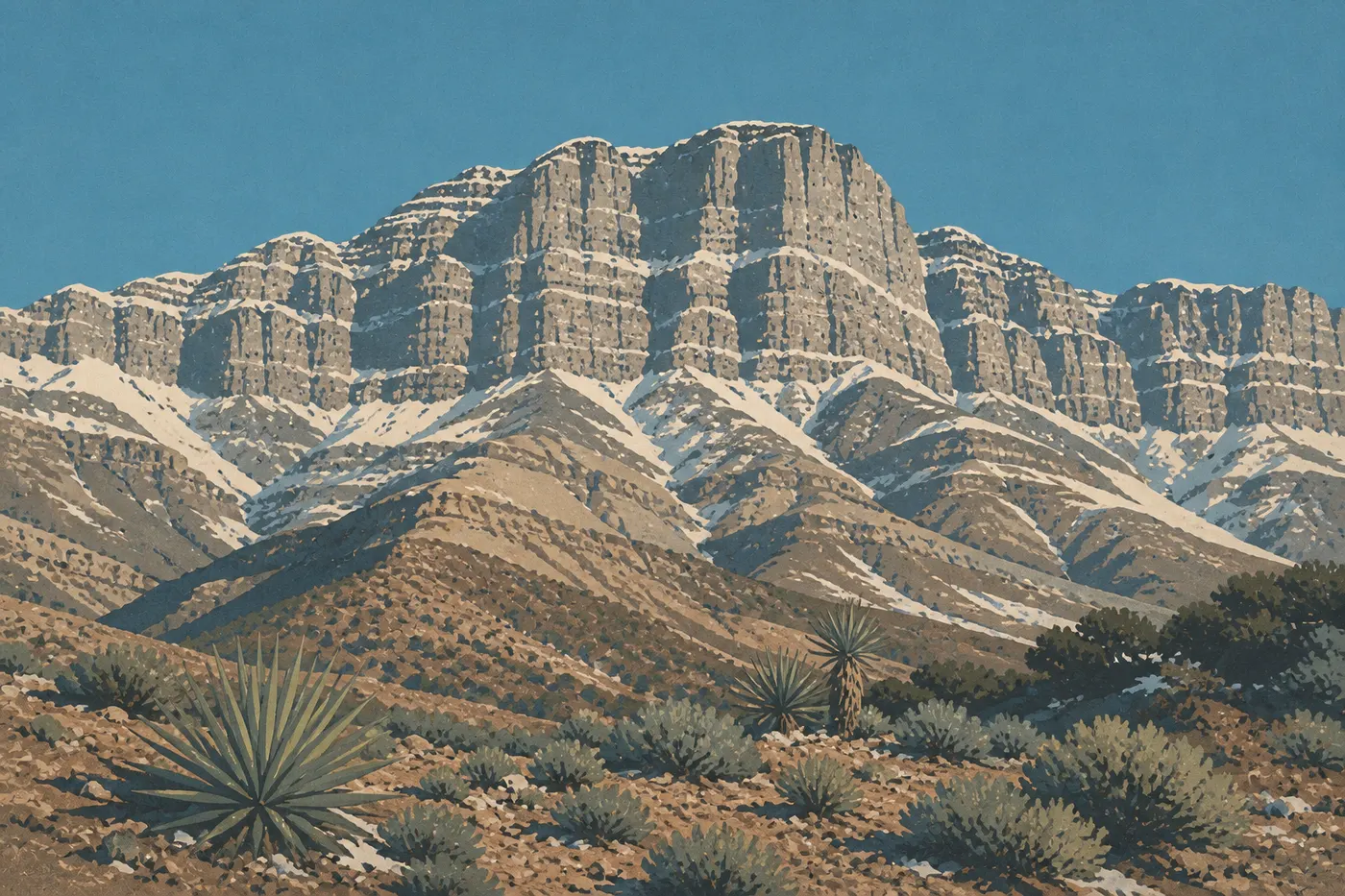
Temperatures drop below freezing on some nights at higher elevations. Snow occasionally settles on the ridges, rarely for more than 24 hours at a stretch. Wind chill is the real risk. On Guadalupe Peak Trail at 8,750 feet, with 50-mph gusts, the feels-like temperature can drop to 5°F or lower. Bring gloves and a hat even if the sun is shining when you leave Pine Springs.
Wildlife is hard to spot in winter, but mule deer remain active in the lower areas. Pine Springs Campground runs at low occupancy. For well-equipped visitors, winter offers an atmosphere found nowhere else: low light on white limestone, possibly snow-covered ridges, and total silence.
Roads and access: Pine Springs Visitor Center is open all the time. For Salt Basin Dunes on the clay road on the west side, check weather conditions before setting out. Rain makes the road impassable.
Spring (March through May): The Big Window
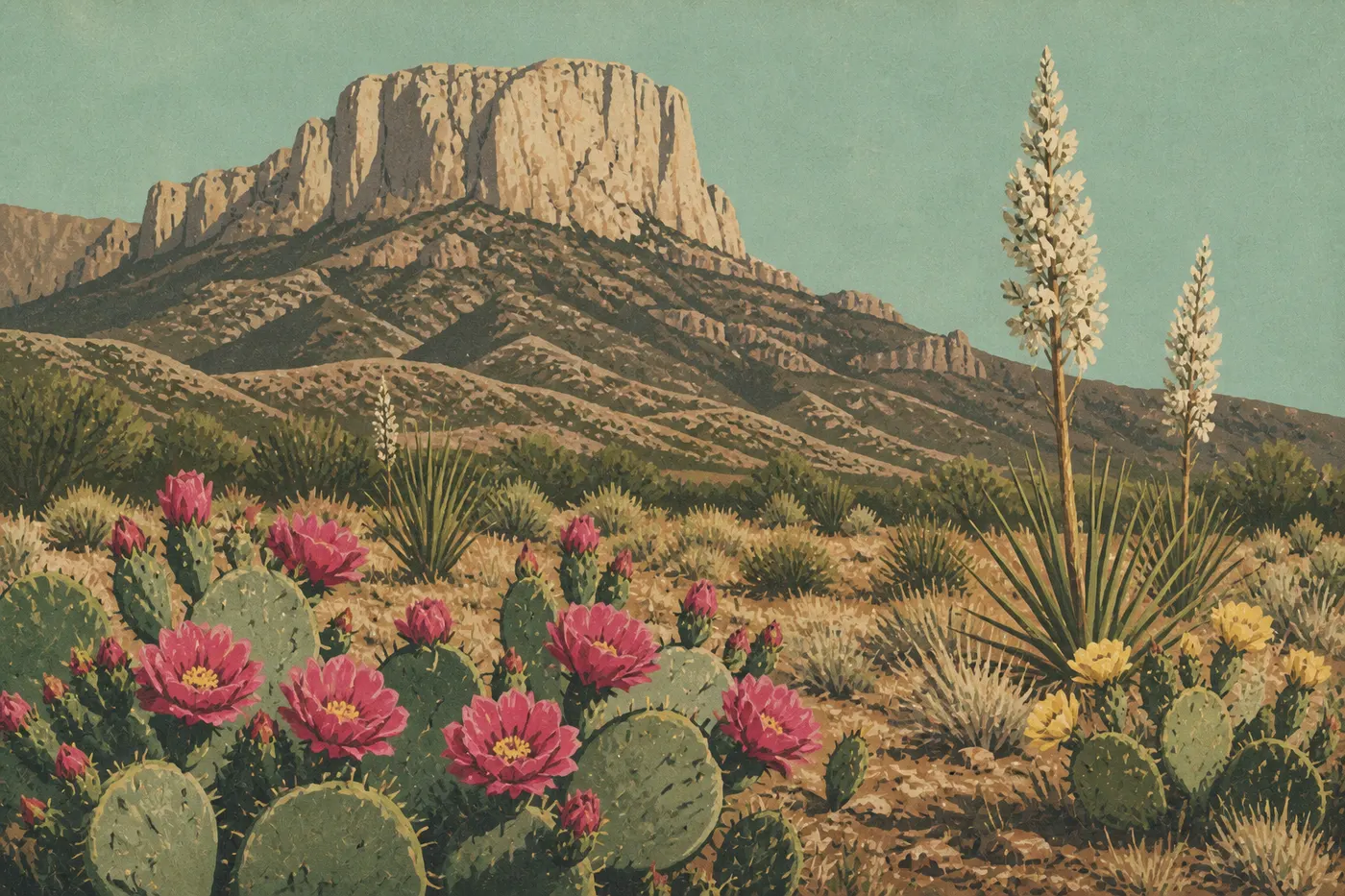
This is the season we recommend to most visitors. March and April temperatures stay cool at dawn, around 41 to 50°F, and pleasant during the day, around 59 to 72°F on the ridges. The 8.1-mile Guadalupe Peak round trip, with 3,100 feet of elevation gain, is manageable without suffering in the heat.
April is excellent for birds. Spring migration makes the park a stopover for songbirds and raptors. Prickly pear cactus fills with yellow and orange flowers, and agaves begin sending up their flower stalks. Our Guadalupe Mountains wildlife guide covers the species present in each season.
March winds can be especially strong, with documented gusts of 62 mph and more. Secure your belongings and wear eye protection on exposed ridges.
Summer (June through August): Intense Valley Heat, Relative Cool at Higher Elevations
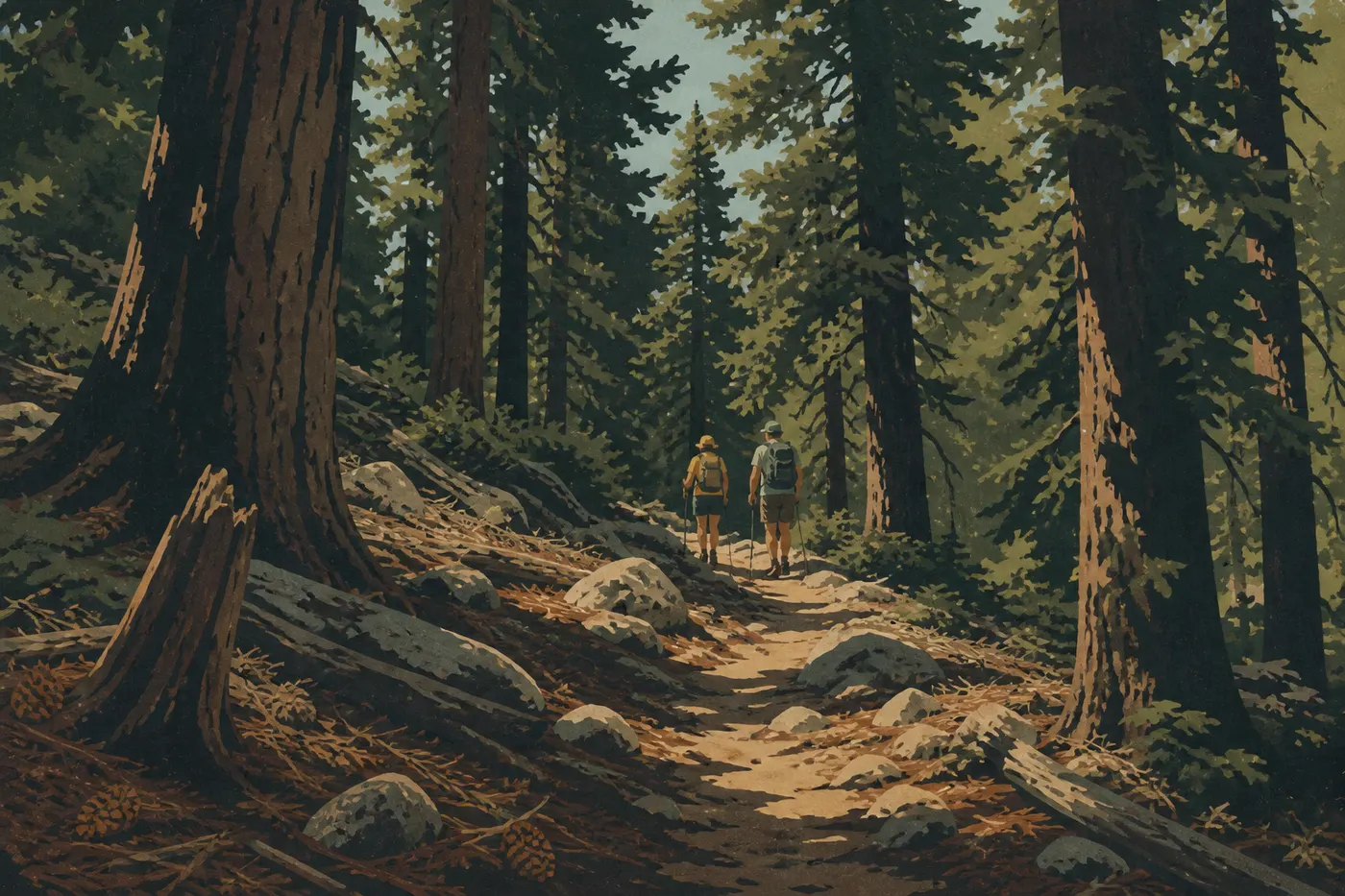
June and July are the hottest months. The valley floor and low areas such as Salt Basin Dunes or Pine Springs can top 100°F in the afternoon. On ridges above 7,900 feet, temperatures are about 9 to 11°F lower than at the visitor center. A sunrise outing is still possible if you carry at least 3 liters of water per person and descend before 11 a.m.
July and August bring late-afternoon monsoon storms. These brief rains cool the air, green up the landscape, and make exposed trails slippery. Basic rule: get off the ridges and out of open areas before 1 p.m. if clouds are building to the west.
The clay access road to Salt Basin Dunes becomes impassable after rain. An afternoon monsoon storm can close access for the rest of the day. Check weather conditions before taking this road.
Fall (September through November): The Park's Signature Season
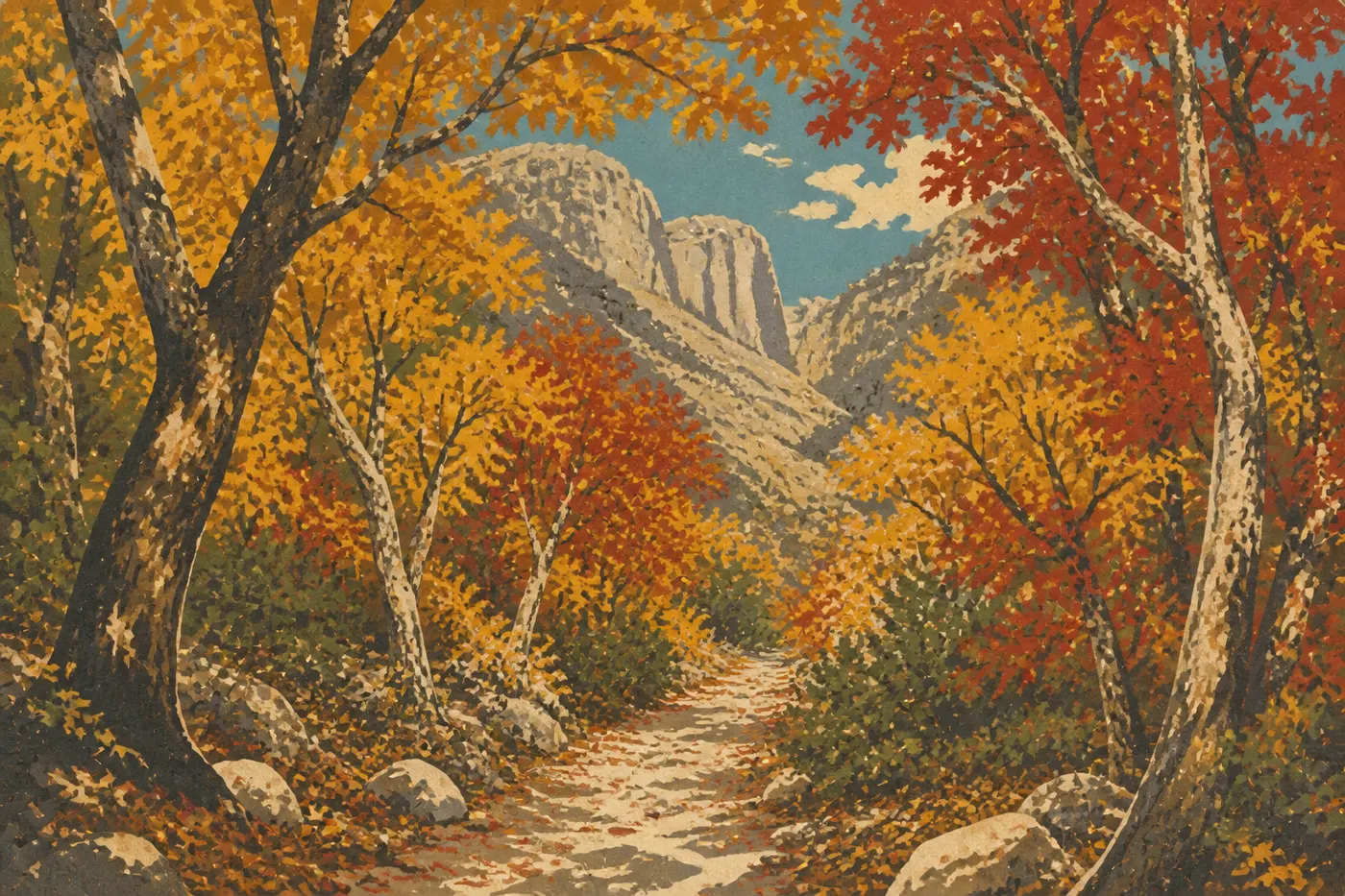
October is the month that puts Guadalupe Mountains on the map for a wider audience. McKittrick Canyon becomes a corridor of color. Bigtooth maples turn deep red and vivid orange, a rare palette in the arid landscape of far west Texas. Visitors make the trip from El Paso, Midland, Carlsbad, and much farther away.
October temperatures are among the most comfortable of the year: 72 to 82°F during the day and cool at night, around 50°F. This is the park's busiest month, though visitation remains very modest by national standards. On weekends, the McKittrick Canyon parking lot can fill by 9:30 a.m. Arrive before 8 a.m. or choose a weekday to avoid the issue.
September is still hot, but the heat eases in the second half. November brings a cold, nearly empty atmosphere, ideal if solitude is your priority.
Crowds: When to Avoid Crowds at Guadalupe Mountains
Guadalupe Mountains is one of the least-visited national parks in the United States. About 180,000 visitors come each year, compared with more than 4 million at Zion National Park. The idea of a “crowd” means something very different here than it does in other parks.
The relative peak comes in October, focused on McKittrick Canyon on weekends. The parking lot, with limited capacity, is the only real constraint. Outside that area and those dates, you can move freely throughout the park.
July and August are paradoxically quiet despite being the height of the American summer season. The heat discourages passing visitors. You'll mostly see experienced hikers and RVing families.
December through February: the park is nearly empty. This is the ideal period if you're looking for complete solitude and don't mind the cold.
The park doesn't use a timed-entry system, so you don't need a reservation to visit. Pine Springs Campground operates on a first-come, first-served basis. On October weekends, it's best to reserve ahead.
Best Time for a Tight Budget
Park entry costs $10 per person, with no additional vehicle fee. The park's annual pass costs $35 and covers repeat visits. Our Fees & passes page explains the America the Beautiful pass, which is valid here.
For flights to El Paso (ELP), the main airport 110 miles away, the lowest fares are generally available in January-February and September, outside school breaks. Avoid the first half of July and the Christmas holidays.
Hotel options nearby are limited and prices vary little by season. Van Horn is 56 miles away, while Carlsbad in New Mexico is 35 miles away. Camping at Pine Springs is still the most affordable option, with sites costing a few dozen dollars per night. Our guides Camping in Guadalupe Mountains and Where to Stay cover camping and lodging options in detail.
Which Season Fits Your Trip?
Hiking and summits. March through May, then September-October. Temperatures are ideal for climbing Guadalupe Peak and tackling long high-elevation loops. Our Guadalupe Mountains hiking guide breaks down trails by difficulty and length.
Wildlife and birding. April-May for spring migration, and September-October for fall migration. The park is an active migration corridor for songbirds and raptors.
Landscape photography. October for the color in McKittrick Canyon. January for low light on the limestone ridges and potentially snow-covered scenery. Sunrise from Pine Springs Campground casts spectacular light across the geological formations.
Families. March-April or the first half of October. Temperatures are neither too hot nor too cold, and trails work well for kids who can walk 3 to 4 miles. Our Guadalupe Mountains family guide lists age-appropriate trails and activities.
Tight budget. January-February for cheaper flights to El Paso and low campground occupancy. Entry remains $10 per person year-round.
Solitude and wild scenery. December through February, as long as you come prepared for cold and wind.
In Summary: The Best Time for Your Trip
| Profile | Ideal period | What to know |
|---|---|---|
| First visit | October or March-April | October for color, spring for mild weather |
| Hiking, all levels | March through May | Ideal conditions, expect wind |
| Photography | October or January | Fall color / low winter light |
| Wildlife and birding | April-May, September-October | Active migrations |
| Families | April or early October | Accessible trails, manageable temperatures |
| Budget | January-February | Cheaper El Paso flights, light campground use |
| Solitude | December through February | Cold-weather gear essential |
Pine Springs Visitor Center and Pine Springs Campground are open year-round. Salt Basin Dunes is accessible from sunrise until 30 minutes after sunset. Overnight use is prohibited, and the clay access road becomes impassable in rainy weather.
The Worst Time to Visit Guadalupe Mountains
June concentrates the drawbacks without offsetting any of them. Valley-floor temperatures reach 97°F, dryness peaks, and the monsoon storms haven't arrived yet to cool the evenings. Hikes are only realistic at dawn, with a firm return deadline before 10:30 a.m. Guadalupe Peak Trail is exposed for much of the climb and especially taxing in these temperatures.
July and August are less discouraging. The monsoon brings real relief late in the day, and vegetation greens up again. But the clay road to Salt Basin Dunes can be closed several times a week after storms, and the ridges become dangerous as soon as clouds build to the west. For a first visit or a family trip, avoid June through August if you have a choice.
Frequently Asked Questions
What's the best time to visit Guadalupe Mountains?
The best time to visit Guadalupe Mountains is spring, from March through May, and fall, from September through November. October is the standout month for the maples in McKittrick Canyon. Winter works for well-equipped hikers seeking solitude.
Can you visit Guadalupe Mountains in winter?
Yes. The park is open year-round, and Pine Springs Visitor Center operates continuously. In winter, nighttime temperatures can fall below freezing at higher elevations, and snow occasionally covers the ridges. With appropriate gear, including gloves, a windbreaker, and layered clothing, winter hikes are manageable and offer a rare atmosphere: empty trails, low light on white limestone, and total silence.
What's the best time to visit Texas?
The best time to visit Texas depends on the region. For west Texas, including Guadalupe Mountains and Big Bend, choose spring and fall, when desert heat remains manageable. Our Regions section provides seasonal guidance for destinations across Texas and the Southwest.
What's the best time to visit the American West?
In general, April through June and September through November work best. Summer's extreme heat hasn't arrived yet, or has faded, and mountain roads are open. Our Regions section offers seasonal guidance for the American West.
What is the climate like in Guadalupe Mountains?
Guadalupe Mountains has a semiarid mountain climate, with very hot summers at lower elevations, reaching 100°F and higher, and cold winters at higher elevations with occasional snowfall. The park's defining constant is wind. Gusts topping 60 mph are possible year-round. Our Weather page brings together detailed monthly data and updated forecasts.
How much time do you need to visit Guadalupe Mountains?
Two days are enough to cover the park's two highlights, Guadalupe Peak and McKittrick Canyon. To also explore Salt Basin Dunes and the Dog Canyon area, plan on three to four days. Our Itinerary & Duration page offers sample plans based on how much time you have.
Is Guadalupe Mountains worth visiting?
Guadalupe Mountains is worth the trip for hikers looking for a low-key park without crowds, with limestone ridge landscapes found nowhere else. Texas's highest point, ecologically distinctive canyons, and white gypsum dunes create scenery you won't find anywhere else in the state.
How much does it cost to enter Guadalupe Mountains?
Entry to Guadalupe Mountains costs $10 per person. A $35 annual park pass is available. School and educational groups enter free. For entry fees and annual passes, see the National Parks Fees & Passes page.