
Great Smoky Mountains Wildlife: Animals to See and Where to Find Them
Great Smoky Mountains National Park is home to remarkable biodiversity for a park in the eastern United States: more than 65 mammal species, over 200 bird species, and the highest concentration of salamanders on the North American continent. The five animals you should watch for are the black bear, elk, white-tailed deer, Appalachian salamander, and synchronous firefly. You can spot the first three with the naked eye in open meadows at dawn. The last two require knowing where and when to look.
Great Smoky Mountains' Iconic Animals
The Black Bear, the Park's Star Resident
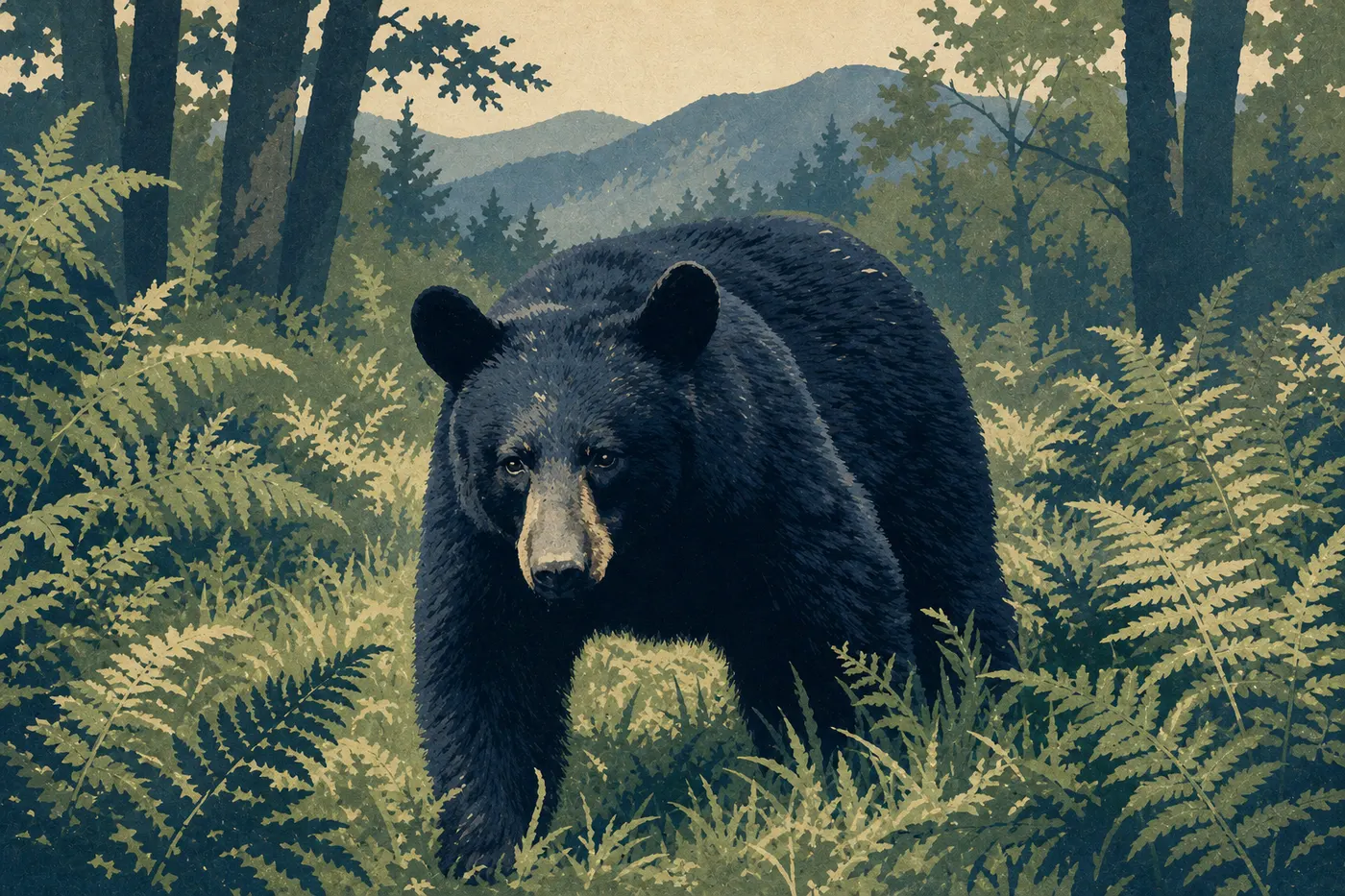
The park is home to around 1,500 black bears (Ursus americanus), making it one of the eastern United States' densest habitats for the species. An adult male weighs between 200 and 595 pounds, depending on the season. Females are smaller, weighing about 130 to 285 pounds. In the Smokies, their coats are almost always black, unlike some Western populations that turn cinnamon brown. Black bears are omnivores. In summer, they feed mostly on berries, acorns, and insects. In fall, they pack on weight before entering winter denning from November through March. Females give birth in January, usually to two cubs, and stay with them for 18 months.
Elk, Cataloochee's Great Comeback
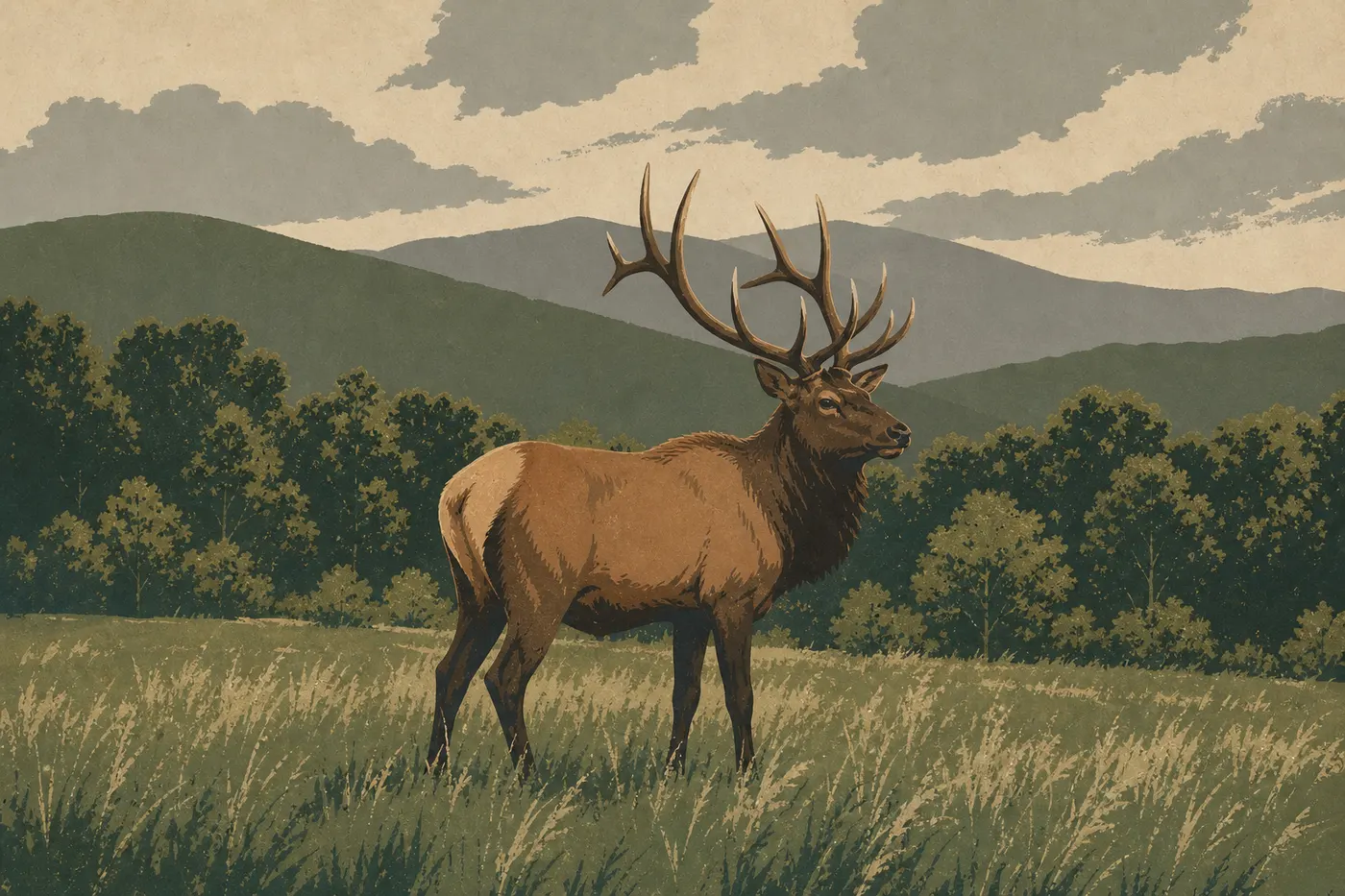
Absent for more than a century, elk (Cervus canadensis) were reintroduced to the park in 2001 with 25 animals brought in from Canada. The population now numbers several hundred, concentrated mainly in Cataloochee Valley. Elk are the park's largest animals. Adult males can weigh up to 750 pounds and grow antlers with spreads sometimes exceeding 4 feet. In October, their bugling echoes through the valley at sunrise. It's a powerful sight and sound, and worth a detour to Cataloochee on its own. Outside the rut, females and young elk live in groups separate from the males.
White-Tailed Deer, an Everyday Encounter
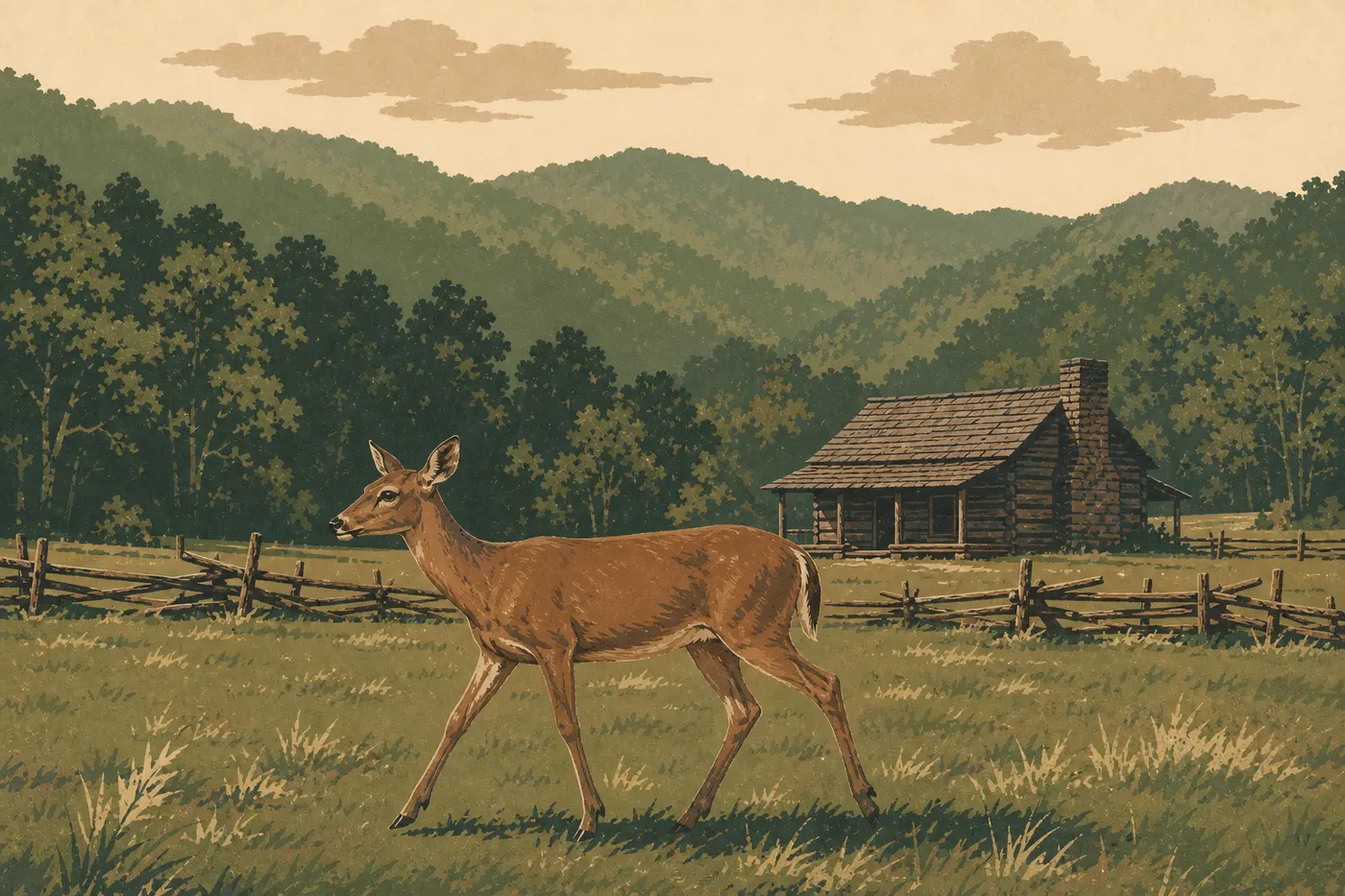
White-tailed deer (Odocoileus virginianus) are the animals you're almost certain to see, at any hour and in nearly every part of the park. Males grow a new set of antlers each year. They shed them in winter and start growing them again in spring. Very accustomed to people, deer graze calmly in the meadows of Cades Cove, sometimes just a few feet from cars. It's not unusual to count a dozen during a single morning on the scenic loop.
Salamanders, the Smokies' Specialty
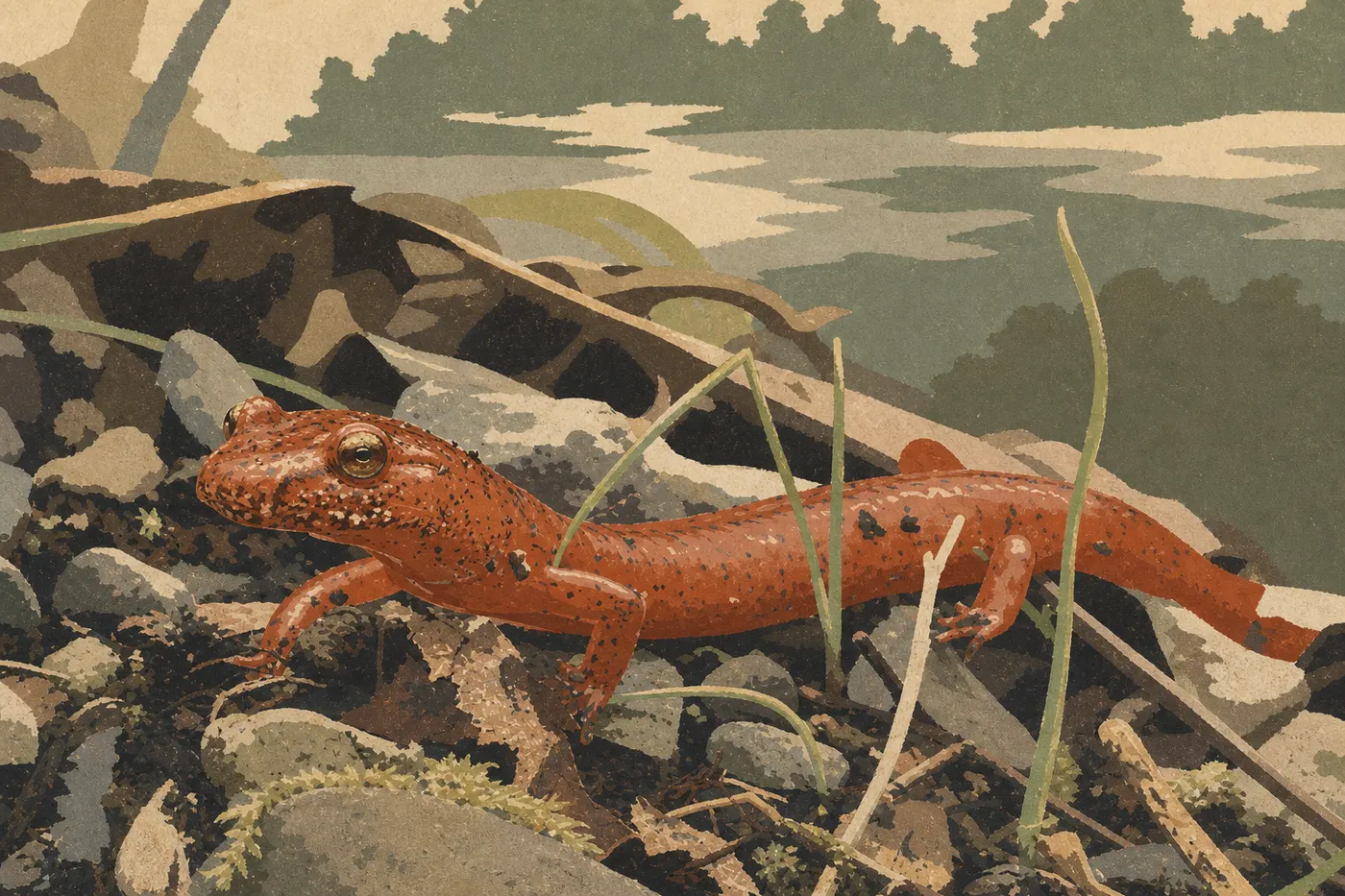
Great Smoky Mountains is home to more than 30 salamander species, the highest concentration of salamanders anywhere on the North American continent. The nickname "salamander capital of the world" is well deserved. Among the best-known species is Jordan's salamander (Plethodon jordani), endemic to the Smokies and recognizable by its bright red cheeks. These lungless amphibians, members of the Plethodontidae family, breathe entirely through their skin, which makes them highly sensitive to water quality. Look for them under wet rocks and along streams, especially in spring after rainfall.
The Synchronous Firefly, a Rare Phenomenon
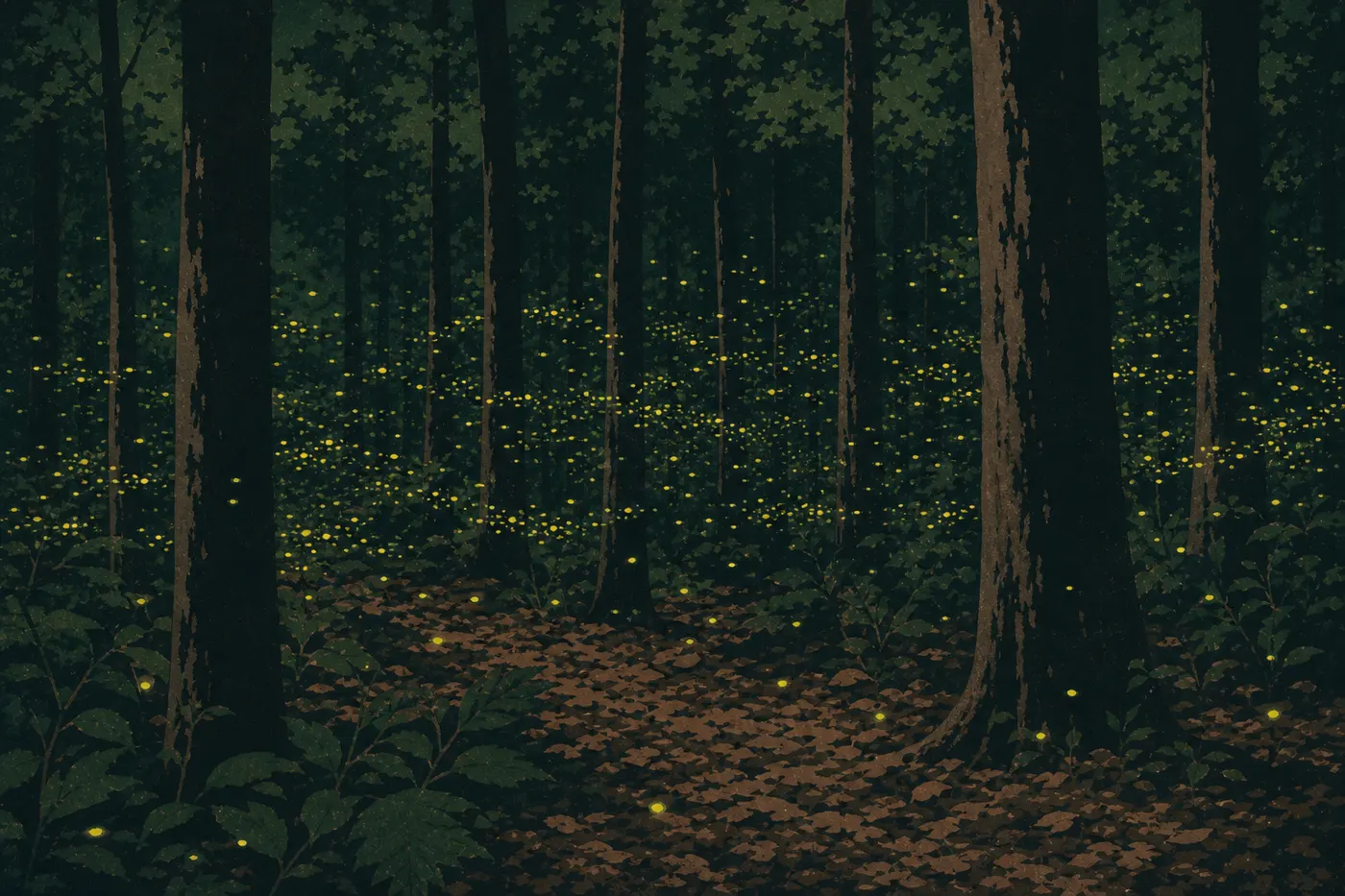
Photinus carolinus is the only North American firefly species known to synchronize its flashes. For two to three weeks from late May to mid-June, thousands of fireflies light up in unison in the dark understory, creating a natural strobe-light display found nowhere else on the continent. Each year, the NPS holds a lottery for spots on the official shuttles. Demand far exceeds the site's capacity. Elkmont Campground is the main viewing area.
Black Bear or Grizzly? A Useful Distinction
You won't see a grizzly (Ursus arctos) in the Smokies. The species is found only in the West, including Yellowstone and Glacier. Every bear in the park is a black bear, even when its fur has a reddish-brown cast. Here's how to tell one from a grizzly: black bears have round, upright ears, while grizzlies have small, rounded ears; black bears lack the muscular shoulder hump; and their claws are short and curved. If you see a brown-coated bear in the Smokies, look at its ears. They'll be distinctly round.
Where to See Animals in Great Smoky Mountains
Cades Cove is the park's top area for land-based wildlife viewing. This 9,900-acre meadow, surrounded by forest and crossed by a 10.6-mile loop road, attracts black bears, deer, wild turkeys, and coyotes, mainly at dawn and dusk. The loop is closed to motor vehicles on Wednesday and Saturday mornings until 10 a.m. Those are the best mornings for exploring the area by bike.
Cataloochee Valley, in the eastern part of the park on the North Carolina side, is the place to go for elk. Arrive before dawn in October to hear the bugling. Outside the rut, elk remain visible year-round in the valley meadows.
Roaring Fork Motor Nature Trail follows vegetation-lined streams and is prime bear habitat when bears are looking for blueberries and insects in summer. The road is narrow and closed in winter.
Newfound Gap Road (US-441) crosses the park from Gatlinburg, Tennessee, to Cherokee, North Carolina, and offers open views of the ridges. It's ideal for watching hawks and vultures soaring at high elevation.
For salamanders, take any trail that follows a stream. Alum Cave Trail and Laurel Falls Trail are excellent starting points after rain. The Great Smoky Mountains hiking guide lists the best wildlife-viewing trails for each season.
When to See Them
Spring (March through May) is the season of renewal. Bears emerge from their dens, amphibians become active again after the snowmelt, and migratory birds arrive in large numbers. Salamanders are especially active in wet weather, particularly in April.
Summer (June through August) overlaps with the synchronous firefly season, which runs from late May to mid-June, and with peak activity for wildlife across the park. Get out before 8 a.m. to avoid both the heat and the crowds that peak in July.
Fall (September through November) is elk rut and the time when bears prepare for winter. Berry patches and nut-producing trees draw bears in large numbers. Reports near campgrounds increase between October and November.
Winter (December through February) is the quiet season. Bears are denning, but deer remain visible in the meadows, and wintering birds, including woodpeckers and American robins, enliven the forest edges.
For month-by-month conditions, see the guide to the best times to visit Great Smoky Mountains.
Predators and Large Animals
Coyotes (Canis latrans) became established in the park naturally in the 1980s after the red wolf was eradicated. They occur throughout the park but are rarely seen in daylight. You’re much more likely to hear one than see one, especially at night from campgrounds.
The bobcat (Lynx rufus) is the park's other native predator. Strictly nocturnal and extremely elusive, it is rarely seen, even by rangers. Its presence is most often revealed by tracks in mud along streams.
There are no wolves or mountain lions in the park today. Red wolves (Canis rufus) were reintroduced in parts of North Carolina near the Smokies, but not within the park boundaries.
The park also has wild boar (Sus scrofa), introduced accidentally in the early 20th century. They root up meadows and damage salamander habitat. The NPS runs active control programs to limit their spread.
Viewing Wildlife Safely
Required minimum distance: 150 feet (50 yards) from bears and elk. This is a legal requirement in the park, not a recommendation. If an animal changes its behavior when you approach, such as raising its head, stopping its grazing, or moving toward you, you're already too close. Back away immediately.
Never feed wildlife: doing so is a federal offense punishable by a fine of up to $5,000. A bear that associates food with people quickly becomes a "problem bear" that the park often has to euthanize.
Store food properly: at campgrounds, store all food and scented items, including toothpaste, deodorant, and sunscreen, in the bear-resistant storage boxes provided at every site. When camping in the backcountry, use an approved bear canister.
If you encounter a bear: don't run. Speak calmly and slowly back away while facing the animal. If the bear charges, which is rare, stand your ground. Most charges are bluffs meant to intimidate. Bear spray, made with capsaicin, is effective at distances of up to 30 feet.
For elk: females with calves and males in the rut are the most unpredictable. Always keep your 150-foot distance. Carefully retreat if a male points its antlers in your direction.
In Brief: Must-See Species and Where to Find Them
| Species | Recommended area | Best time |
|---|---|---|
| Black bear | Cades Cove, Roaring Fork | Spring through fall, dawn and dusk |
| Elk | Cataloochee Valley | Year-round; bugling in October |
| White-tailed deer | Cades Cove | Year-round |
| Salamander | Trails along streams | Spring, after rain |
| Synchronous firefly | Elkmont Campground | Late May to mid-June, at night |
| Coyote | Meadows and forest edges | Dawn, dusk, and night |
To plan your trip around these wildlife sightings, our complete Great Smoky Mountains guide provides the framework for your visit.
Frequently Asked Questions
What kinds of animals live in the Smoky Mountains?
The Smoky Mountains are home to more than 65 mammal species, including black bears and elk, over 200 bird species, dozens of reptiles and amphibians, and more than 30 salamander species. It's one of the richest concentrations of biodiversity in the eastern part of the North American continent.
What is the largest animal in the Smoky Mountains?
The largest animal in the Smoky Mountains is the elk (Cervus canadensis), reintroduced to the park in 2001. Adult males can weigh up to 750 pounds and grow antlers with spreads sometimes exceeding 3 feet.
What kinds of predators live in the Smoky Mountains?
The predators found in the Smoky Mountains are coyotes and bobcats. There are no wolves or mountain lions within the park boundaries. Black bears are omnivores and may take small prey, but they aren't considered active predators of humans.
What animals are out at night in Great Smoky Mountains?
At night, coyotes, bobcats, raccoons, and opossums are active throughout the park. In late May and early June, synchronous fireflies (Photinus carolinus) in the Elkmont area put on an exceptional nighttime display. For seasonal details, see our When to Visit page.