
Visiting Great Smoky Mountains by RV: Campgrounds, Rules, and Tips
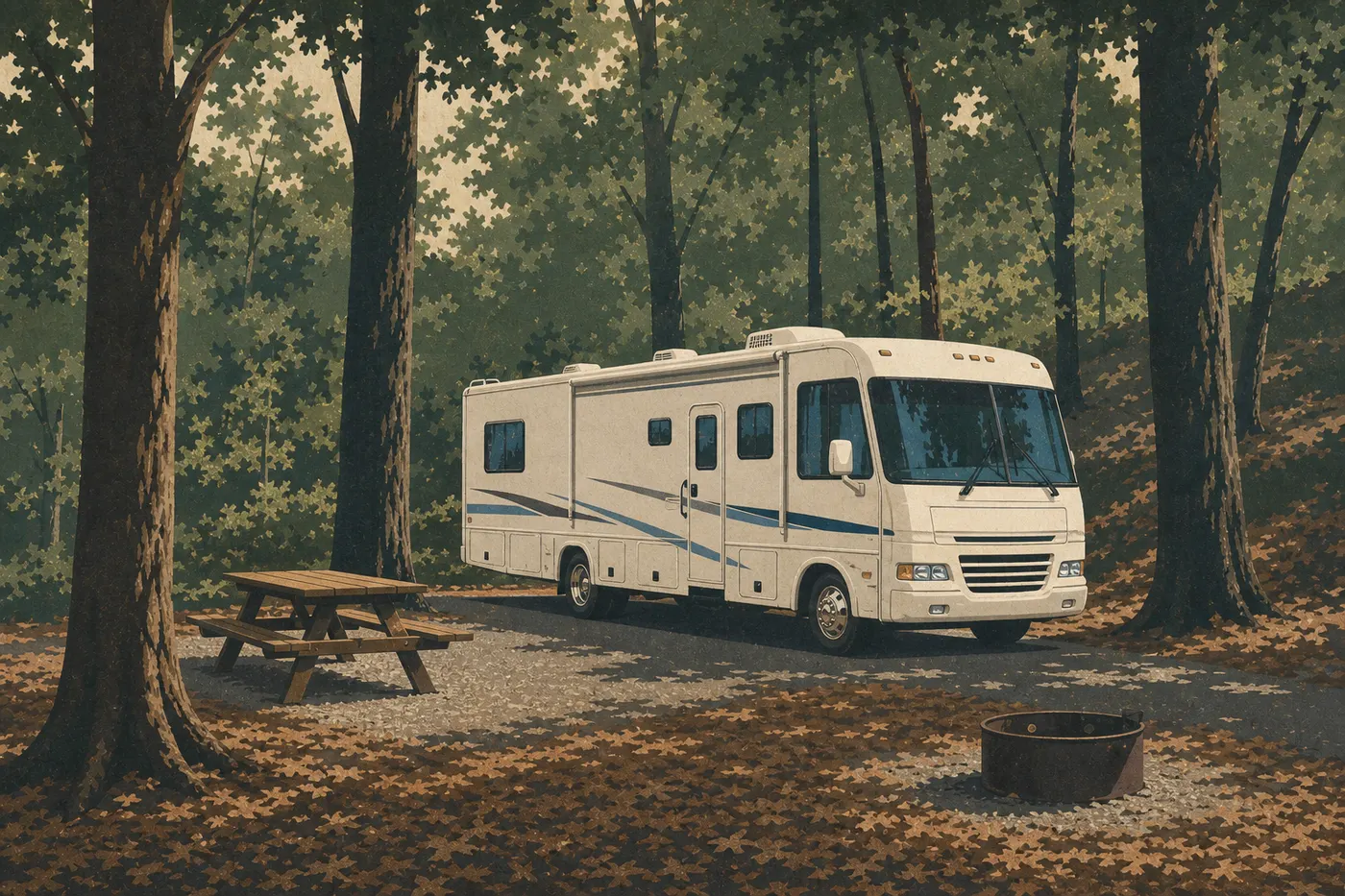
Great Smoky Mountains welcomes RVs at several of its official campgrounds, with no entrance fee. The good news ends when the logistics begin: none of the sites offer hookups, including electricity, running water, or sewer, and some of the park's signature roads are closed to RVs. It's best to know the rules before arriving with 33 feet of motorhome in front of a ranger.
The short answer: yes, you can camp in an RV at Great Smoky Mountains. The number one constraint is that the park is dry camping only, with no hookups, and the Roaring Fork Motor Nature Trail is completely off-limits to RVs.
Can You Drive and Camp in an RV at Great Smoky Mountains?
The park's main roads are accessible to standard RVs. Newfound Gap Road (US-441), the park's backbone between Gatlinburg, Tennessee, and Cherokee, North Carolina, has no height or length restrictions for standard-size vehicles. Little River Road and Laurel Creek Road, which stay open year-round depending on weather conditions, are also suitable for most motorhomes.
The park doesn't charge an entrance fee. Great Smoky Mountains is one of the few major U.S. national parks with no toll. However, none of the park's campgrounds have hookups. Arrive with full tanks and plan your onboard capacity accordingly.
Geographically, the park stretches across Tennessee and North Carolina, with elevations ranging from 876 to 6,644 feet. Weather can change abruptly from one side of the mountains to the other. Our Great Smoky Mountains weather guide covers conditions season by season.
RV Restrictions and Regulated Roads
Roaring Fork Motor Nature Trail: closed to RVs, trailers, and buses. This is a permanent restriction, not a seasonal one. If this forested loop road is on your list, visit it on foot or in a passenger vehicle from a campground.
Cades Cove Loop Road: the 10.6-mile loop past meadows and historic homesteads has length restrictions for large vehicles. Signs at the entrance show the current limit. If your vehicle exceeds that size, you'll be asked to turn around. If your RV or trailer is around 23 to 26 feet long, check the NPS website before setting out.
Cataloochee Valley: access follows a long, winding mountain road that is partly unpaved. It's not recommended for large motorhomes or long trailers. A van or small RV under 20 feet can make it without a problem.
Parking: popular parking areas, including Laurel Falls and Alum Cave Trail, have maximum vehicle lengths. During peak season, they fill up before 10 a.m. Leave early and check ahead to make sure your vehicle will fit in the lots you plan to use. Our Great Smoky Mountains access guide covers parking in detail.
The Park's Official Campgrounds
Elkmont
The park's largest campground is on the Tennessee side, a few miles from Gatlinburg. Elkmont has RV sites with different maximum lengths depending on the loop. Running water and restrooms are within walking distance of the sites. It's the most versatile base, with Laurel Falls, Alum Cave Trail, and Newfound Gap Road nearby. Reservations are made through recreation.gov, and you should book as early as possible because the calendar opens six months ahead.
Smokemont
On the North Carolina side, between Cherokee and Newfound Gap. The campground follows the Oconaluftee River and accepts RVs at its designated sites. It's convenient if you're arriving from Asheville or Atlanta. It operates for much of the year, including spring and fall.
Cades Cove
The park's most sought-after campground has a simple advantage: bears, deer, and wild turkeys roam the edge of the meadows at sunset. RV sites are available, but the loop road's length restrictions apply. Compact rigs, roughly under 21 feet, can get through without trouble. Large motorhomes should check ahead.
Cosby
In the park's northeastern corner, Cosby is regularly the least crowded of the developed campgrounds. The sites are smaller and better suited to camper vans and short RVs. With dense forest and lightly used trails, it's our recommendation if you want to get away from the bustle of Gatlinburg.
Deep Creek
Near Bryson City, North Carolina, Deep Creek offers a pleasant setting with waterfalls accessible from the campground. A few sites accommodate RVs, but larger rigs are pushing the limit. Reserve here if you're exploring the park's southwestern section.
Dispersed Camping and Areas Around the Park (Boondocking)
Boondocking is prohibited inside the national park. You can't spend a free night in a parking lot or along the roadside. The national forests surrounding Great Smoky Mountains offer other possibilities. Cherokee National Forest in Tennessee and Pisgah National Forest in North Carolina allow free dispersed camping on some of their lands, subject to conditions such as minimum distances from water sources and fire restrictions during dry periods.
For nights with full hookups, the towns of Gatlinburg, Pigeon Forge, Cherokee, and Bryson City have many private campgrounds within a few miles of the entrances. This is the practical solution for recharging batteries and refilling tanks between dry nights in the park. If you're combining Great Smoky Mountains with other parks in the Southeast, our regional guide offers the reference points you need to plan your route.
Dump Stations, Water, and Services
Dump stations for gray and black water are available at the park's main campgrounds, including Elkmont and Smokemont. They're available to park campers during the season, generally at no extra charge.
For drinking water, faucets are available at all developed campgrounds. Outside the park, gas stations and private campgrounds in Gatlinburg and Cherokee offer water, dump stations, and sometimes paid showers.
Generators: allowed only in developed campgrounds, during restricted hours, typically early morning and early evening. Quiet hours apply outside those windows. Exact hours vary, so check them when you make your reservation on recreation.gov.
Which Campground Should You Choose?
For families with kids: Elkmont for its proximity to Gatlinburg, short trails, and services. Choose Cades Cove if you want to see wildlife without hiking.
For a quiet natural setting: Smokemont, along the river, offers a peaceful atmosphere. Cosby provides relative solitude and trails that are nearly empty compared with the rest of the park.
For easy access to different areas: Elkmont remains the most central base on the Tennessee side. Smokemont serves the same purpose on the North Carolina side.
For a van or small motorhome: every campground is accessible to you, including Cosby and Deep Creek. Take advantage of that freedom to visit places large RVs can't reach.
Our Where to Stay in Great Smoky Mountains guide covers all the options beyond camping, including lodges, cabins, and accommodations in town.
Renting an RV to Visit Great Smoky Mountains
Major peer-to-peer rental platforms such as Outdoorsy and RVshare, along with national agencies, serve the region well. Knoxville, Tennessee, is the closest city with a broad selection, about 37 miles from Gatlinburg. Asheville, North Carolina, is an alternative to the east.
Two tips before you sign:
- Choose a vehicle under 23 feet if you plan to visit Cades Cove or take secondary roads. A compact rig gives you more options.
- Check the rental company's policy on camping in national forests. Some companies prohibit it under the rental contract.
Book early. October weekends, when the deciduous trees change color, are among the most popular in the entire Southeast.
RVs, Pets, Budget, and Reservations: What to Know
Pets: dogs are allowed in campgrounds as long as they're kept on a leash no longer than 6 feet. They're not allowed on nearly all of the park's trails. An RV is often the most practical solution, since your dog can stay in the shade inside the vehicle while you hike.
Campsite budget: NPS rates remain competitive with private campgrounds in the region. Check recreation.gov for current rates when you book. They vary by season and site.
When to book: Great Smoky campgrounds fill up from June through October, and fall weekends disappear within minutes when the calendar opens six months ahead. On weekdays outside July and August, two to four weeks is often enough. Our When to Visit Great Smoky Mountains guide can help you choose the right window for your priorities.
In Summary: Our Great Smoky Mountains RV Plan
Great Smoky Mountains is RV-friendly as long as you respect its constraints: dry camping only, secondary roads to check based on your vehicle's size, and reservations made well in advance. For a first visit in a large motorhome, base yourself at Elkmont or Smokemont. In a compact van, Cosby and Deep Creek offer a wilder experience. Plan one night at a private campground in Gatlinburg or Cherokee to dump tanks and recharge. If you've never set foot in the park, our complete Great Smoky Mountains guide is the logical place to start.
Frequently Asked Questions
Can you drive through Great Smoky Mountains National Park in an RV?
Yes. You can drive through Great Smoky Mountains in an RV via Newfound Gap Road (US-441), which connects Gatlinburg, Tennessee, with Cherokee, North Carolina, without size restrictions for standard vehicles.
Where are RVs prohibited?
RVs are prohibited on Roaring Fork Motor Nature Trail, with a permanent restriction, and are discouraged or restricted on several secondary roads, including the access road to Cataloochee Valley. Cades Cove Loop Road has length restrictions for large vehicles.
Which is the most scenic campground in Great Smoky Mountains National Park?
Cades Cove is often mentioned for its open meadows surrounded by mountains and the wildlife visible at the end of the day. Cosby appeals to visitors who prefer a denser forest and a quieter setting.
Can you park an RV anywhere in Great Smoky Mountains?
No. Free parking is prohibited in the park. Parking areas have maximum vehicle lengths and often fill up before 10 a.m. during peak season. Plan ahead and leave early.
Can you camp in a van or sleep in your vehicle at Great Smoky Mountains?
Yes, as long as you reserve a site at an authorized campground. Sleeping in a vehicle in a parking lot or outside designated sites is prohibited in the park.