
Great Smoky Mountains Weather: Forecasts, Climate, and Current Conditions
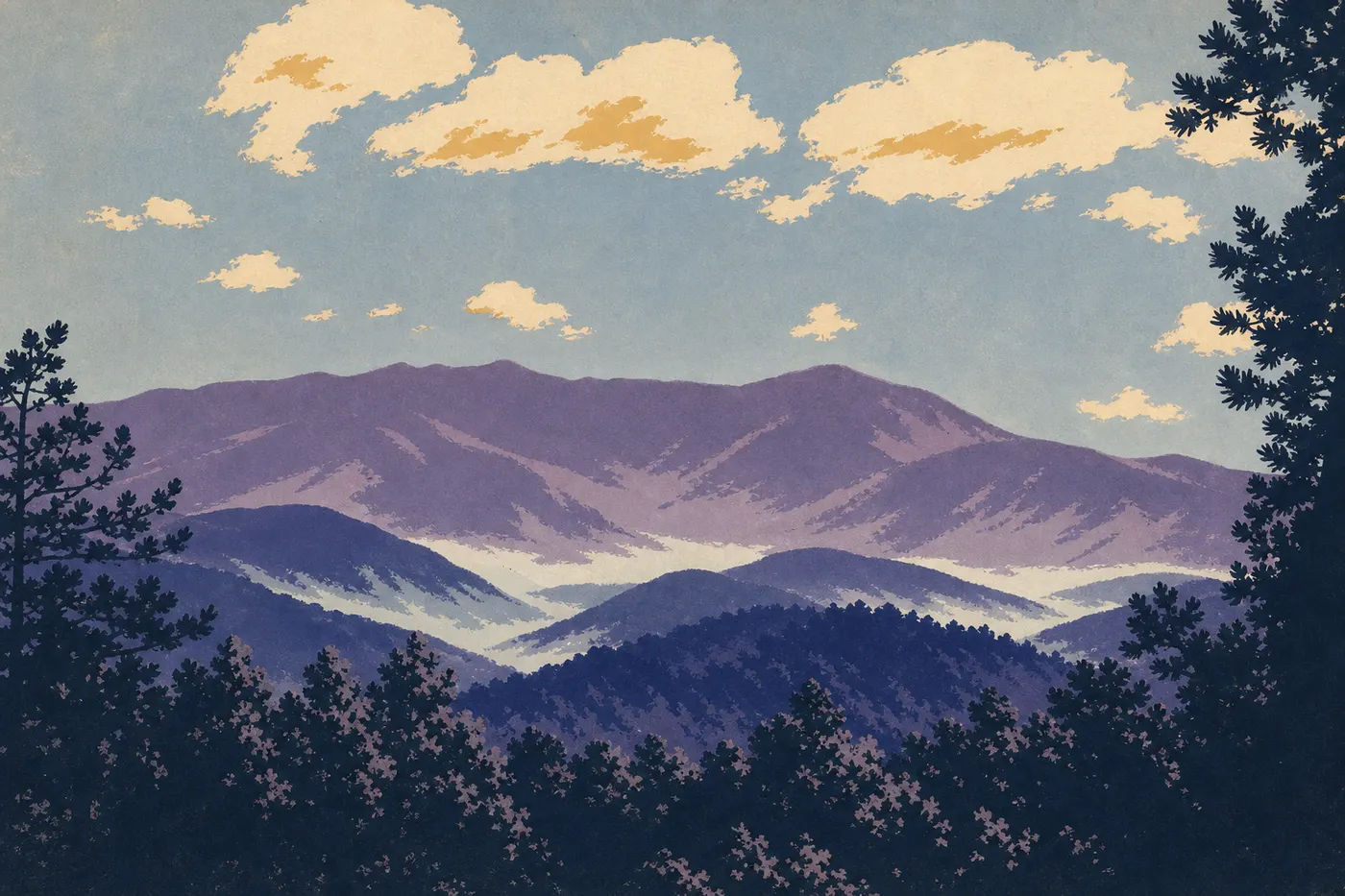
Great Smoky Mountains didn't get its name by accident. The blue haze that constantly envelops its ridges is a daily reality, produced by the forests' intense humidity. The park stretches across two states, North Carolina and Tennessee, and rises from 876 feet in the valleys to 6,644 feet at the summit of Clingmans Dome. The result is two climates in one. Down low, you'll find a hot, muggy summer worthy of the American South; up high, conditions are almost alpine in every season. The basic rule to remember is this: it's always 9 to 18°F colder at the summit than in Gatlinburg, and the difference can reach 20°F during a cold snap.
Current readings are unavailable. See the seasonal averages farther down this page.
Open-Meteo readings · updating… · park time zone
Great Smoky Mountains Climate Month by Month
The park is one of the wettest places in the eastern United States. Gatlinburg gets about 55 inches of precipitation a year, while the ridges can receive as much as 85 inches. There isn't really a dry season.
| Month | Low (valley) | High (valley) | Precipitation | What to expect |
|---|---|---|---|---|
| January | 32°F | 48°F | High | Snow possible at higher elevations; ice on Newfound Gap Road |
| February | 34°F | 50°F | High | Last overnight freezes; Clingmans Dome often closed |
| March | 39°F | 59°F | High | First wildflowers in the valleys |
| April | 48°F | 68°F | Moderate | Azaleas in bloom; ideal days, cool nights |
| May | 57°F | 77°F | Moderate | Synchronous fireflies in late May or early June; reservations required |
| June | 64°F | 84°F | Moderate | Thunderstorms on most afternoons |
| July | 68°F | 88°F | Moderate | Peak heat and humidity; largest crowds |
| August | 66°F | 86°F | Moderate | Persistent thunderstorms; dense morning fog |
| September | 59°F | 79°F | Moderate | A slight break, with more comfortable temperatures |
| October | 48°F | 70°F | Moderate | Fall colors; peak weekend visitation |
| November | 39°F | 57°F | High | Bare forest, clear views; first snow at higher elevations |
| December | 32°F | 48°F | High | Recurring ice; Clingmans Dome closed with the first snowfalls |
Approximate temperatures at low elevations (Gatlinburg/Cherokee). Subtract 9 to 20°F for the ridges.
Does It Get Cold in Great Smoky Mountains? Records and Extremes
In the valleys, winter cold is moderate by American standards. The ridges are a different story. Clingmans Dome regularly records temperatures below 5°F in midwinter, with wind making it feel even colder. Highs above 100°F have been recorded at low elevations in July. Snow can fall on the summits above 4,900 feet in any season. In June, you may still find a few isolated patches in north-facing ravines. Tennessee also sees severe thunderstorms in spring. Tornadoes and hail are real risks, not theoretical ones.
What to Wear by Season
The one constant principle is to layer. A 18°F difference between the valley and the ridge can make for a very different hike within a few hours.
Spring and fall: a lightweight technical base layer, a fleece midlayer, and a waterproof windbreaker. April mornings hover around 48°F; by 2 p.m. in the sun, it's 68°F. Keep a packable rain jacket in your pack at all times.
Summer: lightweight, breathable clothing, sun protection, and a hat in the valleys. Once you climb above 4,900 feet, add another layer. In summer, Clingmans Dome stays around 50 to 59°F. Wear closed-toe shoes on every trail. Flip-flops aren't allowed on rocky trails.
Winter: a down jacket, gloves, and a hat as soon as you gain elevation. Trail shoe soles won't grip ice. Bring lightweight traction devices, such as microspikes, if you're planning Alum Cave Trail or Andrews Bald after a snowfall.
In every season, drink more water than you think you need. Elevation and humidity make you lose water without making you feel sweaty.
Alerts and Conditions to Watch
Newfound Gap Road (US-441) and the other primary roads are officially open 24 hours a day, year-round, weather permitting. If there's ice or significant snowfall, the park may close a road within minutes, and the closure can last for several hours. Check road conditions before you leave. The NPS posts closures in real time on its official website.
Summer thunderstorms are the main hiking hazard. Lightning regularly strikes exposed ridges, including Andrews Bald, Rocky Top, and Charlies Bunion, between 1 and 5 p.m. If the sky darkens and you hear thunder, descend immediately. An exposed ridge is no place to wait out a storm. Figure out your turnaround time before you set out.
Flash floods can hit valley-bottom trails after heavy rain. Trails that follow waterways, including Alum Cave Creek and the Little River, can become impassable quickly.
Frequently Asked Questions
Does it get cold in the Smoky Mountains?
In the valleys, including Gatlinburg and Cherokee, winter cold is moderate. Lows fall to around 32°F in January, and snow rarely stays on the ground. Above 4,900 feet on the ridges, conditions are different. Freezing temperatures are common from November through March, and wind chills at Clingmans Dome can approach 5°F.
Does it snow in Tennessee?
Yes, especially at higher elevations. The Smokies get snow every winter above 3,900 feet, with significant accumulations on the summits at times. On the lowlands around Knoxville and Gatlinburg, snow falls but rarely sticks around for several days.
What is the coldest month in Tennessee?
January is statistically the coldest month, both in the lowlands and at higher elevations in the park. It's also the month when secondary roads and Clingmans Dome are most often closed because of ice.