
When to Visit Great Smoky Mountains: Best Seasons and Months
Great Smoky Mountains National Park is the most visited national park in the United States, with around 13 million visits each year. Admission is free, access is easy from the East Coast, and the scenery changes dramatically from month to month, so choosing when to go really matters. The best times to visit Great Smoky Mountains are April–May for spectacular wildflowers and manageable crowds, or late September to early October for the first fall colors before peak visitation.
Our quick recommendation: Aim for April–May to catch spectacular wildflowers with reasonable crowds, or late September to early October for the first fall colors before October’s peak. In January and February, the park empties out, snow settles on the Appalachian ridges, and you can find empty parking lots at 9 a.m. That’s extremely rare the rest of the year.
Month-by-month climate
The park stretches from 876 to 6,644 feet in elevation. That difference creates temperature swings of up to 20°F between the valleys and the peaks. Clear sunshine in Gatlinburg can coincide with thick fog and biting wind at Clingmans Dome, so always bring an extra layer, even in midsummer.
| Month | Valley high | Valley low | Precipitation | Snow (peaks) |
|---|---|---|---|---|
| January | 46°F | 30°F | High | Frequent |
| February | 50°F | 32°F | High | Possible |
| March | 59°F | 39°F | High | Rare |
| April | 68°F | 48°F | Moderate | None |
| May | 75°F | 55°F | Moderate | None |
| June | 82°F | 63°F | Frequent thunderstorms | None |
| July | 86°F | 66°F | Frequent thunderstorms | None |
| August | 86°F | 66°F | Frequent thunderstorms | None |
| September | 79°F | 59°F | Low | None |
| October | 70°F | 46°F | Moderate | Rare |
| November | 57°F | 37°F | High | Possible |
| December | 48°F | 32°F | High | Frequent |
Approximate valley figures (Gatlinburg area, around 1,300 feet). Our Weather page provides updated forecasts and details by elevation.
Great Smoky Mountains in January
Valley temperatures range from 30 to 46°F, with regular overnight dips below freezing. Snow frequently covers the ridges, and ice can temporarily close Newfound Gap Road. Check conditions on the NPS website before setting out. This is the quietest month of the year, and parking lots stay open even in the middle of the day. Partly frozen waterfalls and bare beech forests create winter scenery that’s easy to reach and rarely crowded.
Great Smoky Mountains in February
The cold persists, lows stay close to freezing, and overnight freezes are common. Clingmans Dome Road is often closed because of snowdrifts or ice and remains inaccessible for much of the month. Visitation is at its lowest, making February an excellent choice for solitude. Bears are still hibernating; you’ll mostly see white-tailed deer and wild turkeys in the meadows of Cades Cove.
Great Smoky Mountains in March
Temperatures rise to 39–59°F in the valleys, and the first wildflowers open at lower elevations. Rain is abundant and streams run high, which makes this a good time for waterfall hikes such as Ramsey Cascades and Grotto Falls. Secondary roads gradually reopen, but check conditions before every outing. Visitation remains moderate outside American spring break.
Great Smoky Mountains in April
April is one of the best months to visit the park. Azaleas and dogwoods bloom on the slopes, daytime temperatures reach 68°F, and nights remain cool. Crowds grow, especially toward the end of the month, but stay well below the summer peak. It’s the ideal window for valley hikes, full-flow waterfalls, and morning photography outings.
Great Smoky Mountains in May
Daytime temperatures climb to 77°F and the vegetation reaches full density. In late May, shuttles for the synchronous fireflies season begin operating. Access is handled through a Recreation.gov lottery, and you need to book several weeks ahead. All roads are open. Visitation rises noticeably as the major American summer vacation period approaches.
Great Smoky Mountains in June
The heat settles in, with valley temperatures ranging from 64 to 84°F, and thunderstorms break out almost every afternoon. Start hikes early and head back down before 2 p.m. to avoid the showers. Crowds increase sharply, especially at signature sites such as Cades Cove and Laurel Falls. Depending on the year, the synchronous fireflies season can extend into the first week of June.
Great Smoky Mountains in July
July is the hottest and busiest month of the year. Valley temperatures regularly top 88°F, with heavy humidity. For cooler hikes, head uphill: Clingmans Dome stays around 64–68°F, but thunderstorms build quickly starting in early afternoon. Arrive before 8 a.m. at the main parking areas; they fill up by midmorning on weekends.
Great Smoky Mountains in August
Conditions are much like July: heat, humidity, and persistent thunderstorms, with dense morning fog over the ridges. The tourist season is still in full swing. This is a good month to explore less crowded areas such as Cataloochee or the trails in the northern part of the park instead of the main corridors. By the end of the month, the heat eases slightly.
Great Smoky Mountains in September
September brings a welcome break. Temperatures drop to 59–79°F, thunderstorms become less frequent, and the first fall colors appear on the ridges around mid-September. At Cataloochee, elk enter the rut at dawn, making this the best month to watch these large deer. Visitation is lower than in July and August, although it rises on the last weekends of the month.
Great Smoky Mountains in October
October is leaf season. Color moves from the peaks down into the valleys over the course of several weeks, reaching its brightest around the third week. It’s also the busiest month of the year, with parking lots full by dawn on weekends and heavy traffic along US-441. To enjoy the show without the crowds, aim for the first half of the month and plan weekday outings.
Great Smoky Mountains in November
The forest loses its leaves quickly after mid-November, opening views of the Appalachian ridges that foliage hides the rest of the year. Temperatures drop to 39–57°F, and the first snow reaches the peaks. Visitation falls sharply once the leaves are gone, making November one of the quietest months for hiking. Secondary roads may close because of ice toward the end of the month.
Great Smoky Mountains in December
Recurring ice makes some high-elevation trails dangerous without the right gear. Clingmans Dome Road closes after the first significant snowfalls, usually for the entire winter season. Visitation is low except around Christmas and New Year’s, when it rises slightly. In return, snowy landscapes and frozen waterfalls create a rare atmosphere in a park that’s usually packed.
Great Smoky Mountains season by season
Winter (December to February)
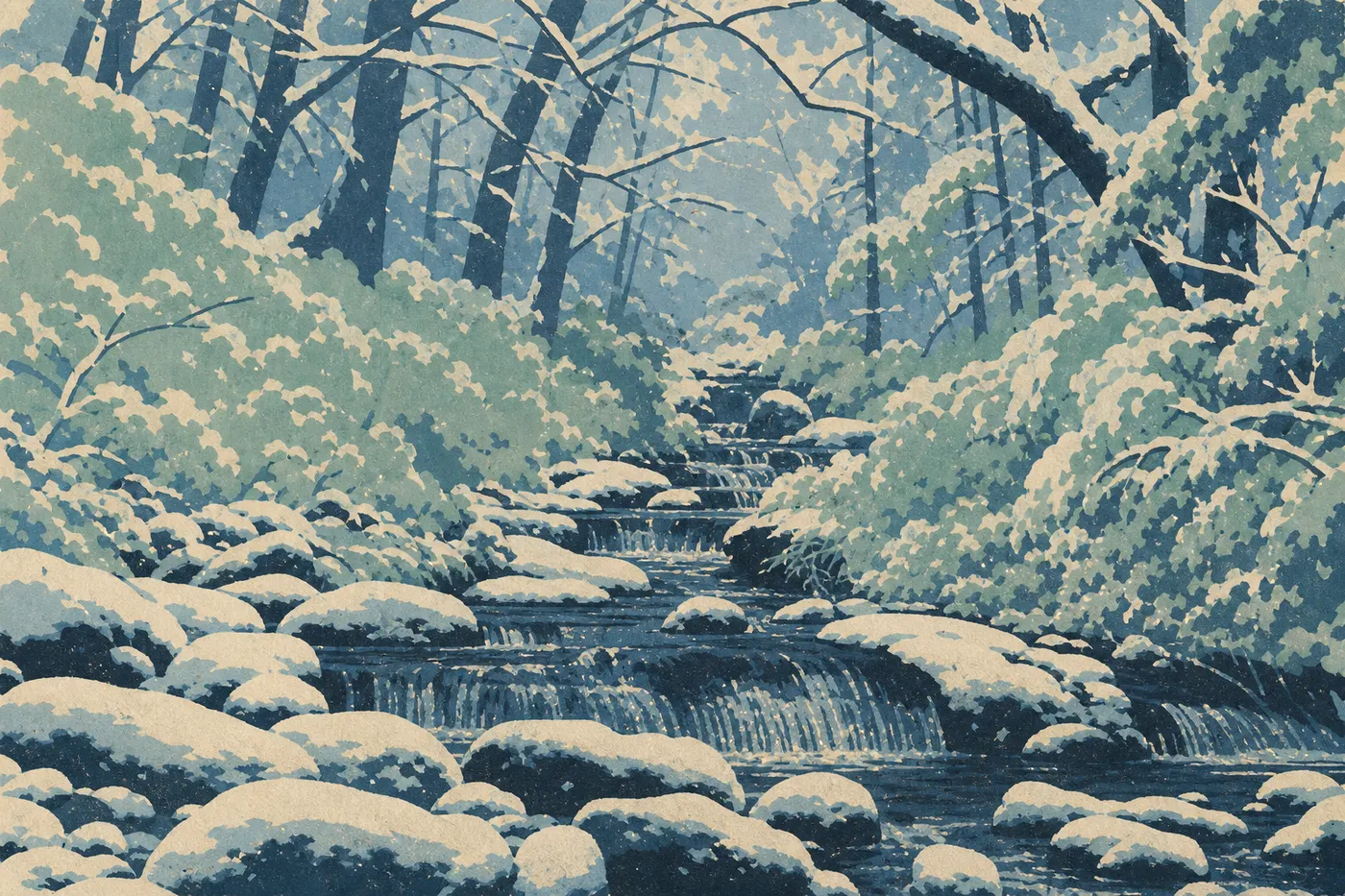
Winter reveals a stripped-down park. Snow regularly covers the ridges and sometimes reaches the valleys, giving the beech forests a graphic outline you won’t see in summer. Newfound Gap Road (US-441), Little River Road, and Laurel Creek Road stay open year-round except for temporary ice closures, while secondary roads close as soon as serious freezes arrive.
Black bears are hibernating. You’ll mostly see white-tailed deer and wild turkeys. Partly frozen waterfalls such as Laurel Falls and Hen Wallow Falls are worth the trip. Visitation is at its lowest, a valuable bonus in a park that’s usually packed.
Bring waterproof shoes and light traction cleats for high-elevation trails. Frozen paths are slippery and aren’t treated.
Spring (March to May)
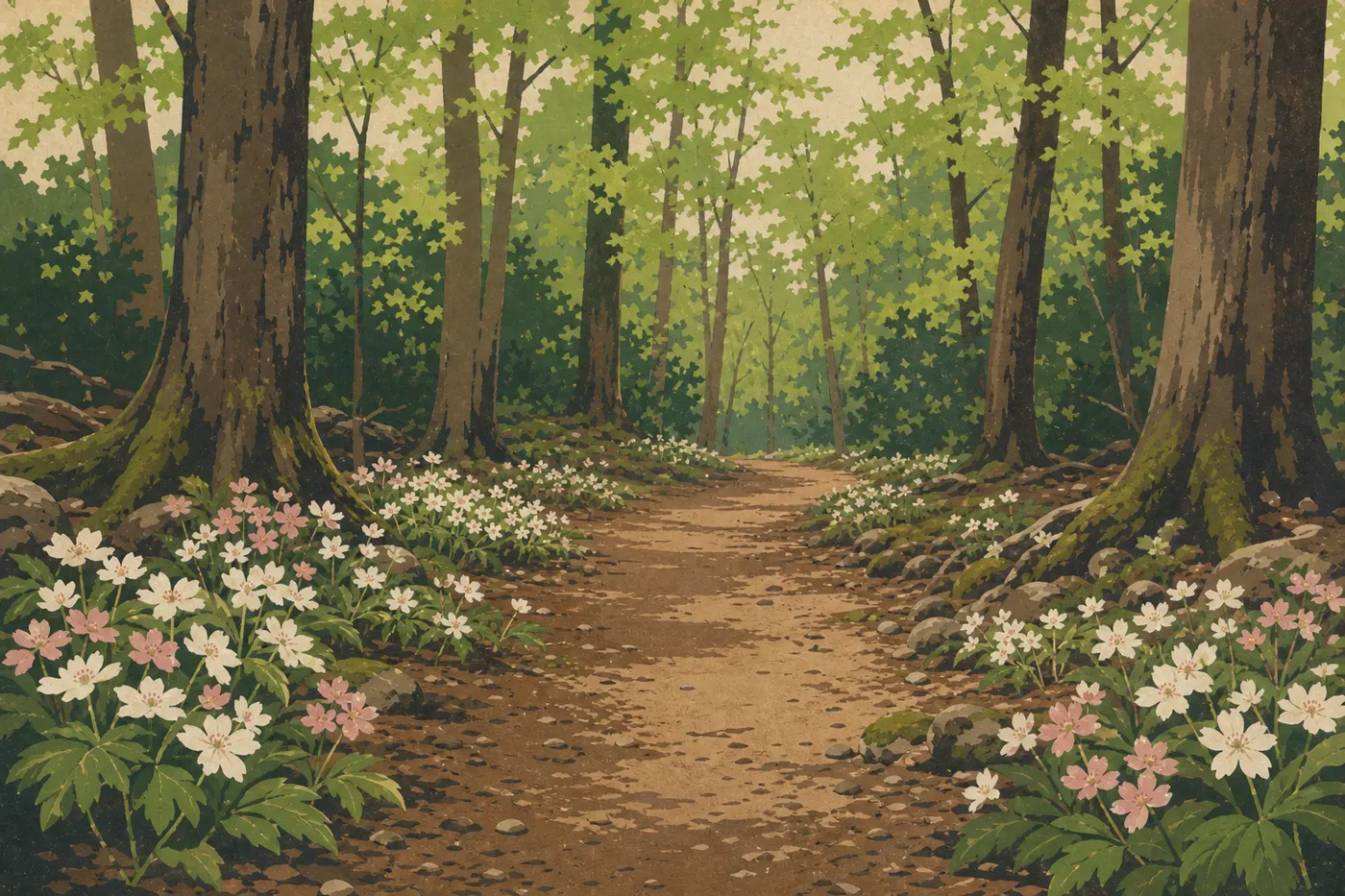
From our perspective, spring is the most striking season in the Smokies. The park is home to one of the greatest varieties of flowering plants in North America, and blooms roll through in successive waves depending on elevation: pink dogwoods in the valleys in March and April, followed by purple rhododendrons on the slopes in May and June.
Spring rains swell the streams and push waterfalls to their highest flows. It’s the ideal time to reach Ramsey Cascades or Grotto Falls.
From late May into early June, the park hosts its most sought-after event: the synchronous fireflies. These endemic fireflies flash in perfect synchronization for only two weeks. A shuttle system run through a Recreation.gov lottery controls access to the nighttime viewing areas. The Great Smoky Mountains guide explains the process and registration dates.
Secondary roads gradually reopen in April. Check current closures on the NPS website before setting out.
Summer (June to August)
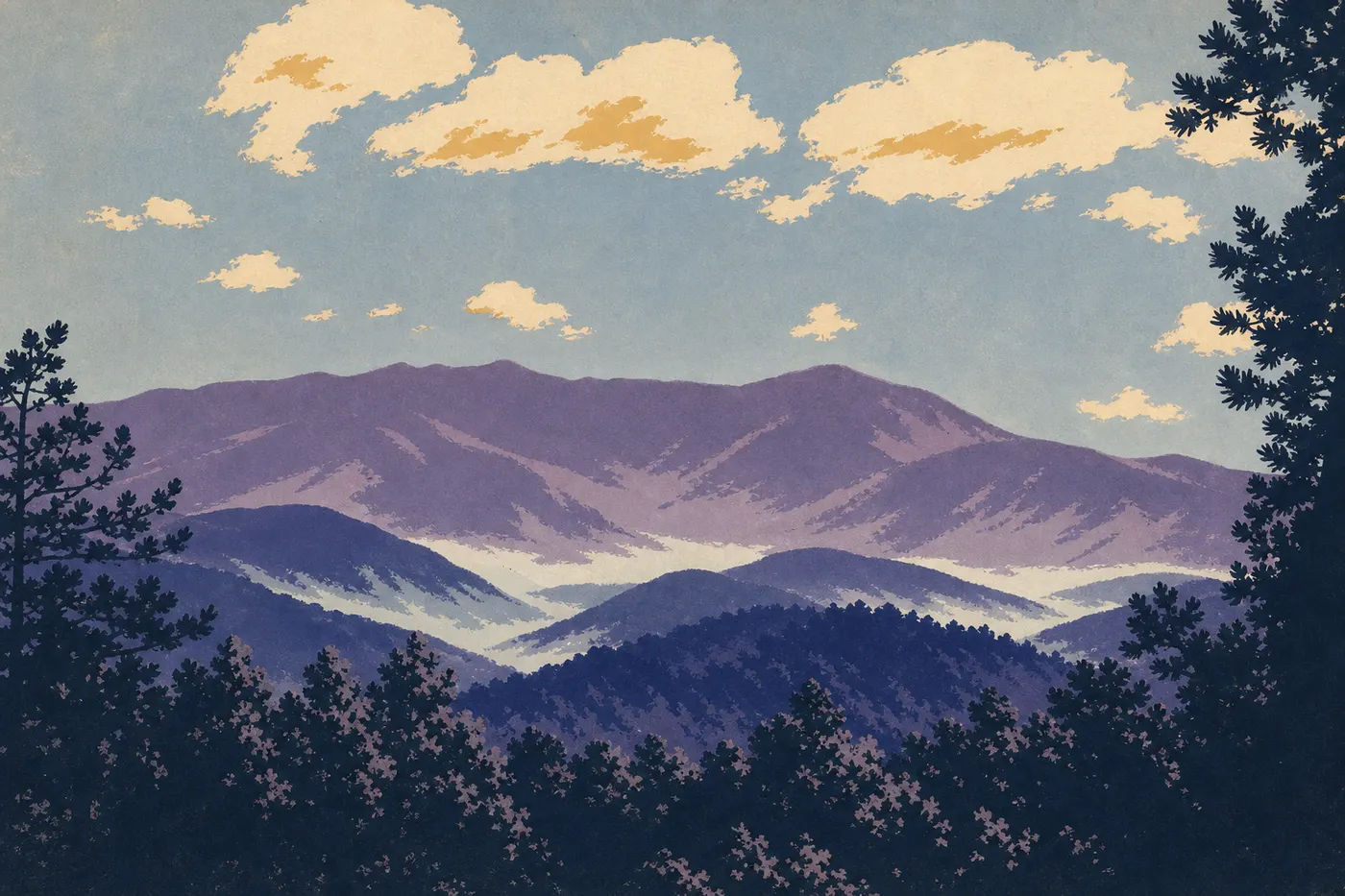
Summer means heavy heat and crowds. Valleys often climb above 86°F in July and August, and the humidity makes afternoon hikes feel even harder. At higher elevations, including Clingmans Dome at 6,644 feet, the thermometer stays around 64–72°F, but thunderstorms build quickly after 2 p.m., so plan climbs for the morning.
The bluish haze that gave the park its name (trees release volatile organic compounds that create this natural veil) is thicker in summer. Long-distance views take on a soft, photogenic depth, but visibility can be limited.
All roads are open, visitor centers are running at full capacity, and bears with cubs are highly active. Keep at least 50 feet away and never leave food in your vehicle. Start early, avoid popular trails between 10 a.m. and 4 p.m., and park before 8 a.m. at high-demand spots such as Cades Cove.
Fall (September to November)
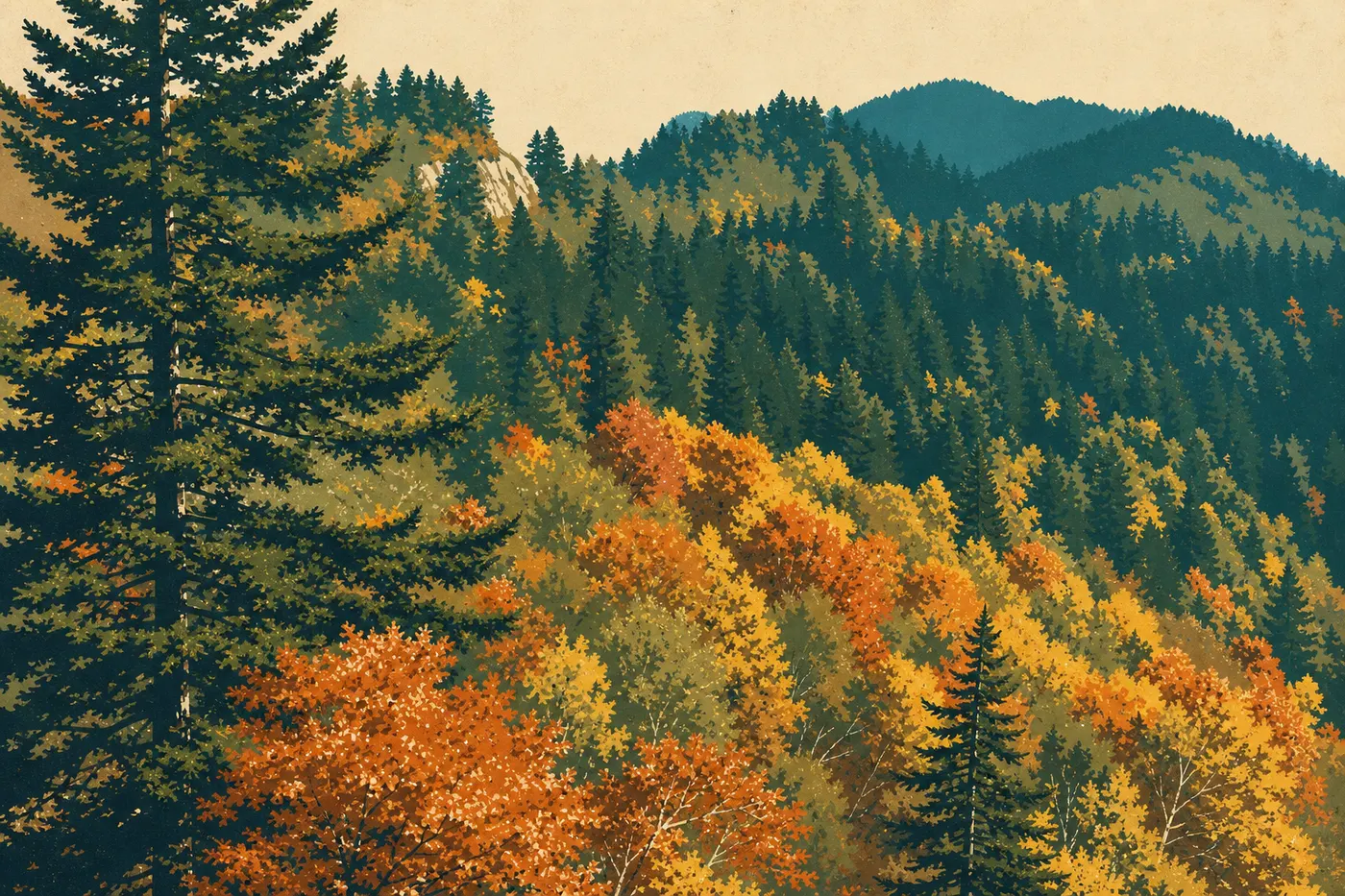
The Smokies’ foliage is famous throughout the eastern United States. Color moves down from the ridges starting in mid-September, reaches the valleys around the third week of October, and fades in November.
September remains our favorite time. Reintroduced elk enter the rut at Cataloochee (watch them at dawn), the air is cool, and crowds remain below October’s peak. The third week of October is the most photogenic, but also the busiest: parking lots fill by dawn, traffic is heavy on US-441, and lodging is often booked.
Our advice is to aim for the first half of October. Color begins at higher elevations, including Andrews Bald and Alum Cave, the crowds are thinner, and you gain an entire weekend of peace and quiet.
Crowds: when to avoid them
With around 13 million annual visits and no entrance fee, Great Smoky Mountains suffers from its accessibility. The peaks are predictable and avoidable.
Busiest months: July, August, and nearly all of October. A Saturday during peak foliage on the Cades Cove Loop looks like a freeway traffic jam.
Quietest months: January, February, and the first half of November after the leaves drop. Weeks outside American school holidays in March and early December also offer a good compromise.
A few practical habits:
- Arrive before 8 a.m. or after 5 p.m. at the most visited spots, including Cades Cove, Laurel Falls, and Newfound Gap.
- Use the Cherokee, NC, or Townsend, TN, entrances instead of Gatlinburg, which is consistently packed during peak season.
- Trails more than 3 miles from a major parking area remain lightly visited even in July.
- Monday through Thursday is noticeably less busy than the weekends.
Best time to visit on a budget
Park access is free year-round. Cost differences mainly affect lodging around Gatlinburg, Pigeon Forge, and Cherokee.
Peak season (high rates): July–August and October. Cabins and cottages on the park’s edge book months ahead and reach their highest rates.
Low season (best deals): January–February and early November. Lodging prices can drop 30–50% compared with the October peak, and the park’s campgrounds, including Elkmont, Smokemont, and Cades Cove, are often available without booking far in advance.
Shoulder season (good value): March–April and September. Pleasant weather, moderate visitation, and midrange rates. Our Where to Stay guide lists options by budget and season, from tent camping to comfortable lodges.
When to go based on your interests
Wildlife: Spring for bears with cubs and white-tailed deer, and September–October for the elk rut at Cataloochee. Winter is the least favorable season for seeing large mammals.
Hiking: May for waterfalls and wildflowers, and September for cooler temperatures and the first high-elevation colors. Avoid midday in the low elevations during July and August, when the heat and humidity are exhausting. Our Hiking page lists trails by difficulty and season.
Photography: October for valley foliage, December–January for snow and frozen waterfalls, and late May for synchronous fireflies at night. Morning fog on the ridges is a bonus almost year-round.
Families: June–August for convenience, with all roads open and activities running at full capacity, or late April–May for blooms and milder temperatures. Our Family guide lists trails and activities suitable for children.
Tight budget: January–February or early November. Admission is already free, and lodging reaches its lowest prices.
Avoiding crowds above all: January–March, plus Monday through Thursday outside American school holidays. Our Great Smoky Mountains guide offers a visit plan based on your schedule.
In summary: the best time for your interests
| Interest | Ideal time | Avoid |
|---|---|---|
| Wildflowers and waterfalls | April–May | July (heat and humidity) |
| Fall foliage | Late September to early October | Third week of October |
| Wildlife (bears, elk) | May / September–October | December–February |
| Photography | October / January–February / late May | August (dense fog) |
| Families | June–August | October (traffic jams) |
| Budget | January–February, early November | July and October |
| Solitude and wild trails | January–March, Monday–Thursday | July–August, all of October |
The worst time to visit Great Smoky Mountains
July and August bring together the biggest drawbacks: stifling heat above 86°F in the valleys with tropical humidity, thunderstorms that derail afternoon hikes, and the highest visitation of the year. Parking lots at iconic sites fill by 9 a.m. on weekends, and late-summer fog often limits long-distance visibility. If your schedule forces you to visit in midsummer, start early, head uphill, and avoid the best-known sites between 10 a.m. and 4 p.m.
The third week of October also deserves a mention. Statistically, it’s the most congested period of the year in a park that already breaks visitation records. Foliage is at its peak, but traffic jams on US-441 and the Cades Cove Loop can turn a nature outing into a logistical headache. To enjoy the colors without the crowds, move your trip up by one or two weeks.
Frequently asked questions
What’s the best time to visit Great Smoky Mountains?
The best times to visit Great Smoky Mountains are April–May for wildflowers and moderate crowds, or late September to early October for the first colors before peak visitation. Winter offers solitude and snowy scenery for anyone who enjoys the wild outdoors.
Is the park open year-round, including in winter and December?
Yes. Great Smoky Mountains National Park is open 365 days a year, and admission is free. Some secondary roads and Clingmans Dome Road close in winter after the first significant snowfalls, but the main routes, including Newfound Gap Road and Little River Road, remain passable outside icing events. Check real-time conditions on the NPS website before you travel.
What is there to see in the Smoky Mountains?
The Smokies offer waterfalls such as Laurel Falls and Ramsey Cascades, the wildlife loop at Cades Cove, the summit of Clingmans Dome at 6,644 feet, and synchronous fireflies in June. Our Things to Do page covers the highlights by season.
When should I visit Tennessee?
For the Great Smoky Mountains area, the best windows are April–May and September–October. The rest of the state, including Nashville and Memphis, is enjoyable year-round without a pronounced seasonal constraint.
Which state is Great Smoky Mountains in?
Great Smoky Mountains National Park straddles Tennessee and North Carolina. Its three main entrances are in Gatlinburg, TN; Townsend, TN; and Cherokee, NC. Our Getting There and Transportation page details routes based on your starting point.
How much time do I need to visit Great Smoky Mountains?
Plan on at least two full days for the highlights, including Cades Cove, Newfound Gap Road, and one hike. Three to four days let you explore less crowded areas such as Cataloochee or the high-elevation trails. Our Itinerary and Duration page offers plans based on how much time you have.
How much does a trip to Great Smoky Mountains cost?
Admission to the park is free year-round, which is unusual for a national park of this size. The main expenses are lodging, which varies widely by season, and gas. Our Where to Stay guide covers every option, from backcountry camping to comfortable lodges.
Is Great Smoky Mountains worth visiting?
Great Smoky Mountains is worth visiting for its rich ecosystems, including old-growth forests, Appalachian peaks, waterfalls, and abundant wildlife, as well as its completely free access. The only challenge is visitation. With the right timing and a few logistical precautions, the park remains a memorable experience in the eastern United States.