
Where to Stay in Great Smoky Mountains: Inside the Park, Gateway Towns, and Campgrounds
In short: For a first visit, Gatlinburg (Tennessee) is the ideal base, just a ten-minute walk from the park's main entrance. If you're approaching from the North Carolina side, Cherokee (North Carolina) is the logical choice. Plan on at least two nights in the area, or three if you want to explore both sides without rushing. The only lodging inside the park is LeConte Lodge, accessible only on foot and requiring a reservation months in advance.
Where to stay: towns, lodges and campgrounds (22)
- Gateway town Gatlinburg entrance Sugarlands (US-441 North) · hotels, restaurants, gas station Directions ↗
- Gateway town Pigeon Forge entrance Sugarlands (via Gatlinburg, ~11 miles) · hotels, supermarket, gas station Directions ↗
- Gateway town Sevierville entrance Sugarlands (via Pigeon Forge, ~22 miles) · hotels, supermarket, gas station Directions ↗
- Gateway town Townsend entrance Townsend Wye / Cades Cove (TN-73 West) · hotels, gas station, restaurants Directions ↗
- Gateway town Maryville entrance Townsend Wye (via Townsend, ~19 miles) · hotels, supermarket, gas station Directions ↗
- Gateway town Cherokee entrance Oconaluftee (US-441 South) · hotels, supermarket, gas station Directions ↗
- Gateway town Bryson City entrance Deep Creek (NC-19 / US-74) · hotels, gas station, restaurants Directions ↗
- Gateway town Maggie Valley entrance Oconaluftee (via Cherokee, ~16 miles) · hotels, gas station, restaurants Directions ↗
- Gateway town Waynesville entrance Oconaluftee (via Cherokee, ~28 miles) · hotels, supermarket, gas station Directions ↗
- Lodge LeConte Lodge Tennessee side - summit of Mount LeConte (Alum Cave corridor) · late March - mid-November Directions ↗
- Campground Smokemont Campground see NPS · 142 sites Directions ↗
- Campground Cades Cove Campground see NPS · 161 sites Directions ↗
- Campground Elkmont Campground see NPS · 211 sites Directions ↗
- Campground Cosby Campground see NPS · 157 sites Directions ↗
- Campground Abrams Creek Campground see NPS · 16 sites Directions ↗
- Campground Big Creek Campground see NPS · 12 sites Directions ↗
- Campground Cataloochee Campground see NPS · 27 sites Directions ↗
- Campground Deep Creek Campground see NPS · 92 sites Directions ↗
- Campground Balsam Mountain Campground see NPS · 43 sites Directions ↗
- Campground Elkmont Group Campground see NPS · 4 sites Directions ↗
- Campground Look Rock Campground see NPS · 68 sites Directions ↗
- Campground Cades Cove Group Campground see NPS · 3 sites Directions ↗
 Base map © OpenStreetMap · © CARTO
 ⚠ Gateway town & Lodge data is undergoing editorial review.
Stay Inside the Park or Outside?
Great Smoky Mountains is the most visited national park in the United States, with more than 12 million visitors a year. Yet its lodging options inside the park remain deliberately limited: one mountain lodge accessible only on foot and about a dozen campgrounds. Most visitors stay in the nearby towns.
Choose to stay inside the park if you're looking for total immersion. Staying on-site means hearing bears rummage through trash cans at dawn (really), getting an hour's head start on the trails before the crowds arrive, and enjoying the quiet after the secondary roads close. NPS camping is also the least expensive option in the table.
Choose to stay outside the park if you're traveling with young children, prefer a comfortable bed and a bathroom, or want to combine a park visit with exploring the surrounding area. The gateway towns are five to twenty minutes by car from the main entrances.
One factor not to overlook is elevation. The park rises to 6,644 feet. It can be 18 to 27°F cooler at higher elevations than in the valleys, and fog rolls in quickly up there. That's actually where the park gets its name. Staying in town protects you from these overnight temperature swings and lets you choose your route in the morning based on the day's weather.
Stay Inside the Park: The Mountain Lodge
LeConte Lodge
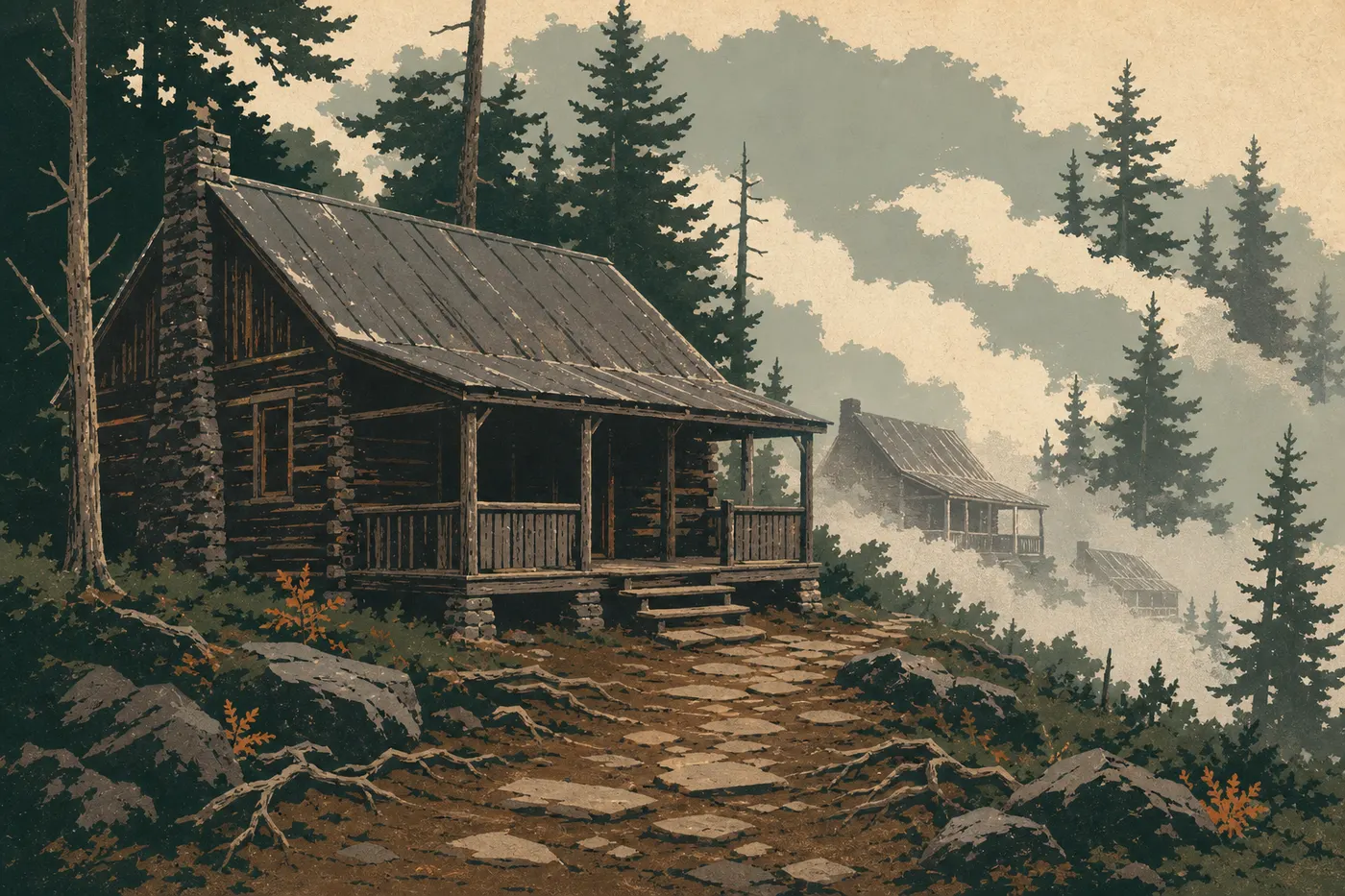
This is the park's only lodging with a roof and a bed. LeConte Lodge sits atop Mount Le Conte at 6,594 feet, and no road leads there. The shortest trail to reach it is about 5 miles one way. You have to hike up, and hike back down.
On-site, you'll find wood cabins without electricity or hot water in the showers, with meals served communally at shared tables. The experience is intentionally simple. That's exactly what gives it its charm, and it's why spots sell out within hours of reservations opening each October for the following season, which runs from May through November. If you're interested, check the lodge's reservation calendar several months ahead of time.
This isn't an option for families with very young children or for anyone attempting a high-elevation hike for the first time.
The Great Smoky Hotels and Lodges Guide takes a detailed look at LeConte Lodge and lodging around the park.
Camp in the Park: Park Campgrounds
Great Smoky Mountains has about a dozen NPS campgrounds spread across both sides of the park. Here are the main ones.
Tennessee side:
- Elkmont (438 sites): the park's largest campground, in Jakes Creek Valley, with easy access from Gatlinburg. A good base for exploring trails in the central area. Reservations are required through Recreation.gov.
- Cades Cove (159 sites): in the valley of the same name, perfect for seeing wildlife (deer and bears) early in the morning. It's in high demand. When we visited in September, we had booked six weeks ahead, and the wooded sites at the back of the loop were already taken.
- Cosby (157 sites): on the northeastern side, less crowded than Elkmont and a good fallback when the larger campgrounds are full.
- Abrams Creek (16 sites): tiny and available without reservations on a first-come, first-served basis. Complete peace and quiet.
North Carolina side:
- Smokemont (142 sites): a few miles from Cherokee, on Bradley Fork. The park's only campground open year-round. Ideal for the southern entrance.
- Deep Creek (92 sites): near Bryson City, with access to trails and river tubing areas, including the famous tube slides. Popular with families.
- Cataloochee (27 sites): in the park's most isolated valley, where elk have been reintroduced to the Appalachians. Reserve as early as possible.
During peak season (June through August and mid-October for fall foliage), Elkmont, Cades Cove, and Smokemont fill up weeks in advance. Reservations open six months ahead on Recreation.gov. The Great Smoky Camping Guide covers facilities, bear-safety rules, and practical advice for each site.
Where to Stay Around the Park: Gateway Towns
Gatlinburg (Tennessee)
This is the most convenient gateway. Downtown runs right along the road to the main entrance, so you can park your car in the evening and be in the park ten minutes later the next morning.
Gatlinburg fully embraces its tourist-town identity, with souvenir shops, plenty of restaurants, an aquarium, and a Ferris wheel on Parkway, the main street. It's lively, sometimes kitschy, and families love it. If you want some peace and quiet after a long day on the trail, choose lodging away from Parkway or stay in a cabin in the wooded hills above town.
There's a wide range of lodging: motels, B&Bs, chain hotels, and especially private cabins with deck hot tubs and mountain views. These are in high demand starting in spring.
Pigeon Forge (Tennessee)
Nine miles from Gatlinburg and a twenty- to twenty-five-minute drive from the park entrance. It's even more commercial than Gatlinburg, with Dollywood, major restaurant chains, and entertainment complexes. Lodging prices are often slightly lower than in Gatlinburg for comparable quality.
It's a good option if you're traveling with kids who are as interested in Dollywood or local attractions as they are in trails. Less suitable if the park is your only goal.
Townsend (Tennessee)
The opposite of Gatlinburg's bustle, Townsend has nicknamed itself "the peaceful side of the Smokies." This quiet little town sits at the park's western entrance, just a short distance from Cades Cove. There are few restaurants and few shops, and that's just fine.
It's ideal for couples and families who want a quiet setting, as well as hikers targeting the western area, including Cades Cove and Abrams Falls. There are fewer lodging options, but the cabins and B&Bs are carefully selected.
Cherokee (North Carolina)
On the southern side, at the park's North Carolina entrance. Cherokee is a town in the Cherokee Nation. Harrah's Cherokee Casino sits alongside the Museum of the Cherokee Indian, which is well worth a visit if you want to understand the history of the people who lived in these mountains long before the park was created.
Cherokee's direct connection to the Blue Ridge Parkway makes it a logical base if you're combining the park with a road trip along this scenic Appalachian route. The Region and Road Trip sections cover these routes.
Bryson City (North Carolina)
About 19 miles southwest of the park, this small mountain town offers a relaxed atmosphere far from the heavily touristed areas. It's the departure point for the Great Smoky Mountains Railroad, a scenic train through the Appalachians, and the gateway to the Deep Creek area. Independent coffee shops, craft beer, and an authentic mountain-town feel.
It's a good choice for anyone who wants to combine the park with a stay in a small, walkable town.
When to Book Your Great Smoky Mountains Lodging
The park has clear peaks in visitation, and they directly affect lodging throughout the region.
Mid-October (fall foliage): This is the absolute peak of the year. Appalachian fall foliage draws hundreds of thousands of visitors over a two- to three-week window. Every lodging option within 31 miles is booked solid. Reserve three to six months ahead if you're targeting this period.
June through August (summer vacation): Demand is high, driven by American families. Book hotels and cabins one to three months ahead, and book NPS campgrounds earlier.
Outside these two periods, you have more breathing room. The Best Time to Visit Great Smoky Mountains breaks down the seasons based on your priorities: foliage, hiking, wildlife, or avoiding crowds.
Lodging Budget: How Much Does It Cost to Stay in Great Smoky Mountains?
The ranges below are ballpark prices in U.S. dollars per night:
- NPS camping: $25 to $30 per site (official NPS rates; check Recreation.gov).
- Motel or chain hotel in Gatlinburg or Pigeon Forge: $80 to $150 in the off-season, $150 to $250 in peak season.
- Private cabin (2 to 4 people) in the hills around Gatlinburg or Townsend: $150 to $300 per night, with peaks above $400 during fall foliage.
- LeConte Lodge: an all-inclusive rate covering the night and meals, around $150 to $180 per person. Confirm the rate on the lodge's official website when you book.
These ranges cover lodging only. Our Complete Great Smoky Mountains Guide includes other expenses in an overall view.
Our Recommendation Based on Your Travel Style
First visit: Gatlinburg, for at least two nights. You'll be within walking distance of the main entrance, Sugarlands Visitor Center, and the most accessible trails. If you have a third night, move to Cherokee to explore the North Carolina side.
Traveling with kids: Gatlinburg or Pigeon Forge for convenience and extra attractions. Elkmont Campground is also a great experience if you're equipped for camping. Deep Creek works especially well for kids because of the river and tube slides.
Tight budget: An NPS campground remains the least expensive option. Cosby Campground is often less in demand than Elkmont. In town, Pigeon Forge offers slightly lower prices than Gatlinburg for comparable quality.
Immersed in nature: LeConte Lodge if you're an experienced hiker and planned ahead by reserving in October. Otherwise, Cataloochee or Abrams Creek offer unparalleled access to the wild. Townsend is the right choice on the town side if you want to avoid mass tourism.
Appalachian road trip: Bryson City or Cherokee as a base for heading toward the Blue Ridge Parkway. The Region and Road Trip sections develop these routes.
To fine-tune your day-by-day plans, the Great Smoky Mountains itineraries offer suggested plans based on the length of your stay.
Frequently Asked Questions
What's the best town to stay in when visiting the Smoky Mountains?
For a first visit, Gatlinburg (Tennessee) is the best town to stay in when visiting the Smoky Mountains. It's at the park's main entrance and has plenty of lodging and restaurants. Townsend is better for those seeking peace and quiet, while Cherokee is ideal for exploring the North Carolina side.
Can you stay inside Great Smoky Mountains National Park?
Yes, but options are limited. LeConte Lodge is the only lodge in the park, accessible only by trail, with a minimum hike of about 5 miles. The park also has about a dozen NPS campgrounds. Aside from these options, all lodging is in nearby towns.
What is the most beautiful part of the Smoky Mountains?
The most beautiful part of the Smoky Mountains depends on what you're looking for. Cades Cove on the Tennessee side is frequently cited for wildlife and panoramic valley views. Cataloochee on the North Carolina side appeals with its isolation and elk. Newfound Gap Road crosses the park from side to side, making it possible to see both in one day.
How many nights should you plan for a visit to Great Smoky Mountains?
Two nights let you cover the essentials. Three to four nights give you the flexibility to explore both sides and tackle longer trails. Our Itinerary & Length page lays out plans based on how much time you have.
Do you need to book lodging in Great Smoky Mountains far in advance?
During fall foliage season in mid-October, book three to six months ahead without hesitation. In summer, one to three months is usually enough. Outside the peak season, a few weeks may be sufficient. The most popular NPS campgrounds, including Elkmont and Cades Cove, also fill up quickly on Recreation.gov.