
Where to Stay in Great Smoky Mountains: Hotels and Lodges
The short answer: Great Smoky Mountains has just one lodging option inside the park, LeConte Lodge, and you can reach it only on foot after a strenuous hike. Almost everyone else stays in Gatlinburg, Tennessee, for the north entrance, or Cherokee, North Carolina, for the southern side. The guide to lodging in Great Smoky compares staying in the park with lodging in a gateway town. Here, we'll look at hotels and lodges in detail, address by address.
Park lodges and gateway towns (10)
- Lodge LeConte Lodge Tennessee side - summit of Mount LeConte (Alum Cave corridor) · late March - mid-November Directions ↗
- Gateway town Gatlinburg entrance Sugarlands (US-441 North) · hotels, restaurants, gas station Directions ↗
- Gateway town Pigeon Forge entrance Sugarlands (via Gatlinburg, ~11 miles) · hotels, supermarket, gas station Directions ↗
- Gateway town Sevierville entrance Sugarlands (via Pigeon Forge, ~22 miles) · hotels, supermarket, gas station Directions ↗
- Gateway town Townsend entrance Townsend Wye / Cades Cove (TN-73 West) · hotels, gas station, restaurants Directions ↗
- Gateway town Maryville entrance Townsend Wye (via Townsend, ~19 miles) · hotels, supermarket, gas station Directions ↗
- Gateway town Cherokee entrance Oconaluftee (US-441 South) · hotels, supermarket, gas station Directions ↗
- Gateway town Bryson City entrance Deep Creek (NC-19 / US-74) · hotels, gas station, restaurants Directions ↗
- Gateway town Maggie Valley entrance Oconaluftee (via Cherokee, ~16 miles) · hotels, gas station, restaurants Directions ↗
- Gateway town Waynesville entrance Oconaluftee (via Cherokee, ~28 miles) · hotels, supermarket, gas station Directions ↗
 Base map © OpenStreetMap · © CARTO
 ⚠ Lodge & Gateway town data is undergoing editorial review.
The Park's Only Lodge: LeConte Lodge
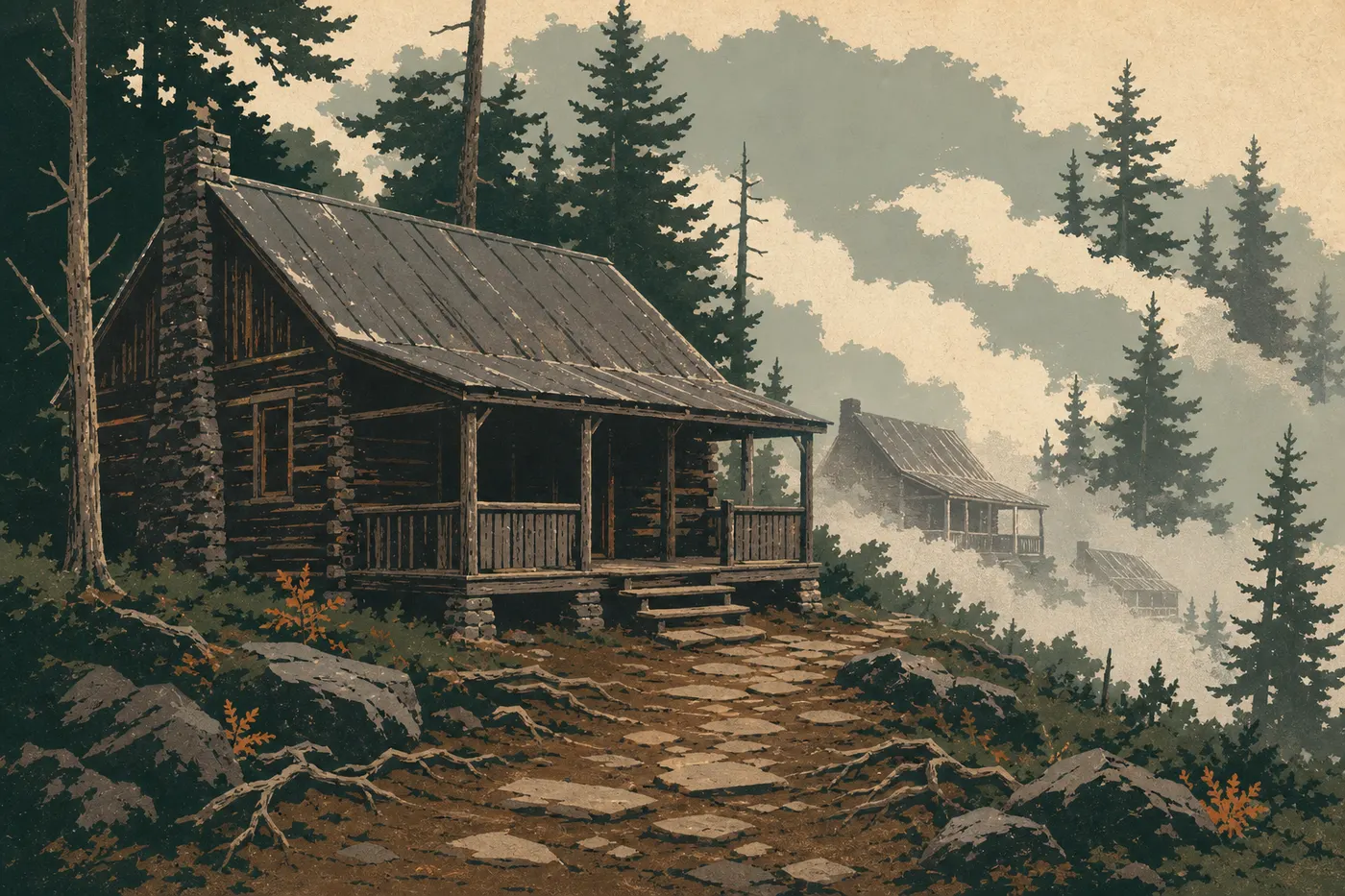
LeConte Lodge is the park's most unusual place to stay. It sits on the summit of Mount Le Conte, at about 6,594 feet, and you can't drive there. The shortest hike up, via the Alum Cave trailhead, is about 6.8 miles each way. Llamas carry in supplies and linens every week, which is no small feat.
The lodge has seven log cabins and a few shared lodge huts. There's no electricity or hot showers, but dinner and breakfast are included. In return, you'll wake up in the clouds above the Appalachian canopy, far from everything.
Reservations: The lodge opens reservations each fall for the following season, generally from late March through mid-November. Dates disappear within hours. If LeConte Lodge is part of your plans, check the park's official reservation opening calendar several weeks ahead of time.
Where to Stay Around Great Smoky Mountains: Gateway Towns
Great Smoky Mountains National Park stretches across Tennessee and North Carolina. It has three main entrances: Gatlinburg, Tennessee; Townsend, Tennessee; and Cherokee, North Carolina. That gives you two very different types of gateway towns to choose from, depending on your itinerary.
Gatlinburg, Tennessee: The Main Gateway
Gatlinburg sits right next to the park's north entrance. Sugarlands Visitor Center is a five-minute drive from downtown, and some trails start within walking distance of residential neighborhoods. It's the most convenient base for a trip focused on Newfound Gap Road and the Tennessee-side hikes.
Lodging ranges from budget motels to boutique hotels with views of the Great Smoky Mountains, along with private cabin resorts featuring wood interiors, hot tubs, kitchenettes, and forest-facing decks. Tourism drives the entire town. The main avenue offers wooden toys, vanilla candles, and bear-themed T-shirts. Some people love it; others would rather head back to their rooms early.
Good to know: The road between Gatlinburg and the park entrance gets congested by 9 a.m. in July and throughout October. Leaving before 8 a.m. makes a dramatic difference.
Pigeon Forge, Tennessee: Big Resorts, 10 Miles Away
Pigeon Forge is about 10 miles from the park entrance, along the same road from Gatlinburg. Hotels are often cheaper there, and the selection of large family resorts is broader. The town is home to Dollywood, Dolly Parton's theme park, which makes it a practical base for families who want to combine hiking with other activities. The drive to the park takes 15 to 20 minutes outside peak traffic.
Townsend, Tennessee: The Quiet Side of the Smokies
Townsend calls itself “the peaceful side of the Smokies.” It provides access to Cades Cove, one of the park's most photographed areas for wildlife viewing, including deer, wild turkeys, and black bears. Lodging is limited to a few motels, bed-and-breakfasts, and cabins. The atmosphere is much more relaxed than along the Gatlinburg-Pigeon Forge corridor. It's the ideal choice if Cades Cove tops your list or you want to avoid the crowds.
Cherokee, North Carolina: The Southern Gateway
Cherokee is the main gateway on the North Carolina side and the entry point to the Blue Ridge Parkway. The town lies within the lands of the Eastern Band of Cherokee Indians. Lodging includes independent hotels, cabins, and the imposing Harrah's Cherokee Casino Resort, a notable option if you want standard hotel comfort with parking and full services. Rates are generally 20 to 30% lower than in Gatlinburg for a comparable level of comfort.
Bryson City, North Carolina: The Authentic Alternative
About 19 miles from the park's southern entrance, Bryson City is the closest thing to a real town on the North Carolina side. Charming inns, small hotels, and a few B&Bs line Main Street. Bryson City is also the departure point for the Great Smoky Mountains Railroad, for those who want to combine mountain hiking with a steam-train ride. The Deep Creek area and its waterfalls are especially well suited to families.
How Many Nights Should You Plan?
Two nights is the bare minimum for covering both sides of the park without rushing. Three nights let you add Cades Cove, which you should target early in the morning, before 9 a.m., for wildlife viewing, along with a more strenuous hike and a sunrise outing. For a truly complete trip that includes a night at LeConte Lodge, plan on four to five days. The day-by-day itinerary for Great Smoky lays out options based on how much time you have.
When to Book and What to Expect to Pay
Great Smoky Mountains is the most visited national park in the United States. Admission is free, and much of the East Coast lies within a day's drive. Lodging stays under steady pressure from May through October.
July and October, peak season: October is the absolute peak, thanks to the fall foliage. Gatlinburg hotels often sell out several weeks ahead, and rates can double compared with the off-season.
April-May and November, shoulder season: April and May bring rhododendron and wild azalea blooms, which are highly photogenic, while prices remain reasonable. November gets cold quickly. Elevations in the park range from 876 to 6,644 feet, but traffic eases.
December-February, low season: Temperatures drop below 32°F at higher elevations. Some secondary roads close. Rates fall, and so do the crowds. Consider this period if you're looking for snow on the ridges and lower-priced lodging.
Budget: During peak season, decent hotels in Gatlinburg can be expensive. Private cabins, a very popular option in the Smokies, vary in price by size and season. Prices are generally lower in Cherokee for a comparable level of service. The best times to visit Great Smoky gives seasonal price ranges and periods to avoid.
Our Picks by Traveler Profile
Total immersion: LeConte Lodge. Book a year ahead and prepare physically. The elevation gain and distance are serious.
Convenience first: Gatlinburg, two minutes from the Tennessee entrance. Book several weeks ahead for summer and October.
Family on a budget: Pigeon Forge for its large resorts and proximity to Dollywood, or Cherokee if you're arriving from the south and want to avoid Gatlinburg's crowds.
Escape the crowds: Townsend on the Tennessee side, with access to Cades Cove, or Bryson City on the North Carolina side. There are fewer lodging options, but much more peace and quiet.
Frequently Asked Questions
What's the best town to stay in when visiting the Smoky Mountains?
The best town depends on your itinerary. Gatlinburg, Tennessee, is the most convenient for trails and the north-side entrances, while Cherokee, North Carolina, works better for visitors arriving via the Blue Ridge Parkway. For a quieter atmosphere, Townsend and Bryson City are excellent, less crowded alternatives.
Can you stay inside Great Smoky Mountains National Park?
Yes, but options are very limited. LeConte Lodge is the only enclosed lodging, apart from camping, in the park, and you can reach it only on foot after a hike of at least 6.8 miles. For nights outdoors, the Great Smoky camping guide covers the park's official campgrounds and reservation details.
Where are the Great Smoky Mountains located?
Great Smoky Mountains National Park straddles the Tennessee-North Carolina border. Its three main entrances are in Gatlinburg, Tennessee; Townsend, Tennessee; and Cherokee, North Carolina.
How much does a trip near Great Smoky Mountains cost?
The cost of a trip varies considerably by season and gateway town. During peak season, in July and October, expect to pay a premium for a room around Gatlinburg. Rates are noticeably lower in Cherokee and Pigeon Forge. Our When to Visit page gives a complete overview of price ranges by season.