
Great Basin with Kids: What to Do and How to Plan Your Visit
Great Basin is one of the few U.S. national parks with caves, ancient trees, and exceptional starry skies, all without the crowds. It works well for kids ages 5 or 6 and up for the park's main activities. Younger children can still enjoy the visit, but they won't be able to do the highlights, including the caves and high-elevation trails. Plan on two full days, give your family time to adjust to the altitude, and you'll leave with kids who are thrilled by the experience.
Why Visit Great Basin with Kids
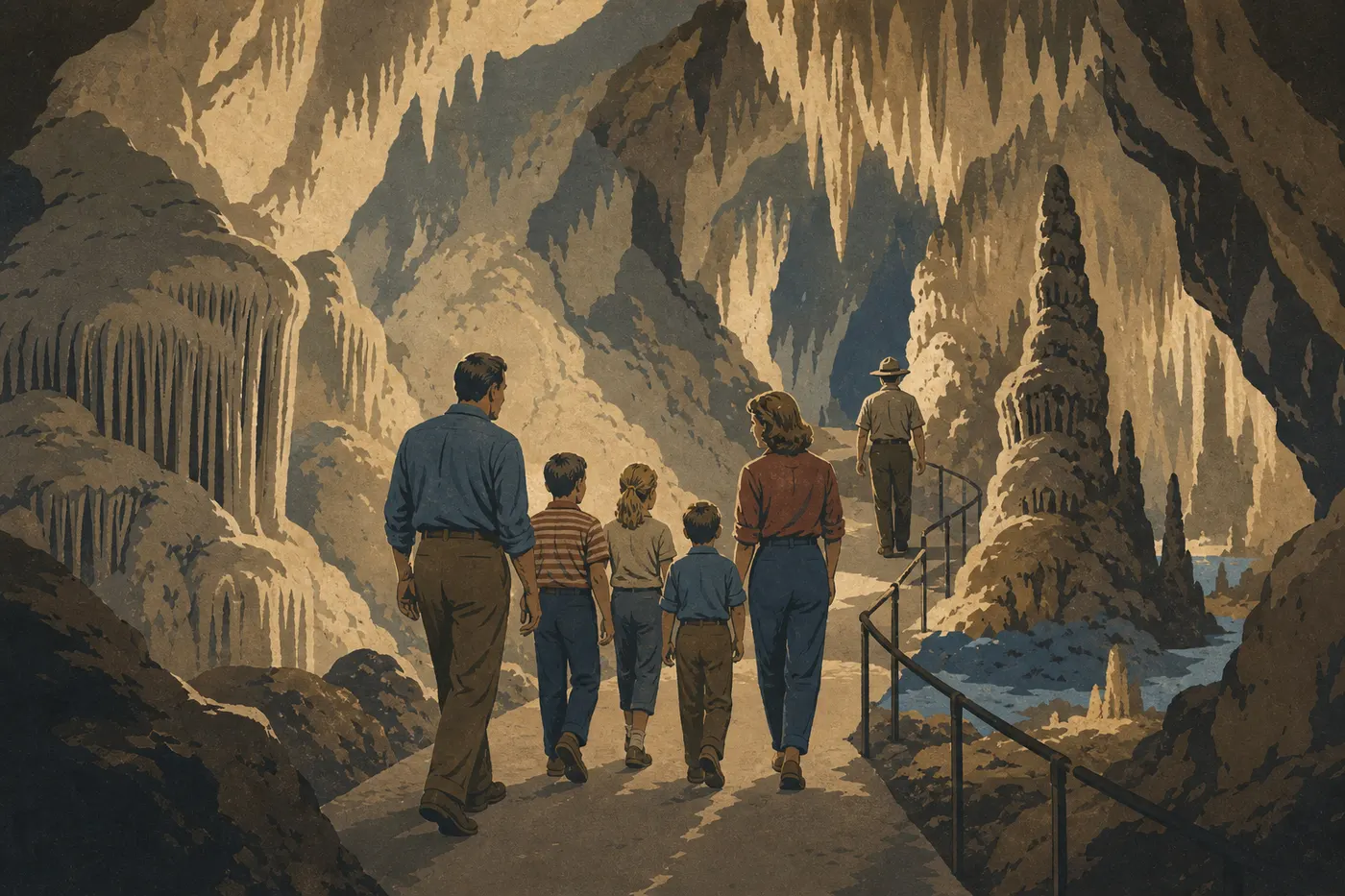
Caves in complete darkness. Lehman Caves are packed with dense karst formations, including stalactites, stalagmites, and especially rare calcite shields. A ranger with a flashlight, a narrow tunnel, and a room whose ceiling is covered in formations make this underground guided tour an easy way to hold kids' attention.
Trees that were here before Rome. The bristlecone pines (Pinus longaeva) growing high on Wheeler Peak are among the oldest living organisms on Earth, with some more than 5,000 years old. Telling an 8-year-old that a gnarled, stunted tree was already growing when the Egyptians were building their pyramids is a natural-history lesson no textbook can match.
An untouched night sky. Great Basin is one of the least light-polluted places in the American West. You can see the Milky Way with the naked eye for much of the year. A night in a tent with kids seeing a shooting star for the first time is worth a few extra hours on the road.
The park is free to enter, which is unusual among major U.S. national parks. You only pay for the guided cave tours.
Is Great Basin Good for Kids? What Age Is Best
Great Basin is a good choice for families, with one important caveat: altitude affects everything. The visitor center already sits at about 6,560 feet. Wheeler Peak Scenic Drive climbs to nearly 9,840 feet. At those elevations, young children tire more easily and are more likely to experience headaches and shortness of breath.
For children under 3, Lehman Caves are generally off-limits because of guided-tour safety requirements, uneven ground, and low passages. The park is still enjoyable by car and around the visitor center, but the main activities won't be accessible to them.
Starting at ages 5 or 6, most cave tours and short trails are manageable. The Junior Ranger program works well for kids in this age range. Take high-elevation hikes at a pace they can handle.
By ages 8 to 10, kids can take on the full family itinerary, including trails to the bristlecone pines and alpine lakes, as long as they're used to hiking.
When to Visit with Kids (The Easiest Season for Families)
June and September are the most comfortable months. The Great Basin weather guide covers conditions month by month. Here's what matters most for families.
In July and August, valley temperatures regularly rise above 86°F, while high-elevation nights drop below 41°F. Afternoon thunderstorms often hit between 2 and 5 p.m., sometimes with little warning. With kids, that means scheduling every hike before noon and heading back down before storms develop.
June and September bring cool days, fewer thunderstorms, and trails that remain accessible at higher elevations. May can work, but some high-country trails may still be snow-covered.
In winter, the park doesn't close, but Wheeler Peak Scenic Drive is closed by snow, and activities are limited to the area around the visitor center.
Our recommendation for families is the second half of September. The weather is ideal, Lehman Caves tours are easy to book, and the fall light on Wheeler Peak is especially beautiful.
How Many Days to Plan for a Family Visit
Two full days cover the main family activities. Here's a realistic way to divide your time.
Day 1: Take a guided tour of Lehman Caves in the morning, with reservations recommended. Complete the Junior Ranger activities at the visitor center in the early afternoon, walk the Mountain View Nature Trail, and watch the sunset from a viewpoint along Wheeler Peak Scenic Drive.
Day 2: Leave early for the high-elevation parking area, then hike to the bristlecone pines or the alpine lakes depending on your children's ages and energy levels. Return to the valley before 1 p.m. and spend the evening stargazing if you're camping.
A third day is worthwhile if your kids are strong hikers and you'd like to explore Lexington Arch, which is reached by an unpaved road. The Great Basin itinerary guide offers plans for different paces.
What to Do in Great Basin with Kids: Our Picks
Lehman Caves
The park's number-one attraction is also the best fit for nearly every age group. Guided tours last 60 to 90 minutes, depending on the route you choose, such as the Lodge Room Tour or Grand Palace Tour. The cave stays around 50°F year-round, so bring a sweater for each child. The exceptionally rare calcite shields are the highlight. Booking well ahead is strongly recommended in July and August.
Wheeler Peak Scenic Drive
This 12-mile road from the visitor center climbs to the high-elevation parking areas. Standard cars can drive it, although length restrictions apply beyond a certain point. The successive viewpoints make it easy to stop as often as you like. You can watch for birds and get your first views of the bristlecone pines from the car, then head out on foot if the kids want to explore. The drive back at dusk is worth it for the views.
Stargazing
Great Basin is one of the least light-polluted national parks in the United States. Rangers lead astronomy programs in the evening, especially during the Astronomy Festival in September. Seeing Saturn through a telescope at age 10 is the kind of moment kids remember. The Great Basin activities guide lists all the available options.
Easy Family Hikes (Short, Little Elevation Gain, Stroller-Friendly)
Most trails in Great Basin gain elevation quickly, so easy doesn't mean flat. Our family picks are aimed at kids age 5 and up.
Mountain View Nature Trail
This interpretive trail near the visitor center is the most accessible in the park. It's short, less than 1.2 miles, and follows the area around Lehman Caves through varied vegetation. An all-terrain stroller can manage the lower section. It's ideal for your first morning, before the cave tour.
Bristlecone Pine Trail
From the Wheeler Peak parking area, at roughly 9,840 feet, this trail leads straight to the bristlecone pine grove. The elevation gain is moderate and the distance is manageable. Kids ages 7 or 8 and up who are used to hiking in the mountains should handle it without trouble. At this altitude, keep the pace slow and take frequent breaks.
Alpine Lakes Loop
This trail passes Teresa Lake and Stella Lake, two alpine lakes in a high-mountain setting. The views of Wheeler Peak from the shores make the effort worthwhile. It's a good fit for kids age 8 and up who are in good physical condition.
Skip this one with kids: Wheeler Peak Summit Trail, which is about 8.7 miles round-trip with a very strenuous climb. The Great Basin hiking guide provides complete trail profiles and current conditions.
The Junior Ranger Program
The Junior Ranger program is one of the National Park Service's best ideas. At Great Basin, kids pick up an activity booklet at the visitor center. It includes field observations, quizzes, and scavenger hunts about the park's wildlife and geology. They complete it during the visit, then show it to a ranger, who leads them in a pledge and gives them an official badge.
The program is free and comes in age groups, roughly ages 6 to 9 and ages 10 and up. It keeps kids active and curious all day, which is a real advantage for parents.
Practical tip: pick up the booklet as soon as you enter the park so the kids can work on it throughout the day instead of rushing through it during the last half hour before you leave.
Safety with Kids
Great Basin isn't a dramatically dangerous park, but four issues deserve special attention when you're traveling with kids.
Altitude. The elevation difference between the valley and the high country is more than 7,900 feet. Driving straight in from Las Vegas, a low-elevation city, and then hiking at 9,840 feet the next morning is a bad idea. Plan at least one night to acclimatize before attempting high-elevation trails. In children, symptoms of altitude sickness include persistent headaches, nausea, loss of appetite, and unusual irritability. If any of these signs appear, descend immediately.
Afternoon thunderstorms. In summer, storms can build quickly, often between 1 and 5 p.m. Follow this rule without exception: never start a high-elevation hike after 10 a.m. if the sky is already hazy. At the first rumble of thunder, leave ridgelines and exposed areas and seek lower ground. Obey the speed limits on Wheeler Peak Scenic Drive when the road is wet.
Wildlife. Rattlesnakes live in lower-elevation areas, especially among talus slopes and brush. Never put your hands into a spot you haven't checked visually. Black bears also live in the park, so always store food in the bear-resistant lockers at campgrounds, even when you're stepping away for a short time.
Dehydration. Great Basin is a dry desert, and kids can become dehydrated without realizing it. Bring at least 0.5 liters of water per person for every hour of activity, and more in summer. The park's water sources are marked on the official map available at the visitor center.
Where to Stay with Kids (In and Around the Park)
The park has several campgrounds managed by the NPS. Wheeler Peak Campground, at high elevation, offers an exceptional mountain setting and very cold nights, so a warm sleeping bag is essential. Lower Lehman Creek Campground is easier to reach and closer to the visitor center, making it a good choice for families with young children.
Outside the park, Baker, Nevada, 5 miles away, has a few motel and B&B-style accommodations. For more comfort, Ely, about 60 miles away, has the usual hotel chains. For details, Great Basin lodging options and the park camping guide explain the comfort levels and booking tips.
Meals and Breaks with Kids
This is the logistical detail you really can't overlook: there's almost nowhere to eat inside the park. The visitor center has a picnic area and a vending machine. That's about it.
Baker has a few local diners serving simple, hearty food, which hits the spot after a day at high elevation. Families who are camping need to bring all their supplies from Ely or from the starting point of their road trip.
Here are a few practical habits for active days. Pack calorie-dense snacks such as dried fruit, bars, and cheese for high-elevation trails, where kids burn a lot of energy. Plan hot meals for cool evenings at camp, and keep a supply of cold water in the car. Our Where to Eat page lists options in Baker and the immediate area around the park.
Family Budget
The park is free to enter, which sets it apart from nearly all major national parks. The only access fees are for guided tours of Lehman Caves. Children pay reduced rates, and kids under 5 are generally admitted free. Check current prices at the visitor center when you arrive.
If your road trip includes other federal national parks, the America the Beautiful pass pays for itself quickly after just two or three paid entrances. It also covers entry to Great Basin, even though the park is free, and may apply to the caves depending on the current fee rules. Our editorial page on Fees and passes explains the available entrance fees and passes.
Plan ahead for food costs. Prices in Baker reflect the town's remote location, and a round trip to Ely for groceries takes almost two hours of driving. Bring more than you think you'll need rather than running out.
Things to Combine Around Great Basin with Kids
Great Basin is often a key stop on a road trip along legendary U.S. Highway 50, known as the “Loneliest Road in America.” It's a good fit for families looking for an authentic experience away from the crowds.
Salt Lake City and the surrounding area, Utah, to the east: the Natural History Museum of Utah is one of the best paleontology museums in the United States, with dinosaurs galore. The Great Salt Lake makes kids float like corks, a memorable experience for ages 6 to 12.
Las Vegas to the south: a natural starting or ending point for a Nevada loop. About five hours away by car, the city offers all the logistical conveniences you need, even though its atmosphere isn't especially suited to families with young children.
Death Valley to the southwest: combining Great Basin and Death Valley lets you see two geographic extremes in a few days, from a cold high-elevation desert to a hot desert below sea level. Our Regions and Road Trips guides offer combined itineraries.
Great Basin with Kids: Is It Worth It?
Yes, absolutely. Great Basin isn't a park you simply check off a list. It's a park where you actually slow down. The lack of crowds, which some visitors see as a drawback, is a real advantage for families. Rangers have time to talk with kids, trails don't feel like pedestrian highways, and the Junior Ranger program unfolds without competing for the attention of an overwhelmed staff member.
Your kids will probably remember Lehman Caves longer than many more heavily promoted parks. Add the free admission, incomparable starry skies, and trees that have lived through five millennia, and the experience is hard to beat. If your family is comfortable with altitude and long drives, Great Basin unquestionably deserves a place on your Nevada road trip.
Frequently Asked Questions
Is Great Basin good for kids?
Great Basin National Park works well for kids ages 5 or 6 and up for the main activities, including cave tours, short hikes, and the Junior Ranger program. Lehman Caves aren't accessible to children under 3. Altitude is the main concern, so plan an acclimatization day before any strenuous activity at elevation.
Is Great Basin worth visiting as a family?
Great Basin is well worth visiting, especially for families who want to avoid crowded parks. Admission is free, Lehman Caves are unique in the American West, and the night sky is among the darkest in the country. The park requires advance planning for food because there are almost no dining options on-site, but the effort pays off.
What's the best time to visit Great Basin with kids?
June or September is the best time for a family visit, with moderate temperatures, fewer thunderstorms than in midsummer, and high-elevation trails that are accessible. Our Weather page covers conditions month by month.
What is there to do in Great Basin with kids?
The main family activities are a guided tour of Lehman Caves, Wheeler Peak Scenic Drive, hikes to the bristlecone pines and alpine lakes, the Junior Ranger program, and stargazing. Our Things to Do page lists all the available options.
How long does it take to visit Great Basin with kids?
Two full days cover the essentials: the caves and visitor center on day one, then a high-elevation trail and an evening astronomy program on day two. A third day is welcome for families who want to explore less-visited areas. Our Itineraries and Trip Length page offers plans for different paces.
What is the Great Basin of the United States?
The Great Basin is a vast endorheic watershed in the American West. Its waterways flow into neither the Atlantic nor the Pacific. Great Basin National Park protects a representative portion of this region, with a high-elevation desert ecosystem, distinctive wildlife and plants, and remarkable geological formations such as Lehman Caves.