
Where to Stay in Great Basin: Inside the Park, Baker, or Ely?
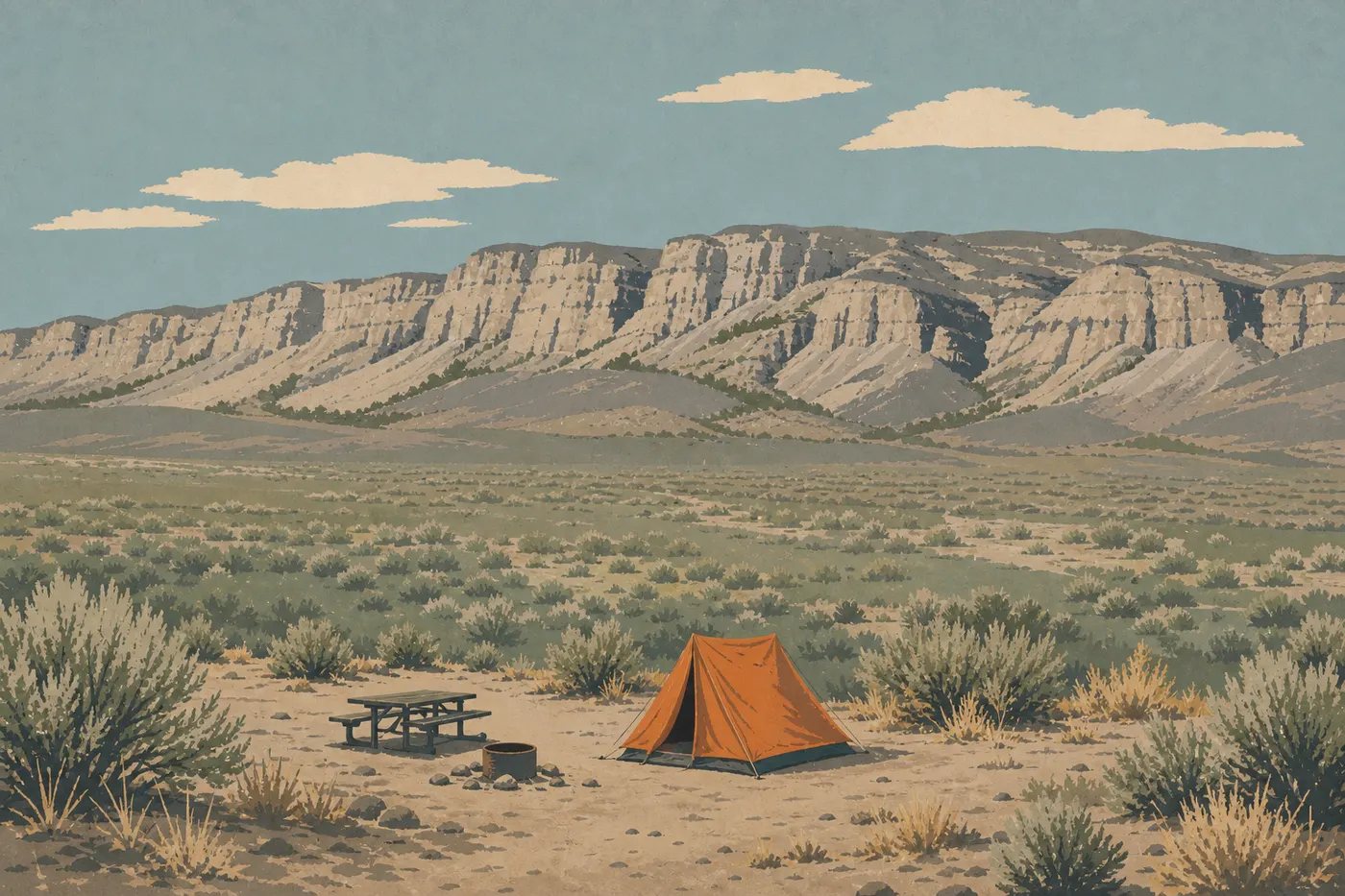
Great Basin National Park makes one thing clear from the start: there’s no lodge or hotel complex within the park, just NPS campgrounds and a tiny settlement of a few hundred people 5 miles from the entrance. That’s not a shortcoming. It’s part of the park’s character. Great Basin is deliberately rugged, and you’ll see that reflected in its lodging options.
In short: plan on at least two nights to see the highlights, with Lehman Caves on day one and Wheeler Peak on day two. If you’re camping, stay in the park. The NPS campgrounds are well maintained, and the night sky is among the darkest in the United States. If you prefer a roof over your head, Baker, 5 miles away, is your first choice. Ely, about 70 miles away, is the more comfortable option. For a detailed day-by-day plan, our Great Basin itinerary guide has you covered.
Where to stay: towns, lodges and campgrounds (11)
- Gateway town Baker entrance Lehman Caves main entrance (NV-488, ~3 miles) · hotels, gas station, restaurants Directions ↗
- Gateway town Ely entrance Lehman Caves main entrance (US-50 + NV-487/488, ~68 miles) · hotels, supermarket, gas station Directions ↗
- Gateway town Delta entrance Lehman Caves main entrance (US-50 + NV-487/488, ~115 miles) · hotels, supermarket, gas station Directions ↗
- Gateway town Milford entrance Lehman Caves main entrance (UT-21 + NV-487/488, ~93 miles) · hotels, gas station, restaurants Directions ↗
- Campground Lower Lehman Creek Campground see NPS · 20 sites Directions ↗
- Campground Upper Lehman Creek Campground see NPS · 23 sites Directions ↗
- Campground Wheeler Peak Campground see NPS · 37 sites Directions ↗
- Campground Baker Creek Campground see NPS · 37 sites Directions ↗
- Campground Grey Cliffs Campground see NPS · 16 sites Directions ↗
- Campground Snake Creek Primitive Campgrounds first come, first served · 12 sites Directions ↗
- Campground Dump Station see NPS · 0 sites Directions ↗
 Base map © OpenStreetMap · © CARTO
 ⚠ Gateway town & Lodge data is undergoing editorial review.
Stay in the Park or Outside It?
The choice is clearer here than in most major American parks for one practical reason: Great Basin has no hotel lodging inside its boundaries. There’s no concession-operated lodge, no NPS cabins, and no glamping. Much of the park is designated wilderness, and that commitment to a wild landscape remains intact.
The result is simple: either camp in the park, which we strongly recommend, or stay outside and drive back every morning.
Choose camping in the park if you:
- are comfortable sleeping in a tent or van
- want to enjoy the starry sky (Great Basin is one of the least light-polluted parks in the NPS system)
- want to hit the trails at dawn without an hour of driving
Choose lodging outside the park if you:
- are traveling with young children or people who don’t sleep well in a tent
- need reliable internet or a guaranteed hot shower
- arrive late at night and leave early (a short, two-day stay)
In those cases, Baker is the obvious choice for its proximity. Choose Ely if you want more services or you’re continuing on a road trip along U.S. Highway 50.
Staying in Great Basin: Lodges and Park Lodging
Unlike Yellowstone, Zion, or Grand Canyon, Great Basin National Park has no lodge inside the park. There’s no hotel concessioner and no NPS reservation system for rooms.
That’s not something a future season will fix. It’s a structural choice tied to the park’s management philosophy and the extent of its wilderness areas. If you’re looking for a bed inside the park, you won’t find one. Camping is the only lodging infrastructure the park provides.
Camping in Great Basin: Park Campgrounds
This is where the real choice comes in. Great Basin has several campgrounds at dramatically different elevations and with very different atmospheres. Your choice of campground can completely change the experience.
Wheeler Peak Campground
The park’s signature campground. Tucked into the bristlecone pine forest at about 9,800 feet, where these thousand-year-old trees grow in the alpine zone and nowhere below it, it provides direct access to the most spectacular trails: the Alpine Lakes Loop, the Glacier Trail, and the ridge toward the summit of Wheeler Peak, at 13,064 feet.
Watch the nighttime temperatures. Even in July, they can easily drop to 32°F or below. Bring a winter sleeping bag and a serious insulating layer. The campground usually opens as the snow melts, in late May or early June depending on the year, and closes in the fall.
Some sites can be reserved on Recreation.gov. The rest are first come, first served. On July and August weekends, the campground is regularly full before noon. Reserve as soon as the booking window opens, four to six weeks ahead.
Lehman Creek Campgrounds (Lower & Upper)
These two campgrounds, at a more moderate elevation of around 6,900 feet, are the most accessible in the park. You’ll find a paved road all the way to the entrance, space for RVs, and an earlier opening in spring with a later closing in fall. They’re just a few minutes’ walk from the visitor center and the meeting point for guided tours of Lehman Caves.
They’re ideal for families, travelers arriving in the evening, or RVers who don’t want to navigate a gravel road. Lower Lehman Creek Campground, shaded by cottonwoods and firs, is especially pleasant.
Baker Creek and Snake Creek
You reach these two more remote campgrounds by gravel roads, which is exactly the point: fewer people, more quiet, and a night sky without compromise. The tradeoff is that the roads aren’t suitable for every type of vehicle. Check with the visitor center before heading out with a trailer or a large RV.
Snake Creek also serves as a trailhead for less-visited hikes in the southern part of the park if you want to avoid the busiest trails.
About reservations: Recreation.gov manages the reservable sites. Outside Wheeler Peak during peak season, most campgrounds operate on a first-come, first-served basis. The high-elevation campgrounds close with the first snow, sometimes as early as October depending on the weather.
Where to Stay Around Great Basin: Gateway Towns
Baker, Nevada
Baker is Great Basin’s official gateway. The town is just 5 miles from the park entrance along Nevada State Route 488. It has a few hundred residents, a bar and restaurant, a small convenience grocery, and a handful of motel or inn rooms and cabins.
It’s the most convenient option if you want a nearby base without camping. But it’s important to be realistic about Baker. There’s no pharmacy, no wide variety of restaurants, and internet service can be unreliable. The town shuts down early, which isn’t a drawback when you’re heading back to the park at dawn.
The number of rooms is very limited. In July and August, they’re booked several weeks ahead. Reserve as soon as your dates are set.
Ely, Nevada
Ely is about 70 miles west of Baker along U.S. Highway 50, known as “the Loneliest Road in America.” The drive to the park entrance takes about 1 hour 15 minutes.
This is the region’s real town, with chain hotels such as Holiday Inn Express and Best Western, independent motels, a range of restaurants, supermarkets, and gas stations. For families or travelers who need to restock in a serious way, Ely is a solid option. Rates are reasonable and nowhere near the markups found in gateway towns for heavily visited parks.
Ely is also worth a stop if you’re traveling along U.S. Highway 50. The Nevada Northern Railway Museum offers steam locomotive rides, and the town has preserved the atmosphere of a former mining city that’s worth exploring.
Pioche, Nevada
Pioche isn’t a natural base for Great Basin. It’s more than two hours south, in Lincoln County. Still, it’s worth mentioning if you’re driving up from Las Vegas or putting together a southern Nevada loop. The Overland Hotel and Saloon, one of the town’s few lodging options, offers an authentic Old West atmosphere without touristy gimmicks. Add it to a larger circuit rather than using it as your dedicated base for the park.
When to Book Lodging in Great Basin
Great Basin is one of the least visited U.S. national parks, with about 130,000 visitors a year compared with several million for Zion or Yellowstone. That doesn’t mean lodging is unlimited. The supply is simply very small, and it fills up quickly during peak season.
June through August (peak season): Baker gets tight. Book your rooms six to eight weeks ahead. On Recreation.gov, Wheeler Peak sites are usually gone within days of the booking window opening. Ely is more available, but prices rise there too.
May and September: demand drops noticeably. Two to three weeks’ notice is enough for Baker. In Ely, you can often find a room at the last minute. High-elevation campgrounds may still be closed in early May.
October through April: Baker slows down, and some lodging businesses close for the fall. Wheeler Peak Campground closes with the first snow. Ely remains open year-round. The lower-elevation Lehman Creek Campgrounds sometimes stay open longer, depending on conditions.
Our guide to the best times to visit Great Basin breaks down conditions month by month if you’re still unsure about the ideal window.
Lodging Budget: What Does It Cost to Stay in Great Basin?
Great Basin is one of the most affordable national parks to visit: free admission, reasonably priced NPS campgrounds, and regional hotels without resort markups.
| Option | Approximate nightly range |
|---|---|
| NPS campground (Great Basin) | $15-$25 per site |
| Motel or inn in Baker | $90-$160 per room |
| Chain hotel in Ely | $80-$150 per room |
| Cabin or unique lodging (region) | $120-$200 |
These are peak-season rates. In May or September, expect hotel prices to be 20% to 30% lower. NPS camping is priced per site regardless of the number of people. Since park admission is free, Great Basin is one of the least expensive destinations on a national park road trip.
Our Recommendation for Different Travelers
First visit, two nights: spend the first night at Lehman Creek Campground for easy logistics and a morning visit to Lehman Caves. Spend the second night at Wheeler Peak Campground so you can start the alpine trails at sunrise. Two nights in the park, with no compromises. This is the setup we recommend to almost every first-time visitor.
Families with children: an inn or motel in Baker makes nights and mornings easier. You’re 5 miles from the entrance, so you can leave early and return in time for dinner. Lehman Creek Campgrounds also work well if your kids are used to tent camping.
Traveling on a tight budget: NPS campgrounds at $15-$25 per night, combined with free admission, make Great Basin one of the cheapest parks for an overnight stay. Prepare your own meals at the campground with a camp stove, some pasta, and a little ingenuity.
For stargazing: don’t compromise. Sleep in the park, away from Baker’s lights. Wheeler Peak Campground and Baker Creek offer rare darkness in the United States. Bring a red light to protect your night vision, then simply wait for your eyes to adjust.
Road trip along U.S. Highway 50: use Ely as your base. Drive to Great Basin in the morning and stay on your route in the evening. You’ll get less immersion, but more flexibility if your trip includes several stops over multiple days.
To plan your days in the park, our complete Great Basin guide and our Itinerary & Length of Stay page lay out all the options based on the time you have.
Frequently Asked Questions
What is the closest town to Great Basin National Park?
The closest town is Baker, Nevada, 5 miles from the main entrance along Nevada State Route 488. It’s a very small settlement with a few hundred residents, a handful of lodging options, and one restaurant. Availability is limited, so book ahead during peak season.
Is it better to stay inside or outside the park when visiting Great Basin?
Great Basin has no lodge, so staying in the park means camping. If you’re camping, stay in the park. The campgrounds are well maintained and the night sky is exceptional. If you prefer a bed, Baker, 5 miles away, or Ely, 70 miles away, are the only serious alternatives.
What is the best town to stay in when visiting Great Basin?
Baker is the most convenient because of its proximity, just 5 miles away, but lodging is very limited. Be sure to book ahead during peak season. Ely is a better fit for travelers looking for comfort or services, at the cost of about 1 hour 15 minutes of driving each way to the park.
How many days do you need to visit Great Basin?
Two full days cover the highlights: a visit to Lehman Caves on the first day and a hike toward Wheeler Peak on the second. Our Itinerary & Length of Stay page offers suggested plans for one, two, or three days.