Great Basin National Park: The Complete Visitor Guide
Great Basin is one of the least-visited national parks in the country, and that's exactly what makes it special. Tucked into eastern Nevada just a short distance from the Utah border, it packs a high-desert landscape, a marble cave, ancient trees, and some of the darkest night skies in the country into a single mountain range. You won't run into many people here. You can breathe easy.
The short version. Plan on 1 to 2 days in Great Basin. Set aside half a day for Lehman Caves (reservations required) and a full day for Wheeler Peak Scenic Drive and its high-elevation trails. The park sits near the town of Baker, in a remote corner of Nevada, so fill up your tank and spend the night to enjoy the starry sky. That's the park's real signature.
Great Basin at a Glance: Where the Park Is and How to Get There
The park occupies the Snake Range in White Pine County, at the far eastern edge of Nevada. This is the Great Basin that gives the park its name, a vast region where no river reaches the ocean, made up of dry valleys and isolated mountains. The change in elevation is striking. Nearly 7,900 feet separate the valley floor from the top of Wheeler Peak, which rises to almost 13,100 feet. In practical terms, you can drive from sagebrush desert to alpine forest in about 30 minutes.
Getting there takes some planning because the park is far from everything. From the major east-west highways (U.S. Highways 6 and 50, along the legendary "Loneliest Road in America"), take Nevada State Route 487 south for about 5 miles to Baker, then Nevada State Route 488 west for 5 miles to the park entrance. If you're coming from Utah to the south, take Utah State Route 21 north. The nearest useful airports are still a long way off: Las Vegas and Salt Lake City are each about 5 hours away by car. Great Basin is rarely a stand-alone destination, so it usually fits into a larger road trip through the West.
To plan distances, stops, and fuel, use our guide to getting to Great Basin. If you're building a regional itinerary, our road trips and regions can help you fit Great Basin into a logical Nevada-Utah loop.
Entrance Fees, Passes, and Reservations
Good news for your budget: Great Basin doesn't charge an entrance fee. You can access the park and the scenic drive for free year-round whenever snow conditions allow. It's one of the few major Western parks that remains free, which makes it a smart stop on a road trip.
The exception is Lehman Caves. Cave tours cost money and should be reserved ahead of time, especially in summer when time slots fill quickly. The park's campgrounds also charge fees. Rates and procedures change from season to season, so always check current prices and availability before you leave. Our Fees & Passes page keeps that information in one place. If you're collecting cancellation stamps, the Passport & Stamps page tells you where to stamp your booklet at the visitor center.
Reservations, Permits, and Rules to Follow
Lehman Caves: Reservations are strongly recommended during the busy season (June, July, and August) through Recreation.gov. Tours have limited capacity, and morning time slots go first.
Camping: Most campgrounds operate on a first-come, first-served basis with no reservations. Check Recreation.gov before leaving to confirm each campground's status, including winter closures and construction.
Hiking: You don't need a permit for the park's trails, including the climb to Wheeler Peak. If you're heading into the backcountry, leave your itinerary with the visitor center.
Essential rules:
- Fires are allowed only in the provided fire rings at campgrounds. Ground fires are prohibited.
- Pets are allowed on roads and in campgrounds, but not inside the caves or on most trails.
- Collecting plants, minerals, or wood is prohibited, including dead wood.
- Drones are prohibited throughout the park.
- Alcohol is prohibited in some areas. Check the signs on site.
Getting Around Great Basin
You'll explore Great Basin by car, with no shuttle and no timed entry reservation system. The park's backbone is Wheeler Peak Scenic Drive, a paved road that climbs about 12 miles from Lehman Caves Visitor Center to roughly 9,800 feet, with overlooks and trailheads along the way.
Two practical cautions matter here. First, the upper section of the road closes under snow in winter and early spring. Full access generally runs from late spring through fall, depending on snowfall. Second, Scenic Drive is not recommended for vehicles longer than about 23 feet because of its tight turns and steep grades. If you're traveling by RV, park the big rig at the bottom. Other routes, such as Baker Creek Road and Snake Creek Road, are gravel roads that call for careful driving and, in some cases, a high-clearance vehicle.
For current conditions on secondary roads and vehicle-specific advice, see how to get around Great Basin. If you're traveling by van, also check our RV guide.
How Long Should You Spend in Great Basin?
Plan on one full day for the highlights and two days if you want to take your time. In a well-planned day, you can take a guided tour of Lehman Caves in the morning, have a picnic, then drive Scenic Drive and hike a high-elevation trail in the afternoon. It's doable, but tight.
Two days are much more rewarding for one specific reason: the sky. Spending the night lets you experience the starry sky that gives the park its reputation, something you can't see if you leave before sunset. A second day also gives you time for a longer hike to the alpine lakes or bristlecone pines. To build an hour-by-hour plan based on the number of nights you have, our Itinerary & Length of Stay page offers ready-to-use outlines.
Plan your visit
What to See and Do in Great Basin
The park is organized around a few distinct areas. Here's how to approach them.
Road trip journal · 4 areas
Lehman Caves
This is the park's historic attraction and the only one that requires a reservation. Lehman Caves is a richly decorated marble cave with stalactites, stalagmites, columns, and, most notably, rare shield formations that make it unique. You must visit with a ranger-led group, on routes of varying lengths. The temperature stays cool year-round, around 50°F, so bring a jacket even in midsummer. Reserve early because summer tours fill up quickly.
The Scenic Drive and Wheeler Peak Area
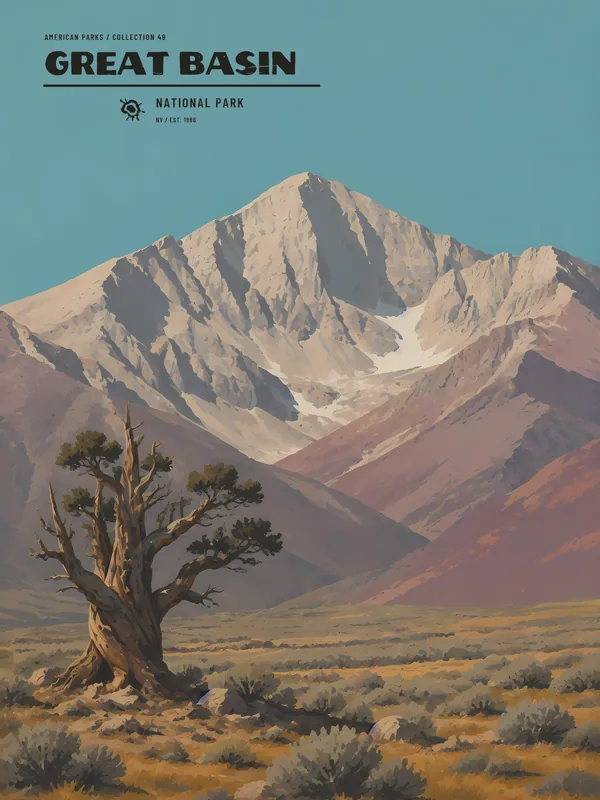
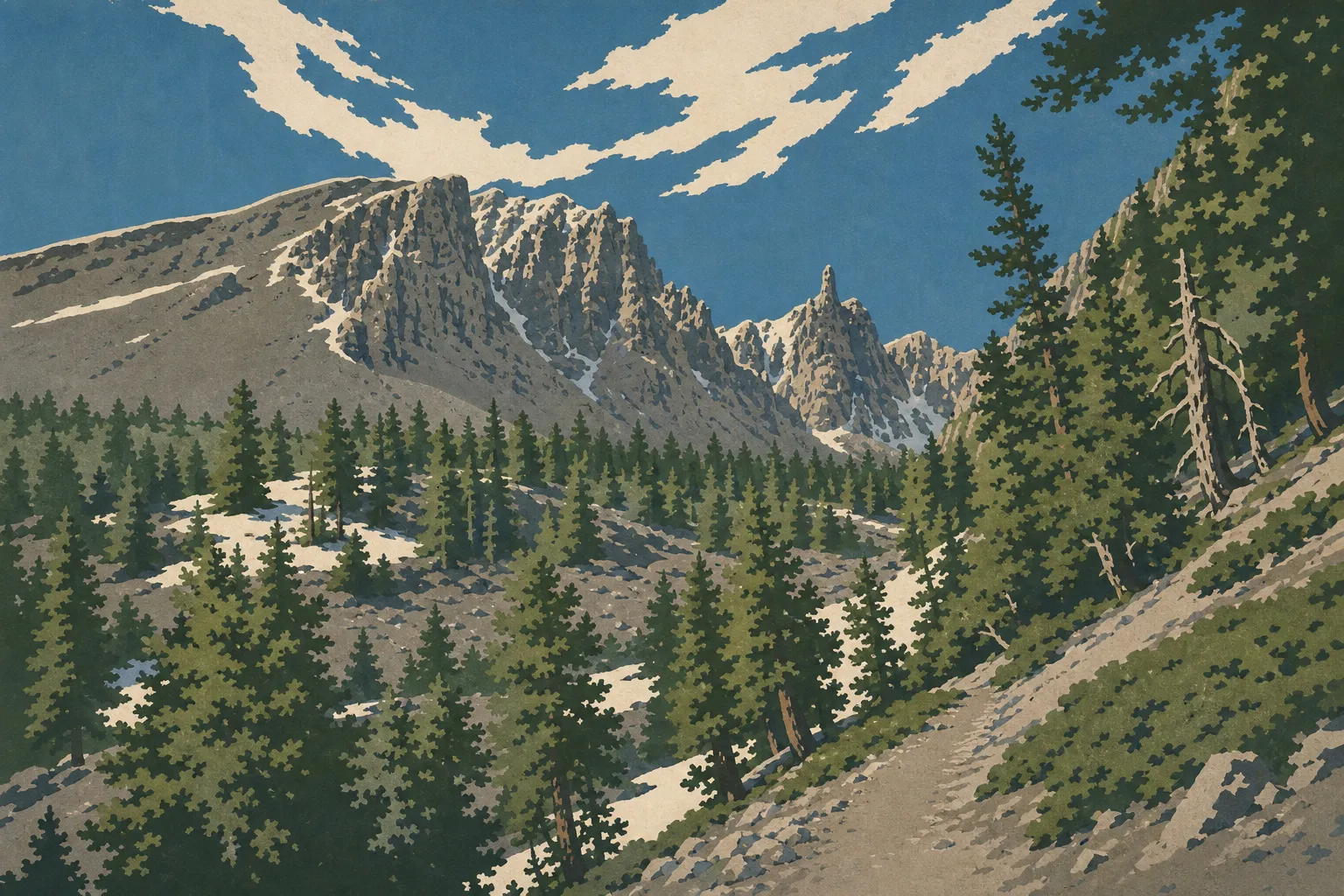
This is the park's alpine heart. At the top of Scenic Drive, you'll reach a rocky plateau where some of the best hikes begin. Three highlights are concentrated here. First come the bristlecone pines, twisted by the wind and among the oldest living organisms on Earth. Some are several thousand years old, and a grove is accessible on foot. Then there's the small rock glacier tucked beneath the north face of Wheeler Peak, one of the few in the Great Basin. Finally, the alpine lakes, Stella Lake and Teresa Lake, are two clear pools beneath the peaks, connected by a family-friendly loop. Strong hikers can aim for the demanding ascent of Wheeler Peak, made harder by the altitude.
The Night Sky
At Great Basin, the main attraction begins when the sun goes down. Far from light pollution, the park offers remarkably dark skies where you can see the Milky Way with the naked eye. Rangers offer astronomy programs during the season. Bring a red-light flashlight, give your eyes about 20 minutes to adjust, and look up. It's free and unforgettable.
Baker Creek and the Backcountry
If you want to get away from the crowds, which are relative here, the Baker Creek and Snake Creek valleys open into wilder backcountry suited to day hikes and overnight trips. You'll find quiet, streams, and forests far from the marked attractions.
To choose activities based on your interests and the day's weather, our guide to things to do in Great Basin covers each option. Our Family page highlights outings that work for kids, including the caves, the lake loop, and astronomy evenings.
Explore the park
Great Basin's Best Hikes
Hiking is the best way to experience the park, from sagebrush desert to alpine forest. The standouts include the alpine lakes loop, an easy route around Stella Lake and Teresa Lake; the bristlecone pine trail leading to the ancient grove; its extension to the rock glacier; and, for strong legs, the climb to Wheeler Peak. At lower elevations, the Baker Creek trails offer a shady alternative when the summit is still covered in snow.
One useful reminder: elevation changes everything here. A trail that looks easy on paper becomes tougher at 9,800 feet, where the air is thinner and the sun is intense. Stay hydrated, start early, and get back down before the frequent summer afternoon thunderstorms. The details for each route, including distance, elevation gain, time, and difficulty, are on our Hiking page. Check it before you hit the trail.
The detailed guide Great Basin Hiking: The Best Trails for Every Ability A guide to Great Basin's best hikes, with trail details by ability level,… Read the guide →Wildlife and Plants to Look For
The range of elevations makes Great Basin rich in wildlife. Down low, it's desert country: jackrabbits, coyotes, lizards, and pronghorn in the valleys. Higher up, you enter conifer forest inhabited by mule deer, marmots, and many birds. At the top, bristlecone pines cling to the rock like living sentinels. The park also has a small trout population and bats in its caves. Watch from a distance, never feed wildlife, and store your food. These rules protect you as much as they protect the animals. Our Wildlife page lists the species and the best times to spot them.
The detailed guide Great Basin Wildlife: What You’ll See and Where to Look Mule deer, pikas, mountain lions, rattlesnakes, and more Read the guide →When to Visit Great Basin
The busy season runs from late spring through fall, when the scenic drive is fully open and the high-elevation trails are clear of snow. Summer brings warm days in the valley but cool nights in the mountains, along with frequent, powerful afternoon thunderstorms. Morning is your best bet. Fall brings color and fewer visitors. In winter, snow closes the upper section of Scenic Drive, but the caves and lower park remain accessible for anyone who enjoys a quieter, colder visit.
One thing you should never underestimate is the possibility of snow at higher elevations in any season, even midsummer. The Great Basin desert combines low humidity with sharp drops in temperature at night. To choose the right month based on your priorities, such as hiking, dark skies, or solitude, see our When to Visit page. For forecasts and detailed averages, use our Weather page.
The detailed guide When to Visit Great Basin: Best Times, Weather, and Seasons September and October bring fall color, while July is best for the summit Read the guide →Where to Stay in Great Basin
The park operates several campgrounds, from high-elevation sites along Scenic Drive to lower sites that stay open for more of the year. It's the ideal way to enjoy the starry night without getting back behind the wheel. If you prefer a real bed, stay in the town of Baker, just a few minutes from the entrance, or in the small city of Ely, about an hour west by car, where you'll find more motels and services.
Here are the main options at a glance. Our Where to Stay page compares all the choices, our Hotels & Lodges page covers indoor accommodations, our Camping page details every campground in the park, and our RV page explains access and accepted vehicle sizes.
Stay in the park
Around Great Basin: Things to Do Nearby
Great Basin is rarely visited on its own. Otherwise, you'd drive a long way for a single stop. To the west, Ely preserves a historic railroad station and its steam train. The legendary U.S. Highway 50 crosses the region for anyone drawn to wide-open spaces. East toward Utah, canyon country begins, with the Colorado Plateau parks just a few hours away. Great Basin fits naturally into a larger Nevada-Utah loop. To map out the sequence, keep an eye on our road trips and regions.
Our Take: Is Great Basin Worth the Trip?
Yes, as long as you're willing to embrace its remoteness. Great Basin doesn't have the same media profile as Zion or Yellowstone, and that's a good thing. You come here for what the major parks have lost: silence, empty trails, and an untouched sky. When we visited, having a high-elevation overlook almost entirely to ourselves, followed by a night beneath the Milky Way with not a single streetlight on the horizon, was enough to justify the long drive.
Our advice is not to come just to check a box in two hours. Reserve the cave tour, drive the scenic road, hike to the ancient pines, and, above all, stay the night. Great Basin rewards visitors who give it time. To plan every detail, this guide is your starting point, and each Great Basin guide goes deeper into one part of the visit.
Frequently Asked Questions
What shouldn't I miss at Great Basin?
Don't miss the ranger-led tour of Lehman Caves, Wheeler Peak Scenic Drive with its ancient bristlecone pines and alpine lakes, and an evening spent stargazing. That's the park's real signature.
How many days do I need at Great Basin?
Plan on 1 to 2 days in Great Basin. One day is enough for the caves and scenic drive, but a second night lets you enjoy the night sky and take a longer hike without rushing. Our Itinerary & Length of Stay page lays out several plans.
Do I need a reservation to visit Lehman Caves?
Yes, you need a reservation to visit Lehman Caves. Tours run only as ranger-led group visits, and slots, especially in summer, fill quickly. Check prices and availability on our Fees & Passes page.
Is Great Basin National Park free?
Yes. Great Basin doesn't charge an entrance fee, so access to the park and scenic drive is free. Lehman Caves tours and campground stays are the only paid activities.
What's the best time to visit Great Basin?
The best time to visit Great Basin is from late spring through fall, when the scenic drive is fully open and the high-elevation trails are clear of snow. See our When to Visit page for a month-by-month breakdown.
The American Parks shop
Bring Great Basin home
Our park-inspired creations, made to order and shipped to your door.