
What to Do in Great Basin: Must-See Sights and Activities
Great Basin National Park is one of the least-visited national parks in the United States, and that's exactly why we love it. In a nutshell, you'll descend into Lehman Caves to see limestone formations you won't find anywhere else in the West, drive up to 9,800 feet on Wheeler Peak Scenic Drive, walk among 5,000-year-old trees, and look up at one of the darkest skies in the continental United States after dark. Four experiences, one park, and hardly anyone around.
Great Basin at a Glance: Areas, Access, and Getting Around
Great Basin National Park lies in eastern Nevada, about 5 miles northwest of Baker, a tiny town that serves as the park's gateway. The park is organized around three main areas that are clearly separated geographically.
The entrance area and Lehman Caves contain the park's facilities: the Lehman Caves Visitor Center, the mandatory starting point for cave tours, the two main campgrounds, and the first picnic tables. This is where you'll stop first, no matter what.
The Wheeler Peak area is reached via Wheeler Peak Scenic Drive, a 12-mile paved road that climbs from 6,200 feet to 9,800 feet. This area includes the alpine trails, mountain lakes, bristlecone pine grove, glacier, and the park's highest point. It's the heart of the mountain experience.
Baker Creek Road and Lexington Arch, to the south, make up the third area. It's less visited and reached by a gravel road, making it a good choice for hikers seeking solitude and drivers with suitably rugged vehicles.
A key point: there's no public transportation to Great Basin. You'll need your own car, and the park doesn't operate a shuttle. Check the Great Basin access guide for seasonal road conditions and vehicle-size restrictions. RVs longer than 27 feet aren't allowed on the scenic drive.
How Much Time Do You Need to Visit Great Basin?
A full day lets you see the highlights: a cave tour in the morning, the scenic drive and bristlecone pines in the afternoon, and an astronomy session in the evening if you're staying overnight. It's the minimum, but it covers the four must-see experiences.
Two days give you time to add a serious hike, such as Wheeler Peak Summit or Lexington Arch, without rushing from one site to the next. Three days feels comfortable. You can explore Baker Creek Road, make two twilight outings to look for wildlife, and still have time to simply sit and take in the Snake Range.
For a structured day-by-day plan, the Great Basin Itinerary guide lays out options based on how much time you have.
Must-See Sights by Area
Lehman Caves: Nevada's Limestone Treasure
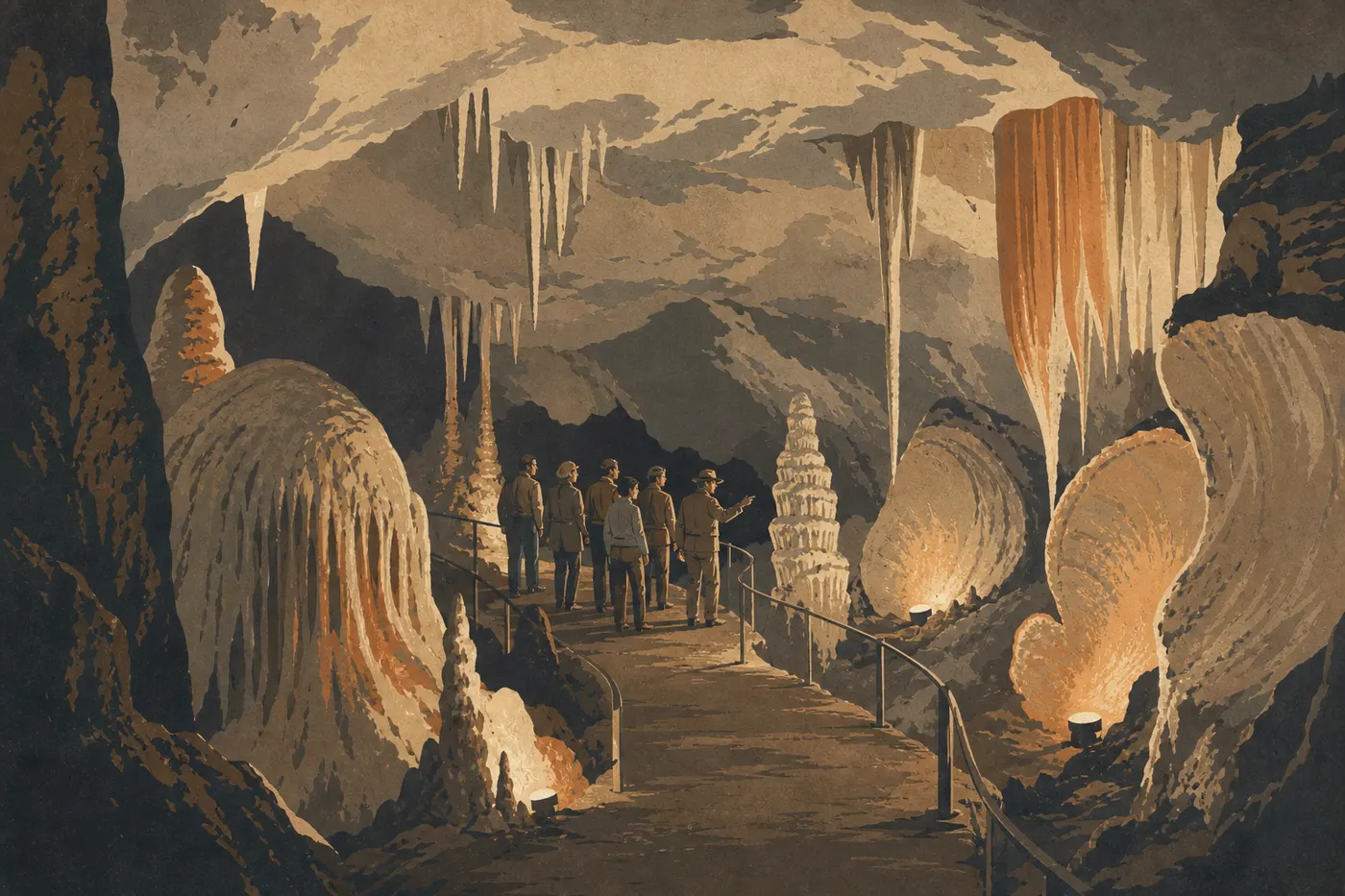
Lehman Caves are the number one reason to make the trip to eastern Nevada. Discovered in 1885 by rancher Absalom Lehman, these limestone caves contain a rare concentration of formations: stalactites, stalagmites, columns, draperies, and, most notably, shields. These are flat, circular structures, sometimes as large as a wagon wheel, and Great Basin has one of the richest collections in the United States.
You can only enter on a ranger-led tour. Two formats are available: the Grand Palace Tour, which lasts about 90 minutes and covers 0.5 miles underground, and the Lodge Room Tour, which lasts about 60 minutes and offers a shorter route with formations that are just as spectacular. The temperature inside stays around 50°F year-round. Bring an extra layer, even in the middle of August.
Book your tour in advance, ideally several days before your visit during the busy season. Spots fill quickly, and morning time slots are the most sought-after. Reservations are made through the NPS website.
Wheeler Peak Scenic Drive: From Desert to High Mountain in 12 Miles
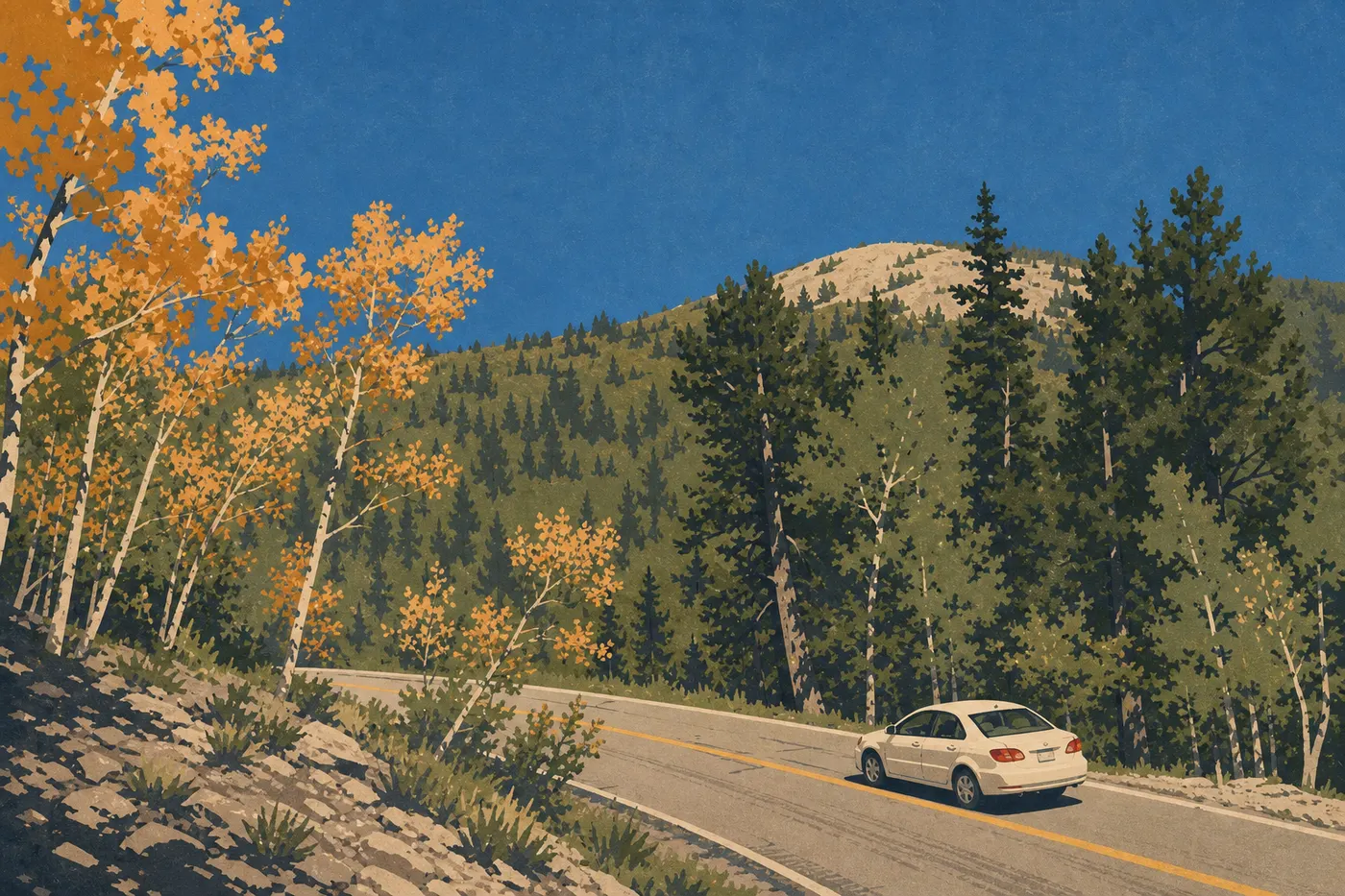
Wheeler Peak Scenic Drive is one of those roads where the scenery changes around every bend. It starts at the park entrance at about 6,200 feet and climbs to 9,800 feet at Wheeler Peak Campground. Over 12 miles, you'll pass through several successive vegetation zones. The low-elevation pinyon-juniper woodland gives way to ponderosa pines, then Douglas firs, and finally Engelmann spruce marking the alpine zone.
The overlooks along the way are worth a stop. Mather Overlook offers views of the Snake Range and the flat expanse of the basin below. It's the kind of landscape that gives you a physical sense of the geography. You can literally see the boundary between desert and mountain.
The upper parking area at 9,800 feet is the starting point for all the alpine trails. The road closes in winter and early spring depending on snowfall, so check conditions before heading up in the off-season.
Bristlecone Pines: 5,000-Year-Old Trees
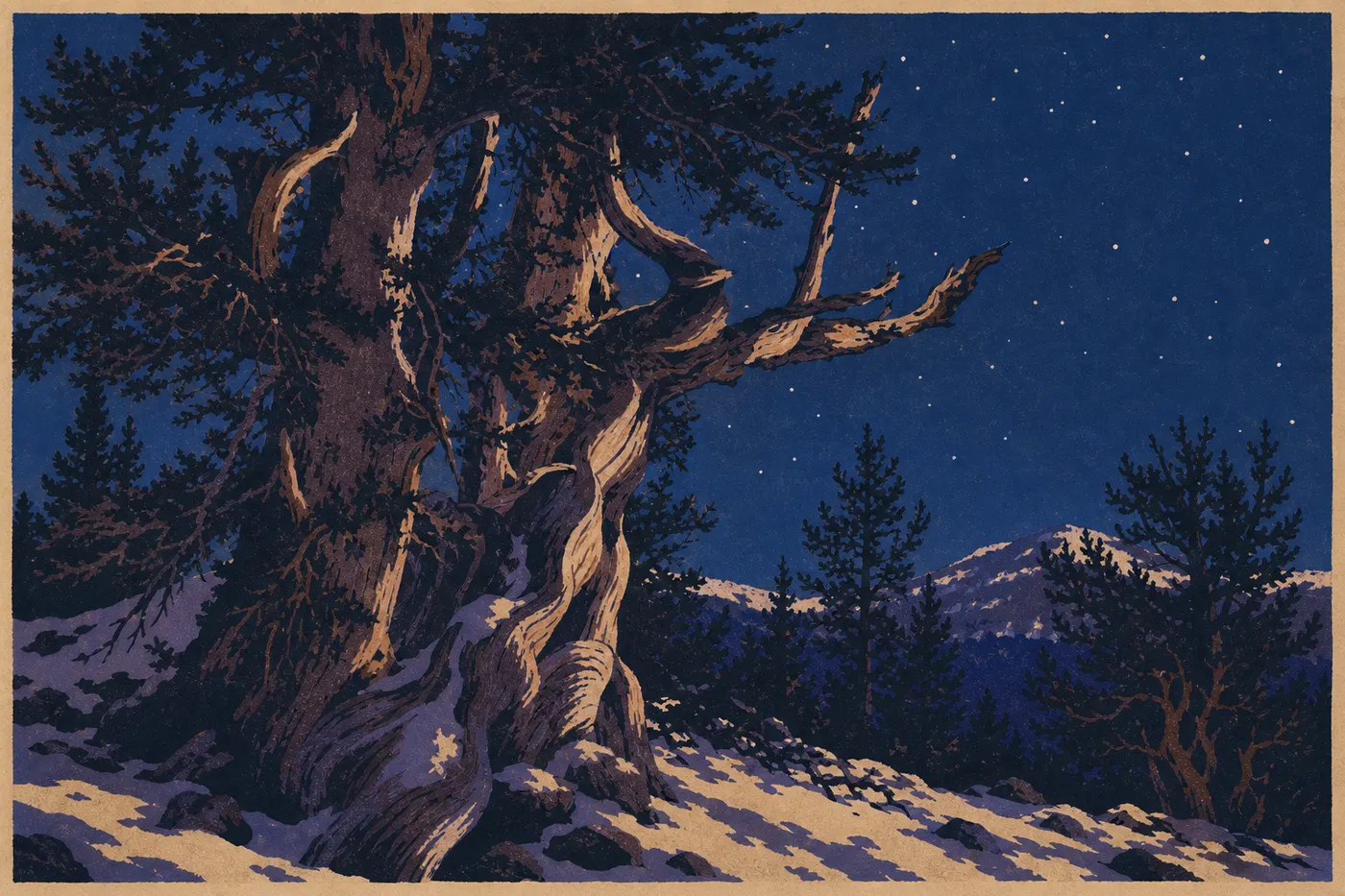
On the northwest-facing slopes of Wheeler Peak, above 9,800 feet, a grove of bristlecone pines (Pinus longaeva) grows. Some specimens are between 3,000 and 5,000 years old. They're among the oldest living organisms on the planet, and seeing them is one of the strangest and most beautiful experiences in any national park.
They don't look like anything else: twisted and sculpted by millennia of wind, freezing temperatures, and UV radiation, often partly dead on the surface but still alive inside. Their dead wood is highly resistant to decay, which is precisely what allows them to survive for centuries. The Bristlecone Trail leads to the grove from the Wheeler Peak parking area in about 1.6 miles round-trip. It's easy on paper, but moderate depending on how well you've acclimated to the altitude.
One rule is especially important: you must not touch the trees or take bark or dead wood, not even a small fragment. Rangers patrol the area, and the fines are real.
Wheeler Peak and the Glacier: The Climb to 13,064 Feet
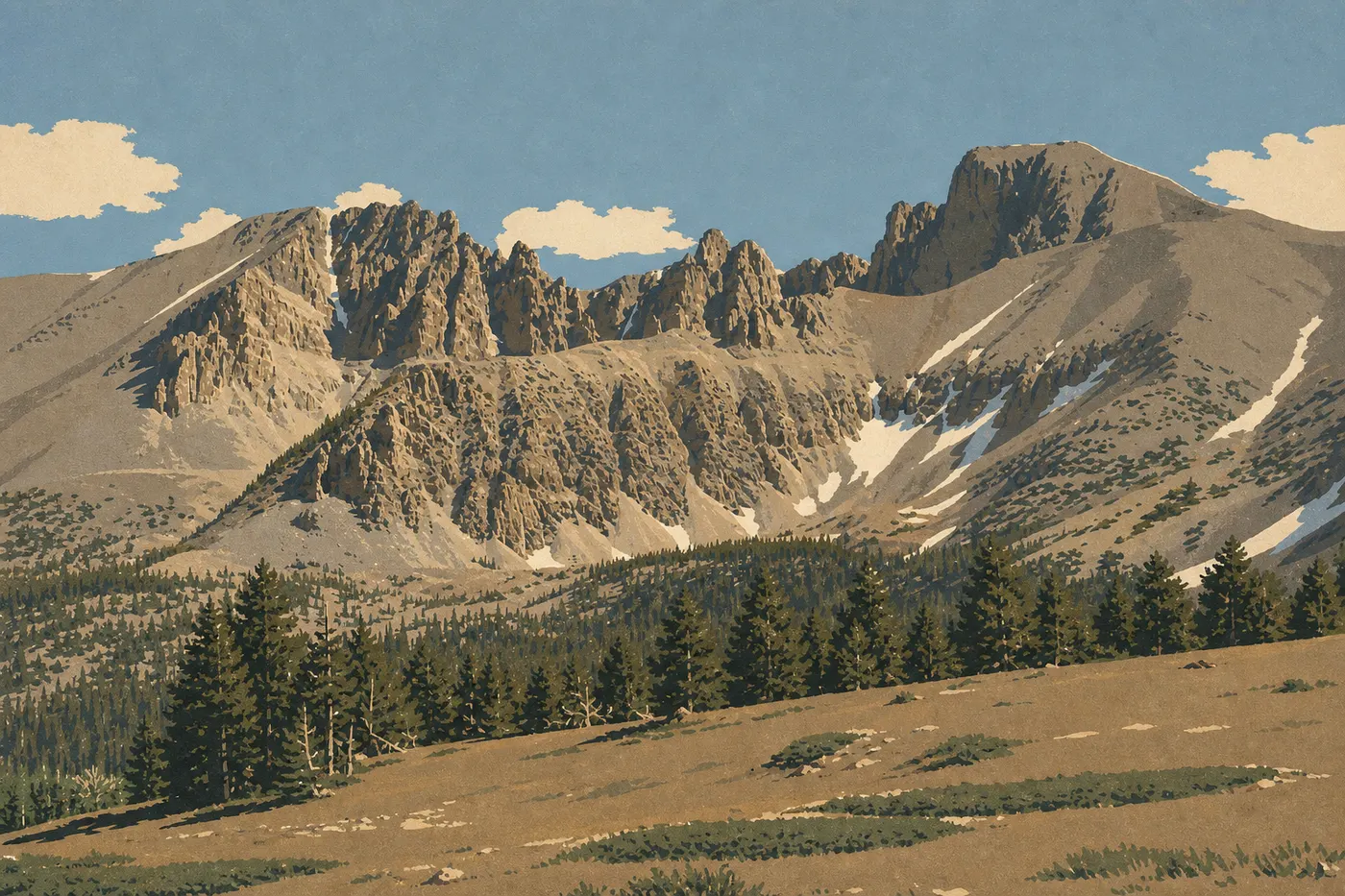
Wheeler Peak rises to 13,064 feet, making it Nevada's second-highest summit. The Summit Trail starts at the 9,800-foot parking area and reaches the summit in about 5 miles round-trip, with 3,200 feet of elevation gain. It's a demanding hike. The trail climbs steeply over the final miles, the terrain turns rocky, and the altitude makes itself felt even by experienced hikers.
Along the way, the trail runs beside Wheeler Cirque Glacier, one of Nevada's few permanent glaciers, tucked into a north-facing cirque. Like most mountain glaciers in the American West, it's been retreating for decades, but it's still visible and impressive among the surrounding rock walls.
An early start, before 7 a.m. in summer, is nonnegotiable. Afternoon thunderstorms move in quickly, and the exposed areas above 11,500 feet offer no shelter. The Great Basin hiking guide covers recommended gear, elevation profiles, and seasonal conditions.
Alpine Lakes: Stella Lake and Teresa Lake
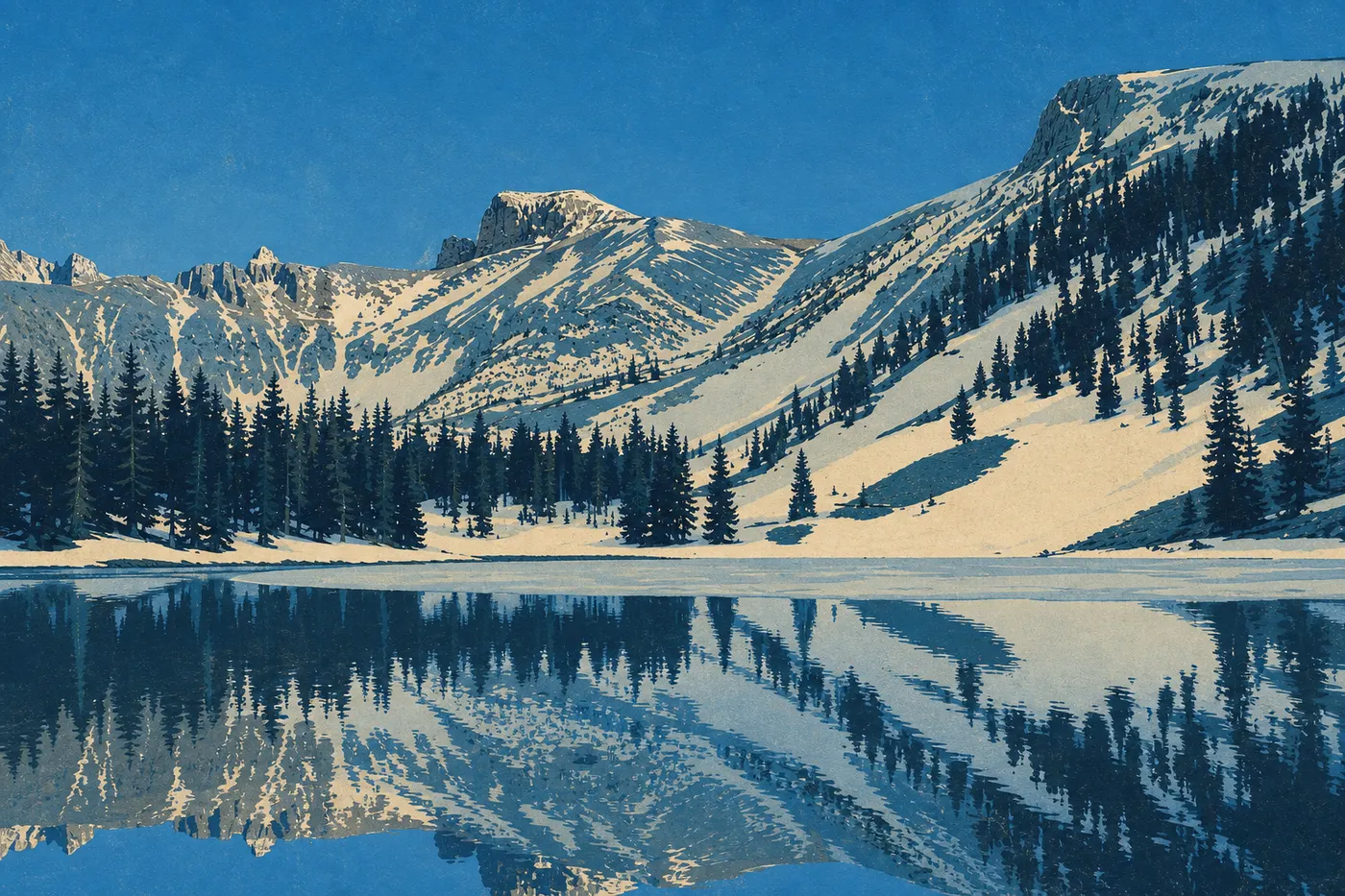
From Wheeler Peak Scenic Drive or Baker Creek Road, several trails lead to glacial lakes perched above 9,800 feet. Stella Lake and Teresa Lake are the two easiest to reach. They reflect the surrounding peaks with a clarity that's no longer common in more heavily visited parks, where too many visitors crowd the shores and leave too many tracks in the water.
The Alpine Lakes Loop connects the two lakes on a roughly 2.8-mile loop from the upper parking area on the scenic drive. It's the ideal hike for anyone who wants a taste of the mountains without taking on the Summit Trail: reasonable elevation gain, complete alpine scenery, and a two- to three-hour duration.
Baker Creek Road provides access to additional lakes, including Baker Lake and Johnson Lake, via longer, less-visited trails. That's our recommendation if you're coming back for a second day in the park.
Lexington Arch: The Stone Arch at the Far End of the Park
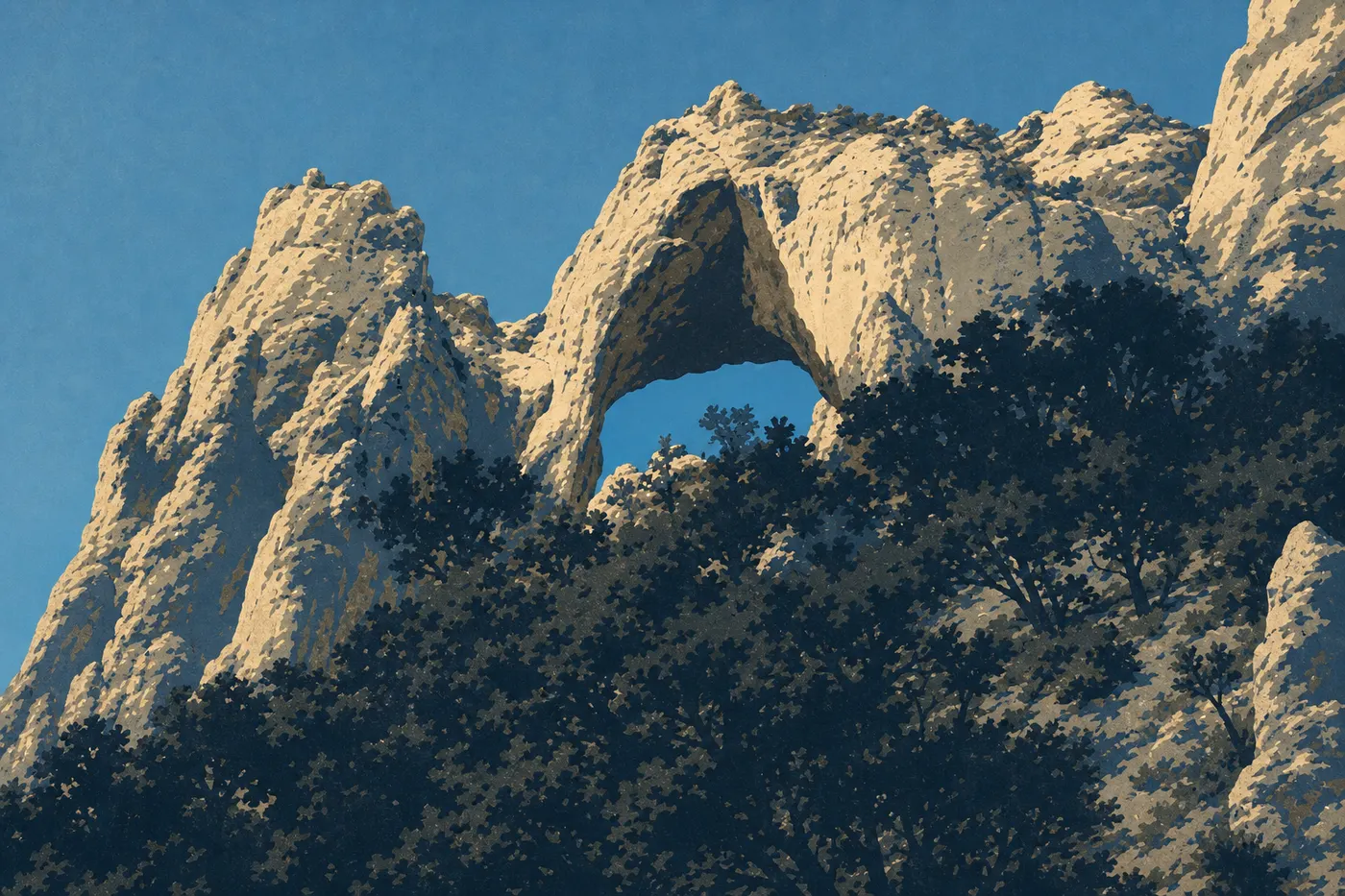
At the southern end of the park, Lexington Arch is a natural limestone arch about 60 feet high. What sets it apart from the arches in neighboring Utah is that it's carved from limestone rather than sandstone, giving it a likely karst origin. It may be the remnant of an ancient cave whose roof partly collapsed. It's a rare geological formation that most traditional park visitors never see.
The trail from Lexington Arch Trailhead is about 6.2 miles round-trip with 1,640 feet of elevation gain. The road to the parking area is gravel and passable in a regular car when dry, but it can be slippery after rain. Check conditions with the visitor center before setting out.
The Best Hikes in Great Basin
Great Basin offers trails for every level, from forest walks to high-elevation climbs. These are the four to prioritize:
- Bristlecone Trail (about 3.1 miles round-trip, easy to moderate): ancient trees from the Wheeler Peak parking area, accessible to most visitors.
- Alpine Lakes Loop (2.8 miles, easy): Stella Lake and Teresa Lake in one loop, ideal for families or a relaxed afternoon.
- Glacier Trail (about 5 miles round-trip, moderate): direct views of Wheeler Cirque Glacier, a good warm-up before the summit.
- Wheeler Peak Summit Trail (5 miles round-trip, difficult): the 13,064-foot summit, for experienced, well-equipped hikers who are acclimated to the altitude.
Exact distances, elevation profiles, gear advice, and seasonal conditions are all on our Hiking page.
Other Activities Based on Your Interests
Stargazing and Night-Sky Watching
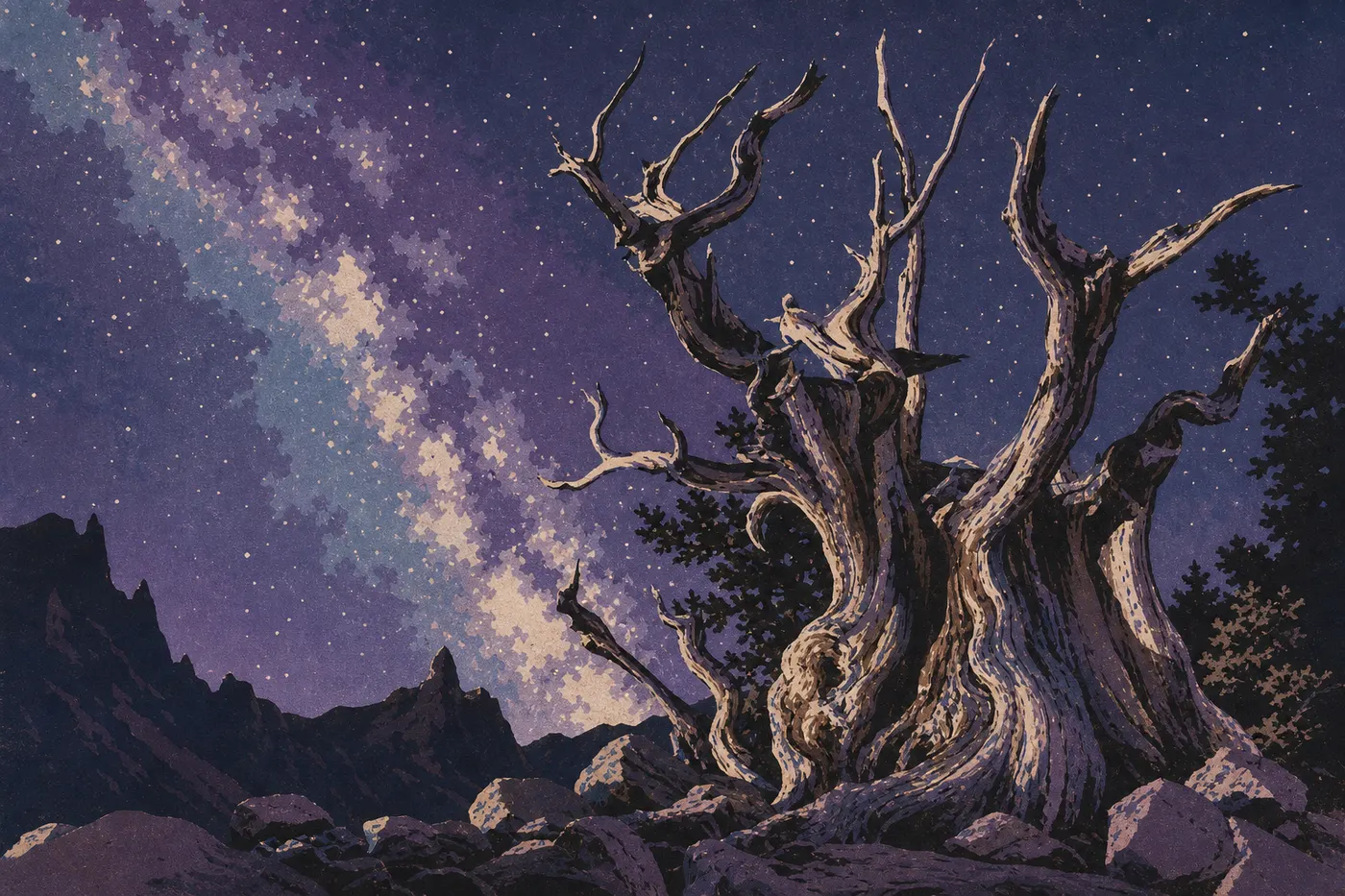
Great Basin has some of the darkest skies in the continental United States. The park is certified as a Gold Tier Dark Sky Park by the International Dark-Sky Association, a distinction few sites receive. At 6,200 feet, far from any major metropolitan area, the Milky Way is visible to the naked eye for much of the year. Las Vegas is more than five hours away by car, and Salt Lake City is three hours away.
The park hosts the Great Basin Astronomy Festival every fall, with speakers, free telescope viewing, and sky-mapping sessions. Outside the event, any night around the new moon will do. Darkness settles in quickly once the visitor center lights go out. Give your eyes about 30 minutes to adjust fully.
For conditions and the best months to visit, the Great Basin weather guide provides seasonal reference points.
Wildlife
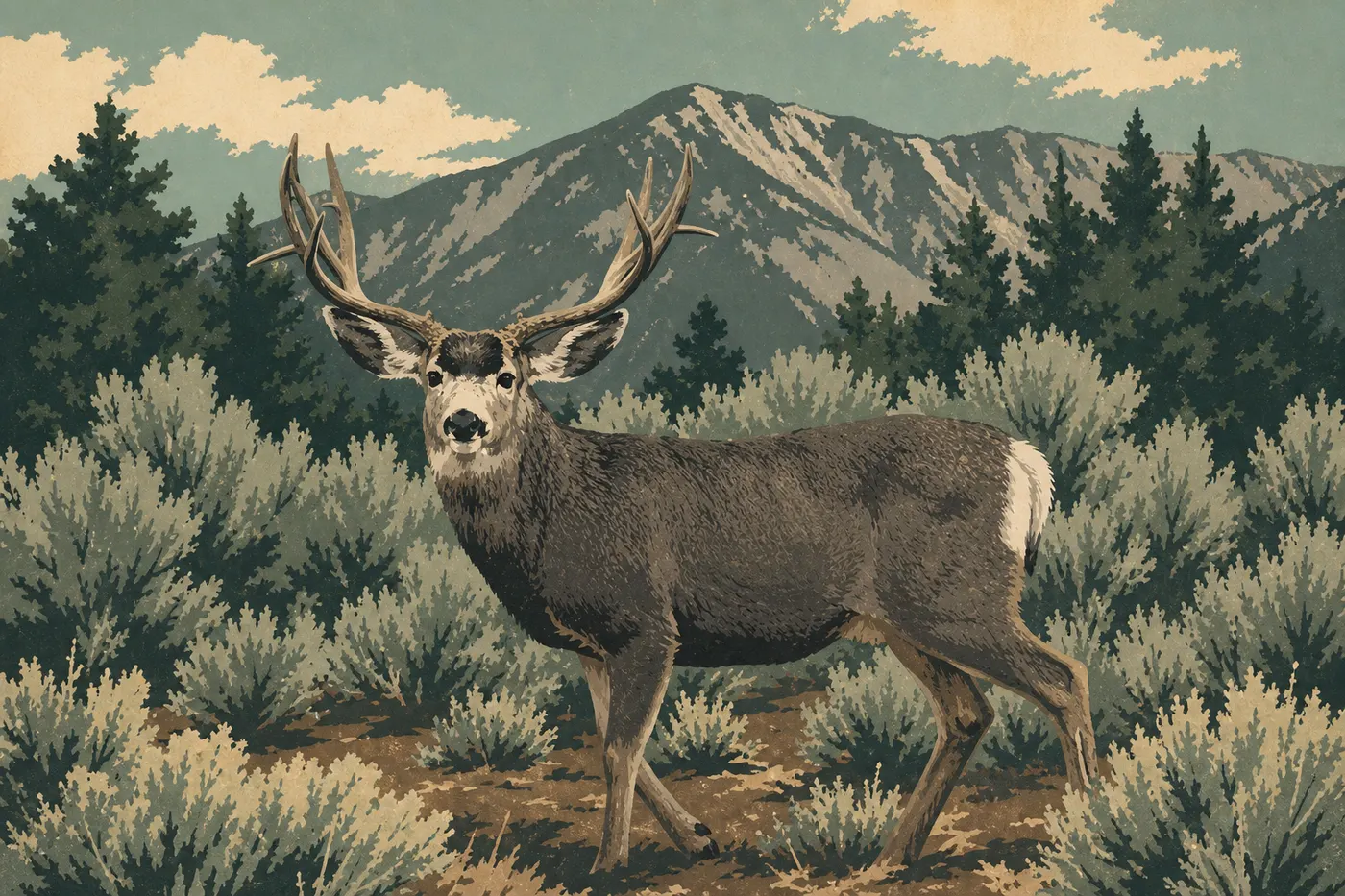
The park is home to mule deer, pronghorns, ringtails, plenty of bats, golden eagles, and a variety of raptors. In summer, the alpine meadows around Wheeler Peak are a good place to spot yellow-bellied marmots, which are easy to see on the rocks early in the morning.
Stay at least 100 feet from all wildlife, and never feed the ground squirrels that gather around the picnic areas. It's a strict NPS rule, and these little rodents can bite.
The Great Basin wildlife guide lists the species found here and the best seasons for viewing them.
Landscape and Night Photography
Great Basin brings together several especially strong photographic settings: bristlecones in the golden hour, when low-angle light highlights their twisted silhouettes; alpine lake reflections early in the morning; the rock walls of Wheeler Cirque; and, of course, the night sky. Photography is easier here than in many other places in the West. There are few crowds, no oversold reservations, and plenty of freedom to choose your position on the trails.
For night photography, the sites at Wheeler Peak Campground at 9,800 feet offer a clear 360-degree view with a low horizon. A sturdy tripod, a fast wide-angle lens at f/2.8 or better, and manual focus on the stars are all you need.
Visiting with Kids
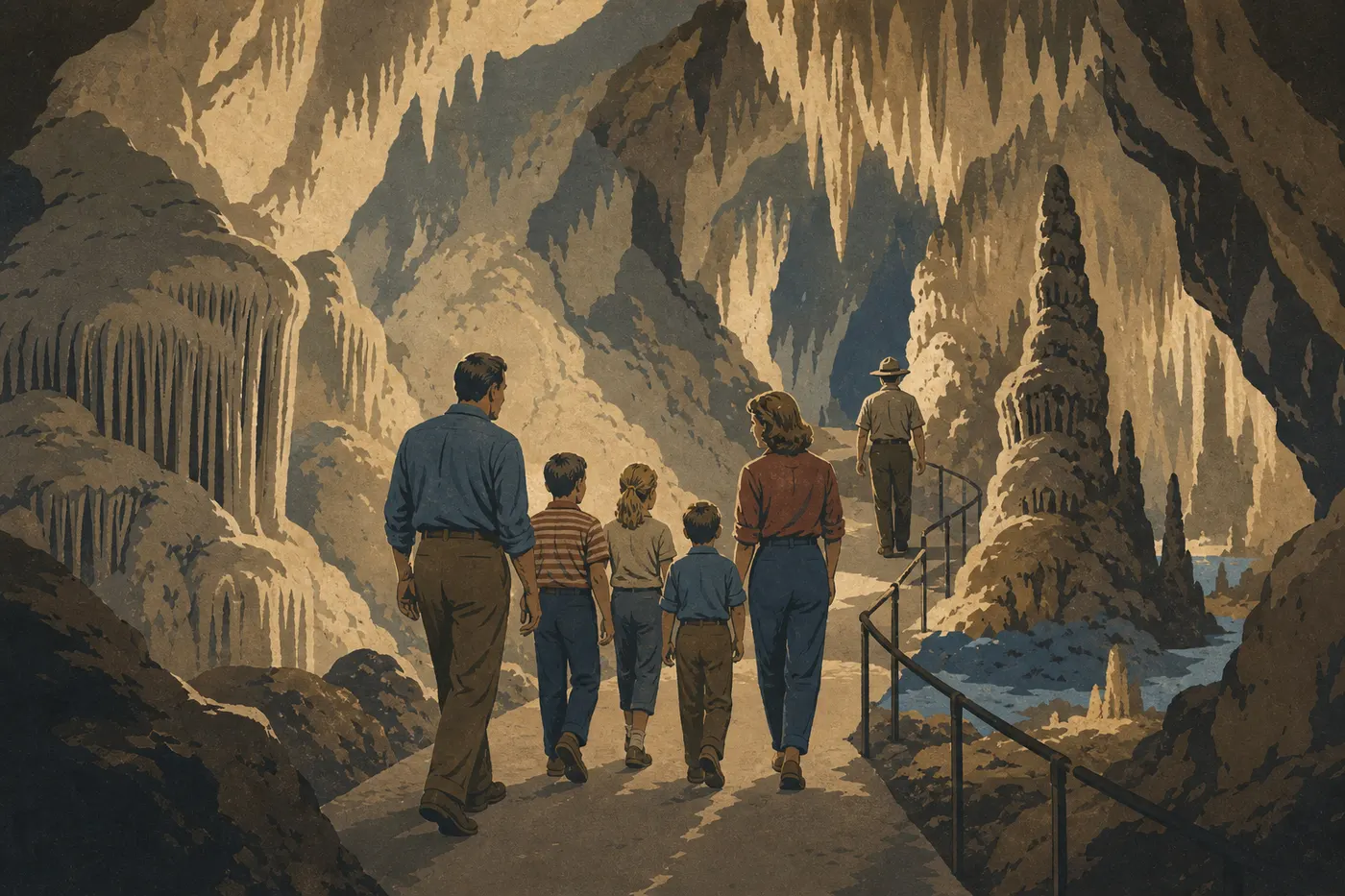
Great Basin is just the right size for families. There are no crowds, no entrance fees, and a Junior Ranger program. Kids ages 5 and up enjoy Lehman Caves, but strollers aren't allowed inside, and total darkness can unsettle younger children.
The Great Basin family guide brings together practical advice for traveling with children, including the recommended maximum distances by age group.
Camping
Sleeping under the stars at Great Basin is an experience in itself. The park has three campgrounds, including Wheeler Peak Campground at 9,800 feet.
The Great Basin camping guide and the RV guide cover capacities, vehicle-size restrictions, and alternatives in Baker and Ely.
Things to Do Around Great Basin
Great Basin is geographically isolated. Baker, Nevada, 5 miles away, is the only nearby town, with one restaurant, Kerouac's, which also serves as a bar, a gas station, and a few basic lodging options. For more complete services, including a pharmacy, supermarket, and hotels, Ely, Nevada, is a two-hour drive west on US-50.
That isolation is also part of the road-trip appeal. U.S. Highways 6 and 50, known as “The Loneliest Road in America,” cross the geographic Great Basin from the Utah border to Carson City. The basin-and-range landscapes that appear every 37 to 50 miles have an almost hypnotic rhythm: a flat valley, a mountain, a flat valley, a mountain. You won't find this kind of road anywhere else.
To the north, the salt flats and playa lakes of central Nevada offer unusual photographic settings, especially late in the day when low-angle light skims across the white expanses. To the southeast, Cathedral Gorge State Park in Nevada is about 2.5 hours away and features eroded clay formations comparable to those at Bryce Canyon, without the line and without the $35 entrance fee.
To build a regional itinerary around Great Basin, look for Great Basin in our Road Trip and Region guides.
The Essentials: What to See First in Great Basin
Great Basin doesn't resemble any other U.S. national park, and that's its strength. The combination of high-quality limestone caves, including Lehman Caves; high mountains above 12,800 feet, including Wheeler Peak; some of the oldest trees in the world, the bristlecone pines; and an exceptional night sky exists nowhere else in one place.
If you've only got one day, take a guided tour of Lehman Caves in the morning, drive up Wheeler Peak Scenic Drive in the afternoon, and walk for an hour to the bristlecone pines. Then return to Baker for dinner at Kerouac's and spend the night at Wheeler Peak Campground for the starry sky. It's a full but realistic and memorable itinerary.
Is it worth the trip? If you're looking for an authentic, uncrowded park with a lot to experience, absolutely. If you want the visitor amenities of Zion or the fame of Yellowstone, Great Basin is definitely more rustic and farther from everything. That's precisely where its value lies.
For lodging, the Where to Stay and Hotels & Lodges pages complete this overview of activities.
Frequently Asked Questions
What should you absolutely not miss in Great Basin National Park?
The two absolute must-sees in Great Basin are Lehman Caves, which require a guided tour and are best reserved in advance, and the bristlecone pine grove high on Wheeler Peak, reached from the upper parking area on the scenic drive. These two experiences are unique in the entire American West.
How long do you need to visit Great Basin?
You need at least one full day to cover the caves, scenic drive, and bristlecone pines. Two days give you time to add a serious hike and a night of stargazing. Our Itinerary & Timing page offers detailed plans based on how much time you have.
Is Great Basin worth visiting?
Great Basin is worth the trip for anyone looking for an uncrowded national park packed with experiences: exceptional caves, high mountains, some of the oldest trees on the planet, and some of the darkest skies in the United States. It's a remote, rustic park, which filters out hurried visitors and makes it an exceptional place for everyone else.
What are the must-do activities in Great Basin?
There are four Great Basin must-dos: take a guided tour of Lehman Caves, drive Wheeler Peak Scenic Drive up to 9,800 feet, hike to the bristlecone pines, and stargaze at night. These four activities are at the heart of a visit.
Which hike should you do in Great Basin?
Whatever your fitness level, Great Basin has a trail that fits. Bristlecone Trail, 3.1 miles round-trip, works for almost everyone and leads straight to the ancient trees. Alpine Lakes Loop, 2.8 miles, is perfect for families. Wheeler Peak Summit Trail, 5 miles round-trip with 3,200 feet of elevation gain, is for experienced hikers. Find all the details on our Hiking page.