
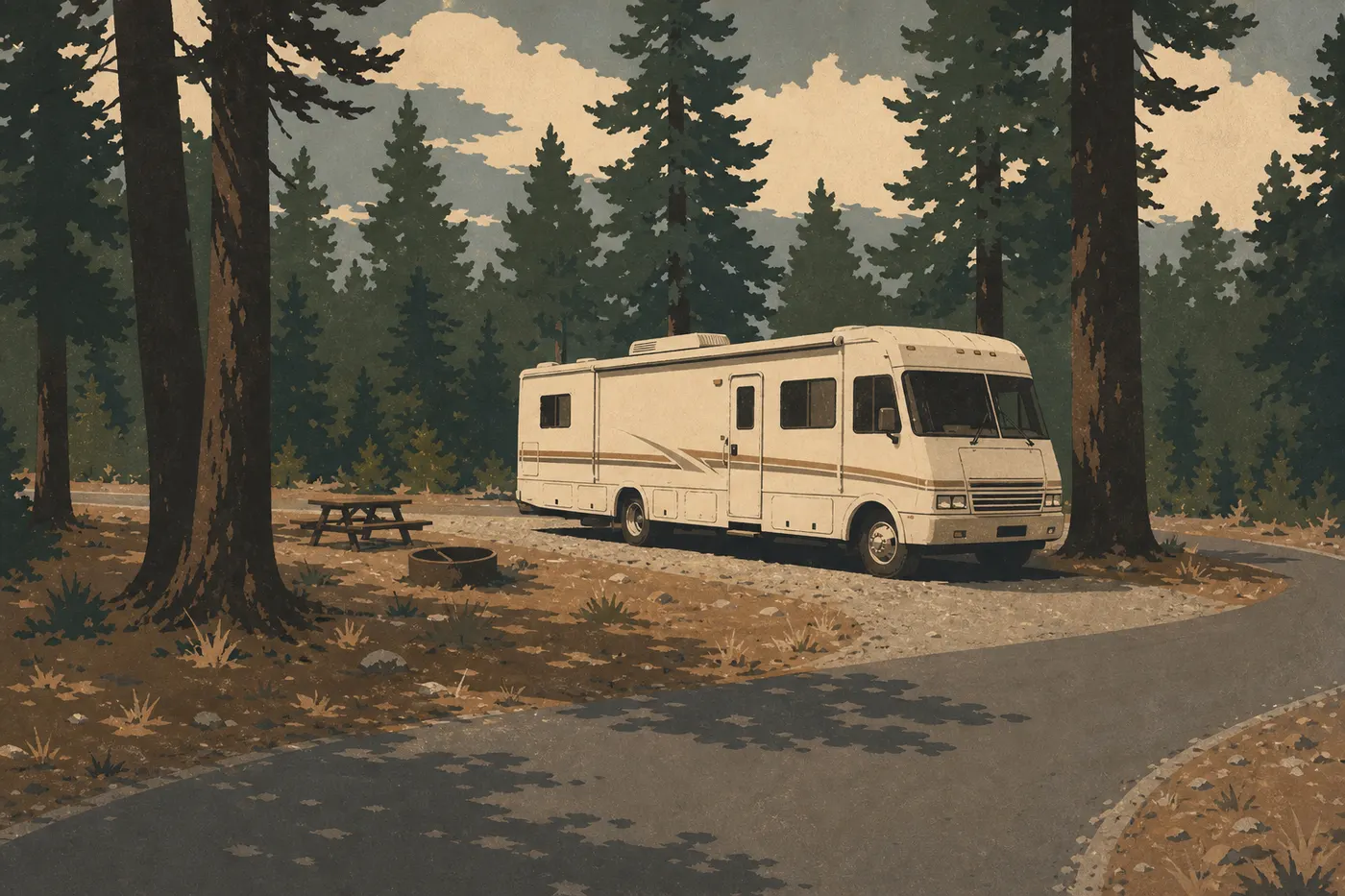
Great Basin by RV: Campgrounds, Rules, and Tips
Great Basin National Park welcomes RVs with no entrance fee and no reservation requirement at most sites. It's one of the National Park Service's rare bargains. The main limitation is Wheeler Peak Scenic Drive, which narrows at higher elevations, forcing large vehicles to stop before the summit. Everything else is easy to plan as long as you bring enough supplies, since services are scarce once you're in the park.
Can You Drive and Camp at Great Basin by RV?
Yes, with no special entry procedure. Great Basin is one of the U.S. national parks with no entrance fee, and you don't need a vehicle pass or permit. Drive to the Lehman Caves Visitor Center, choose a site, and settle in.
The official campgrounds accept motorhomes and converted vans. None has electrical or water hookups, so you'll need to be fully self-contained. Manage your battery, water, and gray and black tanks from the moment you leave home.
RV Restrictions and Regulated Roads
Wheeler Peak Scenic Drive is the park's main road. It climbs above 9,800 feet, and its final miles are winding, with tight turns and a narrow roadbed. Vehicles longer than about 23 feet can have trouble on this upper section. Check current restrictions directly on nps.gov/grba before you leave. The NPS updates this information at the beginning of the season.
Baker Creek Road and Snake Creek Road are gravel roads. Small vehicles can use them in dry weather, but they become slippery after summer thunderstorms. We don't recommend taking a Class A motorhome or a long fifth-wheel combination on either road.
There are no regulated tunnels or convoy procedures, so there's nothing comparable to Zion. However, the 7,900-foot elevation change between the valley, at about 6,200 feet, and Wheeler Peak, at 13,060 feet, creates radically different weather conditions at different elevations. Take care when climbing in strong winds or when thunderstorms are in the forecast.
The Park's Official Campgrounds
Great Basin has five developed campgrounds. There are no hookups anywhere, so plan to be completely self-sufficient.
Lower Lehman Creek
The most accessible campground for large vehicles, with a maximum length of 35 feet. Just minutes from the Visitor Center near the park entrance, it's an ideal base for families and long motorhomes. About ten sites, seasonal potable water, and restrooms. The fee is around $15 per night, first come, first served.
Upper Lehman Creek
Slightly higher in elevation, this campground accommodates RVs up to 24 feet. About twenty sites shaded by pines and cottonwoods. Seasonal potable water, but no electricity. First come, first served, with a fee comparable to Lower Lehman Creek.
Wheeler Peak Campground
The park's most spectacular campground sits at about 9,800 feet and is intended for vehicles under 24 feet. Great Basin is an International Dark Sky Park, and Wheeler Peak offers the full experience. The night sky here has an unusual depth for North America. It's open from June through October, depending on snow conditions. Bring warm layers. Temperatures drop below 50°F at night, even in midsummer. First come, first served.
Baker Creek and Snake Creek
These two primitive campgrounds are reached by gravel roads. They're limited to small vehicles, such as vans and short-wheelbase campers. Vault toilets and no running water. They're lightly used and suit travelers in compact vehicles who want complete solitude.
Dispersed Camping and Areas Around Great Basin (Boondocking)
The park is surrounded by Bureau of Land Management (BLM) lands where free dispersed camping is allowed, with a limit of 14 consecutive nights at one site. Snake Valley and the edges of Humboldt-Toiyabe National Forest offer boondocking spots with easy access to the park the next morning. Many van-life travelers use these BLM lands as their main base for visiting Great Basin.
Baker, 5 miles from the entrance, is the only nearby town, with a handful of businesses and a gas station. For a wider range of lodging options in the region, see our Great Basin Region guide.
Dump Stations, Water, and Services
A paid dump station is available in the park's main area near the Visitor Center. Check availability and the fee on nps.gov/grba during the season. You can fill up with potable water at campgrounds equipped with water facilities.
For a full resupply, Ely, Nevada, is about 68 miles west. You'll find gas stations with dump stations, supermarkets, and repair shops there. Bring enough water and gray- and black-tank capacity for at least two or three days. Services are almost nonexistent between Baker and Ely.
Which Campground Is Right for You?
You have a large vehicle, over 24 feet, or you're traveling with family. Lower Lehman Creek is your only choice among the developed campgrounds. Its easy access and proximity to Lehman Caves make it a solid base camp.
You're looking for dark skies. Choose Wheeler Peak, as long as your RV is under 24 feet. The park's Dark Sky certification really matters here. You can see the Milky Way's arms with the naked eye. Plan to spend some time looking up after dinner.
You're traveling in a van or small camper. Baker Creek or Snake Creek gets you away from the other visitors. These lightly used campgrounds offer the complete quiet that the main campgrounds can't always guarantee in summer. The Great Basin camping guide compares all the options, including tent camping.
Renting an RV to Visit Great Basin
Great Basin fits naturally into a road trip from Las Vegas, about 292 miles and 4.5 hours away, Salt Lake City, about 205 miles and 3 hours away, or Reno, about 298 miles and 5 hours away. All three cities have well-stocked RV rental agencies, including Cruise America, Outdoorsy, and RVshare.
To drive Wheeler Peak Scenic Drive and spend the night at Wheeler Peak Campground, choose a Class B or C vehicle under 23 feet. A Class A motorhome or long fifth-wheel trailer limits you to campgrounds in the lower area. The alternatives for traveling without a vehicle are covered on our Where to Stay page.
RVs and Pets, Budget, and Reservations: What to Know
Pets are allowed in the campgrounds but must be leashed, with a maximum leash length of 6 feet. They're not allowed on trails. Never leave a dog alone in an RV parked in the valley sun. Temperatures can rise above 95°F in July.
The nightly budget is around $15 per site. Entrance to the park is free, which is unusual across the NPS system. Your main costs will be campgrounds, fuel due to the park's isolation, and guided tours of Lehman Caves.
Reservations aren't available for most individual sites. Great Basin operates on a first-come, first-served basis. Arrive before 2 p.m. in July and August to make sure you find a site. Our Great Basin seasons guide explains the busiest and quietest periods.
In Summary: Our Great Basin RV Plan
Spend your first night at Lower Lehman Creek to acclimate to the elevation, then book a guided Lehman Caves tour for the next morning. If your vehicle is under 24 feet, continue up to Wheeler Peak for a night beneath an exceptional sky. Check your water levels and tank capacity before entering the park. The next reliable service is in Ely, more than an hour away.
Great Basin rewards travelers who are willing to give up some of the comforts found in the big national parks. Expect few people, high-mountain scenery, and some of the darkest nights in the United States.
Frequently Asked Questions
Can you camp at Great Basin?
You can camp at Great Basin in five official campgrounds, open from May through October depending on elevation, as well as for free on surrounding BLM lands.
Can you visit Great Basin by RV?
You can visit and stay overnight at Great Basin by RV with no entrance fee. Vehicles under 24 feet can access all developed campgrounds. Longer vehicles must stay at Lower Lehman Creek, which has a 35-foot limit.
Can you park an RV anywhere at Great Basin?
No. Parking is allowed only in signed areas and campgrounds. Staying outside designated sites is prohibited and may result in a fine.
Where are RVs prohibited or restricted at Great Basin?
Large vehicles, roughly over 23 feet, can't use the upper section of Wheeler Peak Scenic Drive. The gravel roads to Baker Creek and Snake Creek are also not recommended for motorhomes.
Which campground should you choose at Great Basin?
Lower Lehman Creek is the most versatile campground for large vehicles and families. Wheeler Peak Campground is the choice for dark-sky enthusiasts, provided you have a suitably sized vehicle under 24 feet.
How much does a site cost at Great Basin?
A site costs about $15 per night. Entrance to the park is free, which is unusual among America's national parks.
When is the best time to visit Great Basin by RV?
From mid-June through early September, all campgrounds are open and the roads are clear. Our When to Visit page explains how conditions change from month to month and which periods to avoid.