
Grand Teton Wildlife: Which Animals to See and Where to Find Them
Grand Teton has an unusually rich variety of wildlife for a park of its size. In Jackson Hole Valley and along the forested slopes of the Tetons, grizzlies, black bears, moose, bison, elk, and pronghorns live side by side, often visible from the road without a strenuous hike. The five iconic species you won't want to miss are the grizzly, moose, elk, bison, and pronghorn. The park is also home to three elusive large predators: the gray wolf, mountain lion, and, of course, the bear.
Grand Teton's Iconic Animals
The Grizzly Bear
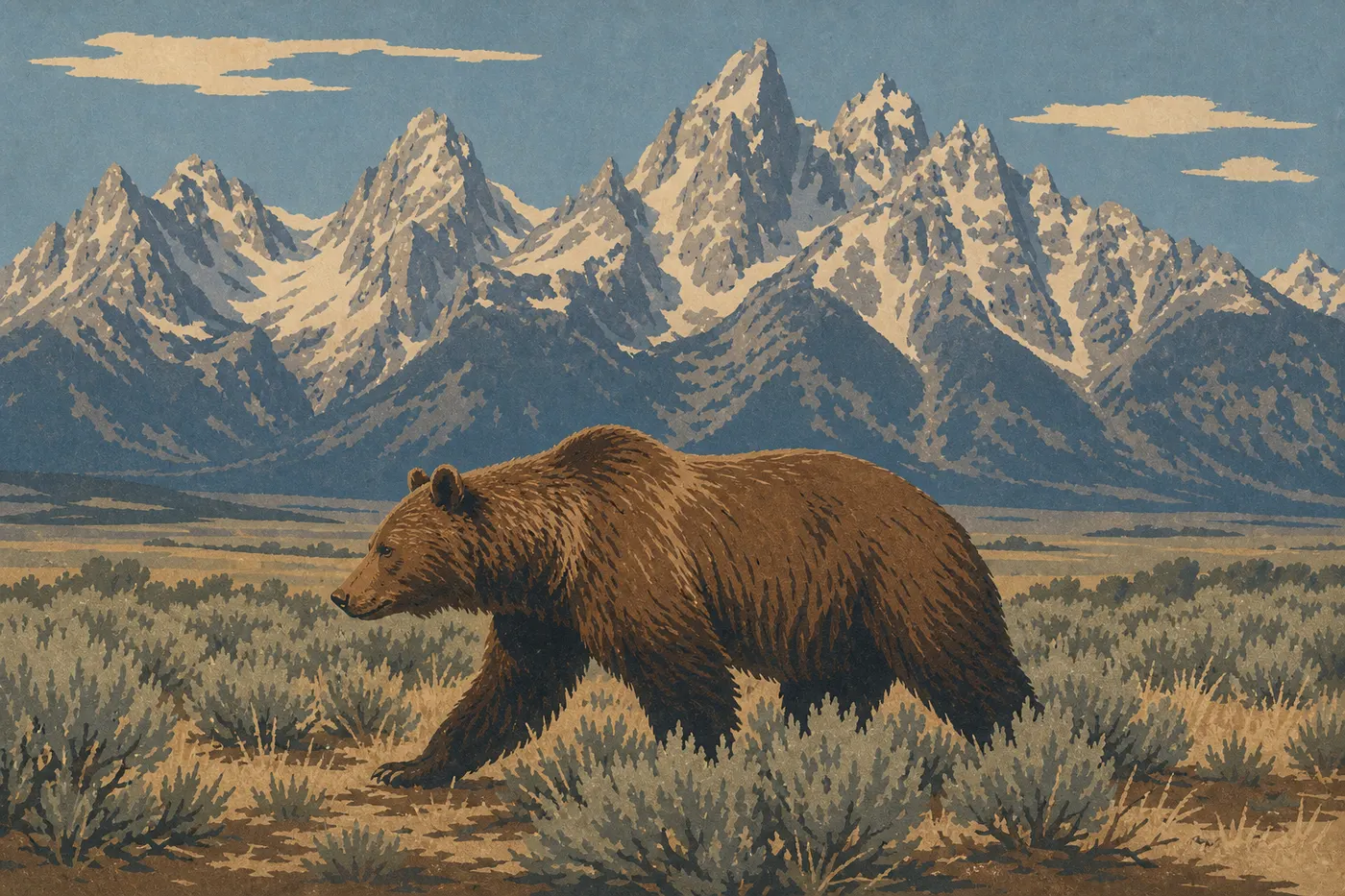
The grizzly bear (Ursus arctos horribilis) is the undisputed star of the park. You can identify it by three reliable features: the shoulder hump, its slightly concave muzzle, and large, pale claws that can reach 4 inches. Its coat ranges from dark brown to golden blond, often with silvery highlights along its back.
An opportunistic omnivore, it changes its diet with the seasons: wild berries in summer, roots, fish, and carrion. In spring, grizzlies come down into the valley as the snow melts, often in the morning light. Moose-Wilson Road and the wetlands of Willow Flats are where encounters happen most often. The NPS requires a distance of 300 feet. If the animal changes its behavior or looks up at you, you're too close.
The Black Bear
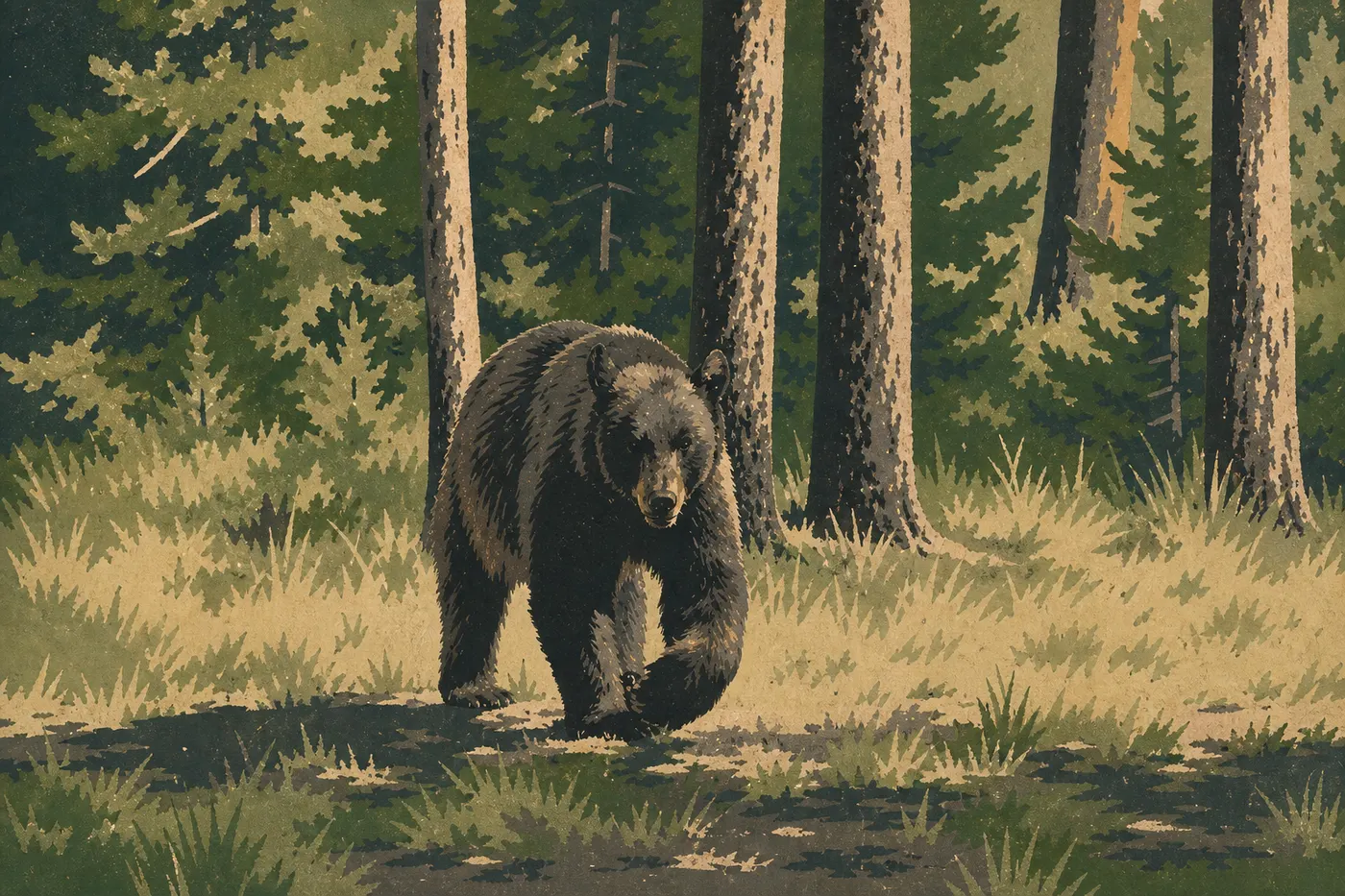
The black bear (Ursus americanus) is smaller and more elusive. It lacks the grizzly's characteristic shoulder hump, has a straight muzzle, and short, dark claws. Its deceptive coat can range from black to cinnamon brown, which often causes confusion. Unlike an adult grizzly, it climbs trees with ease.
You'll find it mostly in forested areas, along Moose-Wilson Road, and near Colter Bay. It's present from spring through fall, with activity peaking in late summer during the hyperphagia that comes before hibernation.
The Moose
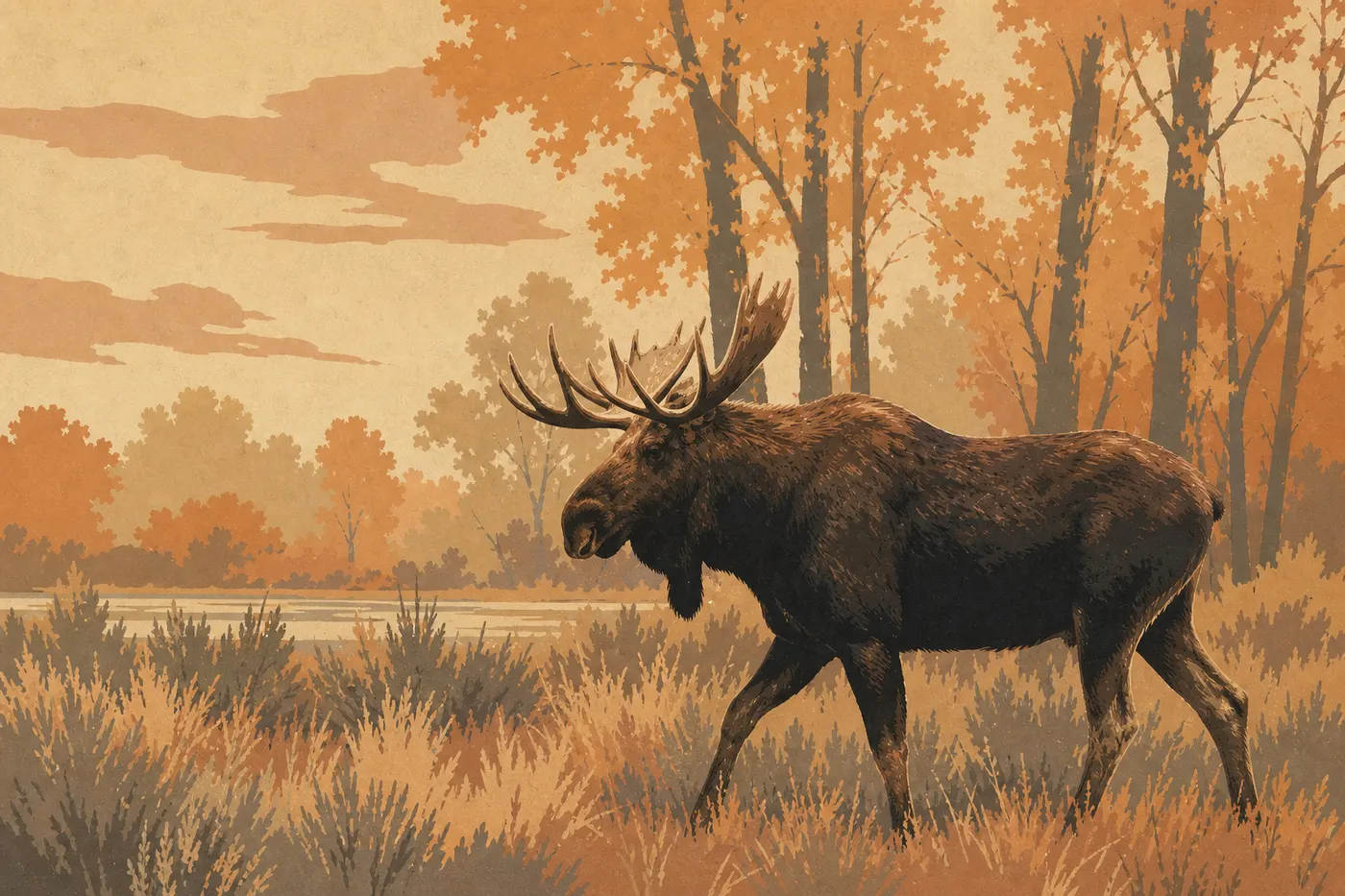
The moose is Grand Teton's signature deer and North America's largest member of the deer family. An adult bull can weigh up to 1,210 pounds and carry antlers that sometimes span more than 6 feet. It favors wetlands and waterways, where it grazes on aquatic vegetation and sometimes submerges its entire head.
Willow Flats, north of Jackson Lake Lodge, is the go-to spot. Oxbow Bend, a quiet bend in the Snake River east of Jackson Lake Junction, is also very reliable at dawn. Moose may look calm, but they're unpredictable. A cow with calves or a bull in the fall rut can charge without warning. Keep at least 75 feet away.
The Elk
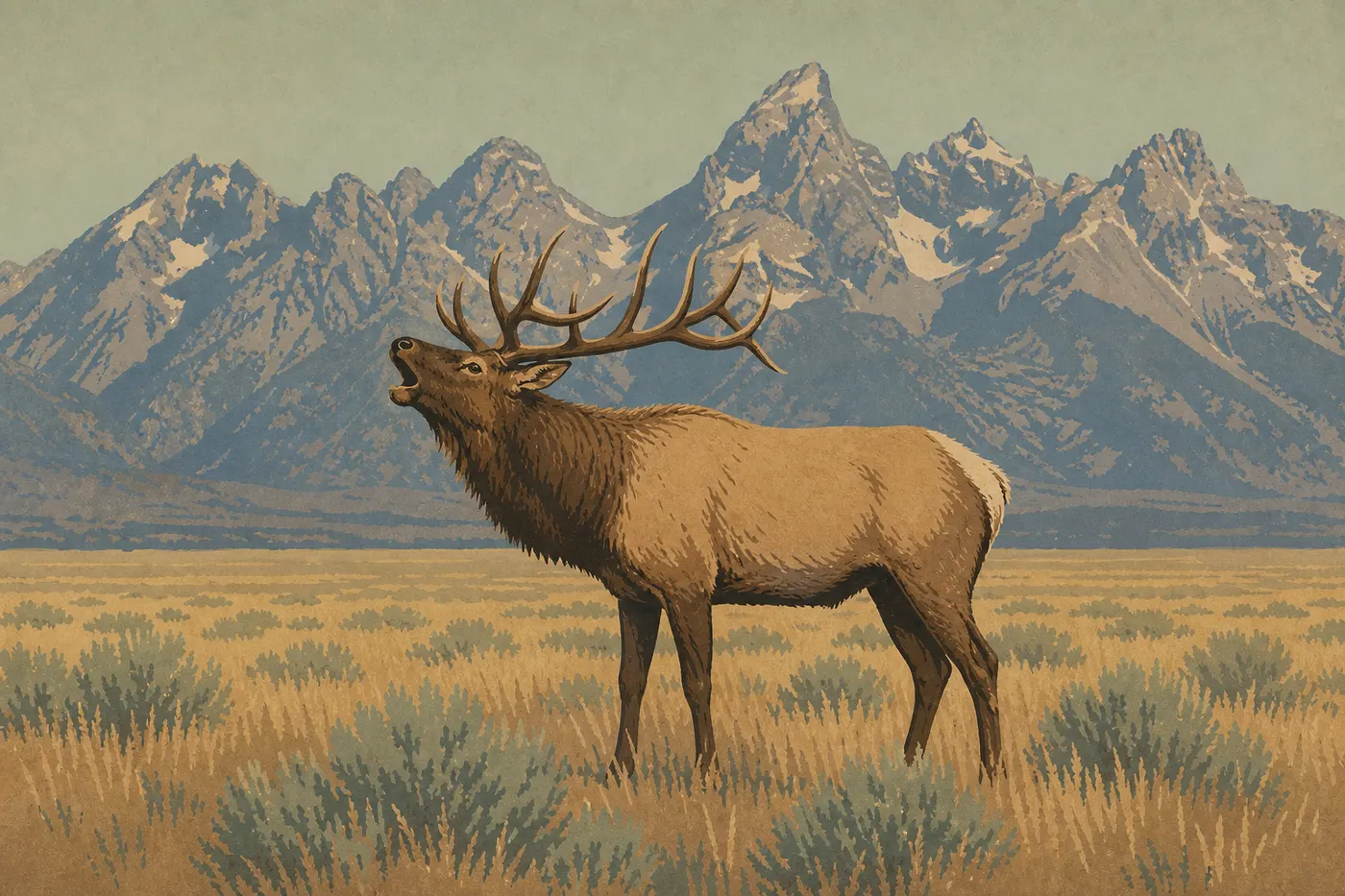
The elk (Cervus canadensis) is a majestic deer, recognizable by its tawny body and cream-colored rump. Bulls carry large branched antlers and produce a powerful bugle in the fall that can be heard for miles. It's one of the park's most memorable sounds.
Herds frequent the valley's open meadows, especially Antelope Flats Road and the Elk Ranch Flats area. In summer, they move to higher elevations. In September and October, they return to the plains in large numbers for the rut.
The Bison
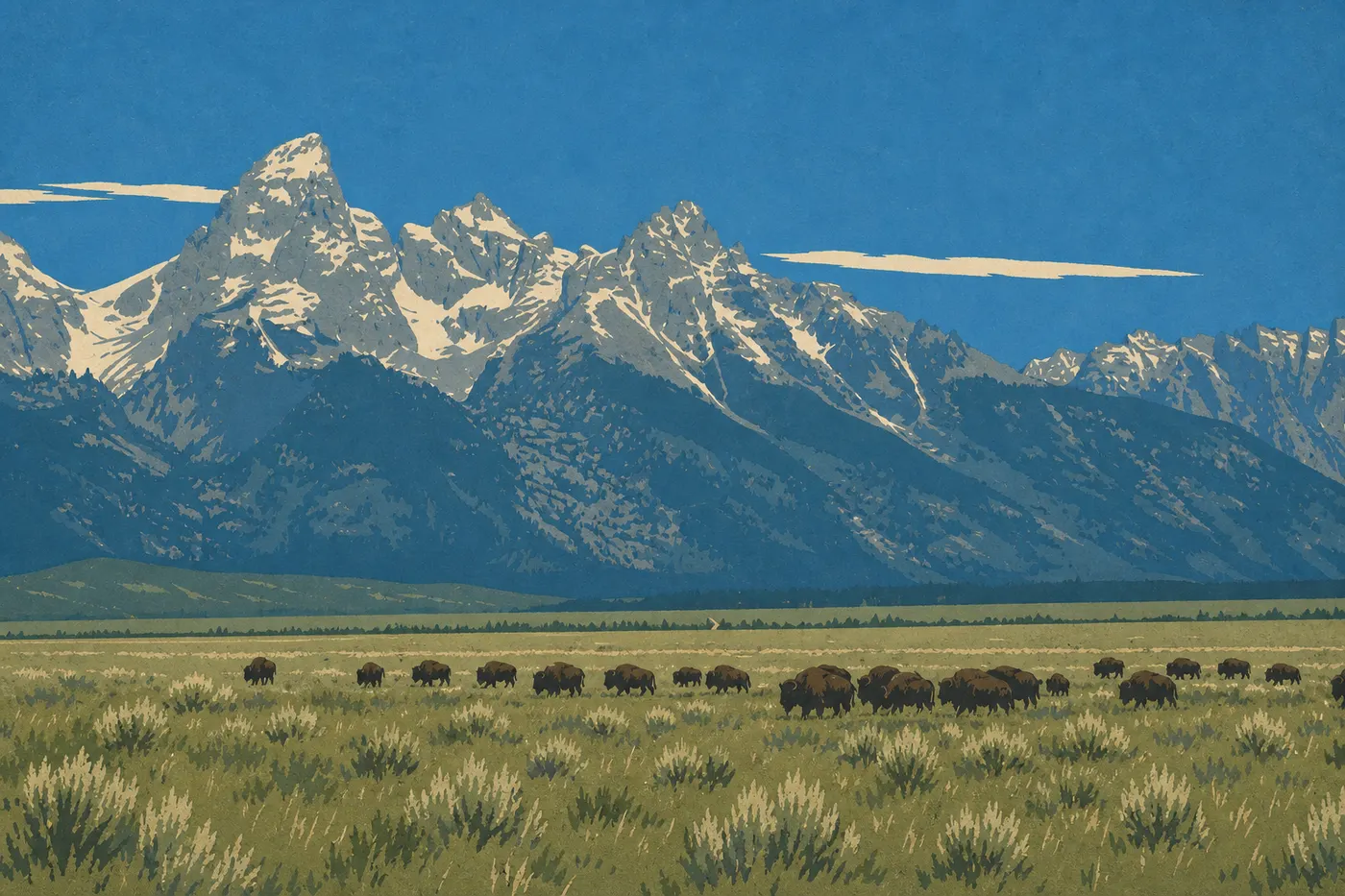
The plains bison (Bison bison) is the heaviest land mammal in the park. An adult bull can weigh more than 2,000 pounds. Despite its massive, slow-moving appearance, it can charge at more than 30 mph without any visible warning. When bison appear on Antelope Flats Road, they regularly cause impromptu traffic jams.
The required distance is 75 feet, but back away farther if the animal paws the ground, lowers its head, or turns its side toward you.
The Pronghorn
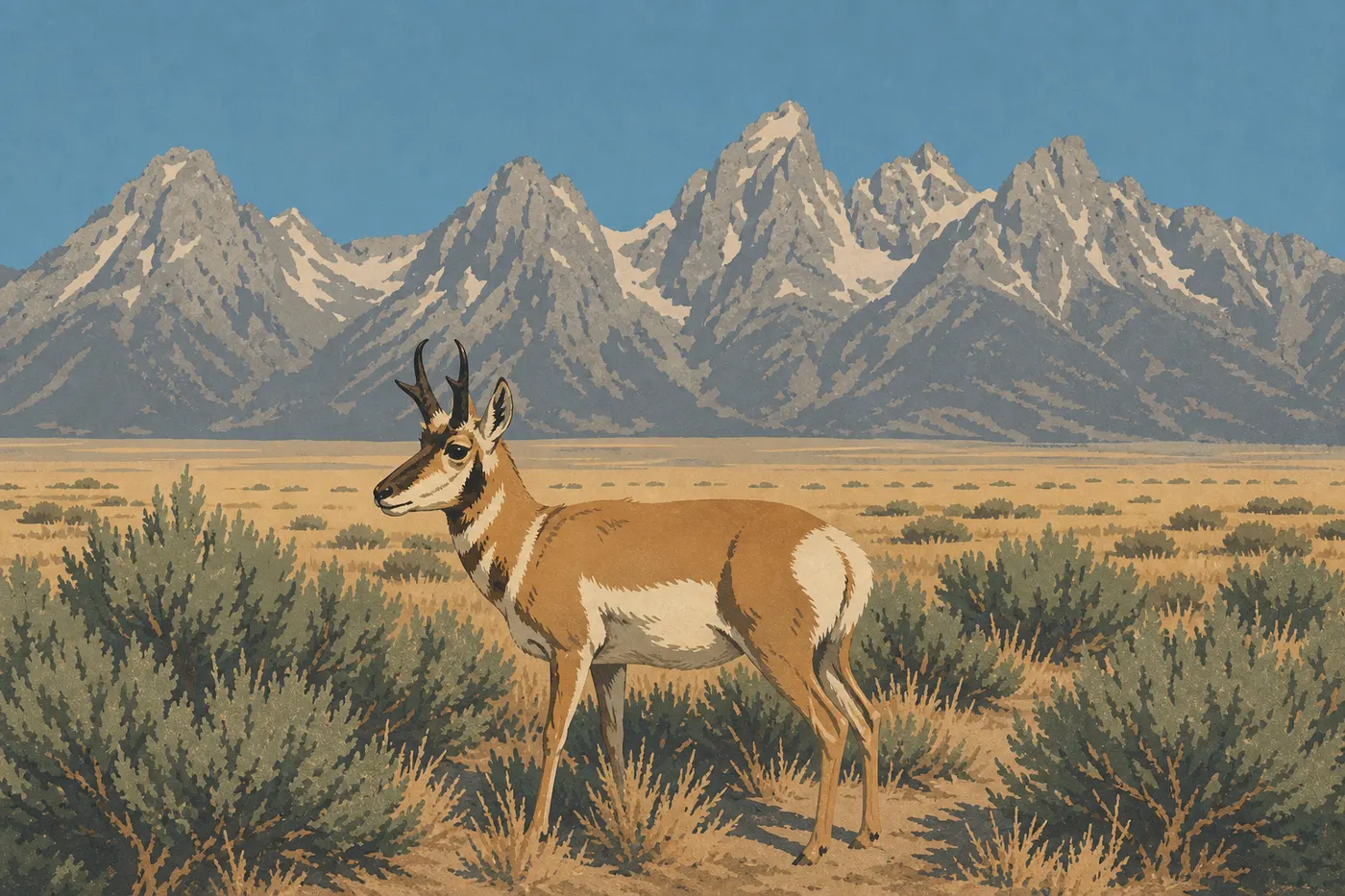
The pronghorn (Antilocapra americana) isn't an antelope, despite appearances. It belongs to its own family, endemic to North America. It's the fastest land mammal on the continent, able to sustain 50 mph over long distances and reach speeds of 55 mph. You can identify it by its curved horns, tawny coat, and bright white rump, visible from far away.
It favors dry, open grasslands. Antelope Flats Road is the prime spot, where small groups graze in open country, clearly visible from your vehicle.
Grizzly or Black Bear: How to Tell Them Apart
Confusion is common, especially when a black bear has brown fur. In practice, three clues are enough:
- The shoulder hump: present on a grizzly, absent on a black bear.
- The muzzle profile: concave, or "dished," on a grizzly, straight on a black bear.
- The claws: long and pale on a grizzly, short and dark on a black bear.
Coat color isn't reliable. If you're unsure, treat the animal as a grizzly and follow the corresponding safety guidelines.
Where to See Wildlife in Grand Teton
Grand Teton makes wildlife viewing easy. Several highly accessible areas are home to abundant large animals.
Antelope Flats Road starts just north of Moose and crosses open meadows that are ideal for bison, pronghorns, and coyotes. It's often the first stop when arriving from the south.
Willow Flats is a wetland below Jackson Lake Lodge. Arrive before 7 a.m. for your best chance of seeing a moose grazing without another visitor around. Grizzlies also make regular appearances here in spring.
Oxbow Bend is a quiet bend in the Snake River east of Jackson Lake Junction. You may see moose in the willows, river otters, great blue herons, and often a bald eagle perched in the cottonwoods. Its east-west orientation makes it an outstanding sunrise photography spot.
Moose-Wilson Road connects Moose and Teton Village along an unpaved road closed to RVs. Black bears and grizzlies regularly use it, as do mule deer and moose. Drive slowly and keep your windows down.
Schwabacher Landing provides access to the Snake River on foot. Beavers are active there at dawn and in the evening, and the reflected view of the Tetons is unmatched.
For hikers, our Grand Teton hiking guide covers the trails that follow wet corridors and alpine meadows where wildlife gathers at higher elevations.
When to Watch Wildlife
Dawn and dusk are the golden windows in every season: from 5:30 to 8 a.m. in the morning, and from 7 to 9 p.m. in summer. Large animals are active, the light is flattering, and visitor numbers remain low.
Spring (April through June): Bears emerge from hibernation and come down into the valley. This is when grizzlies are easiest to spot from the road, often with cubs born over the winter. Female moose give birth in May and June.
Summer (July and August): Animals seek shade during the middle of the day. Bison and pronghorns remain easy to spot in the meadows. Elk move higher into the alpine meadows.
Fall (September and October): It's elk rutting season, and bulls bugle as night falls. Bears enter hyperphagia and are especially active. Fall light is ideal for wildlife photography.
Winter (November through March): Most secondary roads close. The park remains accessible via US-89/191/26, but wildlife migrates to less accessible wintering areas. To choose the right time for your plans, the Grand Teton seasons guide explains the advantages and constraints month by month.
Nocturnal animals active in Grand Teton include mountain lions, coyotes, and raccoons. Driving in the park at night isn't recommended. Collisions with large wildlife are common.
Predators and Large Animals of Grand Teton
The park is home to three large predators. The grizzly is the easiest to spot, often in broad daylight. The gray wolf (Canis lupus), reintroduced to the Greater Yellowstone Ecosystem in the 1990s, is present but elusive. It moves in packs at dawn along the corridors between forest and plain, and seeing one remains a rare privilege. The mountain lion (Puma concolor) is strictly nocturnal and nearly impossible to see during the day.
Among birds, the bald eagle and golden eagle sit at the top of the avian food chain. Oxbow Bend and the banks of the Snake River are their main hunting grounds. The park is also home to American white pelicans on Jackson Lake, along with a wide variety of ducks and shorebirds in the wetlands.
Wildlife Viewing Safety
The NPS requires the following minimum distances throughout the park:
- 300 feet for bears and wolves.
- 75 feet for all other animals, including moose, bison, elk, and coyotes.
These are legal minimums, not goals. If an animal changes its behavior, such as lifting its head, stopping its grazing, or turning toward you, back away immediately.
Never feed an animal. Even unintentionally, this includes crumbs, picnic leftovers, and food packaging. An animal conditioned to approach humans eventually has to be euthanized. The fine can exceed $5,000.
If you encounter a bear on a trail, speak loudly and always carry bear spray where you can reach it, not buried at the bottom of your pack. If a grizzly charges, stand your ground and deploy the spray in a cloud from about 30 feet away, aiming slightly downward. If a grizzly actually attacks, play dead and protect your neck. If a black bear attacks, fight back.
While camping, store all food, toothpaste, sunscreen, and trash in a certified bear-resistant food locker or in your vehicle's locked trunk. Never in the tent and never in plain sight inside the passenger compartment.
On the road, groups of vehicles almost always signal a visible animal. Pull completely onto the shoulder without obstructing traffic and turn off the engine. Don't get out of your vehicle if the animal is nearby.
For families with children, the Grand Teton family guide offers age-appropriate advice for managing wildlife encounters with young visitors.
In Short: Which Species to See and Where to Find Them
| Species | Best spot | Best time |
|---|---|---|
| Grizzly | Moose-Wilson Road, Willow Flats | Spring, dawn |
| Black bear | Moose-Wilson Road, Colter Bay | Spring through fall |
| Moose | Willow Flats, Oxbow Bend | Year-round, dawn |
| Elk | Antelope Flats, Elk Ranch Flats | Fall (rut) |
| Bison | Antelope Flats Road | Summer through fall |
| Pronghorn | Antelope Flats Road | Summer |
| Bald eagle | Oxbow Bend, Snake River | Year-round |
| Beaver | Schwabacher Landing | Dawn and dusk |
See our complete Grand Teton guide to plan your itinerary around these priority areas and choose your lodging base accordingly.
Frequently Asked Questions
What are Grand Teton's iconic animals?
Grand Teton National Park's iconic animals are the grizzly, moose, elk, bison, and pronghorn. You can regularly see them from the valley's main roads without specialized equipment.
What is the most common animal in Grand Teton?
The most common animal in Grand Teton is the mule deer (Odocoileus hemionus), found in nearly every area of the park. Bison are the most visible species in the valley's open meadows.
What is the largest animal in Grand Teton?
The largest land animal in Grand Teton by weight is the adult bull bison, which can exceed 2,000 pounds. In shoulder height, the moose is the tallest, with bulls that can stand more than 6 feet tall.
What predators live in Grand Teton?
Grand Teton's predators include grizzlies, black bears, gray wolves, and mountain lions. Grizzlies are seen most often. Wolves and mountain lions are elusive and rarely visible in broad daylight.
What animals are out at night in Grand Teton?
Animals active at night in Grand Teton include mountain lions, coyotes, raccoons, and some insect-eating bat species. Bears are mainly active at dawn and dusk. Driving on park roads at night is risky because collisions with large wildlife are common.
Where can you see animals in Grand Teton, and where do they go?
The best wildlife-viewing spots in Grand Teton are Oxbow Bend (moose, eagles, otters), Willow Flats (moose, grizzlies), Antelope Flats Road (bison, pronghorns, coyotes), Moose-Wilson Road (bears, mule deer), and Schwabacher Landing (beavers). Dawn and dusk remain the most productive viewing windows in every season.