
Grand Teton Itinerary: What to See in 1, 2, or 3 Days
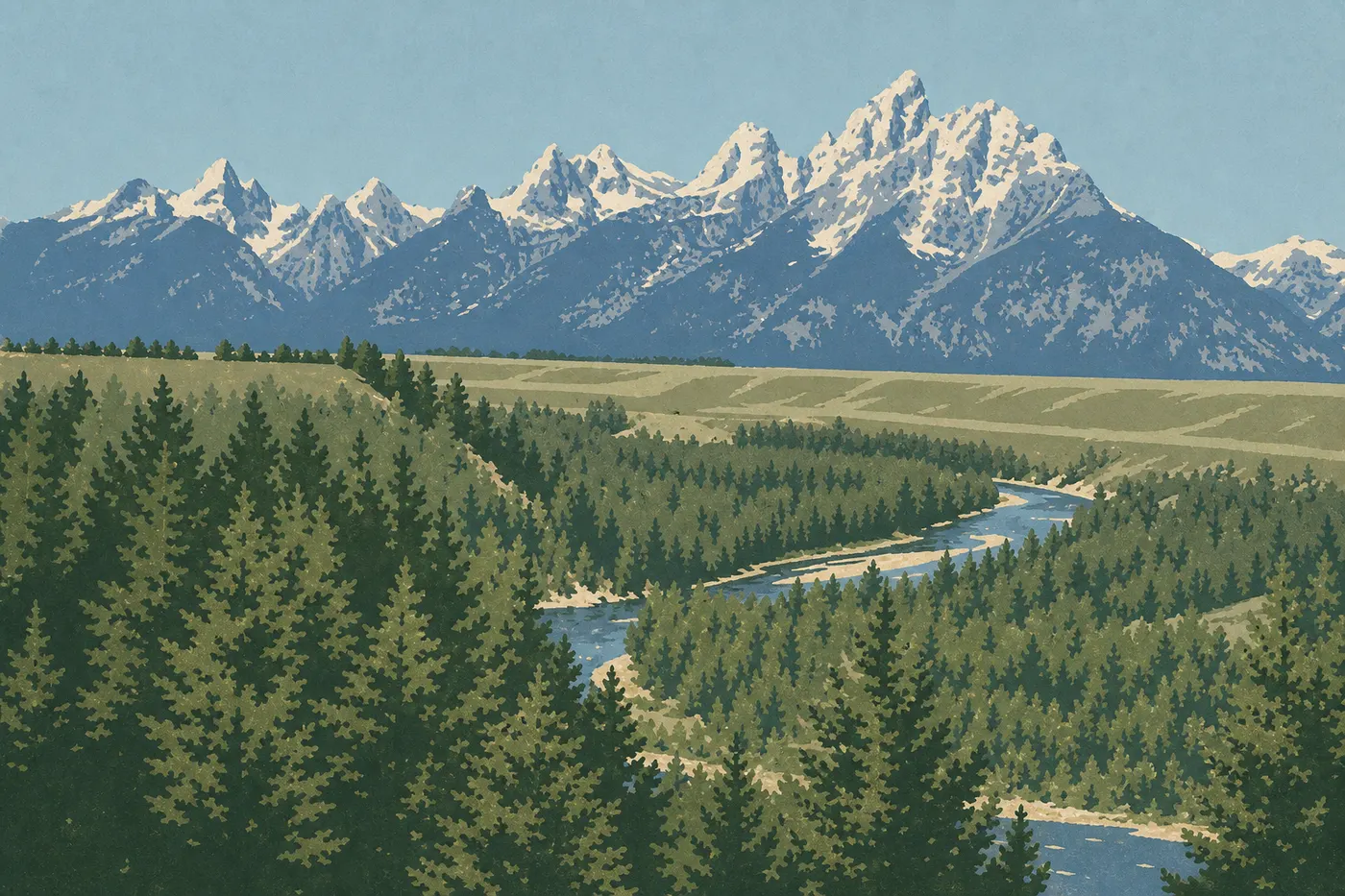
Grand Teton is a park you read from the bottom up. Jackson Hole Valley spreads out its meadows at 6,560 feet, and the Tetons rise straight up all at once, with no foothills or rolling hills to soften the impact. The result is one of the most striking skylines in the United States, visible from your car seat within the first mile of entering the park.
In short: two days cover the essentials (Mormon Row, Jenny Lake, Oxbow Bend, Signal Mountain). Three days is the ideal pace for hiking without rushing and enjoying the morning and evening light. One day is still doable if you're traveling through to Yellowstone, as long as you target two stops, not ten.
Our complete Grand Teton guide covers all the basics if you're starting from scratch.
How Much Time Do You Need to Visit Grand Teton?
Grand Teton is much smaller than Yellowstone, covering about 480 square miles compared with Yellowstone's 3,475 square miles. Distance isn't the main obstacle here. It's the light. The park is best photographed and experienced early in the morning and late in the afternoon. Spending an entire morning at Oxbow Bend for sunrise, then two more hours at Jenny Lake, is what takes time, and it's exactly what makes the time worthwhile.
| Length | Best for | Highlights |
|---|---|---|
| 1 day | Traveling through to Yellowstone | Snake River Overlook, Mormon Row, Jenny Lake (short stop) |
| 2 days | A quick complete visit | Everything above + Hidden Falls, Oxbow Bend, Signal Mountain |
| 3 days | A comfortable visit | Everything above + longer hikes, Colter Bay, evening wildlife |
The rule that applies to every itinerary: start early. Jenny Lake and Mormon Row parking lots fill up after 10 a.m. from mid-June through late August.
For arriving at Grand Teton and getting around the park, the Getting to Grand Teton guide covers entrance stations, roads from Jackson, and ways to get around inside the park.
Grand Teton's Areas
The park is arranged in three parallel bands: Jackson Hole Valley (meadows, historic ranches, wildlife) to the east; the mountain-front lakes (Jenny Lake, Jackson Lake) in the center; and the Teton Range to the west. You can't drive into the high peaks, but you can take in their remarkable clarity from the valley and lakes.
South Area: Jackson Hole, Mormon Row, and Schwabacher Landing
This is the park's photographic gateway. Snake River Overlook, along US-191, offers the view Ansel Adams made famous: the river winding in silver curves in the foreground, with the Tetons filling the sky behind it. Make it a priority at sunset or very early in the morning.
Mormon Row Historic District brings together a handful of 19th-century Mormon barns. The two Moulton barns, including the famous T.A. Moulton Barn, are among Wyoming's most photographed subjects. Arrive before 8 a.m. to find a parking spot and enjoy the low-angle light before the first tour buses arrive.
Schwabacher Landing, reached by a gravel road a few miles north, gives you access to the Snake River's bends upstream from the highway. Beavers are active early in the morning, and sandhill cranes are common in season.
Central Area: Jenny Lake
Jenny Lake is the heart of hiking in the park: a glacial lake at 6,772 feet, ringed by the Tetons' first sheer walls. In peak season, the one-way access road requires traffic to flow either from Moose (northbound) or from Signal Mountain (southbound).
A motor shuttle (a paid ferry, about $18 round-trip for adults in 2025) crosses the lake in 10 minutes and drops you at the foot of Cascade Canyon on the west side. From there, the trail to Hidden Falls is about 0.5 miles one way from the dock, with little elevation gain. Continuing to Inspiration Point adds another 0.25 miles and a bit more climbing, ending at a panorama over the lake and the entire valley. It's the park's most accessible overlook for visitors who aren't hikers.
Experienced hikers can extend the day with the full lake loop (11.8 miles, limited elevation gain) or the climb toward Paintbrush Canyon. Bring water and snacks. Conditions change quickly at elevation, even in July.
Central-East Area: Signal Mountain
Signal Mountain Lodge marks the junction of Teton Park Road and the shores of Jackson Lake. You can drive to the top of Signal Mountain on a 5-mile road from the lodge. It's the only high viewpoint accessible without a hike from the valley floor. From here, you can see Jackson Lake, the bends of the Snake River, and the entire Teton Range at once. Save this stop for late afternoon light.
North Area: Colter Bay and Oxbow Bend
Jackson Lake fills the entire northern part of the park, covering about 42 square miles. Colter Bay Village has a marina, a visitor center with an exhibit on Native American art, and kayak and canoe rentals. On calm mornings, the Tetons reflect in the lake. It's a quieter, less crowded show than Jenny Lake, and just as beautiful.
Oxbow Bend, a few miles east of Colter Bay along US-89, follows an old channel of the Snake River. It's the park's most reliable wildlife spot: great blue herons, bald eagles, otters, elk, and sometimes black bears come to drink in the cool of the morning. Arrive before sunrise, around 5:30 a.m. in July, and keep quiet. This is the kind of place that makes very early wake-up calls completely worthwhile.
A Day-by-Day Itinerary
Day 1: Valley, Southern Light, and Jenny Lake
Morning (7–8 a.m.): enter through the South Entrance from Jackson. Head straight to Mormon Row via Antelope Flats Road. Park in the lot on the east side of the road and walk freely among the barns. Allow 30 to 45 minutes.
Morning (9–10 a.m.): drive down to Schwabacher Landing (gravel road; park at the entrance if the area is full). Take a short 15- to 20-minute walk along the river bends and look for morning wildlife.
Lunch: Moose (Dornan's, a simple cafeteria, or a picnic at the tables along the Snake River).
Afternoon (1–5 p.m.): take Teton Park Road north to Jenny Lake. Arriving before 2 p.m. is recommended if you want to find parking. Take the ferry from the east side, hike up to Inspiration Point (about 2 hours round-trip from the dock, with Hidden Falls along the way), then head back down at your own pace.
Sunset (7–9 p.m., depending on the season): Snake River Overlook along US-191, 15 minutes south of Moose. Bring a tripod if you're taking photos.
Day 2: Northern Park, Wildlife, and Lake Views
Very early morning (5–6 a.m.): Oxbow Bend. Set up by the water before sunrise with coffee in a thermos. Nighttime temperatures stay cool even in July, sometimes 41 to 46°F. Wildlife doesn't show up on command, so be patient and quiet. Allow 1 to 2 hours.
Morning (8 a.m.–noon): drive to Colter Bay Village. Visit the Indian Arts Museum, included with park admission. If the water is calm, rent a kayak or canoe for 1 to 2 hours on Jackson Lake. Choose the south shore for an unobstructed view of the Tetons.
Lunch: Jackson Lake Lodge (the Mural Room if you want to sit down, or the outdoor counter for a quick break facing the Tetons).
Afternoon (2–5 p.m.): drive up to Signal Mountain on the 5-mile road from the lodge. Park at the top for an aerial view of the park. Head back down toward the lake and follow the north shore of Jackson Lake.
Sunset: head back toward Schwabacher Landing or Mormon Row, depending on the clouds on the horizon.
Day 3: Hikes, History, and Evening Wildlife
Morning (8 a.m.–noon): return to Jenny Lake for a longer hike. Choose based on how your legs feel: hike the full lake loop (11.8 miles, moderate elevation gain, allow 5 to 6 hours) or take the Taggart Lake Trail (7.5 miles from the trailhead of the same name, less crowded than Jenny Lake, with little elevation gain).
Early afternoon: Menors Ferry Historic District, in Moose across from the visitor center. The reconstructed ferry and pioneer Bill Menor's cabin bring the valley's settlement history at the turn of the 20th century to life. Visit on your own; allow 20 to 30 minutes.
Late afternoon: drive Antelope Flats Road and Gros Ventre Road in search of wildlife, toward the bison grazing areas. Herds often come out onto the open meadows late in the day.
Sunset: if the weather cooperates, try Phelps Lake Overlook (a short 20-minute climb from the Death Canyon Trailhead) for a wilder sunset away from the crowds.
Options Based on Your Time
One Day (Traveling Through)
Two stops, no more. Our picks are Mormon Row in the morning (arrive at 7 a.m., leave before 9 a.m.) and Jenny Lake in the afternoon (ferry and Inspiration Point, 2 hours). Stop at Snake River Overlook at sunset on the way back to Jackson. Skip the northern park. Colter Bay and Oxbow Bend each deserve an entire morning.
Two Days (Classic Visit)
The Day 1 and Day 2 itineraries above cover the essentials. Stay in Jackson for more choices and price points, or in Colter Bay Village if you booked several months ahead.
Three Days or More (Regional Road Trip)
Grand Teton and Yellowstone National Park are 56 miles apart via US-191 north. Most road trips combine the two parks over a week. The classic order is to enter through Grand Teton from Jackson and finish in Yellowstone, exiting north toward Gardiner. Or do it in reverse. The Regions and Road Trips sections offer guidance for these multi-park circuits if you're planning a longer itinerary.
Itinerary Map
The NPS publishes a free Unigrid map of Grand Teton, available at entrance stations and for download from the park's official website. It shows all the essential roads, trailheads, viewpoints, and services. Download it before you leave. 4G coverage is very limited inside the park, and Google Maps sometimes loses the route in areas without a signal.
Our Map page offers an annotated overview of the areas, with useful landmarks for planning your day.
Where to Stay Along the Itinerary
Park lodging, including Jenny Lake Lodge, Jackson Lake Lodge, and Colter Bay Cabins, books up several months ahead for July and August. Recreation.gov reservations generally open in mid-January for the following season. Put the date on your calendar if you're targeting summer.
Jackson offers a wide range of hotels, motels, and vacation rentals 5 to 10 minutes from the South Entrance, at every price point. For campers, Colter Bay Campground is the largest in the park, with about 350 sites, and accommodates RVs with some length restrictions. Our Where to Stay guide, Hotels & Lodges pages, and Camping section cover all the options for different travel styles and budgets.
Extend Your Trip: What to See Around Grand Teton
Grand Teton is rarely visited on its own. Yellowstone National Park, 56 miles to the north, is the natural and nearly universal next stop. The city of Jackson offers restaurants, art galleries, and shops for an easy transition evening after a day in the park. Farther away, Bryce Canyon and Zion in Utah fit into a 10- to 14-day road trip. The Regions and Road Trips sections offer guidance for these extensions.
The Ideal Itinerary for Your Time
One day: Mormon Row in the morning, then the Jenny Lake ferry and Inspiration Point in the afternoon, followed by Snake River Overlook at sunset. Don't detour north.
Two days: add Oxbow Bend at sunrise on Day 2, Signal Mountain in the afternoon, and Colter Bay for Jackson Lake.
Three days: take a longer hike at Jenny Lake or Taggart Lake, visit Menors Ferry, and go wildlife watching on Antelope Flats in the evening.
The constant is simple: start early. Light, wildlife, and open parking spaces all come down to the first two hours of the day.
Frequently Asked Questions
How many days do you need to visit Grand Teton?
Two days let you see the essential sites, including Mormon Row, Jenny Lake, Oxbow Bend, and Signal Mountain, without rushing. Three days is the ideal pace if you want to hike, watch wildlife at sunrise, and enjoy the evening light. One day is still possible if you're traveling through to Yellowstone and target two stops.
What route do you recommend for visiting Grand Teton?
The classic route starts in the south at Mormon Row and Snake River Overlook, heads up to Jenny Lake for hiking, then explores the north at Oxbow Bend, Colter Bay, and Signal Mountain. This south-to-north direction matches most arrivals from Jackson and follows the day's changing light.
Can you drive through Grand Teton?
Yes. US-191/89/26 crosses the park from south to north, from Moose to Moran Junction, for about 50 miles without interruption. Teton Park Road, the interior road closer to the peaks, is open to cars from May through November. These two roads are enough to reach every area by car.
When is the best time to visit Grand Teton?
July and August offer access to every road and trail, but crowds are at their peak. June and September are the best windows, with fewer people, softer light, and wildlife still active. Our When to Go page breaks down the calendar season by season, including road closure periods.
How much does it cost to enter Grand Teton?
Admission is $35 per vehicle, $20 per person on foot or by bicycle, and $30 per motorcycle. The annual pass for the park alone is $70. If you're visiting several national parks on your trip, the $80 America the Beautiful Pass covers nearly all federal recreation sites for one year. For entrance fees and annual passes, see the National Parks Entrance Fees & Passes page.
What is the best town to stay in near Grand Teton?
Jackson is the most convenient base, with a wide choice of lodging and restaurants, 5 minutes from the South Entrance. To stay inside the park, Jenny Lake Lodge and Jackson Lake Lodge require reservations several months ahead. Our Where to Stay guide compares all the options by budget.
Is Grand Teton worth the detour?
Grand Teton is one of the few parks where a mountain wall rises straight from the plain, with no foothills or intermediate hills. The visual impact is immediate from the road, within the first few minutes in the park. If you're in the area, whether in Yellowstone or Jackson Hole, the detour is an easy choice.