
Getting Around Grand Teton: Access, Entrances, Shuttles, and Parking
Unlike Zion, where shuttles are mandatory during the busy season, Grand Teton is still a car-based park. You can enter and drive through the park 24 hours a day, 365 days a year. Teton Park Road follows the mountains and connects the main areas. Without a car, you'll see only a fraction of the park.
Whether you're coming to Grand Teton from Jackson, Salt Lake City, or Yellowstone, you'll find all the practical details about airports, roads, and drive times in the guide to getting to Grand Teton.
Entrance Stations
Grand Teton has three entrance stations: South Entrance (US-89/191, from Jackson), Granite Canyon (the southern section and bike path), and Moran (US-89/191/26, leading directly to Jackson Lake Junction). The entrance fee is $35 per vehicle for 7 days. The national parks fees and passes page explains entrance fees and annual passes.
Getting Around the Park
By Car
Driving is the main way to get around. Two roads form the backbone of the park.
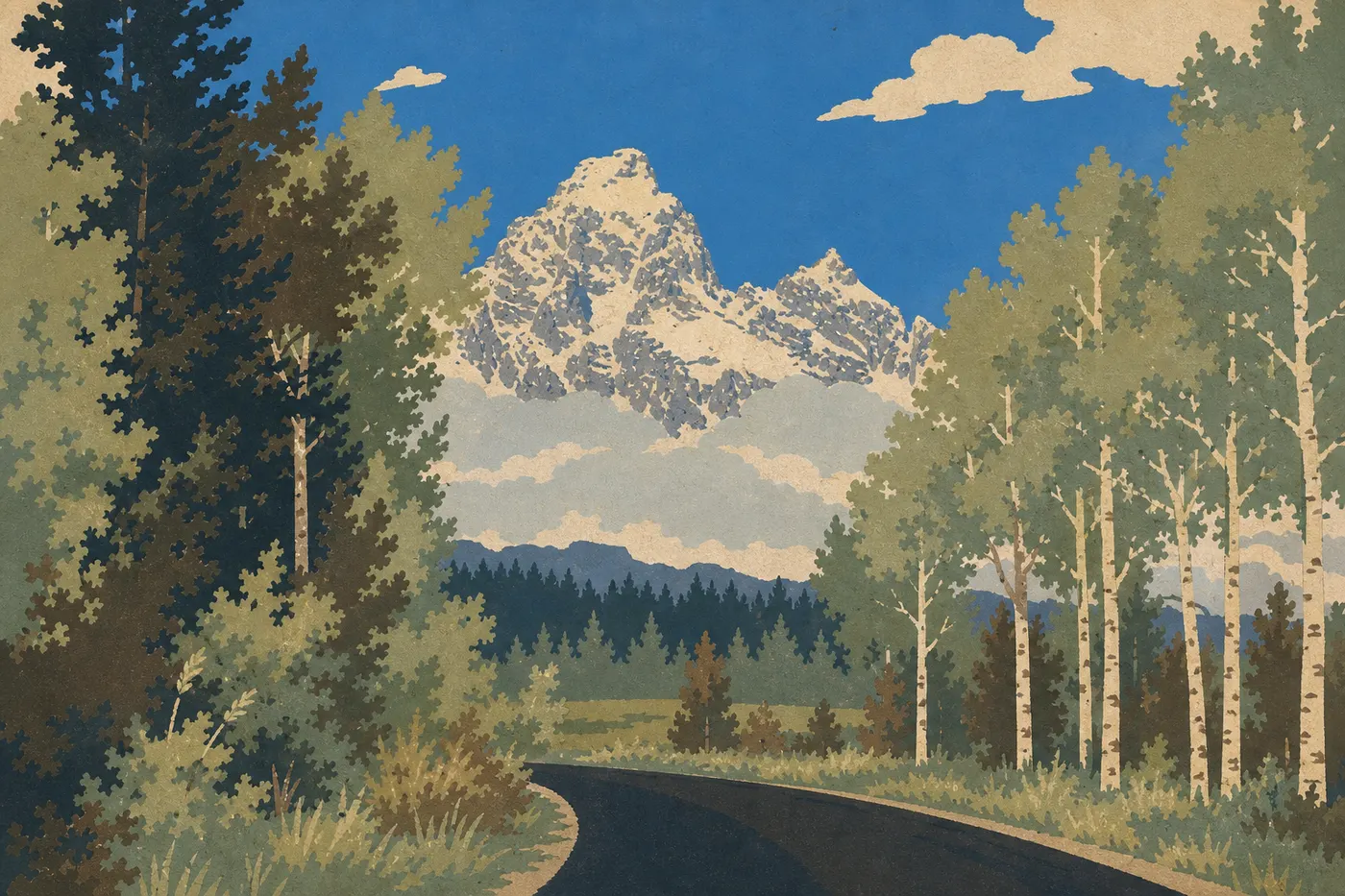
Teton Park Road is the scenic inner road. It runs for about 26 miles and follows the Teton Range closely. It connects Moose in the south with Jackson Lake Junction in the north. The speed limit is 35 mph along most of the road, dropping to 25 mph near heavily used parking areas.
US-89/191/26 is the faster main road on the east side. It connects Jackson with Yellowstone South Entrance. It runs north to south through the park and offers open views of the Tetons from the Jackson Hole valley.
The Signal Mountain Summit Road takes standard vehicles to the top of Signal Mountain, but it's closed to RVs and trailers longer than 24 feet.
By Shuttle
Grand Teton doesn't have a mandatory internal shuttle. In summer, START Bus (Southern Teton Area Rapid Transit) connects Jackson, Teton Village, and some points in the park on regular routes. It's useful if you're staying in town without a car, but it won't take you deep into the park.
A boat taxi crosses Jenny Lake in summer for a fee of a few dollars. It cuts about 2.2 miles of walking to Hidden Falls. It's especially useful for hikers who want to go straight to the trails on the west side.
By Bike
The park has a Multi-Use Pathway, a shared path for pedestrians and cyclists, connecting Moose with South Jenny Lake for about 6.2 miles entirely off-road. Road cycling is allowed, but shoulders are narrow, so it's best left to cyclists who are comfortable riding in traffic. Bike rentals are available in Jackson.
Where to Park: Parking Areas and Lots
Parking is free throughout the park. The most popular lots, however, fill up quickly in summer.
Jenny Lake has the most competitive parking in the park and fills before 9 a.m. in July and August. Arrive before 8 a.m. or use the overflow parking at South Jenny Lake.
Moose (Craig Thomas Discovery & Visitor Center) has a reasonably sized lot that fills up early. It's convenient for hikes in the southern section.
Jackson Lake Lodge and Colter Bay have larger lots with less pressure, making them good choices for the northern section.
Signal Mountain gets busy in the late afternoon around sunset. In the busy season, plan to arrive by about 4 p.m. at the latest.
The rule of thumb is simple: in July and August, aim for the parking areas before 9 a.m. or after 5 p.m. For a detailed look at seasonal crowds, see the guide to the best times to visit Grand Teton.
Distances and Drive Times Between Areas
The park is more compact than Yellowstone, but the roads are winding and wildlife often crosses them, so expect regular slowdowns.
From South Entrance (Moose) to Jenny Lake: about 12 miles, 20 to 25 minutes.
From Jenny Lake to Jackson Lake Junction: about 20 miles, 30 to 40 minutes.
From Jackson Lake Junction to Yellowstone South Entrance: about 22 miles, 30 to 40 minutes.
Allow at least an hour to travel between the park's northern and southern ends. The Grand Teton itinerary and timing guide explains how to plan your visit area by area.
Special Cases: RVs, Vans, Accessibility, and Pets
RVs and trailers: Signal Mountain Summit Road is closed to vehicles longer than 24 feet, including the trailer. Jenny Lake has few spaces for large vehicles, so choose the better-sized campgrounds at Colter Bay or Signal Mountain. The Grand Teton RV guide lists campgrounds suitable for large vehicles.
Accessibility: The main visitor centers (Craig Thomas Discovery & Visitor Center, Colter Bay, and Jenny Lake) have reserved spaces and accessible entrances. The park provides all-terrain wheelchairs upon request. Some short trails, including Menors Ferry Historic District and Laurance S. Rockefeller Preserve, are wheelchair accessible.
Pets: Dogs are allowed in the park, but only on roads, in parking areas, and in campgrounds. They're not allowed on trails or inside visitor centers. Dogs must be on a leash no longer than 6 feet at all times.
Mobility Essentials: Fuel, Cell Service, and Apps
Fuel: There are no gas stations across most of the park. Signal Mountain Lodge sells fuel seasonally. Fill up in Jackson before entering so you don't run short.
Cell service: Service is very limited inside the park. You'll get a few bars near visitor centers and Jackson Lake Lodge, but Teton Park Road is almost entirely out of range. Download offline maps (Google Maps offline, AllTrails, and Gaia GPS) before you enter the park.
Useful apps: The free official NPS app brings together maps, road conditions, and wildlife alerts. Recreation.gov handles campground reservations.
Weather: Afternoon thunderstorms are common in July and August. Check the forecast every morning before heading out on a hike. The Grand Teton weather guide covers seasonal patterns in detail.
Frequently Asked Questions
How do you get around Grand Teton National Park?
The main way to get around Grand Teton National Park is by car. There is no mandatory shuttle inside the park. Teton Park Road and US-89/191/26 cover the main areas and take about an hour to drive from end to end.
Can you visit Grand Teton by car?
Yes. In fact, a car is the only practical way to explore every area. Teton Park Road, the scenic inner road, follows the Teton Range for about 26 miles and is easy to drive in any passenger vehicle.
Where can you park in Grand Teton?
Parking is free throughout the park. The lots at Jenny Lake and Moose fill before 9 a.m. in July and August. Arrive early or after 5 p.m. to find a spot without circling.
Which entrance is best for Grand Teton?
South Entrance (US-89/191, north of Jackson) works for most visitors. Moran (US-89/191/26) is more convenient if you're arriving from the east or returning from Yellowstone via the plains.
Is there cell service in Grand Teton National Park?
Cell service is very limited inside the park. You may get a few bars near visitor centers and Jackson Lake Lodge, but coverage is almost nonexistent on Teton Park Road. Download your maps before entering the park.
Can you enter the park at night?
Yes. Grand Teton is open 24 hours a day, 365 days a year. Entrance stations operate around the clock, while services such as visitor centers and shuttles run on seasonal schedules.