
Grand Teton with Kids: What to Do and How to Plan Your Visit
Grand Teton works for kids as young as 3 or 4, as long as you choose the right trails and arrive with a solid plan. The mountains are spectacular from the moment you step out of the car, wildlife appears along the road with little effort, and the Junior Ranger program keeps kids engaged throughout the trip. This isn't a park with every comfort close at hand, but with two well-planned days, it's one of the most memorable national park experiences you can give your kids.
Why Visit Grand Teton with Kids
Grand Teton stands in a category of its own. There are no geysers to watch from a safe distance and no scalding thermal areas to dodge at every step. Here, the Teton Range rises from the valley just outside Jackson, and kids don't need to hike six miles to be completely amazed.
Here are three practical advantages for families:
- Wildlife along the road. Moose, bison, elk, and sometimes black bears or grizzlies: an early-morning drive on Teton Park Road is enough to bring excited shouts from the back seat. You don't have to hike to see the wild side of the park.
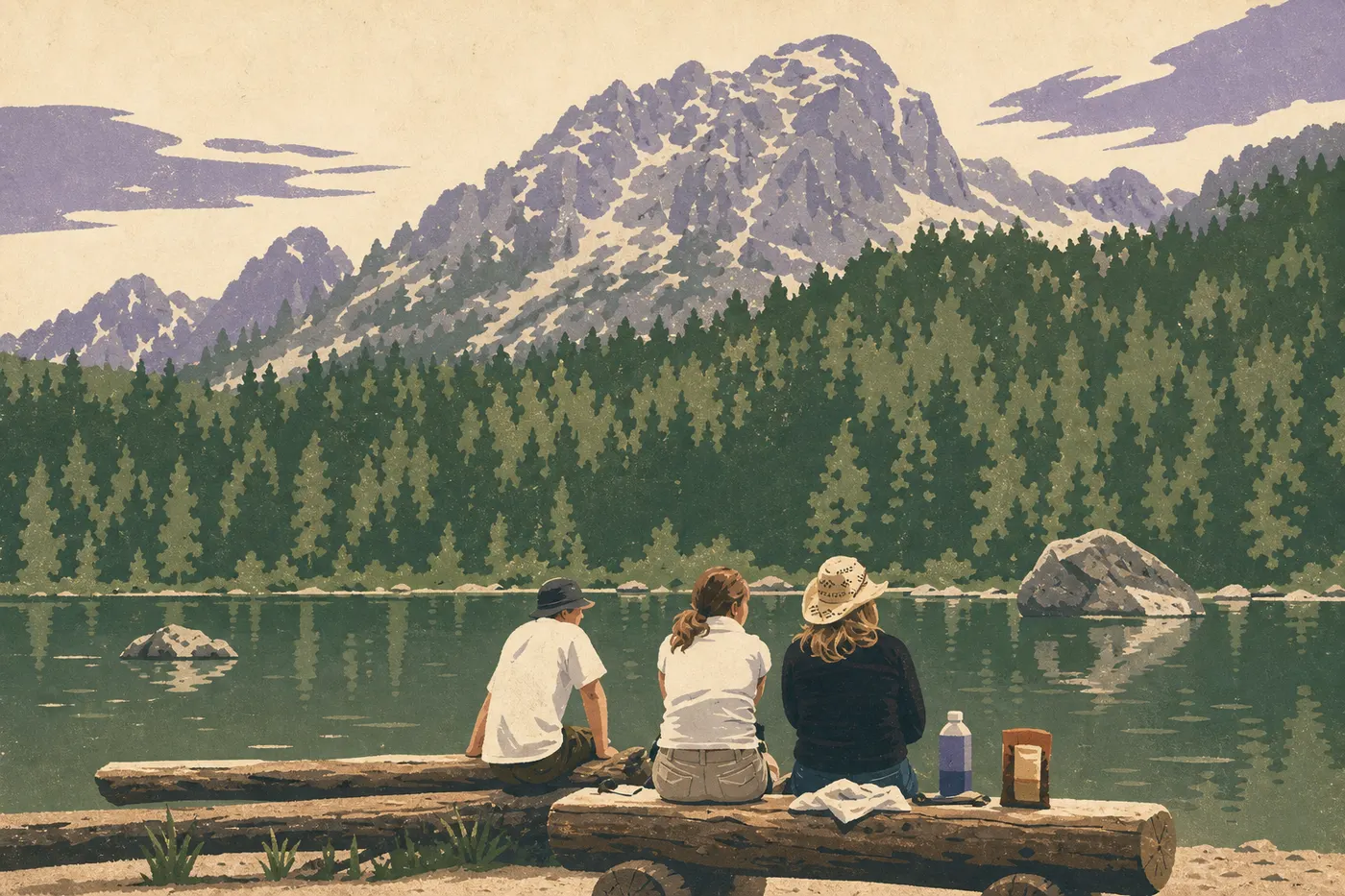
- Lakes you can reach on foot. Jenny Lake, String Lake, and Leigh Lake sit at the foot of the mountains, with flat shorelines that are perfect for picnics, splashing around between hikes, or simply taking a break.
- A manageable scale. Grand Teton is more compact than Yellowstone, so you can see its highlights in three days without spending all day behind the wheel. Kids get a chance to recover, and so do parents.
Is Grand Teton Good for Kids? What Age Is Best
Grand Teton works from about age 3 or 4 for children carried in a framed backpack on flat trails. Kids who hike on their own get more out of the park from about age 6 or 7, when they can handle two to three hours on the trail and are starting to understand what they're seeing, from geology and wildlife to the Junior Ranger program.
All-terrain strollers work on the paved trails around Colter Bay and at the Jenny Lake trailhead. On actual dirt trails, plan on using a child carrier or relying on capable little legs.
Teenagers love the park too. The views are photogenic, the wildlife is spectacular, and a few intermediate trails, including Hidden Falls and Taggart Lake, offer enough elevation gain to make the outing feel like a real hike.
Don't overlook the elevation. Jackson Hole's valley floor sits at around 6,600 feet. The first few hours can cause mild shortness of breath in young children and anyone sensitive to altitude. Allow 24 hours to acclimate if you're arriving from sea level.
When to Visit with Kids: The Easiest Season for Families
The best family window is July and August. Days are warm, around 77 to 82°F in the valley, all roads and trails are open, and the lodges are fully operating. The tradeoff is peak season. Parking at popular sites such as Jenny Lake fills before 9 a.m. Get there early or be prepared to wait.
June is a good alternative if you want fewer crowds. Wildflowers are at their peak, but nights remain cool, around 41 to 50°F, and some high-elevation trails may still be snow-covered in early June.
September brings fall color in the aspens, pleasant daytime temperatures, and fewer visitors. We recommend it for families with school-age children who can shift their trip outside the main summer break.
Avoid arriving in May, when roads may be partially closed and snow is possible, or visiting in winter with young children unless you're coming specifically for cross-country skiing or dog sledding. Our Grand Teton Weather page breaks down temperatures and precipitation month by month.
How Many Days Should You Plan for a Family Trip
The minimum for a family with kids is two full days. You'll cover Jenny Lake, Teton Park Road for wildlife, the visitor center, and the Junior Ranger program. It's a tight schedule, but doable.
Three to four days is the ideal pace. Add Colter Bay, a kayaking or boating excursion on Jackson Lake, a slightly longer hike, and a break in Jackson for shopping and some time in town. This pace leaves room for surprises, such as an afternoon thunderstorm, a tired child, or a moose blocking the road for 20 minutes.
Five days or more calls for combining the trip with Yellowstone. The two parks are connected by a 1.5-hour drive to the north. Our Grand Teton Itinerary & Length Guide offers family-friendly schedules, including Wyoming road trips.
What to Do in Grand Teton with Kids: Our Picks
Drive Teton Park Road at Dawn
Leave before 7 a.m. with the windows down. The low light on the Tetons is unforgettable, and wildlife is at its most active. Bring binoculars for everyone. Spotting a moose in a marsh quickly turns into a competitive game among siblings.
Jenny Lake and Hidden Falls
The paid ferry crosses Jenny Lake in 10 minutes and drops you at the start of the trail to Hidden Falls. The waterfall is a 30- to 40-minute walk from the dock and works for kids age 5 and up. If you'd rather walk around the lake, the west-shore section follows the water for 2.2 miles. It's flat and shaded, making it ideal for younger children.
Oxbow Bend
This bend in the Snake River is one of the park's most reliable wildlife-viewing spots. Great blue herons, beavers, otters, and bald eagles are all possible sightings. No athleticism required. Pull over, get out the binoculars, and wait.
Mormon Row Historic District
Two wooden barns from the early 20th century have been photographed millions of times with the Tetons in the background. Kids love exploring the old buildings, and parents head home with beautiful photos. A dirt road leads there and is suitable for any vehicle in dry weather.
Craig Thomas Discovery & Visitor Center in Moose
This is the park's main visitor center. Its exhibits on Grand Teton's geology, wildlife, and history are well designed for kids, with models, animations, and interactive displays. This is also where children pick up their Junior Ranger booklet. Allow 45 minutes to an hour, and check the posted schedule for ranger talks. These short, free presentations are often the best introduction to the park for kids.
Our Things to Do in Grand Teton page lists all the park's activities, including wildlife viewing and water activities.
Easy Family Hikes: Short Trails with Little Elevation Gain
Grand Teton isn't an easy-hiking park overall. The high-elevation trails are demanding and best left to experienced young hikers. Around the lakes, though, you'll find several very accessible options.
String Lake Trail (1.9 miles round-trip, nearly flat). This trail connects String Lake and Leigh Lake along a shallow channel. Kids can reach the water and skip rocks, while the Tetons stay in view the whole way. It's perfect for children age 4 or 5 and up.
Jenny Lake, west shore (2.2 miles round-trip, flat). The full lake loop is long for young children, at 7.5 miles, but the west-shore section alone is very manageable. Expect constant views of the lake and mountains.
Taggart Lake Trail (3.1 miles round-trip, about 260 feet of elevation gain). Suitable from about age 7 or 8, this trail leads to a mountain lake with direct views of the Tetons. Allow 1.5 to 2 hours at a family pace.
Colter Bay Lakeshore Trail (1.9-mile loop, flat). This loop follows the shore of Jackson Lake. It's ideal early or late in the day, with the Tetons in the distant background.
Avoid hiking beyond Hidden Falls into Cascade Canyon with children under 8. The elevation gain and distance become tiring quickly, and late-afternoon returns often coincide with thunderstorms.
Our Grand Teton Hiking page ranks every trail by difficulty, duration, and stroller accessibility.
The Junior Ranger Program
This is one of the best programs in America's national parks, and Grand Teton runs it well. At the park entrance or at the Moose, Colter Bay, or Jenny Lake visitor centers, children receive a free Junior Ranger activity booklet.
The booklet includes nature and park-history observations, games, and questions. Once the activities are complete, the child presents the booklet to a ranger, takes the Junior Ranger pledge, and receives an official badge. The ceremony lasts five minutes, and rangers play along enthusiastically.
Recommended age: 4 to 14, with activities adapted to different ages. Younger children can complete the simple activities with a parent's help. The booklet is in English. If your children aren't reading yet, you can translate the questions aloud. Ask a ranger about language support if your family needs it.
Our practical advice is to pick up the booklet on your first day, use it as a thread connecting the visit, and save the badge ceremony for the afternoon of your last day. It gives the trip a real closing moment. I've seen 10-year-olds cry when they received their badge, which is pretty remarkable for a paper-and-enamel souvenir.
Safety with Kids in Grand Teton
Wildlife: Keep Your Distance
Grand Teton is home to black bears and grizzlies, moose, bison, and mountain lions. The NPS rule is clear and nonnegotiable:
- Bears and wolves: keep at least 100 yards away, or about 300 feet.
- All other mammals, including bison, moose, and elk: keep at least 25 yards away, or about 75 feet.
Teach your children these distances before you arrive. An angry moose is more dangerous than a bear in many situations. Females with calves may charge without warning. Never approach an animal for a photo, even if it looks calm and indifferent.
On the trails, carry your bear spray where you can reach it at all times, not buried in your pack. Make noise as you hike by talking or singing so you don't surprise a bear around a bend. Our Grand Teton Guide explains what to do in case of an encounter.
Afternoon Thunderstorms
In July and August, severe thunderstorms break out almost every afternoon between 2 and 5 p.m. Plan hikes for the morning, and get down from high-elevation areas by 1:30 p.m. If a storm catches you on the trail, immediately leave ridges and exposed areas. Lightning strikes high points.
The Lakes and the Snake River
The Snake River's currents are strong and deceptive on the surface. Swimming isn't recommended, especially for children. The lakes, including Jenny Lake, String Lake, and Leigh Lake, remain icy even in peak season, at around 50 to 59°F. Keep a close eye on children near the water.
Sun and Elevation
At 6,600 feet, UV exposure is considerably stronger than at sea level. Use SPF 50+ sunscreen, wear a wide-brimmed hat, and stay hydrated throughout the day. Young children dehydrate quickly in the dry mountain air.
Where to Stay with Kids: In the Park and Nearby
The park offers lodges and campgrounds for every kind of trip. Signal Mountain Lodge and Jackson Lake Lodge are the most convenient lodging options with kids: on-site dining, lake or mountain views, and quick access to the main sights. Colter Bay offers more affordable cabins and a well-equipped campground, which is ideal if you're traveling by RV.
If you stay outside the park, Jackson, 15 minutes to the south, has everything you need: hotels, restaurants, pharmacies, and supermarkets. It's convenient for families who need supplies or want a more comfortable night than a campground provides.
Our Where to Stay in Grand Teton page compares every option with sample prices and booking advice. Book at least six months ahead for in-park lodges during peak season. They fill up weeks before opening. Our Grand Teton Camping page and our Grand Teton RV page cover available sites.
Meals and Breaks with Kids
Inside the park, options are limited and high-season prices are high by American standards. Here's what's available:
- Colter Bay: cafeteria and restaurant with simple meals and generous portions.
- Signal Mountain Lodge: snack bar and restaurant with views of Jackson Lake.
- Jackson Lake Lodge: two restaurants, including a buffet that works well for kids.
Our recommendation is to pack a big picnic every morning before you leave, after shopping at a Jackson supermarket the day before. The park has plenty of picnic tables, and eating beside Jenny Lake with the Tetons in front of you beats any restaurant. Pack plenty of snacks for the stretches between stops. Restaurant lines can be long at peak times, and a hungry child stuck in a 20-minute line is a serious problem.
Our Where to Eat in Grand Teton page lists places in and around the park, as far as Jackson.
Family Budget
Park entry costs $35 per vehicle, valid for 7 days with all occupants included. If you're combining Grand Teton with Yellowstone or other national parks, the America the Beautiful pass, at $80 per vehicle and valid for one year in all federal recreation areas, pays for itself starting with the second park.
Children under 15 enter all U.S. national parks for free. The Junior Ranger booklet is free too.
Lodging is the biggest expense. In-park lodges charge $200 to $400 per night depending on the room and season. Camping remains the most economical option, at $20 to $35 per site.
Our National Park Fees & Passes page explains entrance fees and available passes.
Places to Combine with Grand Teton for a Family Trip
Yellowstone is the obvious first choice. 1.5 hours north via US-89, it adds geysers such as Old Faithful, colorful hot springs, and the largest concentration of wildlife in the United States. Allow at least two extra days. Our Wyoming Road Trip Guide offers ready-to-use combined itineraries.
The town of Jackson is worth a half-day. The central square, with its elk-antler arches, is iconic, and kids enjoy the outdoor activities at Jackson Hole Mountain Resort in summer, including a scenic chairlift, alpine slide, and zip line. In winter, it's one of the best ski resorts in the United States for experienced families.
Grand Teton fits naturally into a larger trip through the parks and natural areas of Wyoming. Our Regions Guide introduces the areas around the park and possible routes from Jackson.
Is Grand Teton Worth It for Families?
Grand Teton is absolutely worth the trip for families. The promise is fulfilled the first time you see the Tetons from the road. No child stays indifferent to those sheer cliffs rising out of nowhere. The park is compact enough to get to know in three days and rich enough to make you want to come back.
This isn't a park with every comfort close at hand. You need to plan lodging reservations six months ahead during peak season, arrive early at popular sites, and take wildlife seriously. With reasonable preparation, though, it's an experience kids will talk about long after you get home. Our complete Grand Teton guide helps you put it together.
Frequently Asked Questions
Is Grand Teton good for kids?
Grand Teton works for kids as young as 3 or 4 on flat trails and for roadside wildlife viewing. Families with children age 6 and up can enjoy the park fully, including short hikes and the Junior Ranger program.
Is Grand Teton worth visiting?
Grand Teton is especially worthwhile for families. The mountains are spectacular from the moment you step out of the car, wildlife is abundant, and the easy trails around the lakes work for all ages. With three well-planned days, it's a memorable trip.
What's the best time to visit Grand Teton with kids?
The best time for a family visit is July and August, when all roads and activities are open. September is an excellent alternative with fewer crowds. Our When to Visit Grand Teton page compares every season in detail.
What is there to do in Grand Teton with kids?
Family highlights include wildlife viewing on Teton Park Road, Jenny Lake and Hidden Falls, the flat trails around String Lake, the Junior Ranger program, and the Moose visitor center. Our Things to Do in Grand Teton page lists all the activities.
How long do you need to visit Grand Teton with kids?
Allow at least two days for the essentials, three to four days for a comfortable family pace, and five days if you're combining the trip with Yellowstone. Our Grand Teton Itinerary & Length Guide offers family-friendly schedules.