
What to Do in Grand Teton: Must-See Sights and Activities
Grand Teton makes an immediate impression. The peaks rise straight out of the plain, almost vertical, with no foothills or gradual buildup. You don't have to go far to get right into the heart of the park.
Here are the five must-see experiences to put at the top of your list: Mormon Row at sunrise, the boat shuttle across Jenny Lake, the view from Signal Mountain, wildlife watching at Oxbow Bend, and a trip into Cascade Canyon. These five experiences cover the heart of the park in two full days. The sections below cover each area, along with activities to add based on your interests and the time you have.
Grand Teton at a Glance: Areas, Access, and Getting Around
The park is organized around two parallel roads. Teton Park Road follows the range along its west side, from the Moose entrance to Jackson Lake Junction. It's the park's signature scenic drive, with the mountains constantly in view. US-191 (the John D. Rockefeller Jr. Memorial Parkway through its central section) runs farther east, crossing the Jackson Hole valley from the town of Jackson to Yellowstone's entrance. The two roads meet at Moose Junction to the south and Jackson Lake Junction to the north.
The park has three main entrances. Moose is to the south on Teton Park Road, Moran is to the east on US-191, and the north junction leads toward Yellowstone. The town of Jackson sits about 6 miles south of the Moose entrance, outside the park. The entrance fee is $35 per vehicle in 2025. For opening hours and transportation options, see the guide to getting to Grand Teton.
How Much Time Do You Need to Visit Grand Teton?
Two days are enough to see the five highlights mentioned above, as long as you focus your plans and start early. Three days offers the ideal pace, with a high-elevation hike, a morning devoted to wildlife, and an evening for photography without rushing. With four days or more, you can explore less-visited areas such as Leigh Lake or Paintbrush Canyon, and take time to linger, just a little, beside a lake. Our detailed itinerary guide offers several practical plans for different schedules.
Grand Teton's Highlights by Area
Jenny Lake and the Central-Western Area
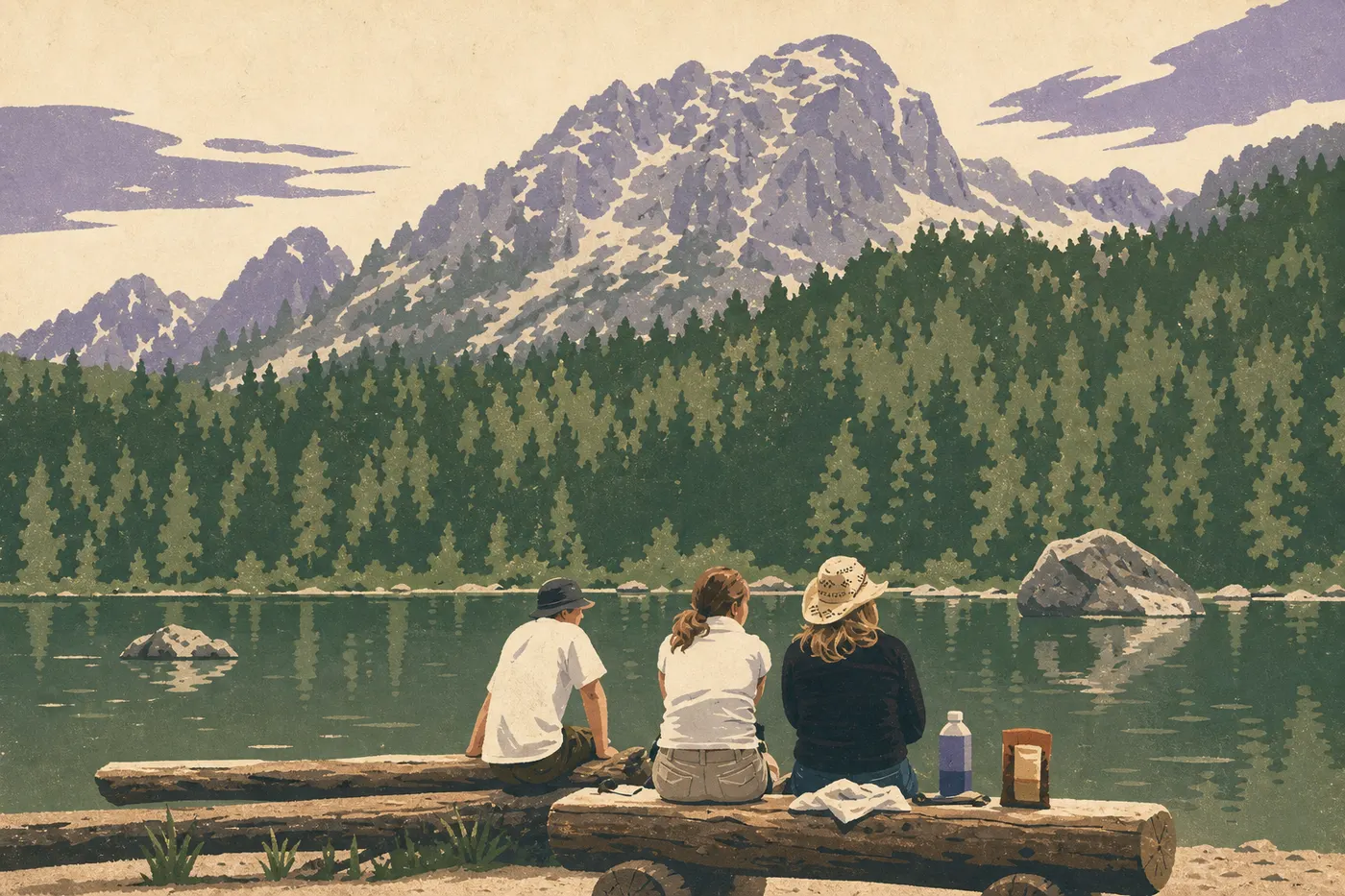
Jenny Lake is the park's essential stop. This glacial lake sits at the foot of the range in the park's central third and offers the best way to experience the Tetons up close. You can walk the entire 7.5-mile loop in 3 to 4 hours on an easy, well-marked trail. The boat shuttle from the south dock is paid and runs frequently during the season. It cuts the crossing to five minutes and drops you right at the start of the trail to Hidden Falls.
Hidden Falls is a 150-foot waterfall tucked into a rocky canyon at the foot of the Tetons. It's dramatic and relatively easy to reach. A 20-minute walk farther uphill brings you to Inspiration Point, an open overlook above Jenny Lake and the Jackson Hole valley. It's one of the park's most photographed viewpoints. Get there before 9 a.m. if you want to beat the crowds.
Two miles north of Jenny Lake, String Lake is a shallow, turquoise lake that's ideal for swimming, cold but refreshing, or launching a kayak toward Leigh Lake. This area is noticeably less crowded than Jenny Lake while offering a similar setting.
The Craig Thomas Discovery & Visitor Center, near the Moose entrance, is the park's main visitor center. Its exhibits on Teton geology and the history of the Shoshone-Bannock peoples are worth about 20 minutes, and rangers offer up-to-date advice on trail conditions.
Mormon Row and the Antelope Flats Plain
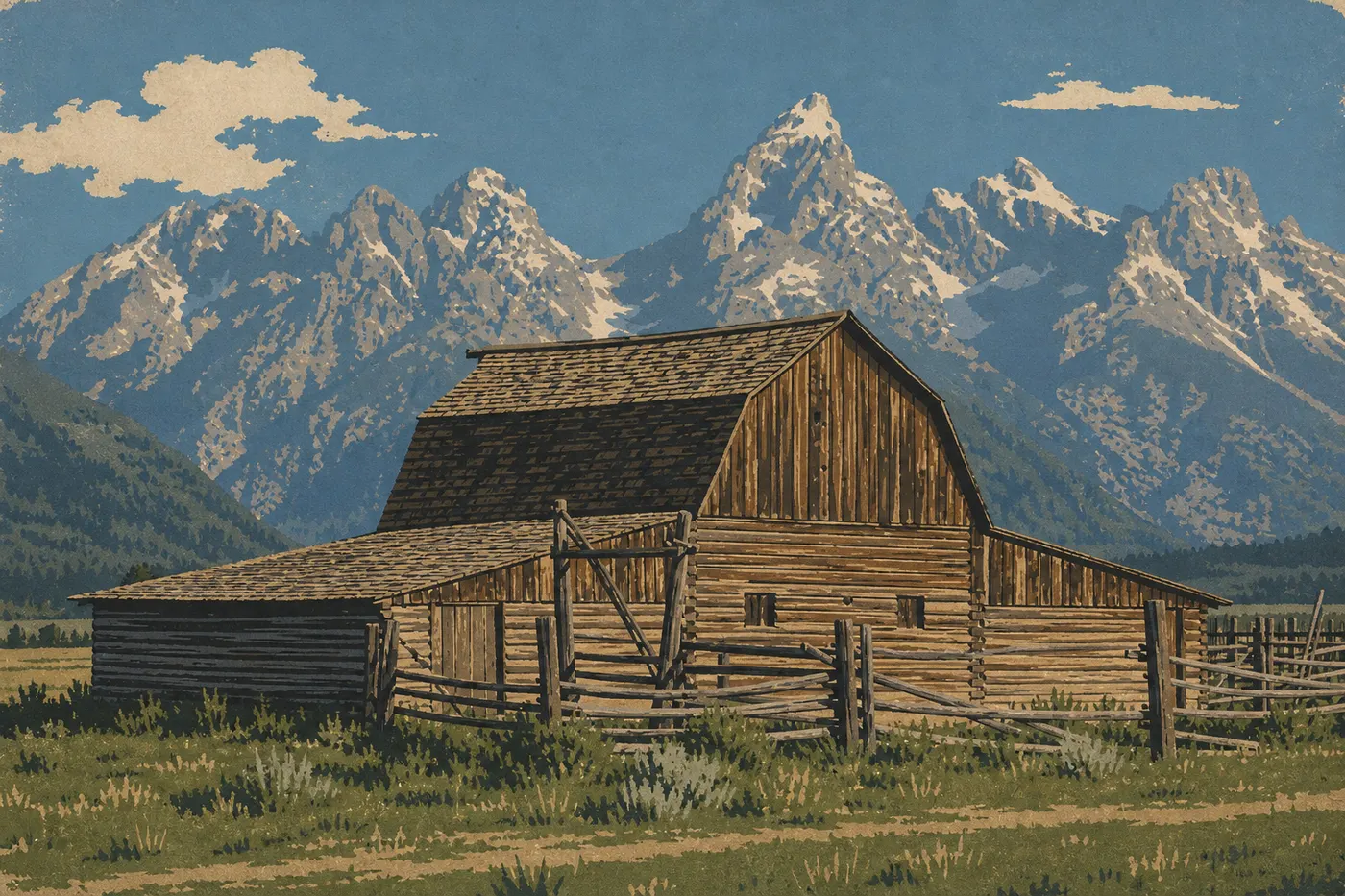
East of Teton Park Road, the Antelope Flats plain stretches out at the foot of the range. This is where you'll find the barns of Mormon Row, built by Mormon settlers in the 1890s and listed on the National Register of Historic Places. The composition is simple but striking. The old wooden structures stand out against the Tetons with almost theatrical precision.
Sunrise here is one of the most sought-after photography experiences in the American West. Low-angle light turns the peaks orange-pink while the barns remain in shadow. The moment lasts about 20 minutes. To arrive in good position in midsummer, get there before 5:30 a.m. The parking lot fills quickly.
The area is worth visiting beyond sunrise for its wildlife. Bison regularly graze across the plain, sometimes just a few yards from the road, and pronghorn cross the area during the warmer months. Always keep at least 75 feet from any wild animal.
Signal Mountain and Oxbow Bend
The Signal Mountain Summit Road climbs in switchbacks from Teton Park Road to the summit of Signal Mountain, about 7,087 feet high, an isolated hill in the plain. The view from the top is one of a kind. You can see the entire Teton Range to the west, Jackson Lake to the north, and the Jackson Hole valley to the east all at once. The road is closed to vehicles longer than 23 feet. Allow about 20 minutes to drive up from the base.
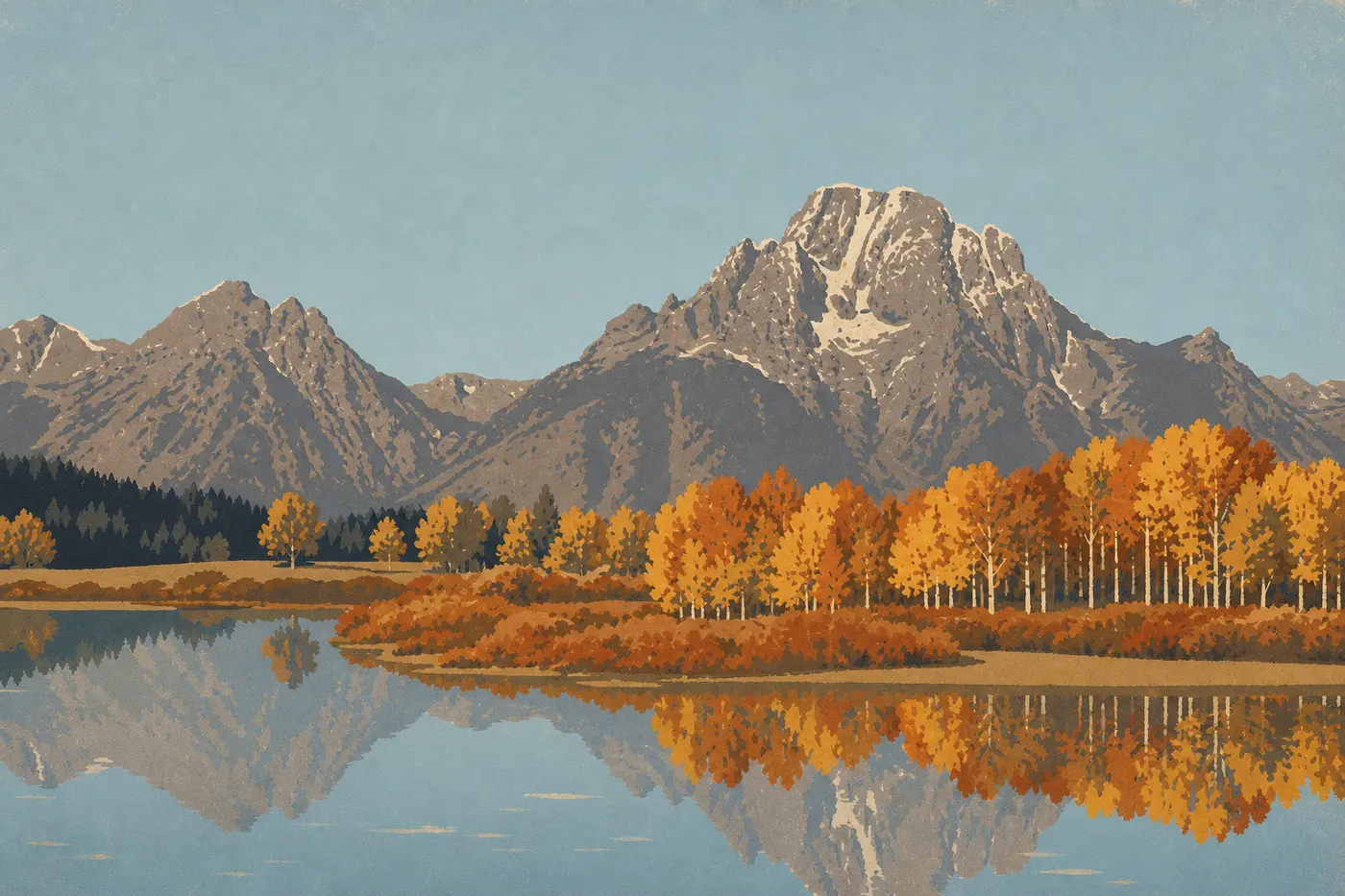
Just east of Signal Mountain, Oxbow Bend is the park's best wildlife-viewing spot. An old bend in the Snake River forms a quiet backwater where moose feed among the willows and aquatic plants, especially at dawn and dusk. Bald eagles, American white pelicans, beavers, and otters are regularly seen here. Binoculars are essential. The low light on a summer morning makes Oxbow Bend a photographer's dream.
Snake River Overlook and the US-191 Corridor
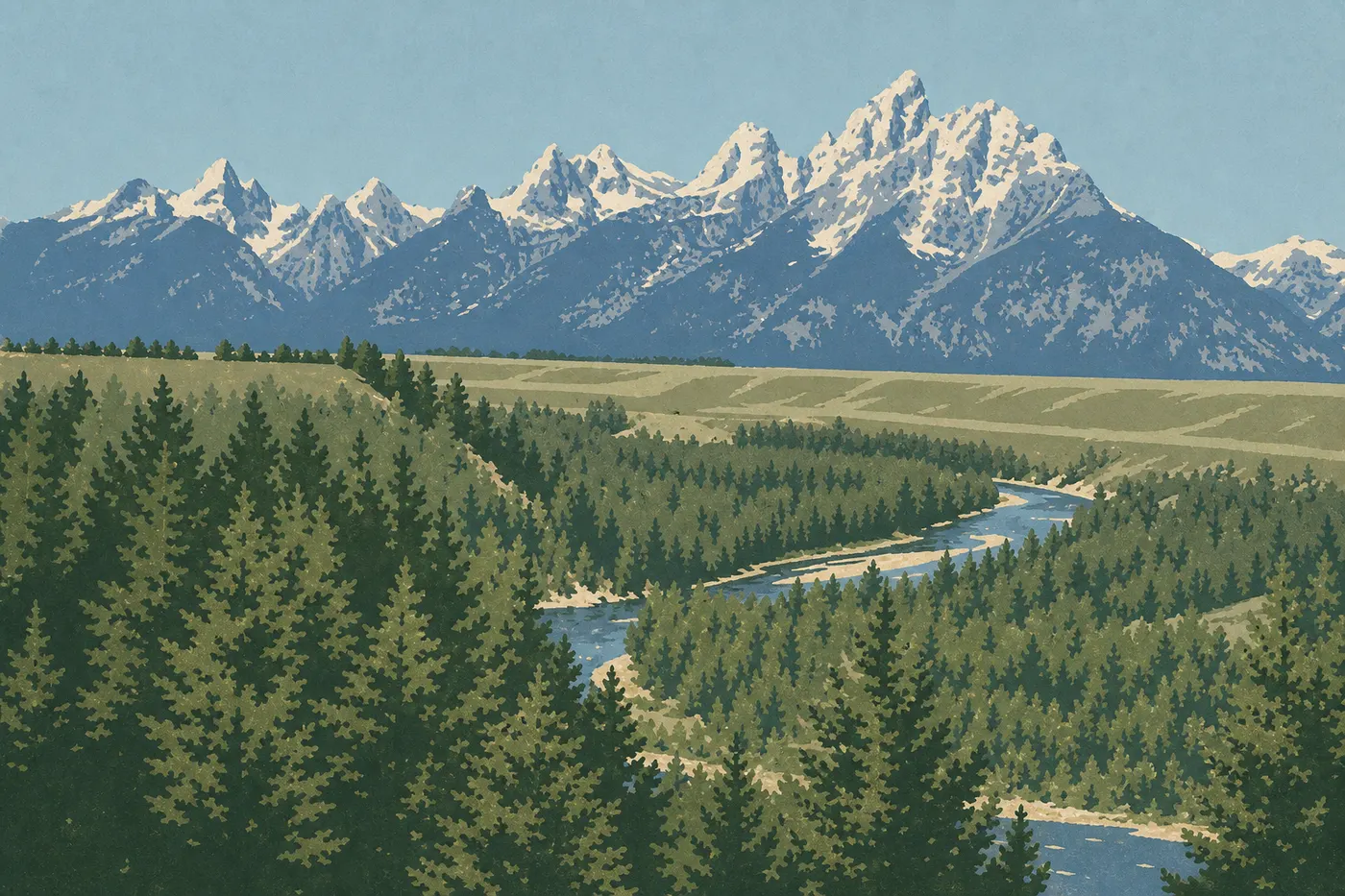
If you're coming from Jackson or the airport on US-191, the first major stop is Snake River Overlook. This roadside overlook, made famous by Ansel Adams's 1942 photograph, looks down on the bends of the Snake River with the Tetons in the background. The natural composition is almost identical to Adams's image, apart from a century of vegetation. The stop takes 10 minutes and is worth it even when you're passing through quickly.
The stretch of US-191 between the Moran entrance and Jackson Lake Junction then follows the park's wooded shoreline. It's a travel corridor for bears and elk. We spotted a grizzly and her two cubs near this road during a September visit, from the car and without even looking for them.
Jackson Lake and the Northern Area
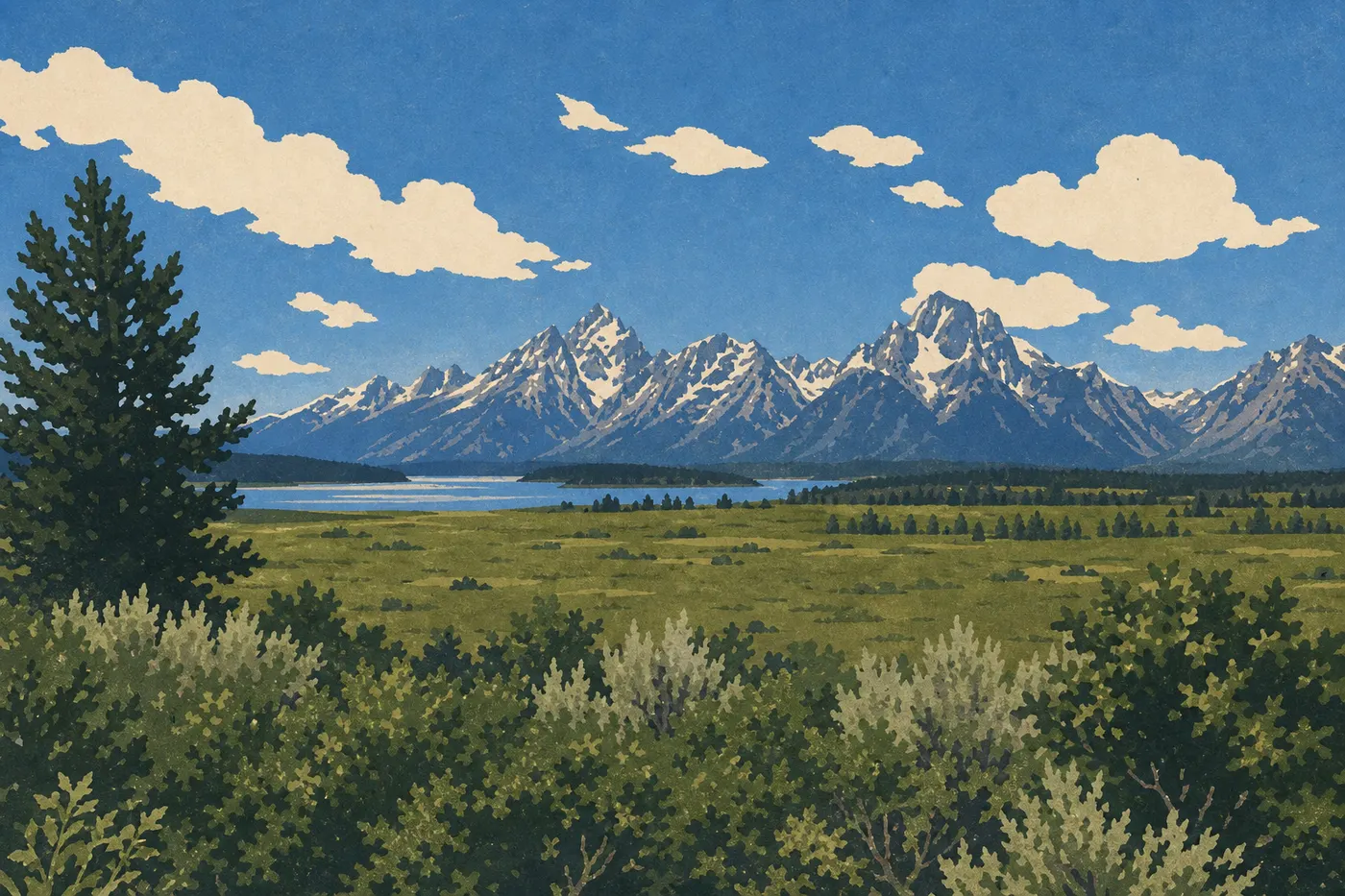
Jackson Lake is the park's largest body of water, about 25 miles long and up to 425 feet deep. A dam built in the early 20th century partially regulates the lake, which explains its slightly artificial shape at the northern end. The view from Jackson Lake Lodge is one of the park's most celebrated. The lobby's floor-to-ceiling windows look out over the lake, with Mount Moran, at 12,605 feet, immediately behind it. Anyone can enter the lobby, even if you're not staying at the lodge.
Colter Bay Village, 9 miles north of Jackson Lake Lodge, is the liveliest area in the northern part of the park. Kayak and canoe rentals, a dock for boat tours, a designated swimming beach, campgrounds, and a restaurant are all within walking distance. It's the recommended starting point for a family day on the water.
The Best Hikes in Grand Teton
Grand Teton is one of the most rewarding national parks in the American West for hiking. Trails climb straight into the Tetons' meadows and glacial cirques, without the long, flat approaches found in some other parks.
Here are a few signature routes to remember: Cascade Canyon, a spectacular canyon hike from Hidden Falls that's accessible to most hikers; the Taggart Lake Loop, an easy route at the foot of the Tetons that's ideal for a first look at the alpine meadows; Delta Lake, an unmaintained route that's difficult and intended for experienced hikers looking for a nearly private turquoise alpine lake; and the Paintbrush Divide route, a multi-day hike with high-elevation sections. The Grand Teton hiking guide covers every trail, including elevation gain, distance, difficulty, and seasonal conditions.
One warning applies to every trail. Weather conditions change quickly at elevation in Grand Teton. Afternoon thunderstorms are common from July through early August, and high-elevation trails can hold snow into July. Start early, bring waterproof layers, and check the forecast at the visitor center. The Grand Teton weather guide summarizes month-by-month trends.
Other Activities Based on Your Interests
Wildlife Watching
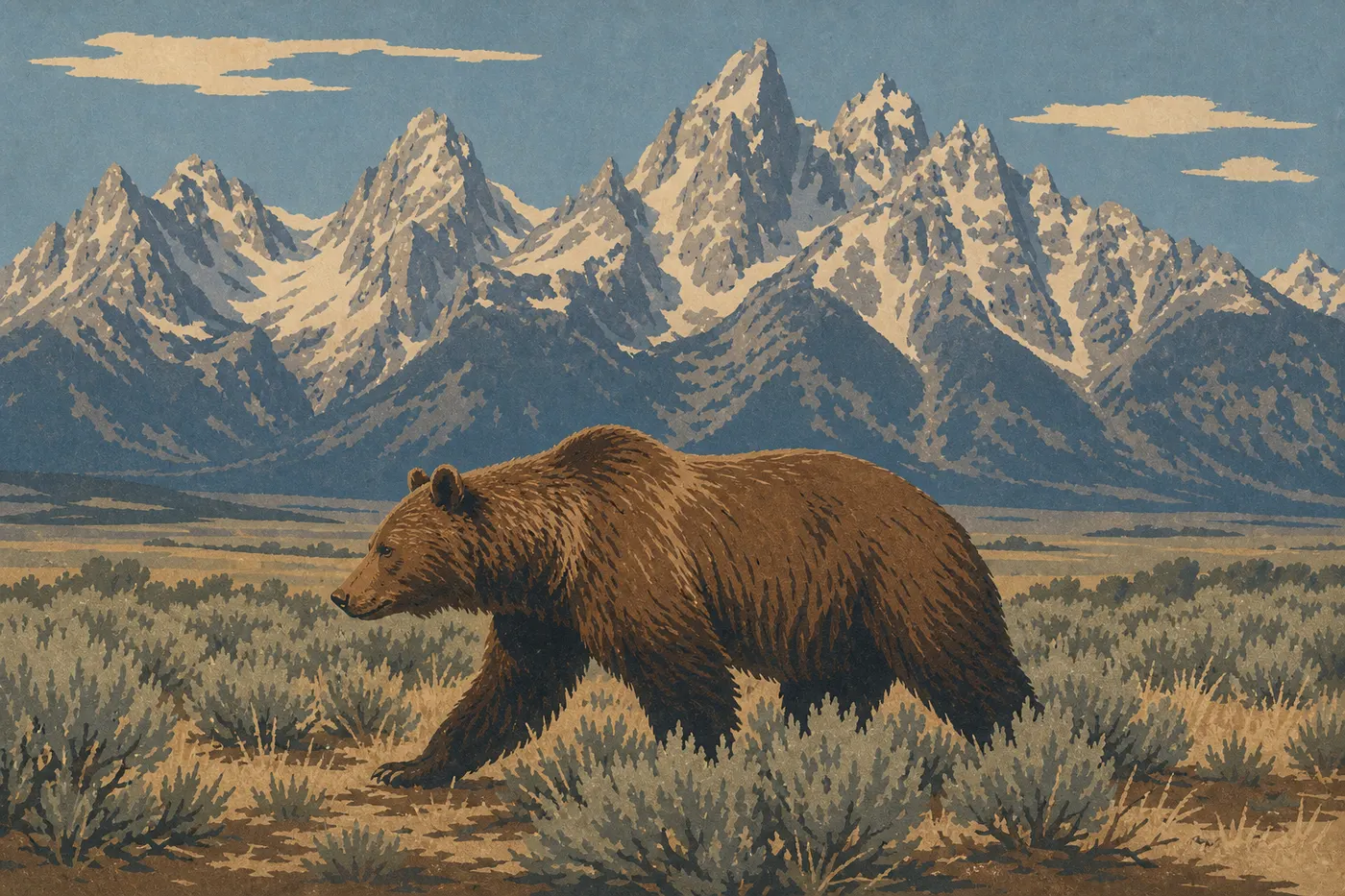
Grand Teton is one of the American national parks with the highest density of large mammals. Bison, elk, moose, black bears, grizzlies, pronghorn, coyotes, and wolves all share the park. The best viewing areas include Oxbow Bend for moose and raptors, Antelope Flats for bison and pronghorn, the north shores of Jackson Lake for bears and elk, and the forested sections of Teton Park Road for deer and coyotes. Aim for early morning and late afternoon.
The distance rule is strict. Stay at least 75 feet from all wildlife and 300 feet from bears and wolves. Stay in your vehicle if traffic conditions require it, and never approach an animal for a better photo. The Grand Teton wildlife guide lists the species and the best seasons for viewing them.
Kayaking, Canoeing, and Boating
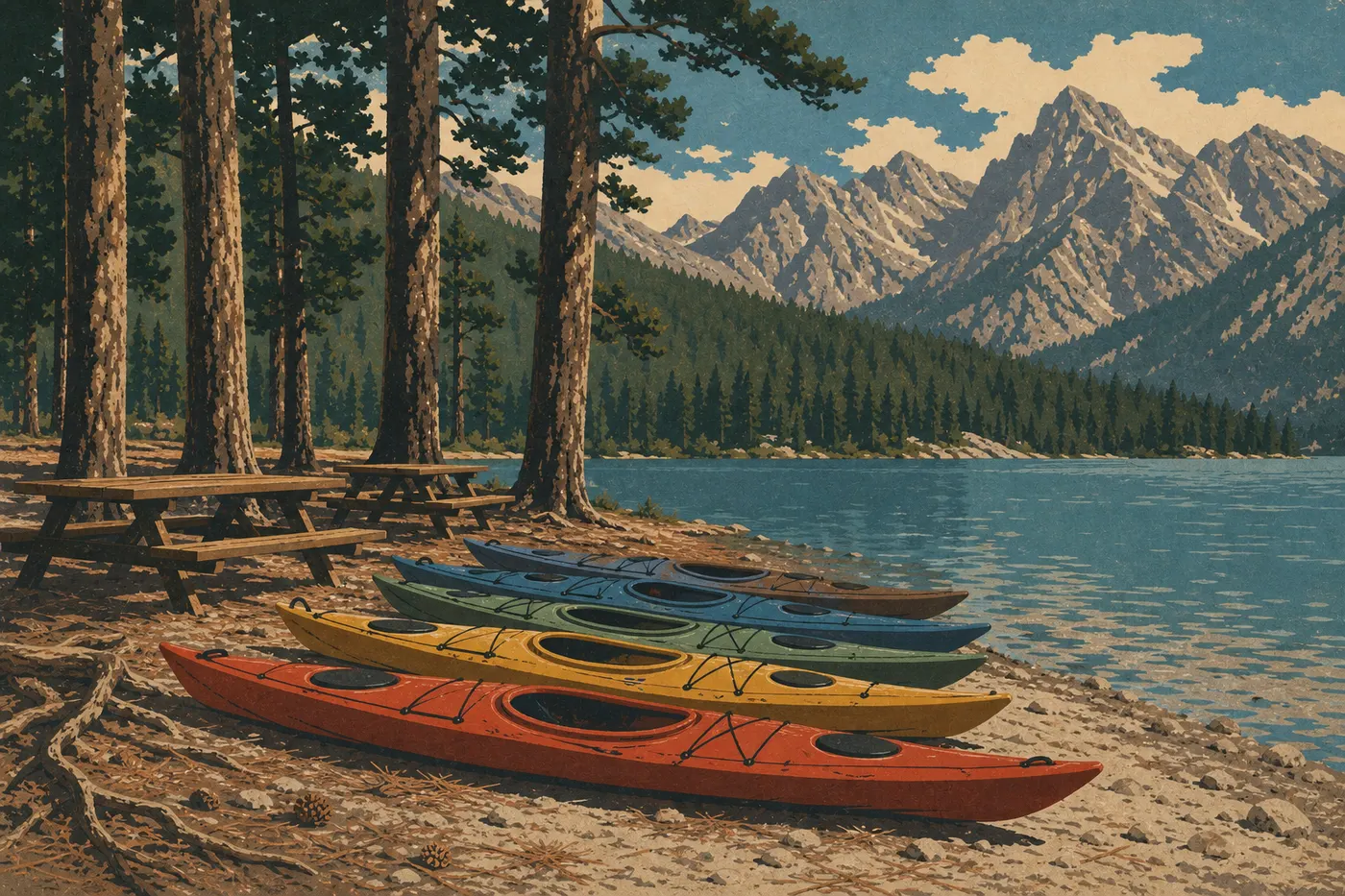
Jackson Lake and Jenny Lake are the two most popular bodies of water for boating activities. Kayaks and canoes are available for rent at Colter Bay and String Lake. Motorized boats are allowed on Jackson Lake with a permit but prohibited on Jenny Lake, which keeps the lake relatively quiet. A guided sunset boat ride on Jackson Lake, with Mount Moran in the background, is hard to forget.
Biking
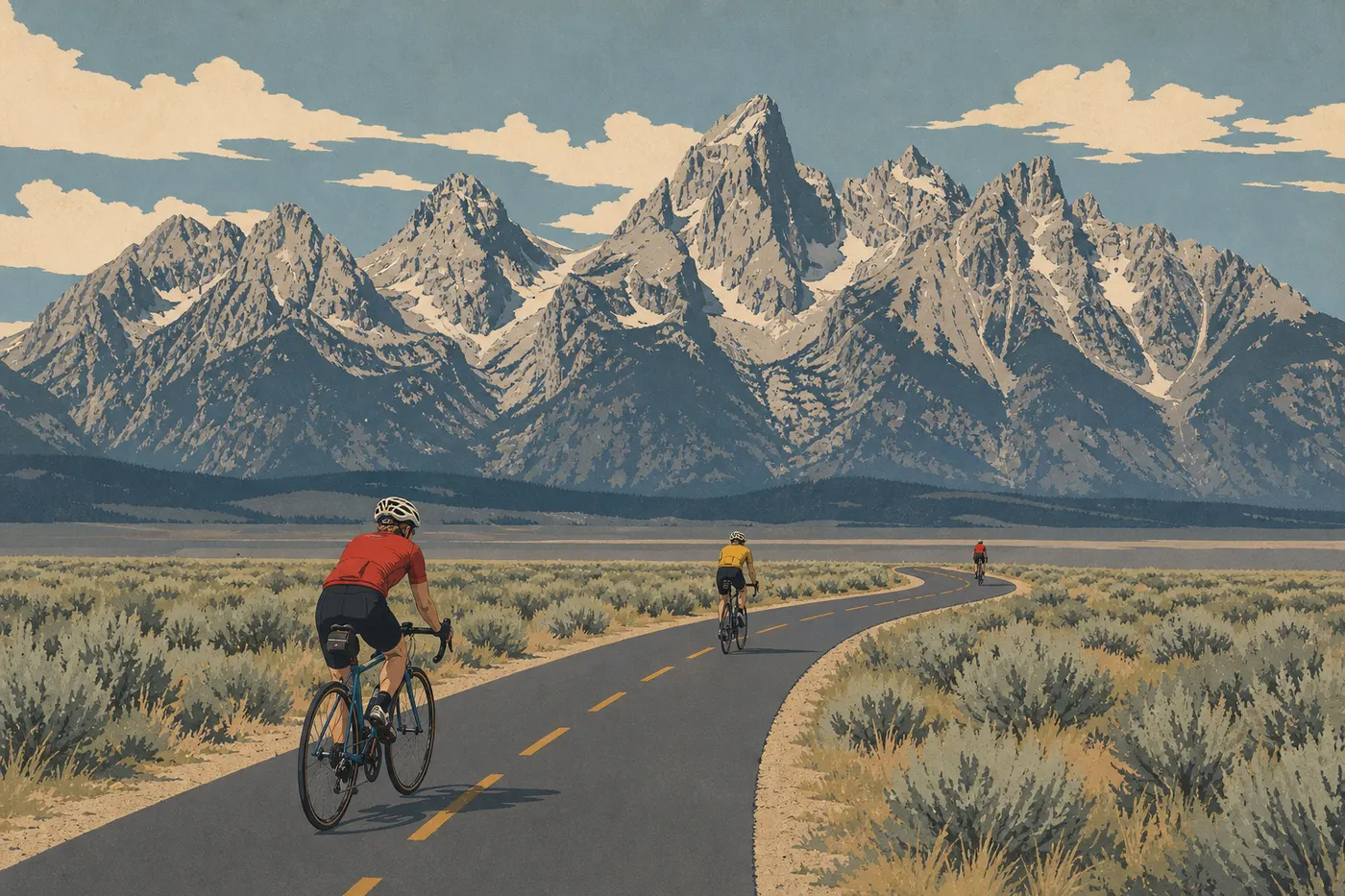
A separated bike path connects Moose and South Jenny Lake for about 5 miles. Bicycles are allowed on Teton Park Road, but the pavement is narrow and vehicle traffic is heavy during peak season, so use caution. Bikes are available to rent in Jackson and at some park lodges.
Photography and Stargazing
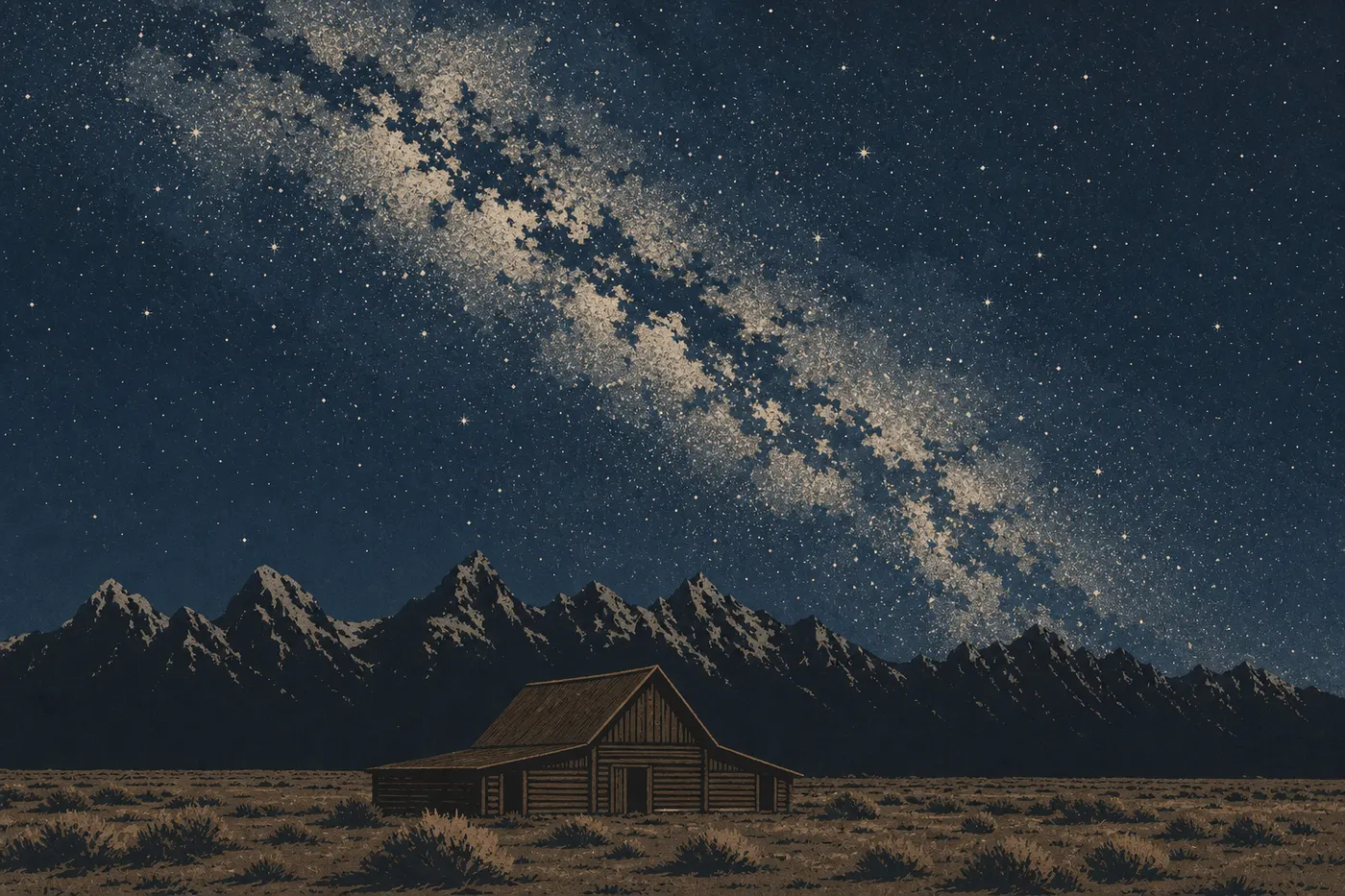
Light pollution is very low in the Grand Teton area. Clear summer nights, between the thunderstorms of July and August, offer unusually good star-filled skies from the park's campgrounds and lakeshores. For landscape photography, the two classic spots remain Mormon Row at dawn and Oxbow Bend at sunset. Signal Mountain Summit Road also provides access to an unobstructed nighttime view of the range, with less traffic than the two spots mentioned above.
Visiting with Kids
The Junior Ranger Program is available at every visitor center. Kids complete an activity booklet and receive a ranger badge. The boat shuttle ride on Jenny Lake appeals to all ages because it's short and the scenery starts right away. Colter Bay Beach is one of the park's few designated swimming areas. The guide to visiting Grand Teton with kids brings together practical advice for planning a family visit.
Winter
Teton Park Road and most secondary roads close between November and May. US-191 remains open year-round. The park is accessible by snowshoe and cross-country ski starting in December, with marked trails leaving from the Moose and Colter Bay entrances. Jackson Hole Mountain Resort, a few miles outside the park, is one of the American West's best-known ski areas.
Things to Do Around Grand Teton
Grand Teton naturally pairs with Yellowstone National Park. Yellowstone South Entrance lies a few miles north of Grand Teton's northern exit, connected by the John D. Rockefeller Jr. Memorial Parkway. Together, the two parks are the centerpiece of a major Wyoming Rockies road trip. Allow five to seven days for both parks without rushing. Our Rockies road trips offer ready-to-use itineraries for planning this kind of loop.
To the south, the town of Jackson is worth a half-day. Its central square with elk-antler arches, restaurants, Western art galleries, and mountain-guide outfitters make Jackson a pleasant, well-equipped hub. Most hotels and services outside the park are concentrated there as well. See Grand Teton lodging options for places to stay in and around the park.
To the west, Teton Valley on the Idaho side is accessible via Teton Pass, a 7,070-foot mountain pass that's sometimes closed in winter. This lesser-known side of the Tetons offers reverse views of the range and a much less touristy atmosphere. A two-day loop combining both sides is possible and offers a completely different perspective.
The National Elk Refuge, adjoining the park to the southeast, is home to several thousand elk each winter. Outside the snowy season, the area is open to hikers and cyclists. It's also a travel corridor for bears and wolves in spring.
The Essentials: What to See First in Grand Teton
If you have only one day, build it around three stops. Start at Mormon Row at dawn, before 6 a.m. in summer. Then visit Jenny Lake in the morning, taking the boat shuttle and hiking up to Hidden Falls. Finish at Signal Mountain in the late afternoon for the 360-degree view. Add Oxbow Bend on the way back for one last chance to spot a moose or eagle. This plan covers the park's iconic views within a relatively compact area.
Is Grand Teton worth the trip? Without a doubt. It's one of the few American parks where the central landscape, the Teton Range, is visible from the road, the lake, the trails, and the barns of an old settlement, each time from a different angle. The park is more compact and less crowded than Yellowstone, with well-developed infrastructure and activities for every kind of visitor, from photographers and hikers to families and wildlife enthusiasts. The hard part here is leaving.
Frequently Asked Questions
What should you do in Grand Teton?
The highlights in Grand Teton are Mormon Row at sunrise, the boat shuttle across Jenny Lake followed by the hike to Hidden Falls and Inspiration Point, the view from Signal Mountain, wildlife watching at Oxbow Bend, and a hike in Cascade Canyon. The park also offers boating activities on Jackson Lake and Jenny Lake, nighttime astrophotography, and Junior Ranger programs for kids.
How many days do you need to visit Grand Teton?
Two days let you cover the highlights at a comfortable pace. Three days give you time for a high-elevation hike and a morning wildlife outing without rushing. Our Itinerary & Length Guide lays out several plans based on the time you have.
What is the highest point in Grand Teton?
Grand Teton, the park's namesake peak, rises to 13,770 feet. It's the highest point in the Teton Range and in Wyoming. Climbing it is reserved for properly equipped, experienced mountaineers. This is a technical rock-climbing route, not a hike.
When should you visit Grand Teton National Park?
Summer, especially July and August, is peak season. All services are open, wildlife is active, and high-elevation trails are mostly clear. June and September bring fewer visitors with nearly as good conditions. Winter closes most roads inside the park, but the area remains accessible for snowshoeing and cross-country skiing. Our When to Visit page explains the advantages and drawbacks of each season.
Is Grand Teton worth visiting?
Grand Teton is well worth visiting, especially when combined with Yellowstone a few miles to the north. It's more compact and accessible than its neighbor, with a spectacular mountain range visible from almost anywhere in the park, abundant wildlife, and some of the best hiking trails in the American West.