
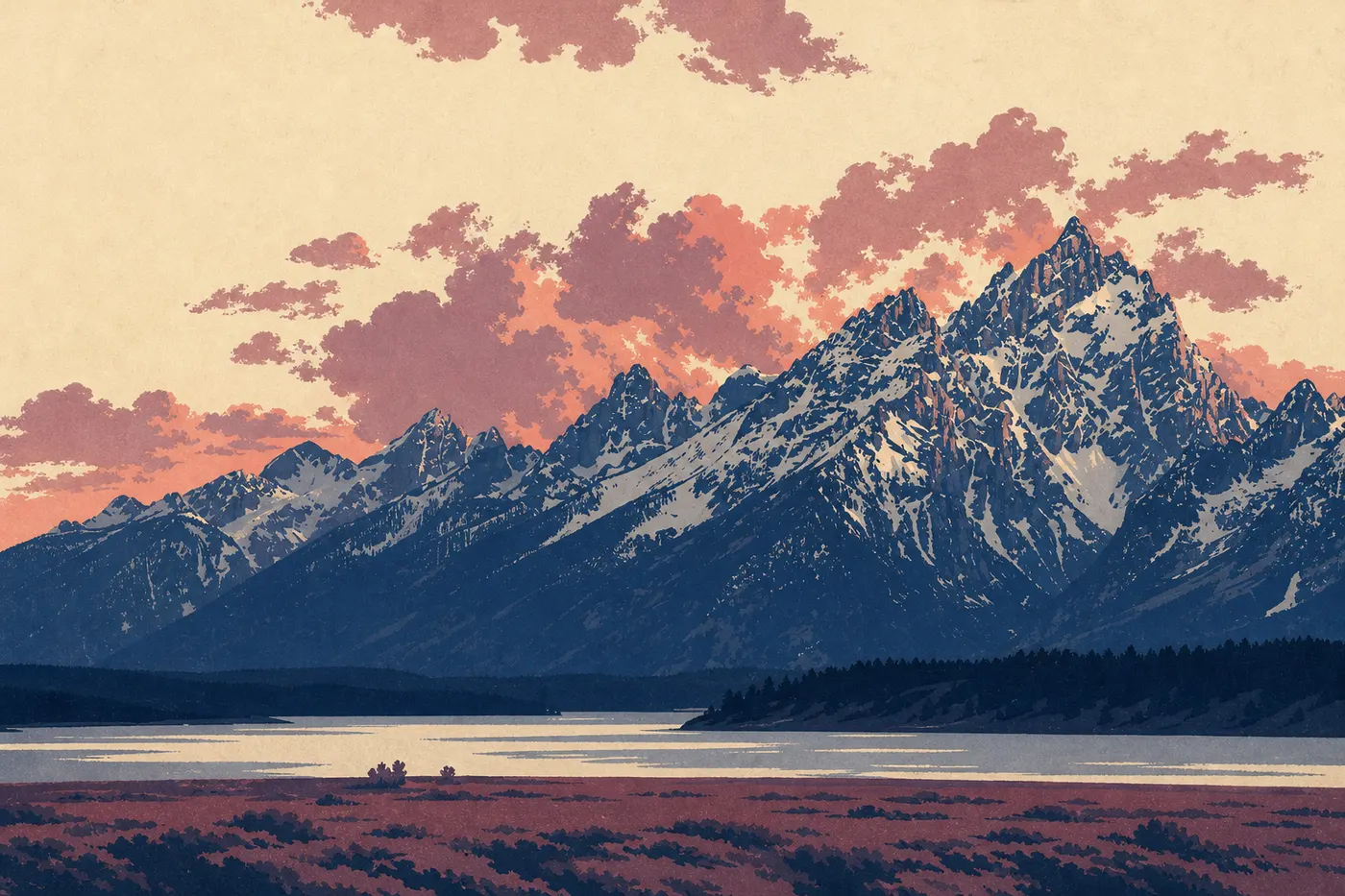
Grand Teton Weather: Forecasts, Climate, and Current Conditions
Grand Teton has an uncompromising mountain climate: long, bitterly cold winters, short but bright summers, and snow can fall in any month of the year. Jackson Hole Valley, set at roughly 6,560 feet, magnifies temperature extremes. Plan for a wide range of conditions, head out early, and never assume that yesterday's weather tells you what to wear tomorrow.
Current readings are unavailable. See the seasonal averages farther down this page.
Open-Meteo readings · updating… · park time zone
Current Conditions at Grand Teton
Mountain weather can turn within hours in the Teton Range. Before heading to higher elevations, check conditions at the start of your outing. A clear morning can turn into a severe thunderstorm by 1 p.m., with temperatures dropping 18°F in an hour.
Grand Teton Forecasts (7 to 14 Days)
Beyond four or five days, mountain forecasts carry a high degree of uncertainty. Use them to plan your layers and your schedule, not to optimize every hour. The Teton Range rarely cooperates that neatly.
Grand Teton Climate Month by Month
At roughly 6,560 feet, the day-to-night temperature swing commonly reaches 27 to 36°F in every season. The figures below are approximate averages for the valley (Jackson Hole). The Teton Range peaks rise above 13,100 feet, where temperatures are much lower.
| Month | Low | High | Precipitation | What to expect |
|---|---|---|---|---|
| January | 7°F | 27°F | ~20 mm | Bitter cold, deep snow |
| February | 10°F | 32°F | ~18 mm | Clear weather between storms |
| March | 18°F | 41°F | ~22 mm | Slow thaw, skiing still possible |
| April | 23°F | 50°F | ~28 mm | Alternating snow and rain |
| May | 34°F | 61°F | ~38 mm | Changeable spring weather, muddy trails |
| June | 41°F | 72°F | ~35 mm | Mild days, frequent showers |
| July | 48°F | 81°F | ~22 mm | Warm days, afternoon thunderstorms |
| August | 46°F | 79°F | ~23 mm | Peak summer, daily thunderstorm risk |
| September | 36°F | 70°F | ~22 mm | Golden fall, cold nights |
| October | 25°F | 54°F | ~25 mm | First snow at higher elevations |
| November | 16°F | 36°F | ~23 mm | Gradual closures |
| December | 9°F | 30°F | ~22 mm | Snow across the valley |
Is Grand Teton Cold?
Yes, and colder than most U.S. national parks. Jackson Hole ranks among the coldest areas in the continental United States outside Alaska. The bowl-shaped valley traps cold air. Winter records hover around -40°F, which may sound extreme but isn't unusual. In summer, even during heat waves, nights remain cool (rarely below 41°F in the valley). Here's the answer to a common question: Grand Teton is indeed colder than Yellowstone in winter, in part because Jackson Hole traps cold air longer than the Yellowstone Plateau.
What to Wear at Grand Teton by Season
Winter and early spring (October to May): three-layer clothing is essential: a merino wool base layer, an insulating midlayer, and a waterproof, windproof shell. Bring a hat, gloves, and waterproof high-top shoes. On ridges, wind chill can make it feel like -13°F or colder.
Summer (June to August): a light fleece is essential in the morning, even under sunny skies. In the afternoon, bring sunglasses (UV levels are high at 6,560 feet and above), high-SPF sunscreen, and a light rain jacket in your backpack. High-elevation thunderstorms don't give you much warning.
Fall (September to October): temperatures can drop from 64°F at noon to 23°F by sunset. A light puffy jacket in your pack weighs almost nothing and can make all the difference.
In every season, avoid cotton. It absorbs moisture and doesn't dry, which can lead to hypothermia even in supposedly mild weather.
Weather Alerts and Conditions to Watch
The main summer threat is lightning. Stay below tree line before 1 p.m., avoid exposed ridges and lakes when storms threaten, and check the National Park Service weather bulletins produced with the National Weather Service (NWS) every morning on the official website before setting out.
In winter and spring, watch for avalanches on off-trail slopes, road closures (Teton Park Road, Moose-Wilson Road), and flooding on the Snake River and its tributaries during snowmelt.
During a severe weather alert, the park may close some access roads without notice. Check the official NPS website before every outing.
Frequently Asked Questions
Is Grand Teton colder than Yellowstone?
Grand Teton is generally colder than Yellowstone in winter. Jackson Hole Valley, set at roughly 6,560 feet, traps cold air longer than the Yellowstone Plateau. Winter lows in Jackson regularly approach -22°F to -40°F, temperatures that are less common on the plateau.
What's the weather like at Grand Teton right now?
In summer, the valley sees days around 77 to 81°F, with afternoon thunderstorms. In winter, nights regularly drop below 5°F. Mountain weather changes quickly, so check an up-to-date forecast the morning of your outing, whatever the season.
What should you wear to visit Grand Teton?
For a visit to Grand Teton, rely on layers made of synthetic fabric or wool in every season. In summer, a light fleece in the morning and a rain jacket in the afternoon are essential, even in fair weather (thunderstorms are frequent). In winter, thermal layers and waterproof high-top shoes are non-negotiable.