
Grand Teton by RV: Campgrounds, Rules, and Tips
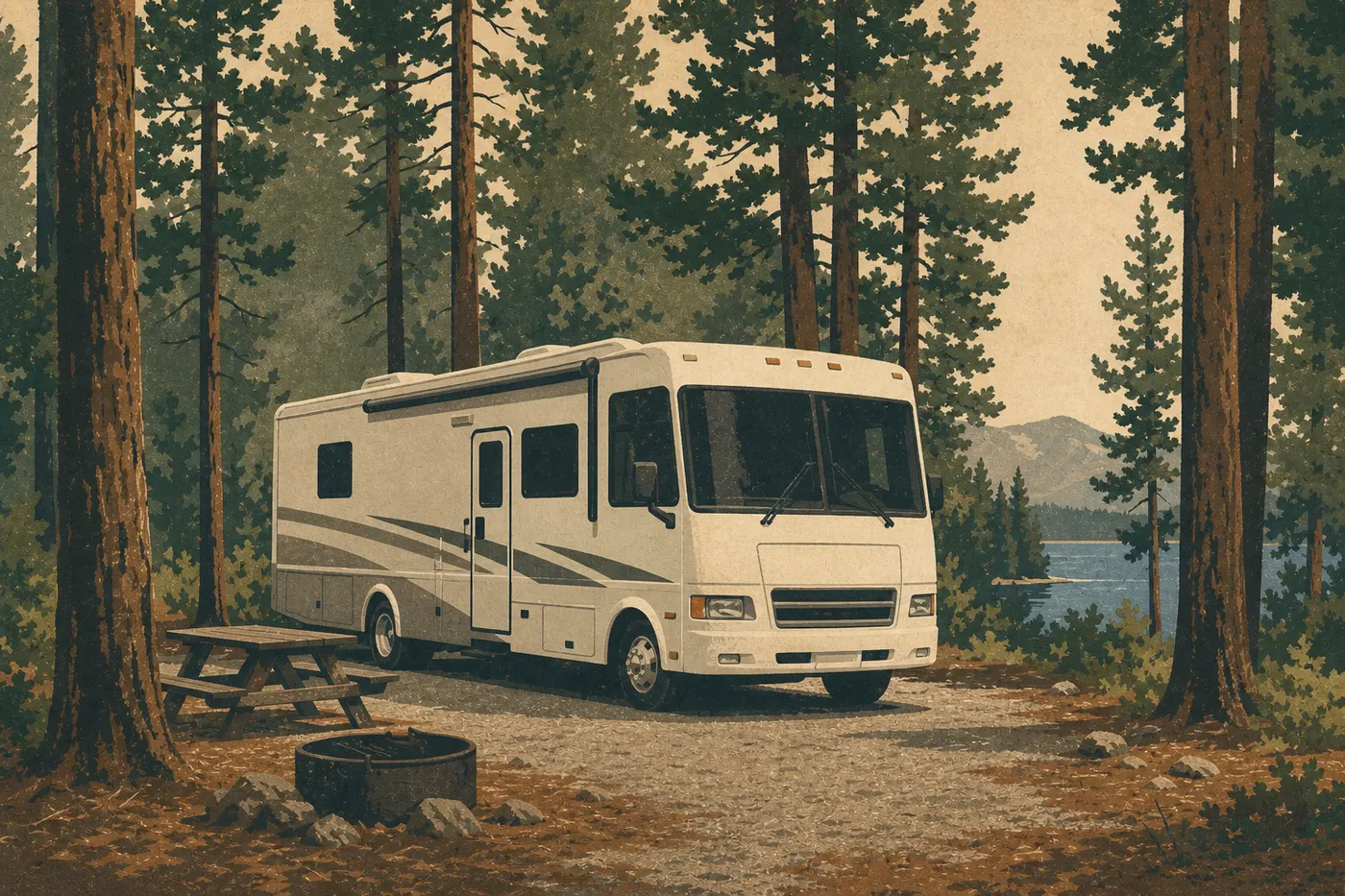
Yes, Grand Teton is easy to visit by RV. The park is better suited to RVs than many others. The main roads are wide, the campgrounds are well equipped, and RV logistics have been running smoothly for decades. The first constraint to factor in during planning is that two roads inside the park have vehicle-size restrictions. Ignore them and you could end up stuck, with your trailer blocking a hairpin turn.
Can you drive and camp at Grand Teton in an RV?
Yes, and without any major difficulty on the main roads. Teton Park Road and US-89/191, which cross the park from south to north, are accessible to standard-size RVs, including Class A motorhomes. The park is open year-round, but motorized access varies. Teton Park Road closes to motor vehicles from November through April, and RV campgrounds close from mid-October to around mid-May.
In practice, the useful RV season runs from late May through early October. Outside that window, a few sites remain open without services, and the main roads generally stay passable.
The entrance fee for a private vehicle is $35, valid for 7 consecutive days. If you're combining Grand Teton with Yellowstone, about 62 miles north, the $70 annual America the Beautiful pass pays for itself on the second entry. The National Parks Fees & Passes page explains entrance fees and passes.
Grand Teton is accessible from Salt Lake City, about 300 miles away and a 5- to 6-hour drive, and from Yellowstone South Entrance, about 56 miles north of Jackson Lake Lodge.
RV restrictions and regulated roads
Almost all of the park's vehicle-size incidents happen on two roads. Know the restrictions before you start the engine.
Jenny Lake Scenic Loop. This one-way loop follows the east shore of Jenny Lake and offers some of the best views of the Tetons. It's limited to vehicles under 26 feet long, with no trailers. If your motorhome is longer than that or you're towing a car, skip it. The parking areas around Jenny Lake that accommodate all vehicle sizes provide access to the same views on foot.
Signal Mountain Summit Road. This narrow, winding road climbs to 8,005 feet. Vehicles over 24 feet long and vehicles with trailers are prohibited. If you're driving a large RV, park it at the Signal Mountain campground below and make the climb by bike, in a small rental car, or by catching a ride from someone else at the campground.
On the park's other roads, especially US-89 and Teton Park Road, RVs 26 to 36 feet long can travel without particular restrictions. Check the NPS app or the official website before you arrive. Temporary alerts for construction or rockfalls can change access to some sections.
The park's official campgrounds
Grand Teton has five NPS-managed campgrounds, plus Headwaters Campground to the north. Flagg Ranch operates that concession at the park's northern end, near the Yellowstone boundary. You can reserve all reservable sites through recreation.gov. In July and August, sites sell out 6 months in advance.
Colter Bay RV Park
This is the only spot in the park with full hookups for water, electricity, and an on-site dump connection. Colter Bay Village is a small village in its own right, with a grocery store, restaurant, laundry, showers, marina, and ranger programs. Sites accommodate vehicles up to about 40 feet. It's an ideal base for a 2- to 3-night stay. Jackson Lake, Oxbow Bend, and the trails in the northern area are all easy to reach from here. Open from mid-May to mid-October, with full-hookup rates at the high end of the NPS campground range.
Signal Mountain Campground
On the shore of Jackson Lake, this campground has no hookups and accepts medium-size RVs up to about 30 feet. Some sites have views of the lake and the Tetons. Boat rentals are a few minutes away on foot, and trails are accessible directly from the campground. This campground makes you feel like you're in the heart of the park rather than on its outskirts. Open from mid-May to mid-October, with all sites reserved through recreation.gov.
Gros Ventre Campground
The park's largest campground sits near Moose Junction, a 15-minute drive from Jackson. Its roomy loops accommodate long rigs, so this is where we recommend staying if you're driving a large motorhome or towing a car. There are no hookups, but an on-site dump station is available. It's also a good choice for late arrivals because reservations are less competitive than at Signal Mountain in mid-season. Open from mid-May to early October.
Lizard Creek Campground
At the northern end of Jackson Lake, Lizard Creek is wilder and less crowded, with a forest-and-lake setting that's especially appealing late in the season. RV sites are limited and better suited to small motorhomes and camper vans. Large Class A motorhomes will find them tight. Open from early June to early September, depending on conditions. No hookups. A dump station is available at Colter Bay, 9 miles south.
Jenny Lake Campground
To be clear, Jenny Lake does not accept RVs or trailers. Tents only. If you're traveling by RV, use Signal Mountain or Gros Ventre as your base for day trips to Jenny Lake.
Boondocking and camping areas around Grand Teton
Dispersed camping is prohibited inside the national park, except in designated backcountry areas accessible only on foot or horseback, so they aren't relevant for RVs. Grand Teton is surrounded by two national forests where free dispersed camping is allowed.
Bridger-Teton National Forest, east and south of the park, offers the most accessible boondocking spots. Gros Ventre Road and areas near the Buffalo Fork River let you park a van or small RV 20 to 40 minutes from the park entrances. Caribou-Targhee National Forest, west of the Teton Range, is less convenient for visiting the park because you have to cross the passes, but it offers beautiful high-elevation sites.
Rules to follow in both forests include minimum distances from waterways and roads, packing out your own waste, and observing seasonal fire restrictions. Check each forest's website or the iOverlander app for current locations. For road access from Jackson, the Grand Teton access guide has the details.
Dump stations, water, and services
Inside the park:
- Colter Bay RV Park: On-site dump connection with full hookups, potable water, showers, and laundry. The most complete option.
- Gros Ventre Campground: On-site dump station and potable water.
- Signal Mountain Campground: Potable water available. Check with the NPS about dump station availability for the season.
Outside the park, Jackson, 9 miles south of Moose, has several gas stations offering paid dump services. Plan to fill your freshwater tank at Colter Bay or Signal Mountain before heading to campgrounds without services or boondocking spots in the national forest.
Which campground is right for you?
Comfort and a longer stay. Colter Bay RV Park has full hookups, services close by, and sites suited to large vehicles.
Water views and trail access. Signal Mountain Campground offers a setting on Jackson Lake, access to water activities, and a central location in the park.
Large rig or late arrival. Gros Ventre Campground has spacious sites, a convenient south entrance location, and an on-site dump station.
Van or small RV on a tight budget. Choose Lizard Creek in season or boondocking in Bridger-Teton for an affordable option with a genuine immersion in nature.
Family with kids. Choose Signal Mountain for water activities such as boating and fishing, or Colter Bay for the convenience of the village, including the grocery store, ranger programs, and laundry. The Grand Teton campgrounds guide also covers tent sites if you'd like to alternate types of overnight accommodations.
Renting an RV to visit Grand Teton
Jackson, Wyoming, has a few local agencies, but the selection is limited. Salt Lake City, 300 miles away and about 5 hours by road, and Denver, about 500 miles away, offer a much broader selection from major national rental companies such as Cruise America, Outdoorsy, and RVshare. Book at least 3 to 4 months ahead for summer. Vehicles go quickly.
The three common categories on the American market are Class A, 30- to 40-foot motorhomes with every comfort but limited access to some spots; Class C, cab-over motorhomes on truck chassis, 20 to 30 feet long and versatile; and Class B, camper vans that are easy to maneuver almost anywhere but have limited space. For Grand Teton, a 23- to 26-foot Class C offers the best balance. It can use both regulated roads, maneuver in every campground in the park, and gets better fuel economy than a Class A.
Plan for fuel costs. A Class C cab-over motorhome gets about 8 to 12 mpg on the road, and less in the mountains. The Grand Teton lodging overview summarizes other options, including lodges and hotels, if you'd like to combine RV nights with nights in a regular room.
RVs, pets, budget, and reservations: what to know
Pets. Dogs are allowed in the park but must be on a leash no longer than 6 feet in campgrounds, picnic areas, and along roads. They're prohibited on hiking trails and in backcountry areas. Traveling with a dog in an RV is straightforward. Just never leave your pet alone in the vehicle in hot weather. In July, temperatures can exceed 86°F even in the shade.
Site budget. The entrance fee is always added to the nightly rate. Sites without hookups generally cost between $30 and $40 per night, depending on the campground. Colter Bay with hookups costs more. Also budget for dump fees if you use stations outside the park.
Reservations. July and August are extremely competitive. Open recreation.gov as soon as reservations go live, usually in January for the summer season, and book immediately. June and September offer more flexibility, substantially lower crowds, and often better mountain photography light. For a detailed season-by-season comparison, see the Grand Teton seasons guide.
In summary: our Grand Teton RV plan
For a first visit, we recommend this setup: 2 to 3 nights at Colter Bay RV Park for comfort, services, and a central location on Jackson Lake, plus one night at Gros Ventre if you arrive from Jackson late in the day. Avoid Jenny Lake Scenic Loop with vehicles over 26 feet and Signal Mountain Summit Road with vehicles over 24 feet. All other main roads are passable without restrictions. Book through recreation.gov 4 to 6 months ahead for July and August, and check the NPS app the day before for road alerts.
Frequently asked questions
Can you camp at Grand Teton?
Yes. Grand Teton has five NPS campgrounds, Colter Bay, Signal Mountain, Gros Ventre, Lizard Creek, and Jenny Lake, open from late May to early October, plus the concession-operated Headwaters Campground to the north.
Can you visit Grand Teton by RV?
Yes. The park's main roads are accessible to standard-size RVs. Two roads have length restrictions: Jenny Lake Scenic Loop, under 26 feet with no trailer, and Signal Mountain Summit Road, under 24 feet with no trailer.
Can you park an RV anywhere at Grand Teton?
No. Parking outside designated areas is prohibited in the park. For day visits, use the official parking areas at Colter Bay, Jackson Lake Lodge, Moose, and Jenny Lake, which have spaces suitable for large vehicles.
Where are RVs prohibited at Grand Teton?
On Jenny Lake Scenic Loop and Signal Mountain Summit Road because of vehicle-size restrictions, on all hiking trails, and outside designated overnight sites.
Which campground should you choose at Grand Teton?
For comfort and full hookups, choose Colter Bay RV Park. For views of Jackson Lake and trail access, choose Signal Mountain Campground. For large vehicles or the park's south entrance, choose Gros Ventre Campground.
How much does a campsite cost at Grand Teton?
Sites without hookups generally cost between $30 and $40 per night. Colter Bay RV Park with hookups costs more. The entrance fee, $35 for 7 days per private vehicle, is added to the site fee.
What's the best time to visit Grand Teton by RV?
June and September offer the best balance of crowds and weather. Campgrounds are open, temperatures are comfortable, and reservations are easier to get. July and August bring the best weather but require booking 6 months ahead. See our When to visit page for a detailed season comparison.