
Glacier Bay Wildlife: What to See and Where to Find It
Glacier Bay is one of the few places in the world where marine megafauna and Arctic land wildlife share such a compact area. Glaciers calving into the bay cool nutrient-rich waters, so whales, seals, and seabirds gather here in large numbers. Along the shores, brown bears and bald eagles bring every kayaking trip or cruise to life.
The five animals you shouldn't miss in Glacier Bay: the humpback whale, brown bear, harbor seal, bald eagle, and horned puffin. If you're traveling through the upper bay between June and August, there's a good chance you'll check four of the five off your list in a single day.
Glacier Bay's Signature Wildlife
Humpback Whale
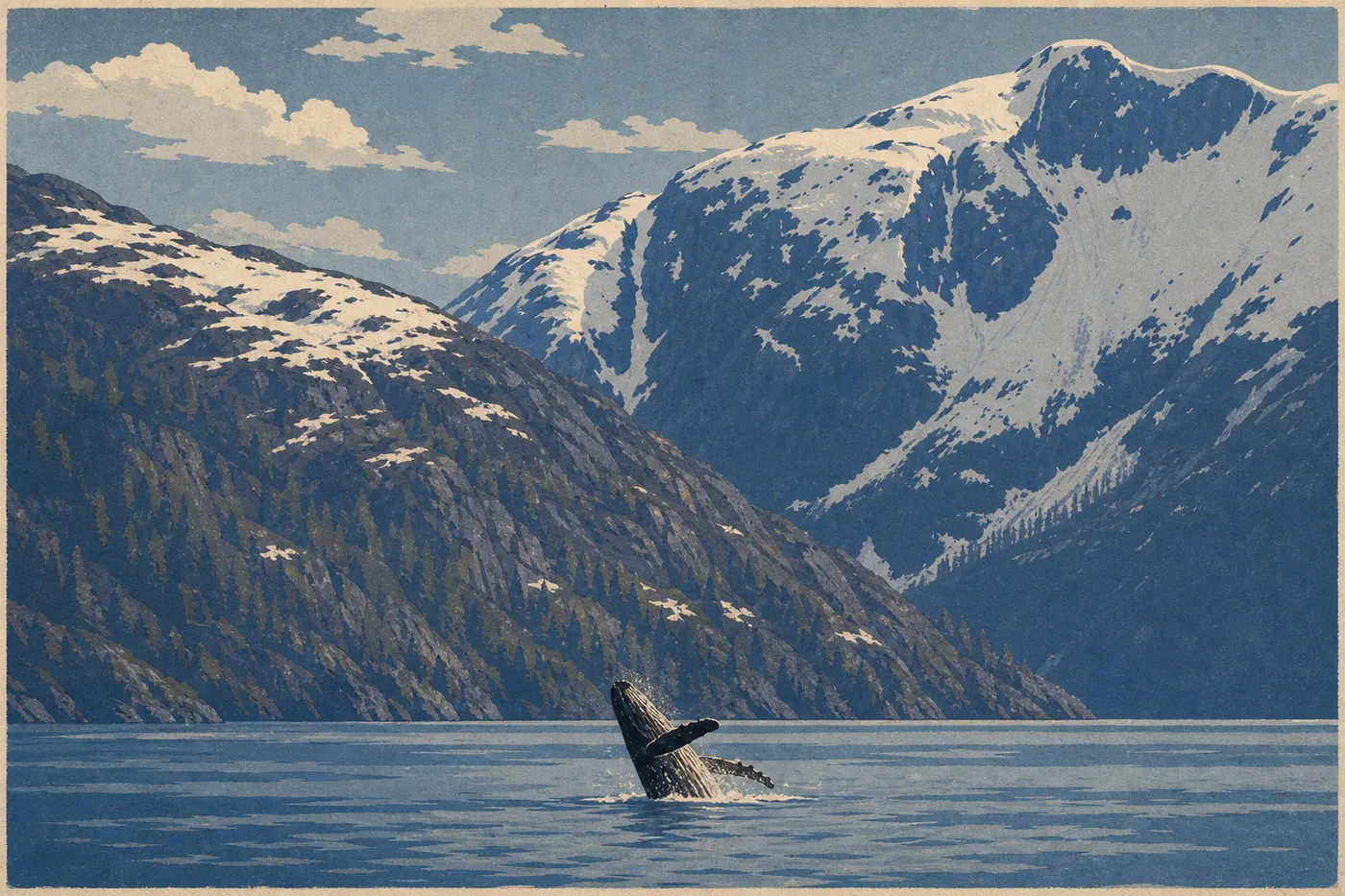
The humpback whale (Megaptera novaeangliae) is the park's main attraction. Every summer, dozens of whales migrate from their tropical wintering grounds to feed in the bay. They can reach 49 feet in length and weigh up to 88,000 pounds. In Glacier Bay, they use bubble-net feeding: working as a group, they dive in a circle, exhale at the same time, create a column of air that concentrates herring at the surface, then surge upward with their mouths open. When we visited in July, we watched two such sequences from the deck of a day cruise. It's hard to forget.
Identification tips: a tall, V-shaped blow, enormous pectoral fins (up to 16 feet), and frequent breaching. Hearing its song through the hydrophone at Glacier Bay Lodge in Bartlett Cove is an experience in itself.
Brown Bear
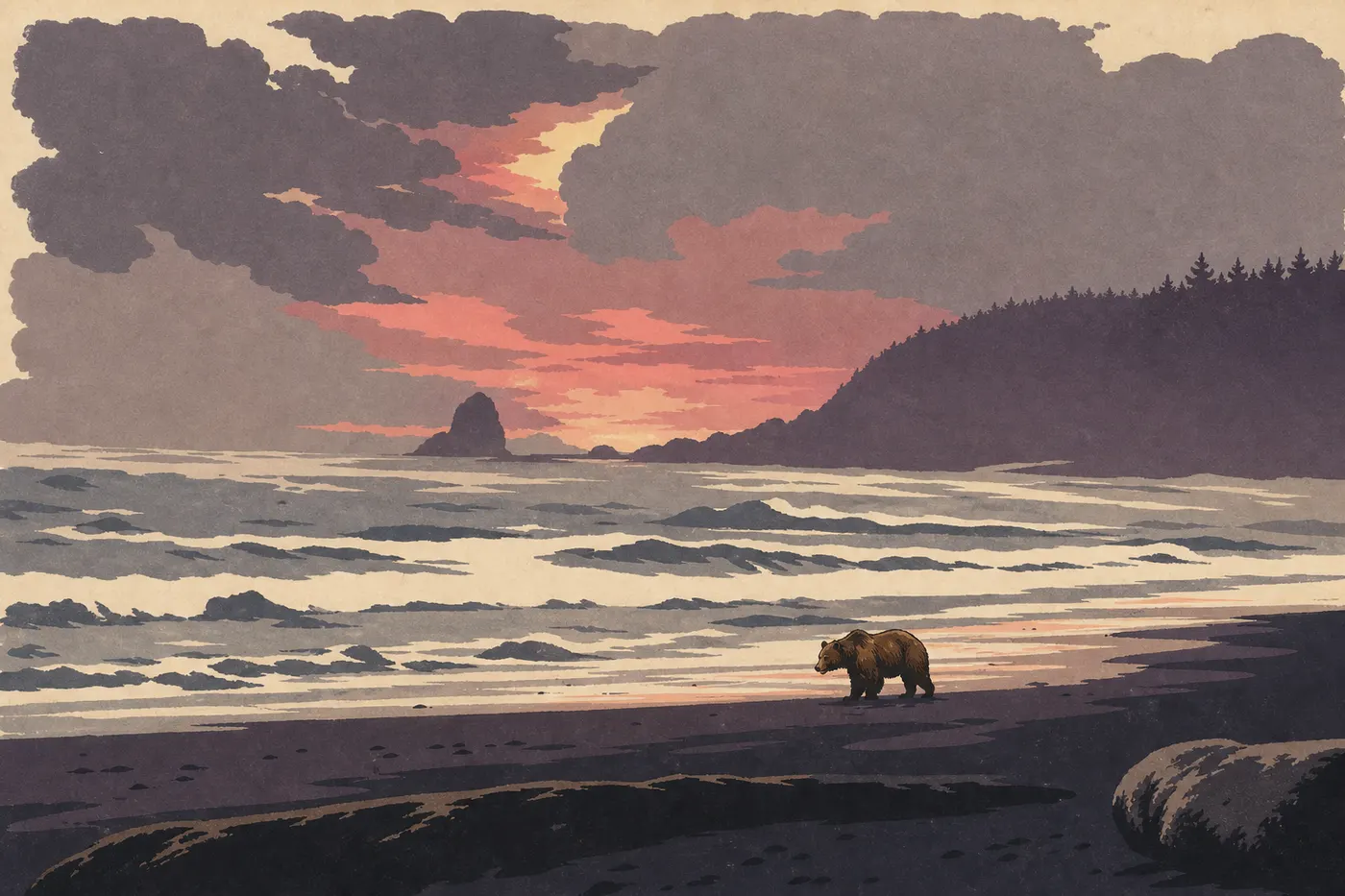
The brown bear (Ursus arctos), called a grizzly in this region, roams the park's shores, river valleys, and forests. An adult male weighs between 400 and 770 pounds. In summer, it grazes on plants and berries; from July through September, it waits at river mouths for salmon heading upstream. Its slow gait, prominent muscular shoulder hump, and long, light-colored claws make it recognizable from a boat.
Telling Brown Bears and Black Bears Apart
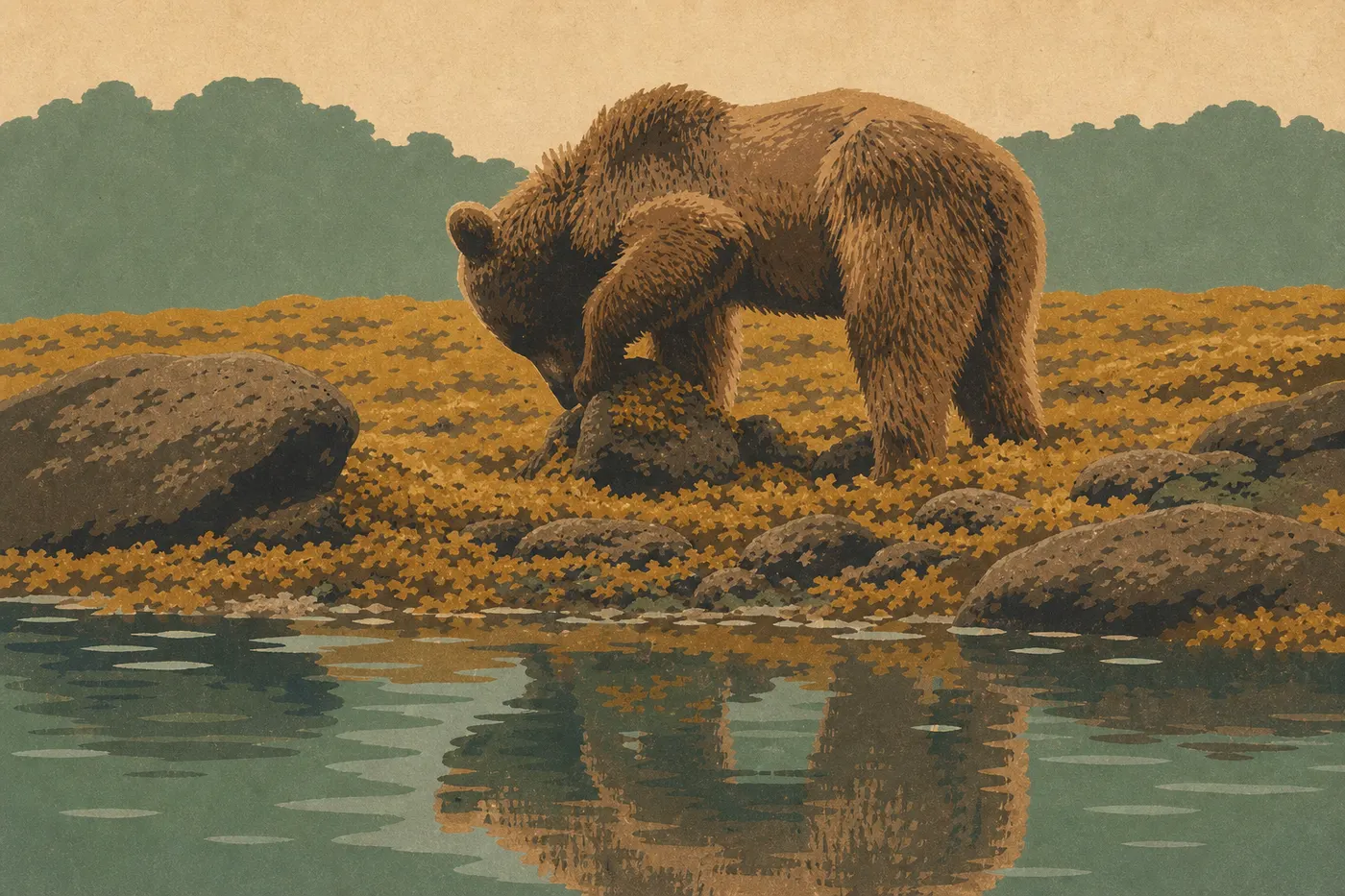
Both species live in the park, and confusion is common because a black bear can have brown fur. The most reliable clue is the muscular shoulder hump: brown bears have one, while black bears don't. Other useful markers include the brown bear's concave muzzle profile, sometimes called a dish-shaped muzzle, and long, pale claws. Black bears have a straight muzzle, higher-set ears, and short, dark claws.
Harbor Seal
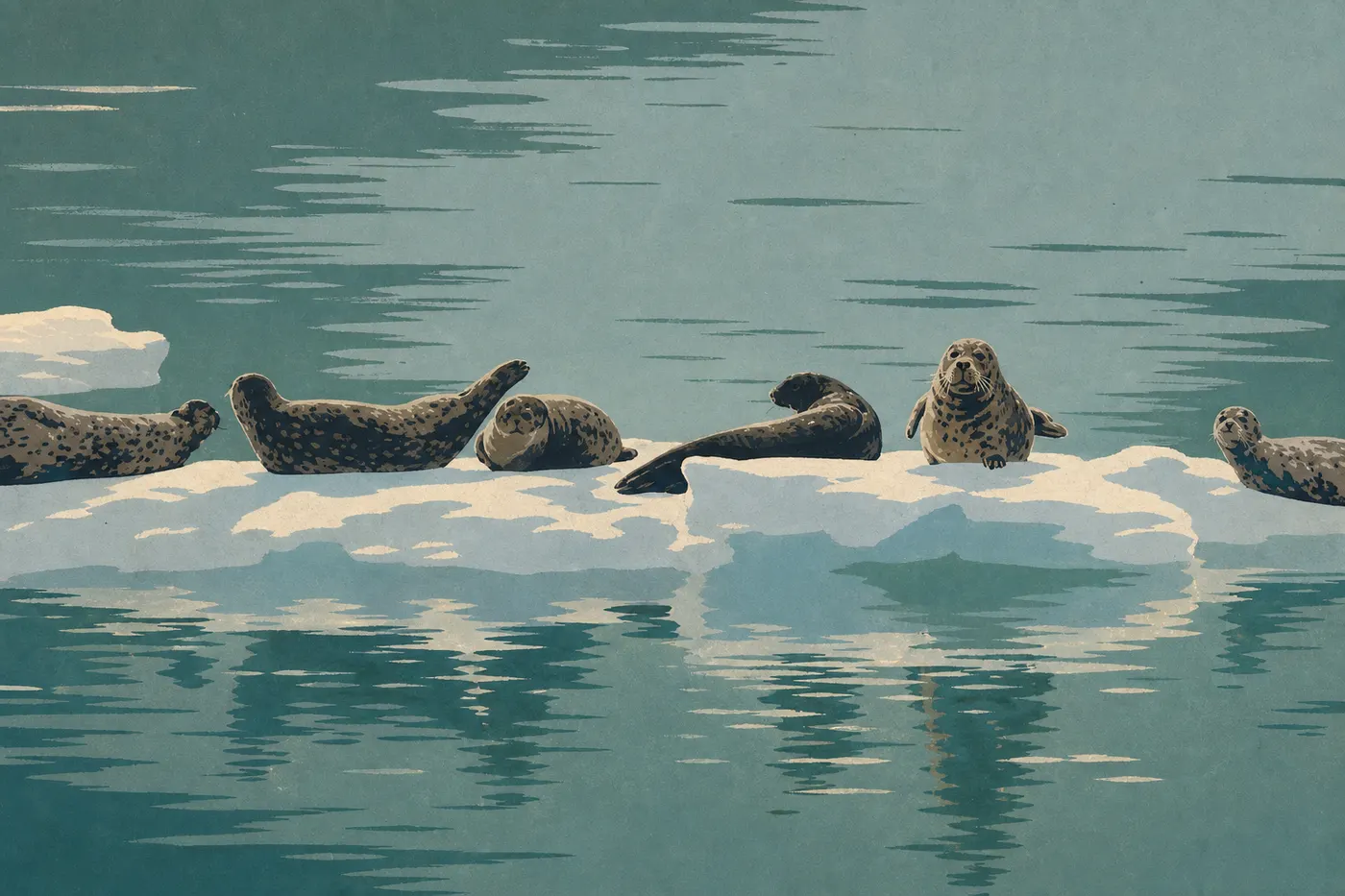
The harbor seal (Phoca vitulina) is the animal visitors see most often on cruises. It rests in colonies on floating icebergs near glacier fronts, sometimes in groups of dozens. From June through July, females give birth on these same ice floes, protected from land predators. It hunts in shallow intertidal areas for fish, shrimp, and octopus. Keep your binoculars handy. It surfaces quietly for a single breath, then disappears.
Bald Eagle
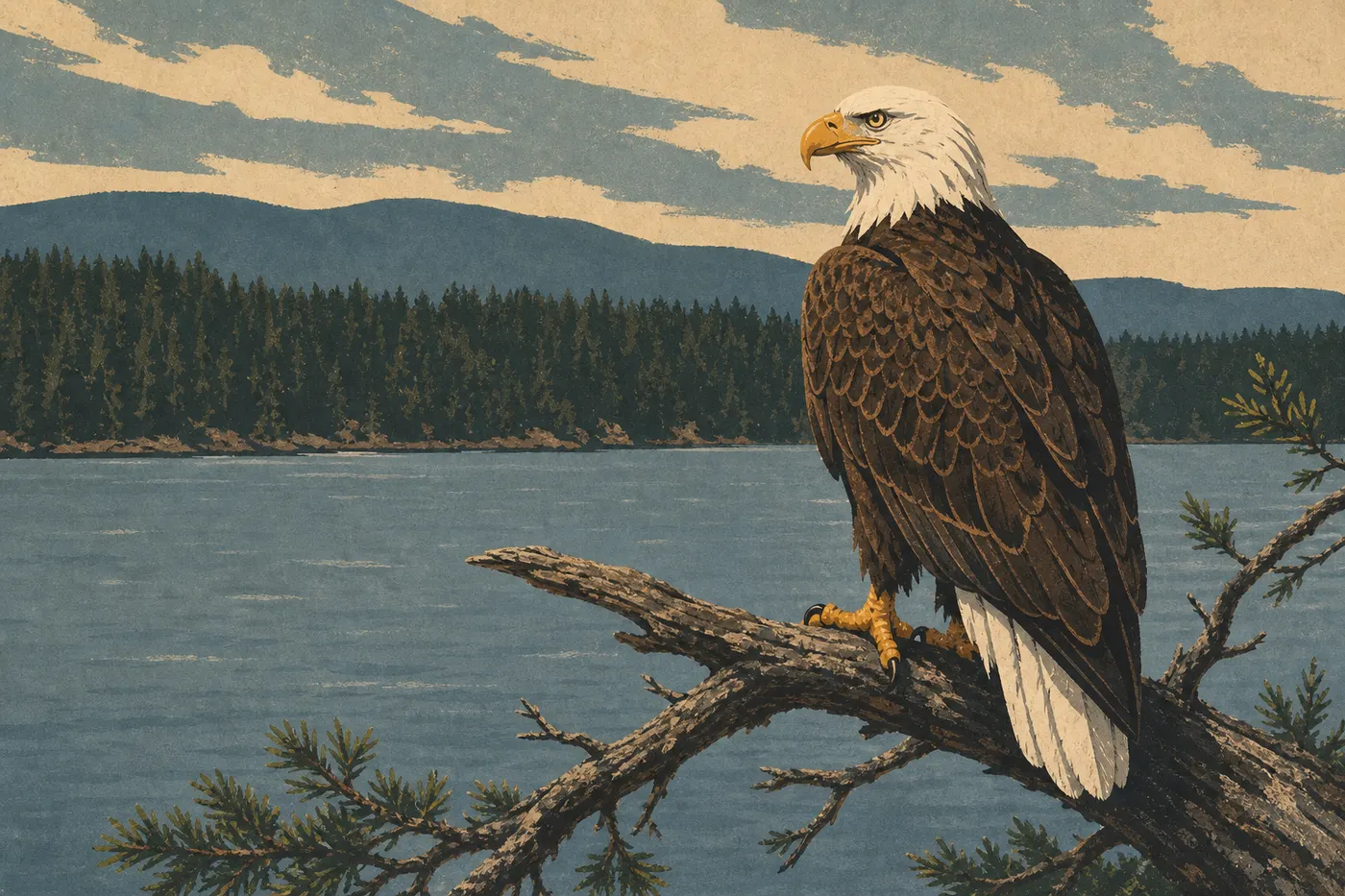
The bald eagle (Haliaeetus leucocephalus) nests in the tall spruce trees along the edge of Bartlett Cove and hunts along the shoreline. Its wingspan can reach 8 feet. In Glacier Bay, it's so common that it can start to seem ordinary, but that doesn't make it any less thrilling to watch one dive toward the water to snatch a salmon. Immature birds, with mottled brown plumage and no white head until they are 4 or 5 years old, are often mistaken for other raptors. Look for their imposing silhouette and perfectly flat wings when they glide.
Horned Puffin
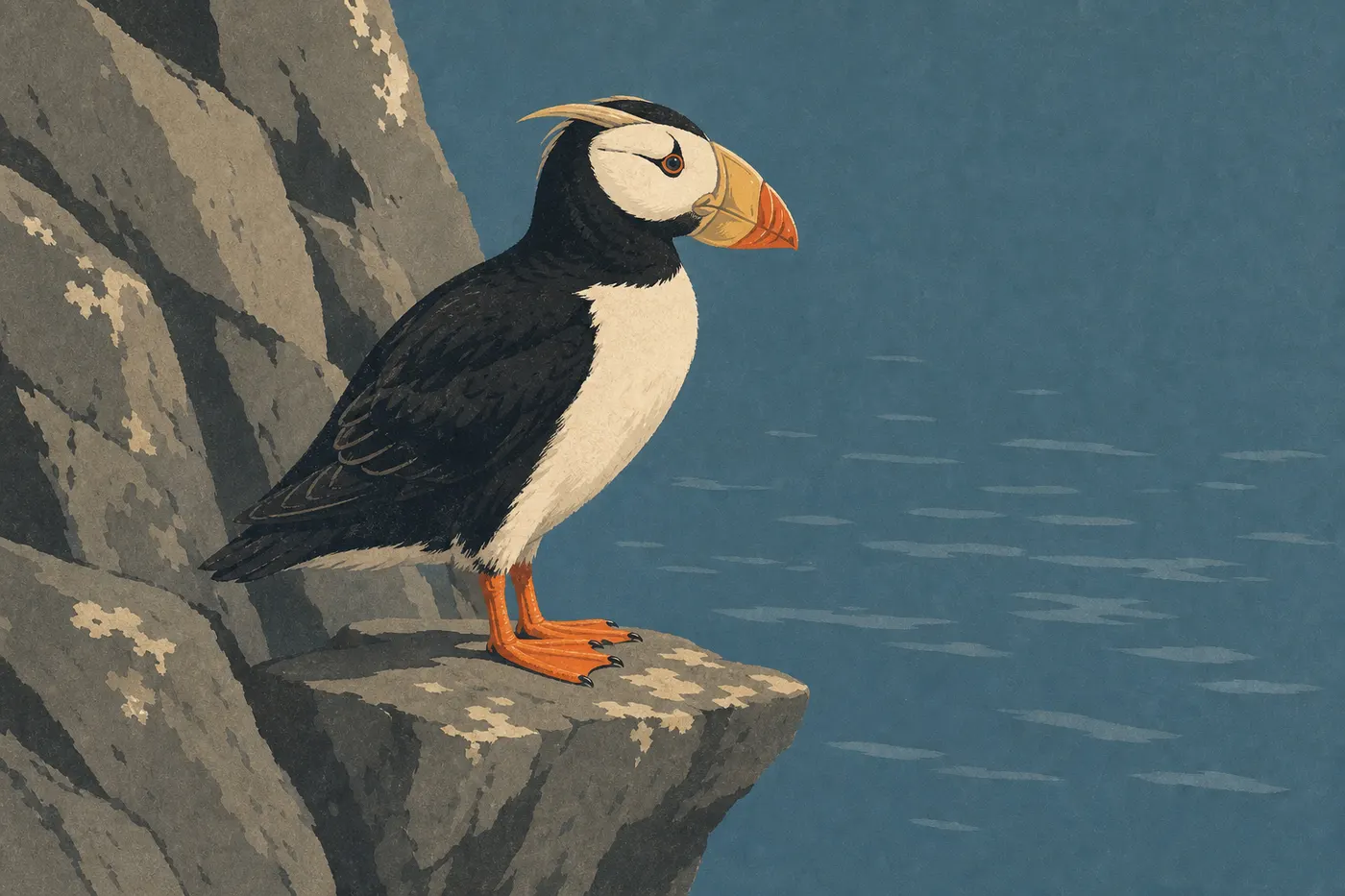
Yes, Glacier Bay has puffins. The horned puffin (Fratercula corniculata) nests from May through August on the park's cliffs and rocky islets. Its bright red-and-orange bill, small black “horns” above the eyes, and white face make it instantly recognizable. It dives for small fish and can bring back several dozen prey items in a single trip. Bay cruises regularly pass near the nesting colonies.
Where to See Wildlife in Glacier Bay
Bartlett Cove is the essential starting point. The area is home to bald eagles, sea otters, which you can spot floating on their backs with their feet in the air, pelagic cormorants, and guillemots. A short hike on the Forest Trail from the lodge may reveal a bear along the forest edge or a Steller's jay in the canopy.
The upper bay, accessible only by boat or kayak, is whale country. This is where humpback whales gather to feed alongside Dall's porpoises and Steller sea lions. The glacier fronts, including Margerie Glacier and Grand Pacific Glacier, are the best places to watch harbor seals on icebergs and see glaciers calve.
Rivers and streams in the backcountry attract brown bears when salmon are running. Kayakers who venture into the bay's side arms have a real chance of encountering a bear fishing, at a safe distance.
Cliffs and islets exposed offshore shelter colonies of horned puffins, black-legged kittiwakes, marbled murrelets, and Arctic terns. Zodiac cruises follow these walls late in the day, an ideal time for photographers.
Trails through wildlife areas, including the trails around Bartlett Cove, are covered in the Glacier Bay hiking guide with their viewing spots. Our complete guide to Glacier Bay provides an overview of the park and its activities.
When to Watch Wildlife in Glacier Bay
The main season runs from late May to early September. July is the richest month, with plentiful humpback whales, salmon in the rivers, puffins at the height of nesting season, and temperatures between 50 and 59°F.
For land mammals, including bears, wolves, and mountain goats on the cliffs, dawn and dusk are the most productive times. Whales are active all day. They often put on a more acrobatic display, including breaching and spy-hopping, on calm seas in the morning.
April through June are the driest months and the best time for birds passing through. Whales generally arrive starting in June. Visitor numbers drop in September and October, and the rain sets in, but bears can still be seen during their final hyperphagia phase before winter denning.
To choose your visit based on weather and the species calendar, the Glacier Bay seasonal guide lays out the best windows for each species and set of conditions.
Predators and Large Animals of Glacier Bay
The humpback whale is the park's largest animal, reaching 49 feet in length and weighing 88,000 pounds. It isn't a predator in the strict sense, since it filters krill and herring, but its size alone makes it the dominant presence in the bay.
The brown bear is the park's top land predator. It goes after fish, small mammals, and, more rarely, weakened animals. Solitary and generally wary of people, it remains the animal that calls for the most caution on the trails.
The killer whale (Orcinus orca) sits at the top of the marine food chain. So-called transient populations specialize in hunting marine mammals, including seals, porpoises, and sometimes whale calves. They are spotted in the bay several times each season, but not regularly.
The gray wolf (Canis lupus) lives in the park but is rarely seen. It carefully avoids areas with heavy human traffic. A footprint in the mud or a distant howl is often the only sign that it's there.
The mountain goat (Oreamnos americanus) deserves special mention. Clinging to the sheer walls of the fjords, this sure-footed climber is one of the park's hardest animals to photograph. Look for white spots on the cliffs from the bay.
Watching Wildlife Safely
At Glacier Bay, the basic rule is simple and nonnegotiable: never approach a bear within 300 feet, whether it's moving or resting. On the water, the same 300-foot distance applies to whales and other cetaceans. Boats shut off their engines if an animal approaches on its own.
Here are the rules to follow:
- Never feed wildlife. A bear that associates people with food becomes dangerous and is usually euthanized.
- When camping in the backcountry, bear-resistant canisters are required for storing food, scented products, and trash.
- Don't approach seals on icebergs, especially from June through July. Disturbing them during pupping season can cause a mother to abandon her pup.
- When kayaking near whales, position yourself perpendicular to their path and avoid getting between a mother and her calf.
- When hiking through dense vegetation, carry bear spray on your belt and make noise to avoid surprising an animal at close range.
For complete guidance on backcountry camping and hypothermia prevention, consult the rangers at Glacier Bay Lodge and the official NPS resources.
In Brief: Species You Shouldn't Miss and Where to Find Them
| Species | Where to look | Best time |
|---|---|---|
| Humpback whale | Upper bay, cruise | June through August |
| Brown bear | Shores, salmon rivers | July through September |
| Harbor seal | Icebergs near glaciers | June through July (pupping) |
| Bald eagle | Bartlett Cove, forest edges | All season |
| Horned puffin | Cliffs and rocky islets | May through August |
| Killer whale | Passing through the bay | Summer, irregular |
| Mountain goat | Fjord walls, visible from the water | All season |
Frequently Asked Questions
Are there puffins in Glacier Bay?
Yes. Horned puffins (Fratercula corniculata) nest in Glacier Bay from May through August on the park's cliffs and rocky islets. You can see them from bay cruises that pass along the nesting colonies.
What are Alaska's five signature animals?
In Alaska as a whole, the five iconic species are the brown bear, moose, caribou, killer whale, and bald eagle. In Glacier Bay, the humpback whale tops the list and takes the place of the moose and caribou, which are uncommon in this area.
What mammals can you see in Glacier Bay?
The park is home to marine mammals, including humpback whales, killer whales, harbor seals, sea otters, Dall's porpoises, and Steller sea lions, as well as land mammals, including brown bears, black bears, gray wolves, mountain goats, beavers, and American mink.
What marine species live in Alaska's Glacier Bay?
Glacier Bay's marine species include humpback whales, killer whales, Dall's porpoises, harbor seals, sea otters, and Steller sea lions. Waters rich in krill and herring also attract a wide variety of seabirds, including horned puffins, marbled murrelets, black-legged kittiwakes, cormorants, and Arctic terns.
What is the most common animal in Glacier Bay?
The harbor seal is probably the animal visitors see most often. Its colonies on icebergs are visible on every bay cruise. The bald eagle is the most common raptor and is nearly ubiquitous in Bartlett Cove.
What is the largest animal in Glacier Bay?
The humpback whale is the park's largest animal, reaching 49 feet in length and weighing nearly 88,000 pounds.
What are Glacier Bay's predators?
The park's main predators are the killer whale, which specializes in hunting marine mammals; the brown bear, which hunts fish and small land mammals; the gray wolf, which hunts land prey; and the bald eagle, which hunts fish and birds.
What animals are out at night in Glacier Bay?
Wolves mainly hunt at dawn and dusk. Sea otters remain active in the water at night. Bears move around at any hour in summer, especially during Alaska's long daylight hours in June and July. Seabirds return to their rocky colonies at sunset.