
Glacier Bay with Kids: What to Do and How to Plan Your Trip
Glacier Bay is one of the most remote national parks in the United States, and that's exactly what makes it such a memorable family destination. There are no traffic jams at the entrance and no crowds at the foot of a famous geyser. You arrive by plane or boat, drop your bags at Bartlett Cove, and the park begins right away. For kids, the trip feels like a real expedition.
Is Glacier Bay a good fit for families? Yes, starting at around 4 or 5, as long as you're comfortable with cool, often rainy weather (50 to 59°F in summer) and plan to spend most of your time on the boat cruise to the glaciers. Toddlers under 2 can make the trip too, but a long day at sea isn't especially comfortable. Our complete Glacier Bay guide offers an overview of the park for anyone discovering this wild corner of Alaska.
Why Visit Glacier Bay with Your Family
Glacier Bay gives kids something few national parks can offer: a boat trip past active glaciers, with real chunks of ice breaking off in a resounding crash. This is called calving, and the spectacle is immediate, striking, and requires no particular physical effort.
The second reason is the wildlife. You don't have to go looking for it. Humpback whales, sea otters, tufted puffins, and bald eagles are all part of the scenery. Countless families say they've watched a whale blow just a few dozen yards from the boat while their children looked on in amazement.
The third point is that the park sees relatively few visitors compared with the major parks in the Lower 48. In July, the peak of the season, you won't wait in line to access activities. The feeling that you have the park to yourself remains intact, and that's valuable when you're traveling with kids who need room to move.
Is Glacier Bay Good for Kids? What Age Should They Be?
The central question is the day cruise to the glaciers. It's the park's signature activity, and you'll spend about eight hours on the water. A 4- or 5-year-old can handle that pace, especially if you dress them warmly and bring things to keep them busy between wildlife sightings.
For kids under 3, the experience is still possible, but it takes careful planning, including diapers, meals, and the fatigue that builds up in the cold. In our view, this age group gets more out of the trip if you limit the day to a short boat round-trip or activities around Bartlett Cove.
Once they're 8 to 10, kids can really engage with the park. They can take part in ranger programs, ask questions during guided tours, and understand the geological story of glaciers that have been retreating since the end of the Little Ice Age, around 1750. It's an open-air science class.
Guided kayaking is generally available starting around age 12, depending on the outfitter. Hikes focus on the area around Bartlett Cove and remain accessible to kids as young as 5 or 6.
Accessibility: Forest Trail and access to Bartlett Cove Beach are stroller-friendly along most of the route. Glacier Bay Lodge and the visitor center are accessible to people with limited mobility. The park's backcountry, however, isn't developed.
When to Visit as a Family (The Easiest Season with Kids)
The main season runs from late May through early September, with July as the peak. For families, May and June are often the best compromise. Days are very long, with up to 18 to 20 hours of daylight in June, rain is a little less frequent than in August, and whales are already plentiful in the bay.
July brings the mildest temperatures, up to 59°F, and the most services are open. It's also the busiest month.
Avoid September with young children. Rain increases significantly, and some services start to close.
Our Glacier Bay seasons guide details weather conditions month by month, whale migrations, and the best times to visit for different types of families. Our park weather guide adds forecasts and historical data.
How Many Days Should You Plan for a Family Trip?
Plan on two to three nights in the area, or three to four travel days when you include connections from Juneau or Anchorage. Anything less doesn't leave enough time to absorb the journey and really enjoy the park.
Here's our recommendation for a family with kids:
- Day 1: arrive in Gustavus, settle in at Bartlett Cove, walk the Forest Trail, and visit the visitor center.
- Day 2: take the day cruise to the glaciers. Booking well in advance is essential.
- Day 3: do the Junior Ranger program in the morning, then go guided kayaking or walk along the beach in the afternoon. Leave that evening.
With kids under 6, two nights is enough. The cruise day is packed, and the visit often fits into a longer Alaska itinerary.
Our Glacier Bay itinerary guide offers several options based on the length of your trip and your children's ages.
What to Do in Glacier Bay with Kids: Our Picks
The Day Cruise to the Glaciers
This is the park's defining experience. The boat leaves Bartlett Cove and travels about 62 miles up the bay to the tidewater glaciers, including Margerie Glacier, which calves regularly. A National Park Service ranger narrates the geology, wildlife, and history of the park. Kids love the live format, especially when the ranger points out a whale at eleven o'clock off the port side.
Book early. Seats go quickly in July.
Humpback Whale Watching
Humpback whales are present in the bay from May through September. Seeing a whale breach is the kind of memory a child carries for years. For the best visibility, sit toward the front of the boat, and dress kids in two layers. The wind on the water gets cold fast.
Bartlett Cove and Forest Trail
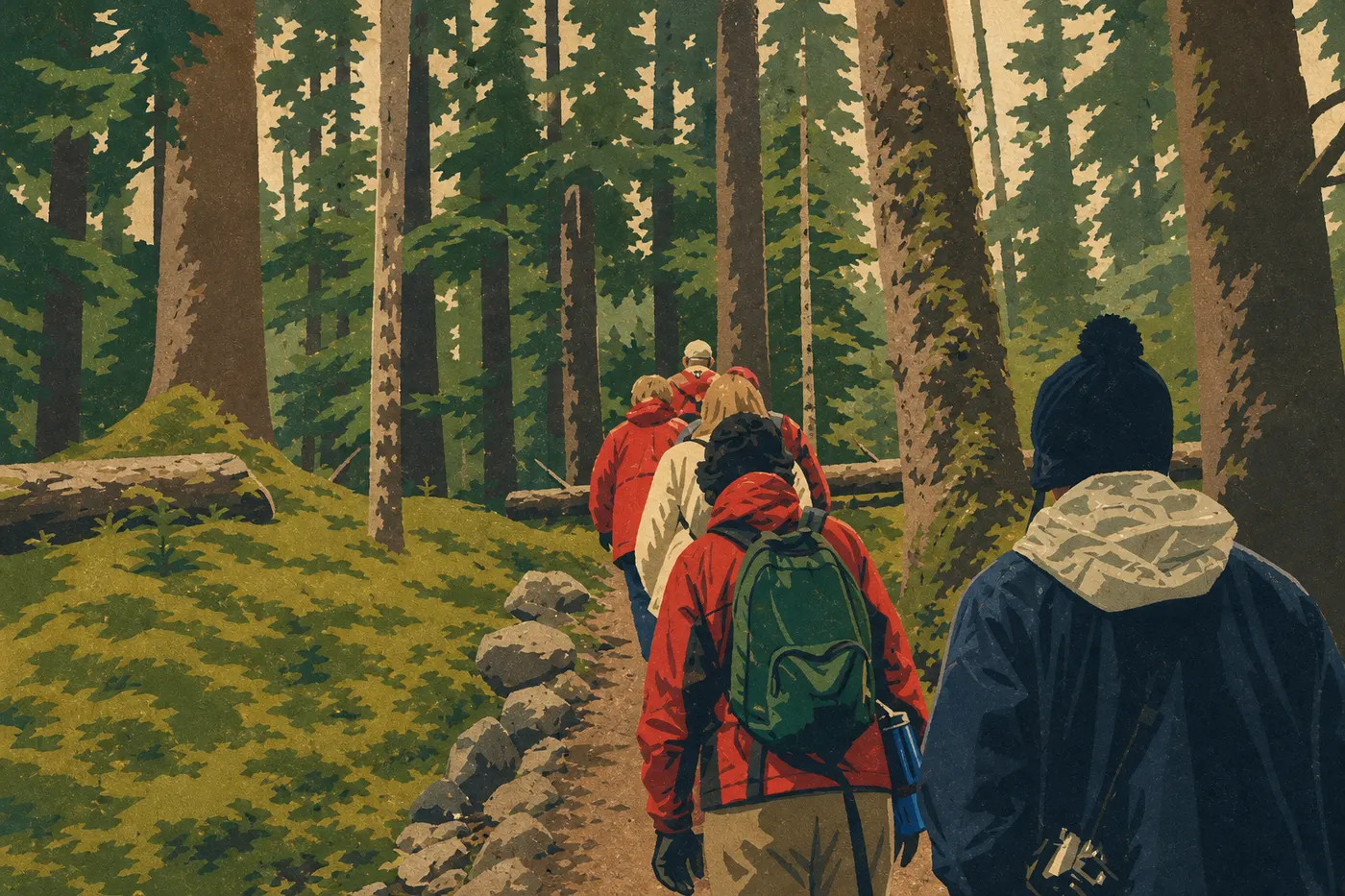
This roughly 1-mile trail passes through a forest of Sitka spruce and western hemlock. The route is flat, partly stroller-friendly, and lined with signs explaining how plants return after glaciers retreat. It's short, straightforward, and suitable for kids as young as 4.
The Intertidal Zone at Bartlett Cove Beach
At low tide, the beach reveals a rich intertidal zone with sea stars, hermit crabs, and anemones. It's an ideal chance for curious kids to explore freely. Give them waterproof rubber boots.
For more ideas geared toward kids, see our Glacier Bay activities guide. Our Glacier Bay wildlife guide lists the animals found here and the best viewing conditions by season.
Easy Family Hikes (Short and Nearly Flat)
Glacier Bay isn't a hiking park in the usual sense. Most of the terrain is remote wilderness accessible only by boat or kayak. Marked trails are concentrated around Bartlett Cove.
Forest Trail (1 mile, almost no elevation gain): This is the family hike to do. Allow 30 to 45 minutes. Part of the route follows boardwalk, and kids as young as 3 or 4 can manage it. Keep an eye out for red-headed woodpeckers and wildlife tracks along the trail.
Bartlett River Trail (about 9 miles round-trip, moderate): Best for families with capable kids ages 8 to 10 and up. The trail follows an estuary that's excellent for birding. Bring waterproof boots and mosquito repellent.
Bartlett Cove Beach (free-form, no elevation gain): This isn't an official trail, but every family enjoys the walk along the shore. Set your own pace. The bay views are wide open, and kids can collect pebbles to their hearts' content.
Our Glacier Bay trails guide covers all the park's trails, with elevation data and age recommendations.
The Junior Ranger Program
The National Park Service offers the Junior Ranger program in all its national parks, and Glacier Bay is no exception. Kids receive an activity booklet to complete during their visit, with wildlife observations, glacier quizzes, and landscape drawings. Once they've finished it, a ranger checks their answers and gives them an official Junior Ranger badge.
The booklet is free at the Bartlett Cove visitor center. Allow one to two hours, depending on age and enthusiasm. Kids ages 6 to 12 get the most out of it.
Practical tip: start the booklet on your first day so you have time to complete the observations during the cruise. Kids earn the badge, and they wear it proudly on their backpacks.
Safety with Kids
Brown and Black Bears
Glacier Bay is home to brown and black bears. Encounters around Bartlett Cove are rare but possible. Follow NPS guidance: hike in a group, never alone with the kids; make noise so bears know you're there; and never leave food accessible at your campsite. If you encounter a bear, don't run, and never get between a mother and her cubs.
Hypothermia and Cold
The bay's water temperature hovers around 39 to 46°F, even in July. If someone falls into the water, hypothermia can set in within 15 minutes. On the cruise boat, keep kids away from the railings. If you go kayaking, make sure every child wears a properly fitted, Coast Guard-approved life jacket supplied by the outfitter.
Rain and Gear
Rain is the norm in Southeast Alaska. A poorly equipped child gets cold quickly, and the day can end early. For every family member, pack a hooded waterproof jacket, a fleece or wool midlayer, and waterproof boots. Waterproof outerwear and warm layers are essential, even in the middle of summer.
Mosquitoes
Mosquitoes are active in forested and wet areas from June through August. Use a child-appropriate repellent, such as a light DEET or picaridin formula, and cover arms and legs on forest hikes.
Where to Stay with Your Family (In the Park and in Gustavus)
Glacier Bay has deliberately limited lodging. The park is protected wilderness, and its infrastructure remains modest.
In the park: Glacier Bay Lodge at Bartlett Cove is the only lodging with permanent structures inside the park. Rooms are comfortable, the restaurant is on-site, and the location makes it easy to move from one activity to the next. It often sells out months ahead for July, so book early.
Bartlett Cove Campground is free, with no electricity or showers. With young children, camping there in rainy weather is ambitious. Starting around age 7 or 8, it can become a memorable adventure.
In Gustavus: This village of a few hundred residents, 10 miles from the park, has several bed-and-breakfasts and small family-run lodges. They're often welcoming and well maintained. This is the most comfortable option for families with young children.
Our Where to Stay page and Hotels & Lodges guide compare all the options, including seasonal rates and availability. Our Camping page covers Bartlett Cove Campground and its facilities in detail.
Meals and Breaks with Kids
Dining in Glacier Bay centers around Glacier Bay Lodge. Its restaurant serves hot meals in the morning and evening, along with a packed lunch for the cruise. The menus are solid, with soup, sandwiches, and local fish, without pretending to be fine dining. They work well for kids.
In Gustavus, a few restaurants offer varied menus, often built around local products such as salmon, halibut, and crab. Their hours are limited, especially outside the peak season.
For your day on the water: pack a complete meal bag. The cruise boat has a dining area, but prices are high and choices are limited. A thermos of soup, fruit, and warm snacks make a real difference during a long, cold day with kids.
Our Where to Eat page lists restaurants in Gustavus and Bartlett Cove, along with their hours.
Family Budget
Park entrance: Glacier Bay doesn't charge an entrance fee. That's good news for families.
Transportation is the main expense. You can reach the park only by plane, with a flight of about 20 minutes from Juneau, or by ferry. A charter or scheduled flight to Gustavus is often the biggest cost of the trip, followed by the day cruise. Check adult and child fares with the authorized NPS operator, since they change every year.
The America the Beautiful pass is annual and available by vehicle or individual. It doesn't cover Glacier Bay's free entrance, but it can still be useful if you're adding other national parks in Alaska or elsewhere in the United States. Kids under 16 enter all NPS parks for free.
Our national parks fees and passes page explains entrance fees and passes. Our Access & Transportation page details flight and ferry options from Juneau, with current prices.
Places to Add Around Glacier Bay with Kids
Glacier Bay fits naturally into a longer Alaska itinerary. From Juneau, the main gateway, families can add:
Juneau: Mendenhall Glacier is reachable by car from downtown and has a short trail to the foot of the glacier. It's suitable for kids of any age, in good weather or rain.
Skagway: Two hours north of Juneau by ferry, this historic town dates to the 1898 gold rush. The White Pass & Yukon Route steam train is a hit with kids of all ages.
Ketchikan: Farther south, Ketchikan is known for its Tlingit totem poles and fishing-town atmosphere. The collection of totems at Totem Bight State Historical Park is impressive and very accessible for families.
Our Road Trip and Regions guides offer itineraries for planning a family trip through Alaska.
Is Glacier Bay Worth It for a Family Trip?
Glacier Bay isn't a park you choose by default. The journey is long, the budget is high, and the weather is unpredictable. But if you make the trip, your kids will remember for the rest of their lives seeing a glacier calve with a roar of blue ice, searching the horizon for whales from a boat deck, and earning their Junior Ranger badge in one of the most remote places in the United States.
For families ready to invest in the trip, including the budget, logistics, and gear, Glacier Bay is unlike any other national park experience. It isn't the easiest park to reach. It's one of the places you'll come home from changed.
Frequently Asked Questions
Is Glacier Bay suitable for families with kids?
Glacier Bay works well for families with kids ages 4 or 5 and up, especially because of the day cruise to the glaciers and the activities at Bartlett Cove. The logistics are more demanding than in mainland parks, but the experience is unique and manageable for well-prepared families.
How long should you spend in Glacier Bay?
Plan on two to three nights in the area, or three to four travel days in all, to fully enjoy the park as a family. That gives you a day for the cruise, a day around Bartlett Cove, and time to slow down. Less than one night isn't worth the trip, given the journey from Juneau.
What can you do in Glacier Bay National Park and Preserve?
The main activities are the day cruise to the tidewater glaciers, humpback whale watching, hikes around Bartlett Cove such as Forest Trail, guided kayaking, Junior Ranger programs, and ranger-led tours. Our What to Do page explains every option, including age requirements.
How much does a visit to Glacier Bay National Park and Preserve cost?
Park entry is free. The main expenses are transportation to Gustavus, with flights from Juneau, and the day cruise to the glaciers. Lodging at Glacier Bay Lodge is another significant expense. Our National Parks Fees & Passes page explains entrance fees and passes.