
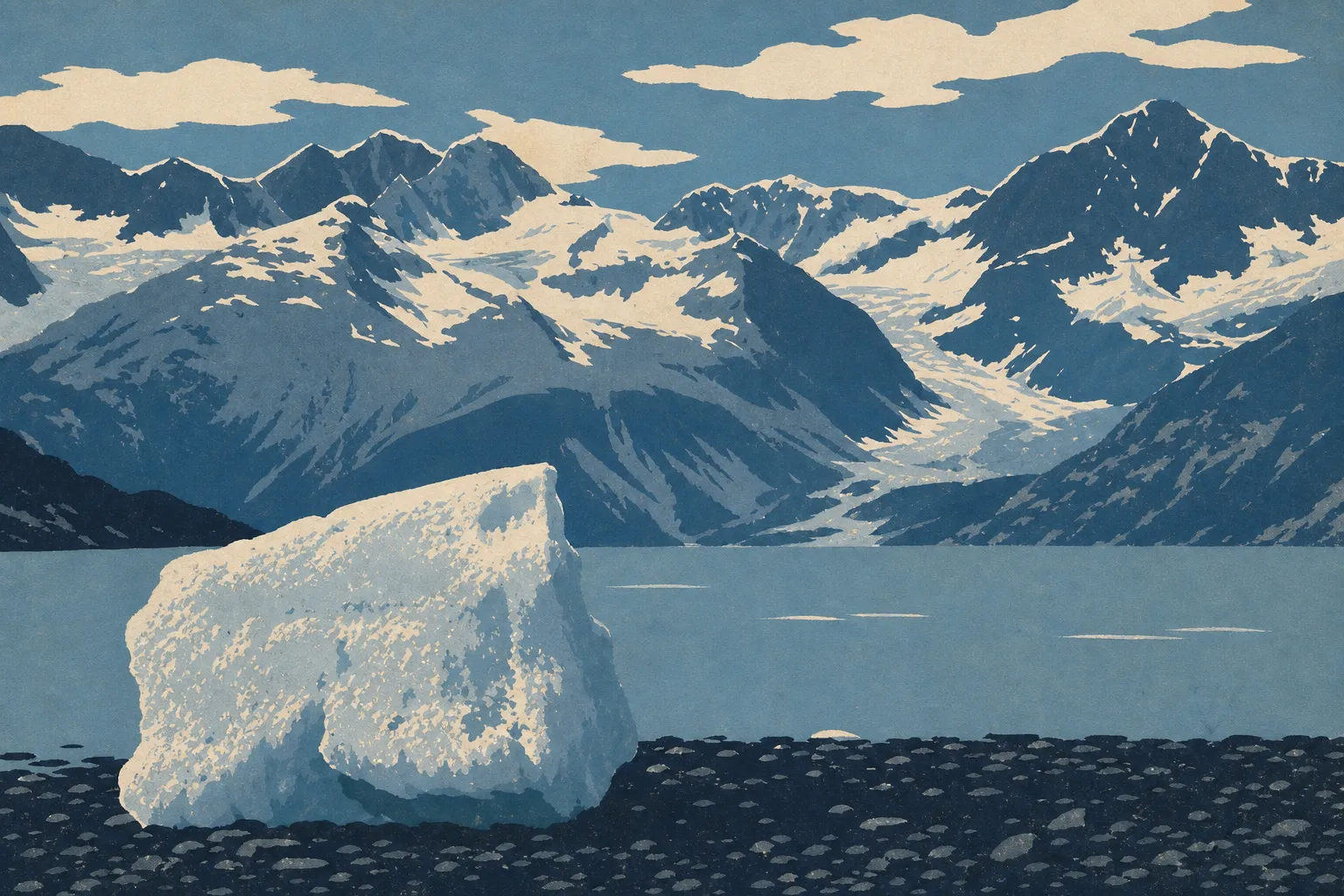
Glacier Bay National Park: The Complete Visitor Guide
Glacier Bay is a living fjord in southeastern Alaska, west of Juneau, where tidewater glaciers calve directly into the sea. You can't reach the park by car or RV. You get there by boat or plane, and you see most of it from the water. Plan on at least one full day if you're visiting by cruise ship, or two to three days if you're staying at Bartlett Cove and want to take your time. There is no scenic drive or road loop here. The bay stretches for nearly 62 miles between ice-covered walls, humpback whales, and sea lions resting on icebergs.
Here's where the park is, how to get there, what to see in each area, how long to stay, and when to go. Each question has its own detailed guide, so follow the links as you read.
Glacier Bay at a glance: where the park is and how to get there
Glacier Bay National Park and Preserve occupies the southeastern tip of Alaska, in the Inside Passage region, west of Juneau. The park is isolated, with no road connecting it to the rest of the continent. You can get there only by plane or boat.
The area's only road is short. It connects the small town of Gustavus and its airport with the park headquarters at Bartlett Cove for about 10 miles. That's it. To reach Gustavus, you have two options: a flight from Juneau that takes about 30 minutes, or a boat connection. Most visitors never set foot on shore. They see the bay from the deck of a cruise ship that travels up the fjords without stopping.
Bartlett Cove is the park's only developed area. That's where you'll find the lodge, visitor center, campground, hiking trailheads, and the dock for the day boat. Everywhere else, there are waters, glaciers, and nearly untouched wilderness.
Entrance fees, passes, and reservations
Good news for your budget: Glacier Bay has no entrance gate. There is no fee booth and no entrance fee to pay, unlike Yellowstone or Zion. The park is technically open 24 hours a day.
What costs money isn't admission. It's the services that get you to the bay and let you stay there: the flight or boat to Gustavus, a night at the lodge or a campsite, and especially the boat tour that travels up the fjords to the glaciers. Those are what drive up the cost of a Glacier Bay trip, not an entrance ticket.
Two reservations deserve your attention ahead of time. First, the popular day boat tour during peak season. Then, lodging. Options are limited in Gustavus and Bartlett Cove, and they fill up quickly in summer. Our National Park Fees & Passes page explains entrance fees and annual passes.
Reservations, permits, and rules to follow
What requires a reservation or permit
Backcountry camping: Campers heading beyond Bartlett Cove must attend a mandatory orientation at the visitor center before setting out. This free briefing covers bear safety, Leave No Trace principles, and navigation requirements in the bay. You don't reserve a campsite. Backcountry camping is allowed without reservations in authorized areas. The orientation is different: it's required.
Private boats: The NPS limits the number of vessels allowed in the upper bay at one time. Boaters must get a permit online before arriving. During peak season, available time slots fill up quickly.
Cruise ships: Cruise lines reserve their bay-entry windows with the NPS well in advance. You won't see this logistics if you're traveling with a cruise operator.
Lodge boat tour: Reservations are strongly recommended in July. The day boat has limited capacity.
Rules to know
The standard federal rules for national parks apply: don't collect plants, rocks, or artifacts, and pack out all your waste in the backcountry.
Whether you're kayaking or boating, the NPS requires safe distances from marine wildlife, including whales, seals, sea otters, and bears along the shore. Rangers explain the exact distances during the orientation or at the visitor center.
Dogs are allowed in the park, but they must stay on a leash at all times. They're not allowed in the backcountry.
Getting around Glacier Bay
Here, getting around means traveling by water. The bay forms a large Y, with a West Arm and an eastern arm, Muir Inlet. Both reach toward active glaciers. No road follows the water, so you get around by boat, kayak, or plane.
There are three ways to explore the bay:
- The day boat tour, departing from Bartlett Cove. A catamaran travels up the West Arm to the tidewater glaciers, with a ranger on board explaining the landscape, wildlife, and history. It's the best option if you're staying nearby and want to see the glaciers up close without relying on a cruise.
- A cruise, which travels up the bay for a full day without stopping ashore. The number of ships allowed each day is capped to protect the whales and preserve the area's peace.
- A kayak, for a truly immersive experience. You can paddle from Bartlett Cove, or have the excursion boat drop you farther up the bay to explore coves far from everything.
Along the road between Gustavus and Bartlett Cove, a shuttle or transfer covers the 10 miles. Details on transportation are on our Getting Around page.
How long should you spend visiting Glacier Bay?
How long you should spend in Glacier Bay depends on how you're visiting. On a cruise, you see the bay in a single day on the water. The ship travels up the fjords in the morning, stops in front of the glaciers, and then heads back down. You see the essential scenery, but you never set foot in the park.
If you're staying at Bartlett Cove, plan on two to three days. Spend one day on the boat tour to the West Arm glaciers. Use a second for the coastal forest trails, a kayaking trip, or wildlife watching from shore. Add a third if you want to paddle farther or simply settle into the rhythm of the place, often in the rain and always in the quiet.
Our advice is simple: one day is enough to say you've seen Glacier Bay, but two nights here will change the experience. You move from watching a parade from a ship's deck to truly immersing yourself in the park. To fit it into your Alaska itinerary, see our Itinerary & Length page.
Plan your visit
What to see and do in Glacier Bay
The heart of the visit is on the water, area by area. Here's how the bay is laid out.
Road trip journal · 4 areas
Bartlett Cove, the main base
This is the park's land-based gateway and only developed area. You'll find Glacier Bay Lodge, the visitor center, the campground, and the departure point for the boat tour. An easy trail crosses the temperate rainforest to the shore, where the reconstructed skeleton of a humpback whale is a reminder of who rules these waters. Bartlett Cove is your base camp: sleep there, get information there, and head out from there into the bay.
The West Arm and its tidewater glaciers
The West Arm is the star. Travel up it and you'll reach tidewater glaciers calving into the sea, including the famous Margerie Glacier, an ice cliff more than 100 feet high where chunks break off with a thunderous roar. That's the spectacle most visitors come to see. Blue icebergs drift through the water, carrying resting seals.
The eastern arm and Muir Inlet
Less visited, the eastern arm, Muir Inlet, is named for naturalist John Muir, who explored the bay in 1879. It's a playground for kayakers and anyone looking for solitude, far from the large ships.
The outer coast and Dry Bay Preserve
Beyond the bay, the Pacific outer coast and the Dry Bay area, in the park's preserve, form a remote and wild region. Visitors come for river trips and guided fishing, rarely as a first-time stop.
A little history helps explain what you're looking at. About 250 years ago, a wall of ice blocked this entire bay. When George Vancouver followed the coast in 1794, Glacier Bay barely existed as a bay. In just over two centuries, the glaciers retreated several dozen miles, opening the fjords you travel today. Glacier Bay is also the homeland of the Huna Tlingit, whose ancestral territory this is.
Explore the park
Glacier Bay's best hikes
Don't come to Glacier Bay for an extensive trail network. This is a park of water, not trails. Hiking centers around Bartlett Cove, where a few marked routes cross the rainforest and follow the shore. Forest Trail and Bartlett River Trail offer easy walks that are ideal for spotting birds, watching for a distant bear, and getting a feel for this waterlogged forest.
Beyond that, hiking often means traveling off-trail across beaches and areas exposed by the retreating glaciers. Those routes are for experienced, well-equipped hikers. We cover the trails, difficulty, and safety precautions on our Hiking page.
The detailed guide The Best Glacier Bay Hikes for Every Experience Level Bartlett Cove trails, backcountry wilderness hiking, bear safety, and weather… Read the guide →Wildlife and plants to look for
Glacier Bay is a sanctuary for marine and land wildlife. From the water and ship decks, look for humpback whales feeding here in summer, orcas, porpoises, sea otters, and seals resting on icebergs. On land and along the slopes, you may see brown and black bears, mountain goats, moose, and bald eagles.
The golden rule here, as everywhere in Alaska, is to keep your distance. Never approach a bear, never come between a mother and her young, and keep all food secured. On the water, boats maintain the required safe distances around whales. Our Wildlife page covers the species, the best viewing windows, and the rules to follow.
The detailed guide Glacier Bay Wildlife: What to See and Where to Find It Humpback whales, brown bears, and horned puffins Read the guide →When to visit Glacier Bay
The useful season is short. The park comes alive from late May to early September, with the busiest period in July, when services are running at full capacity and the whales are present. Outside that window, access, transportation, and lodging become much more limited.
As for weather, prepare for rain. It's the norm in this part of southeastern Alaska. Summer temperatures typically range from 50 to 59°F. April, May, and June are generally the driest months of the year; September and October are the wettest. Come to Glacier Bay prepared for water, not sunshine. Our When to Visit page has a month-by-month breakdown, and our Weather page covers clothing and climate advice.
The detailed guide When to Visit Glacier Bay: Best Time, Weather, and Seasons The best time to visit Glacier Bay Read the guide →Where to stay in Glacier Bay
Lodging is concentrated in two places, and options are limited, so book early. At Bartlett Cove, Glacier Bay Lodge offers rooms beside the visitor center and dock, in the forest. It's the most convenient place to stay if you're taking the boat tour. Nearby, a free campground beneath the trees accommodates tents, with the usual bear-country precautions, including mandatory food storage. In Gustavus, a few lodges and guesthouses round out the options. They're a little farther from the water but often more intimate.
Keep in mind that you can't reach the park by car, so forget about driving a van or RV to Glacier Bay. Our Where to Stay page compares all the options. Details are on our Hotels & Lodges, Camping, and RV Camping pages. They're useful for planning logistics farther ahead, around Juneau and the Alaska Highway.
Stay in the park
Around Glacier Bay: things to do nearby
Glacier Bay is rarely a stand-alone destination. It fits into a larger Alaska trip. Juneau, the state capital, serves as a hub for flights and cruises, with its own icefield and accessible glaciers. More broadly, the park is part of the Inside Passage, a sea route lined with fjords, port towns, and rainforests. It's also part of a large transboundary UNESCO World Heritage site, alongside neighboring parks in Alaska and Canada.
To build a complete itinerary, the Regions guides for Alaska and the Inside Passage and the Road Trips guides place Glacier Bay among nearby stops.
Our take: Is Glacier Bay worth the trip?
Yes, as long as you know what you're coming for. Glacier Bay isn't a park where you drive from one viewpoint to the next. It's a bay you travel slowly, often in the rain, to watch ice fall into the sea and whales surface. Getting there takes real logistical effort and a real budget because everything depends on a boat or plane. In return, you experience a raw, quiet Alaska that feels worlds away from the crowded parks of the Lower 48.
If your trip includes the Inside Passage or an Alaska cruise, Glacier Bay is a stop that stays with you. If you're looking for hiking and scenic roads, look elsewhere. On our visit, the thunder of a calving event on Margerie Glacier in absolute silence made the whole journey worthwhile.
Frequently asked questions
How long should you spend in Glacier Bay?
How long to spend in Glacier Bay depends on your travel style. One day is enough on a cruise, which travels up the bay without stopping ashore. If you're staying at Bartlett Cove, plan on two to three days for the boat tour, trails, and kayaking. Details are on our Itinerary & Length page.
How much does a visit to Glacier Bay National Park cost?
A visit to Glacier Bay National Park has no entrance fee. There is no fee booth or entrance gate. Your budget goes toward transportation, whether a flight or boat to Gustavus, lodging, and the boat tour to the glaciers. For entrance fees and annual passes, see the National Park Fees & Passes page.
What can you do in Glacier Bay National Park?
In Glacier Bay National Park, you can travel up the bay by excursion boat or cruise ship to the tidewater glaciers, paddle a kayak, walk through the rainforest around Bartlett Cove, and watch for whales, seals, sea otters, and bears. Our Things to Do page lists all the activities.
What is Glacier Bay's main attraction?
Glacier Bay's main attraction is its tidewater glaciers calving directly into the sea, including Margerie Glacier, surrounded by exceptional marine wildlife. People come to watch ice fall into the water and humpback whales feed in a landscape of nearly untouched fjords. Our complete guide above gives you the essentials.
The American Parks shop
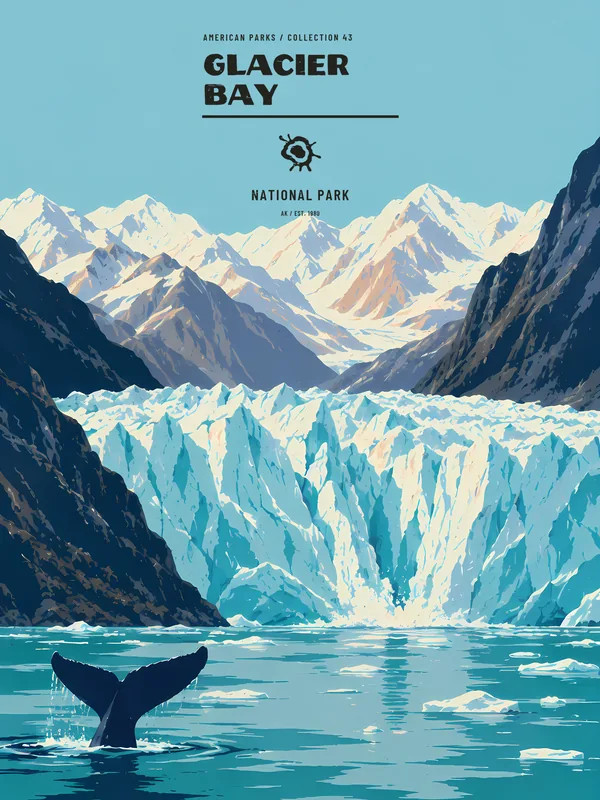
Bring Glacier Bay home
Our park-inspired creations, made to order and shipped to your door.
Latest park news
- Glacier Bay Lifts the Whale Waters Speed Limit Starting October 1, 2026The 13-knot limit in Queen Inlet and eastern Lower Bay ends October 1, 2026, at 5 a.m. Here's what it means for your boating.
- Glacier: Eight Grizzlies Gather Atop Siyeh Peak for Moth SeasonFrom mid-July through late August, hikers on Glacier's high rocky summits may run into several grizzlies feasting on high-altitude moths.