
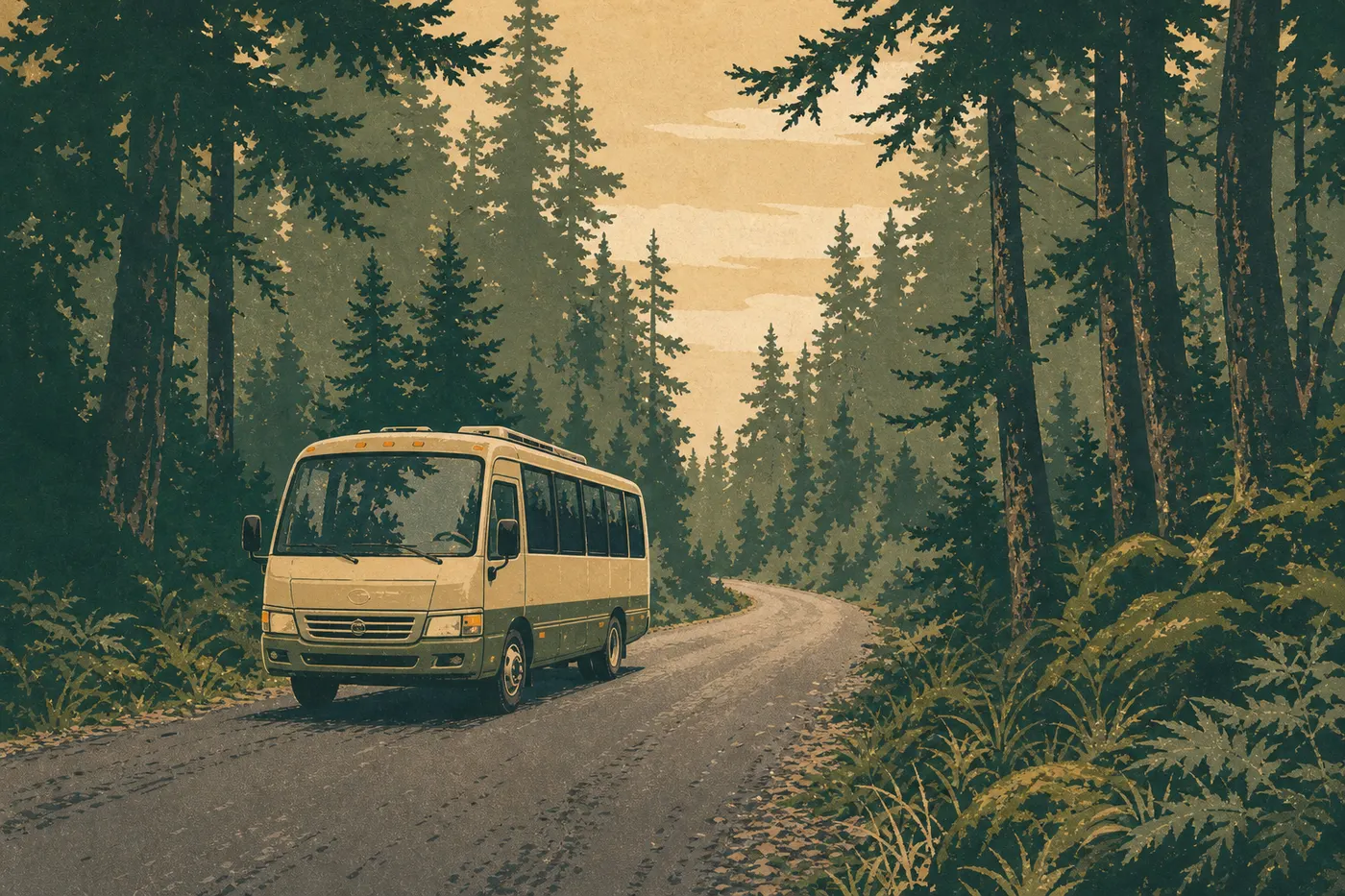
Glacier Bay by RV: Campgrounds, Rules, and Tips
Can you visit Glacier Bay by RV? The short answer is no, not by road. Glacier Bay National Park and Preserve lies in southeastern Alaska, west of Juneau. No road connects it to the North American road network. You can reach it only by air or water. The main challenge isn't the size of your vehicle or tunnels you need to navigate. It's the site's complete geographic isolation.
This guide explains exactly what that means, what camping options are available anyway, and how to fit Glacier Bay into an Alaska RV road trip.
Can You Drive and Camp an RV in Glacier Bay?
Glacier Bay has just one road: the 10 miles connecting the small town of Gustavus, and its airport, to park headquarters at Bartlett Cove. There is no road connection to Juneau, no link to the Alaska Highway, and nothing else.
To bring an RV to Gustavus, your only option is the Alaska Marine Highway System (AMHS) ferry network. In practical terms, you'd have to drive to Haines or Skagway via the Alaska Highway, take a ferry to Juneau, then take a second one to Gustavus. Fares for a large vehicle are high, sailings are limited, and service to Gustavus is seasonal. You're looking at several days of logistics to end up with just 10 miles of road under your wheels.
In practice, most visitors, including people traveling through Alaska by RV, reach Glacier Bay by flying from Juneau, a 15-minute flight, or by cruise ship. If the park is on your itinerary, the most practical choice is to leave the RV in Juneau or Haines for a two- or three-day side trip, then get back on the road.
RV Restrictions and Regulated Roads
The Gustavus-Bartlett Cove road is paved for most of its length and suitable for standard-size vehicles. The NPS doesn't publish any specific length or height restrictions for this stretch. There are no tunnels, tight turns, or low-clearance bridges along these 10 miles.
The Bartlett Cove Campground, however, is reached by a short walking trail from a small parking lot. The lot is designed for cars and vans. A large Class A motorhome, fifth wheel, or long trailer won't find a suitable space there. Converted vans and Class B RVs work much better in this setting.
Before you leave, check the “Alerts & Conditions” section of the NPS website. Alaska conditions, including roads, ferry access, and weather, can change quickly at the beginning and end of the season.
The Park's Official Campgrounds
Bartlett Cove Campground
This is the park's only land-based campground. It's at Bartlett Cove, 10 miles from Gustavus.
- Sites: Walk-in sites, a short walk from the parking lot, designed for tents and lightweight camping gear.
- Hookups: None. No electricity, running water, or dump station.
- Reservations: First come, first served. There is no online reservation system.
- Cost: Free. The park also has no entrance fee.
- Season: Open from late May through early September.
- Amenities: A required bear-resistant food storage system and composting toilets. Water available on-site must be filtered or purified.
If you arrive in a compact van or Class B RV, you can park in the lot and set up in the campground area. A large RV, however, isn't suited to this site.
Backcountry Camping
Glacier Bay also offers an extensive backcountry camping program, accessible only by kayak or boat. These wilderness sites in the heart of the bay require a free wilderness permit issued at the Bartlett Cove Visitor Center. It's a completely different way to spend the night in the park, and the most spectacular one.
Dispersed Camping and Areas Around Glacier Bay (Boondocking)
Boondocking as it's practiced in the American West, on BLM land, in national forests, or in informal areas, doesn't apply here. The area around the park is protected wilderness. Gustavus itself is a community of a few hundred people, with no public RV camping area.
You may occasionally find informal options on private property in Gustavus, but they're not guaranteed from one season to the next. Check recent reports on platforms such as Campendium or iOverlander before you count on them.
If you're looking for a well-equipped Alaska campground for your RV, parks such as Denali or Kenai Fjords offer much more suitable facilities. The Glacier Bay camping guide and the Glacier Bay lodging overview cover these options in detail.
Dump Stations, Water, and Services
There is no dump station at Bartlett Cove or anywhere in the park. Gustavus has very limited services, including no known public dump station in town. If you manage to bring an RV there by ferry, arrive with empty tanks and take care of dumping in Juneau before you board. Fill up with fresh water before leaving Gustavus. Water available at Bartlett Cove isn't safe to drink without treatment.
Choosing a Campground for Your Trip
Glacier Bay has only one land-based campground, so the question of the “best campsite” works a little differently here.
- You're traveling in a compact van or Class B RV: Bartlett Cove is your option. Plan on two nights so you can enjoy morning kayak trips and evening ranger programs.
- You're in a large RV: Leave the vehicle in Juneau or Haines, reach the park by air or boat, and stay at Glacier Bay Lodge once you're there.
- You enjoy wilderness camping: The backcountry sites accessible by kayak are the most unique experience the park offers. Pick up your permit at the Visitor Center as soon as you arrive. They fill up fast in July.
Renting an RV to Visit Glacier Bay
Most Alaska RV rentals start in Anchorage, where most rental companies are based. A few agencies also operate out of Fairbanks. The classic RV route covers Anchorage, the Kenai Peninsula, Denali, and Fairbanks, sometimes extending to Dawson City in the Yukon. Glacier Bay then fits in as a flight-based side trip from Juneau or directly from Gustavus.
From Juneau, regional airlines such as Wings of Alaska and Air Excursions provide service to Gustavus in about 15 minutes. Day boat tours of the bay are also available from Bartlett Cove during the peak season. For flight and boat tour schedules and reservations, see the Glacier Bay access guide.
RVs, Pets, Budget, and Reservations: What to Know
Pets: Dogs aren't allowed on park trails or in the backcountry. They're permitted on a leash in the Bartlett Cove area and common areas. Check with rangers when you arrive to confirm where they're allowed.
Budget: Park entry and camping at Bartlett Cove are free. The real costs are elsewhere: the ferry, which varies widely depending on vehicle size and the route you choose; the flight from Juneau; and Alaska fuel, which costs more than elsewhere in the United States. To choose the right season and keep costs down, the best times to visit Glacier Bay guide lays out visitation windows month by month.
Weather and gear: Summer temperatures average 50 to 59°F. Rain is the norm in this corner of southeastern Alaska. Bring waterproof boots, full rain gear, and warm wool or fleece layers. April, May, and June are the driest months. September and October are the wettest.
When to book: There are no reservations for the land-based campground. Sites are first come, first served. Flights to Gustavus and boat tours in the bay, however, should be booked well in advance for July. The NPS regulates vessel traffic in the bay. The number of boats allowed at the same time is limited to protect the ecosystem.
In Summary: Our Glacier Bay RV Plan
Glacier Bay isn't the kind of park where you roll out the awning after a long day on the road. Its geographic isolation is something to account for during the planning stage, not a surprise to deal with once you're there.
Our recommendation is to build your Alaska RV itinerary around parks you can reach by road, including Denali, Kenai Fjords, and Wrangell-St. Elias. Save Glacier Bay for a two- or three-day flight-based trip from Juneau, with tent camping at Bartlett Cove Campground. That's exactly what makes this park exceptional. Its isolation protects it. You won't run into convoys of Class A RVs, and that's just fine.
Frequently Asked Questions
Can you camp in a van in Glacier Bay National Park and Preserve?
You can camp in a converted van or Class B RV in Glacier Bay if you bring the vehicle by ferry via the Alaska Marine Highway System. The Bartlett Cove Campground parking lot accommodates compact vehicles. There are no hookups or dump stations on-site. Be careful not to confuse Glacier Bay in Alaska with Glacier National Park in Montana, which is accessible by road from the U.S. highway system.
What is Glacier Bay like?
Glacier Bay is a deep bay in southeastern Alaska, surrounded by snowcapped mountains and glaciers that calve directly into the water. Vegetation is sparse near the glacier fronts, on land reclaimed as the ice has retreated, and dense in the boreal forest at lower elevations. The atmosphere is wild, wet, and often foggy.
What's the average price for an RV campsite?
Glacier Bay's only official campground, at Bartlett Cove, is completely free. It's a walk-in campground with no RV infrastructure, including no hookups, dump station, or developed pads. If you want campgrounds with electrical hookups, the closest options are in Juneau, several hours away by ferry.
Is Glacier Bay National Park and Preserve accessible to RVs?
Glacier Bay isn't accessible by road from outside the park. You can reach it only by air or water. Technically, you can bring a compact RV via the Alaska Marine Highway ferry system, but it requires several days of costly logistics. Almost all visitors arrive by air from Juneau or by cruise ship.