
Things to Do in Glacier Bay: Must-See Sights and Activities
Glacier Bay is a park you have to earn. There is no road through the bay, no trail leading to the glaciers, and no 500-space parking lot. Here, almost the entire park is explored from the water or the air. The result is a completely different experience from most American national parks, with a true sense of remoteness from the moment you arrive.
For a first visit, keep these three highlights in mind: a full-day boat tour to the tidewater glaciers of the West Arm, led by Margerie Glacier and Grand Pacific Glacier; a morning of wildlife watching at Bartlett Cove; and, if time allows, an overnight stay to watch the evening light play across the bay.
Glacier Bay at a Glance: Areas, Access, and Getting Around
Glacier Bay National Park and Preserve covers about 5,400 square miles in southeastern Alaska, west of Juneau. The park's defining feature is its complete separation from the outside road network. You can reach it only by plane, a 25-minute flight from Juneau, or by seasonal Alaska Marine Highway ferry to Gustavus, the only community at the park's doorstep. A 10-mile road connects Gustavus with park headquarters at Bartlett Cove. That's the only road in this part of the park.
The park is divided into three distinct areas:
- Bartlett Cove: the park's logistical hub, accessible by car from Gustavus. This is where you'll find the lodge, visitor center, campground, and marked hiking trails.
- The Main Bay and West Arm: home to the tidewater glaciers, accessible by cruise boat or the organized day tour from Bartlett Cove.
- Muir Inlet, the East Arm: a more remote area accessible by water taxi, used mainly by kayakers and self-sufficient campers.
For everything related to arrival logistics, including flights, the ferry, and rental cars in Gustavus, our guide to getting to Glacier Bay covers it all. The park map provides an overview of the areas and distances within the park.
How Much Time Do You Need to Visit Glacier Bay?
Two days is the bare minimum: one day for the boat tour and another to explore Bartlett Cove and its surroundings. With 3 to 4 days, you can add a kayaking trip and possibly spend a night camping in the bay. Travelers arriving by cruise ship see the bay from the deck for a few hours. It's striking, but very different from staying in the park.
One important thing to know is that weather conditions in Glacier Bay change quickly, especially outside June. Building a half-day of flexibility into your itinerary is a smart move. Our Weather page details the chances of fog and rain throughout the season.
For a day-by-day itinerary combining activities and transportation, our Glacier Bay itinerary offers plans ranging from 2 to 5 days.
The Must-See Sights, Area by Area
Bartlett Cove: The Park Headquarters
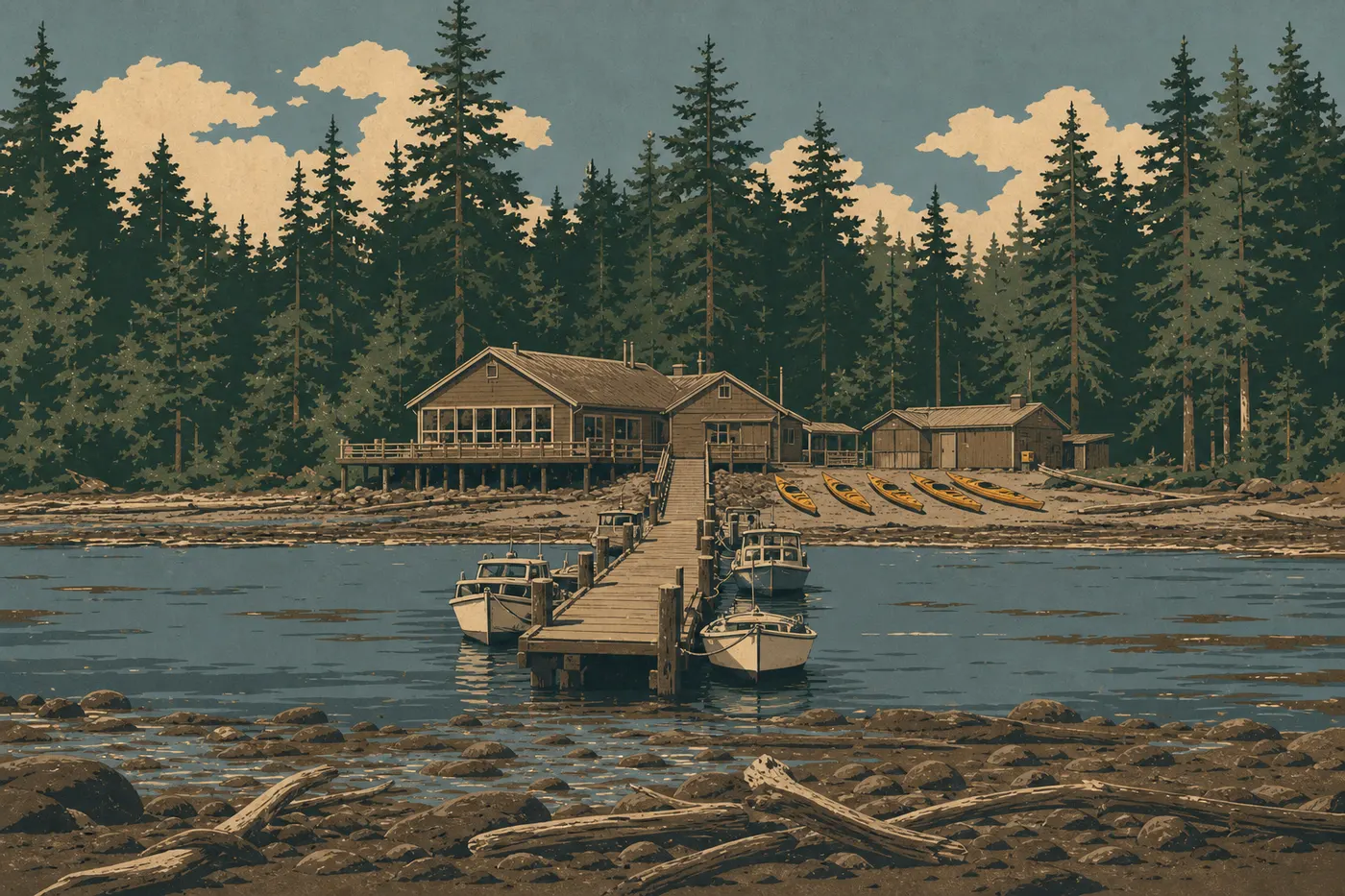
Bartlett Cove is the only place in the park you can reach by car from Gustavus. It's also the starting point for everything you do in the park. This is where you pick up your kayaking or camping permit, board the boat tour, and attend evening ranger programs.
The visitor center, located on the second floor of Glacier Bay Lodge, is worth visiting as soon as you arrive. Rangers update the navigation conditions, wildlife sightings, and area restrictions there every day. The exhibits trace the glacier's retreat since the mid-18th century. Over two and a half centuries, the ice has pulled back more than 62 miles into the bay. That figure captures the scale of the change.
Bartlett Cove's dock is just below the lodge and makes an underrated wildlife-watching spot. Bald eagles are almost always around. At low tide, harbor seals haul out on the intertidal rocks. I spent an hour on that dock one June morning, watching a sea otter crack clams on its chest without moving an inch. It was Alaska in miniature.
Bartlett Cove's boreal forest offers an unexpected side of the park. Damp, dense, and quiet, it has reclaimed these lands since the ice retreated, and some of the spruce trees are nearly 250 years old. This is a long way from the lunar landscapes of the glacial areas, and that contrast is exactly what makes Bartlett Cove interesting.
The Bay by Boat: Tidewater Glaciers and Marine Wildlife
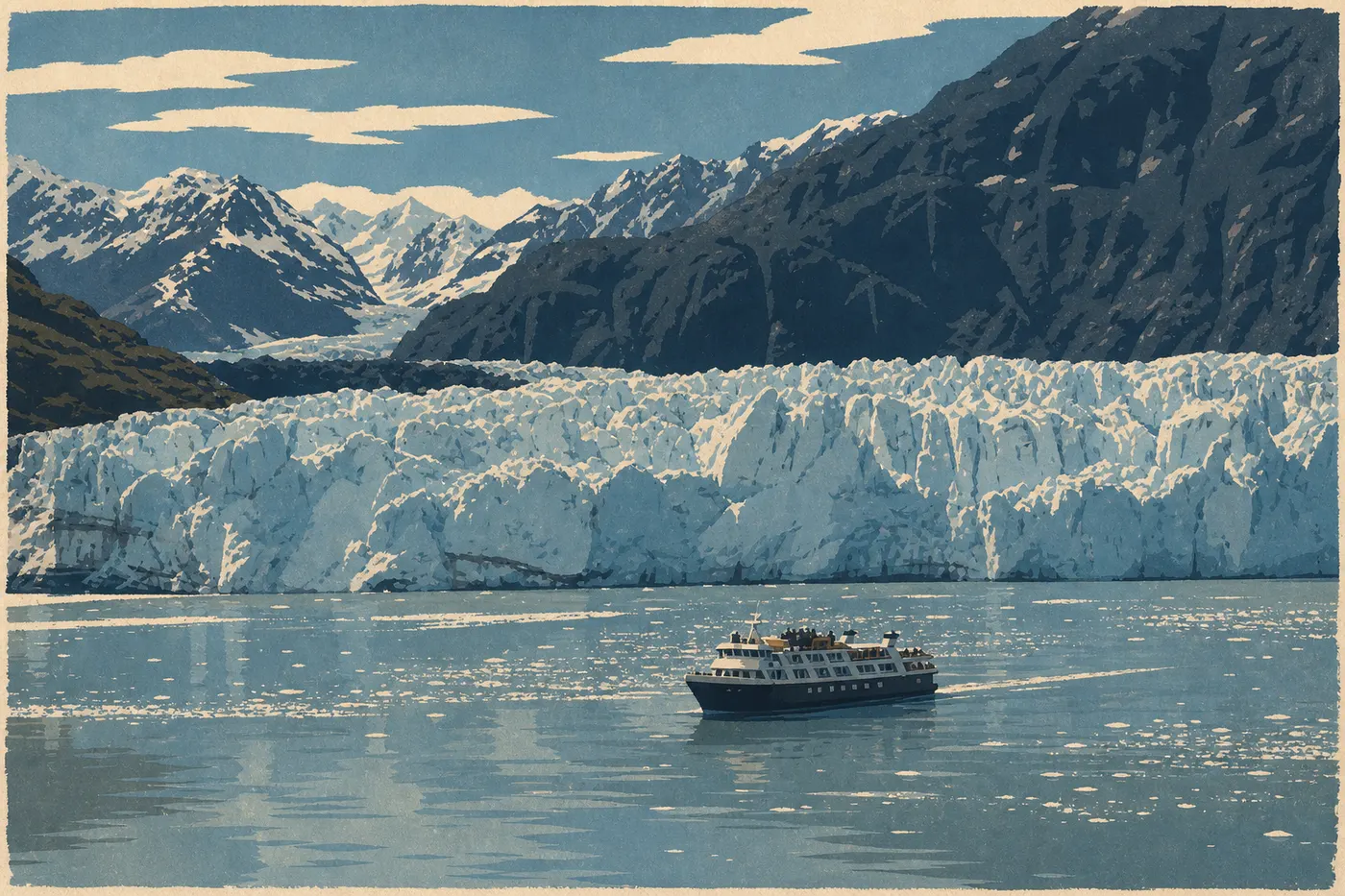
The full-day boat tour is the park's main activity for most visitors. It leaves every morning from the Bartlett Cove dock and travels northwest for more than 62 miles, all the way to the end of West Arm. An NPS ranger is on board to explain the geology, wildlife, and glacial history. The round trip takes about 8 hours.
The tour visits two tidewater glaciers: Margerie Glacier and Grand Pacific Glacier. Margerie Glacier is one of the most active glaciers in West Arm. Calving is frequent and unpredictable. Blocks of ice break away and crash into the sea with a deep rumble and a spray of water. You can watch for long stretches without ever seeing the same spectacle twice. The glacier face has a bluish tint in its most compressed sections, where light enters the crystals without emerging in the red wavelengths of the spectrum. Grand Pacific Glacier is broader, with a surface grayed by moraines. It may look less photogenic at first glance, but its mass dominates the end of the bay.
Marine wildlife takes center stage along the way. In summer, the bay supports a remarkable concentration of whales and other marine mammals. Humpback whales feed here from June through September, with July usually bringing the peak numbers. Sea otters sleep on their backs, holding paws so they don't drift apart. Harbor seals climb onto drifting icebergs to give birth. Orcas pass through regularly, especially in Icy Strait at the entrance to the bay.
Booking the boat tour ahead of time is recommended, especially in July. Seats are limited, and the main season, from late May to early September, is short. Reservation details and prices are listed on the Glacier Bay park page.
Muir Inlet: Kayaking in Glacial Silence
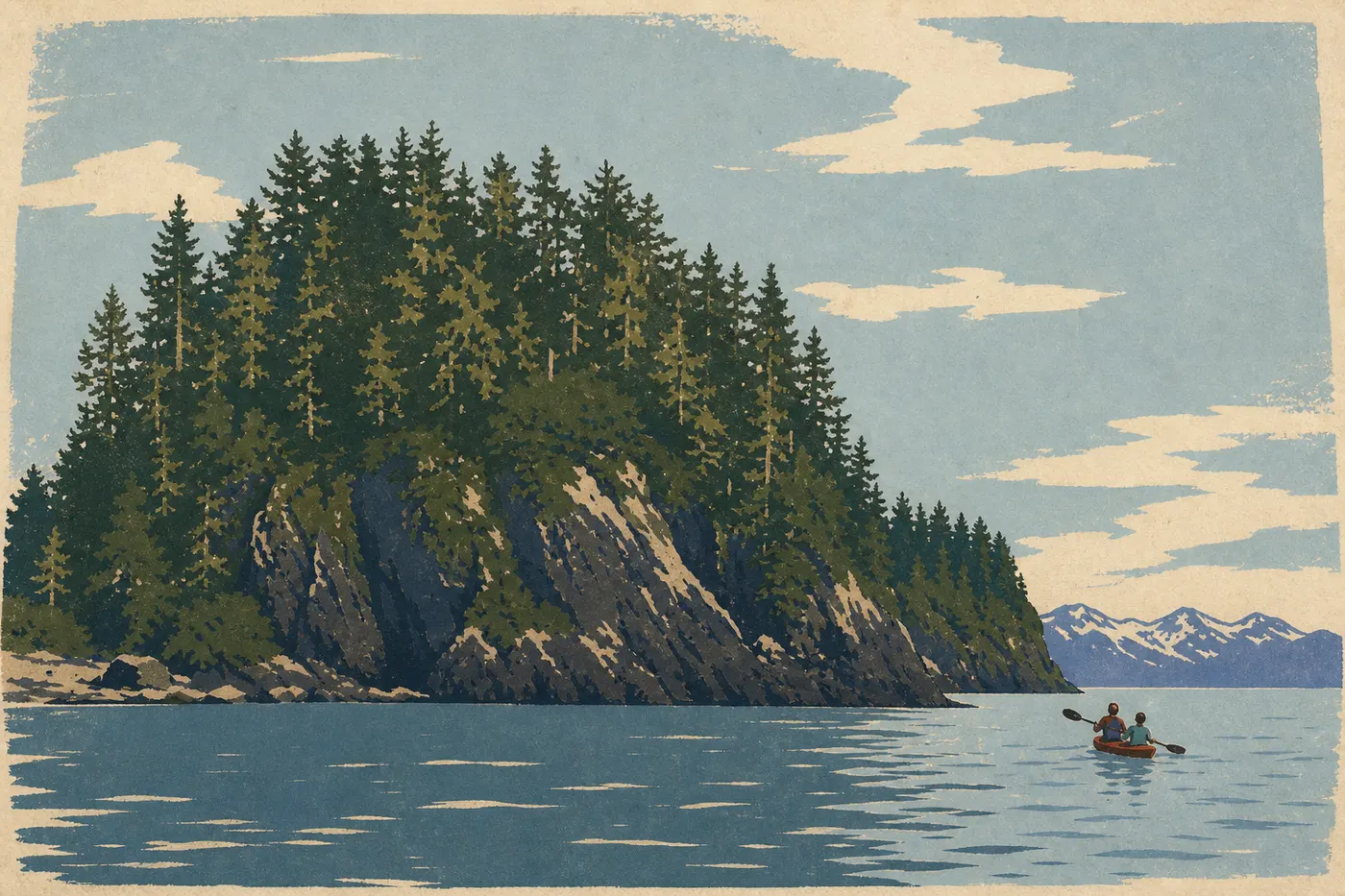
Muir Inlet forms the eastern arm of the bay. The daily boat tour doesn't go there. Instead, a water taxi drops you off from Bartlett Cove, and you continue by paddle. It's a favorite destination for kayakers who want to spend the night facing Muir Glacier and Riggs Glacier, in a silence broken only by the crack of moving ice.
The experience is spectacular and demanding. Katabatic winds, cold air rushing down from the glacial slopes, can rise within minutes and turn calm water into a choppy surface. Don't set out alone by kayak in Muir Inlet without leaving a trip plan at the Bartlett Cove visitor center, carrying appropriate survival gear, and checking the marine forecast hour by hour.
Wilderness camping in the bay, outside Bartlett Cove, is allowed with a free NPS permit issued at the visitor center. Campsites aren't marked. You choose your spot along the shore while observing the required distances from wildlife. Our Glacier Bay camping guide covers the rules and recommended gear for an independent night in the park.
From the Air: Flying Over the Glaciers
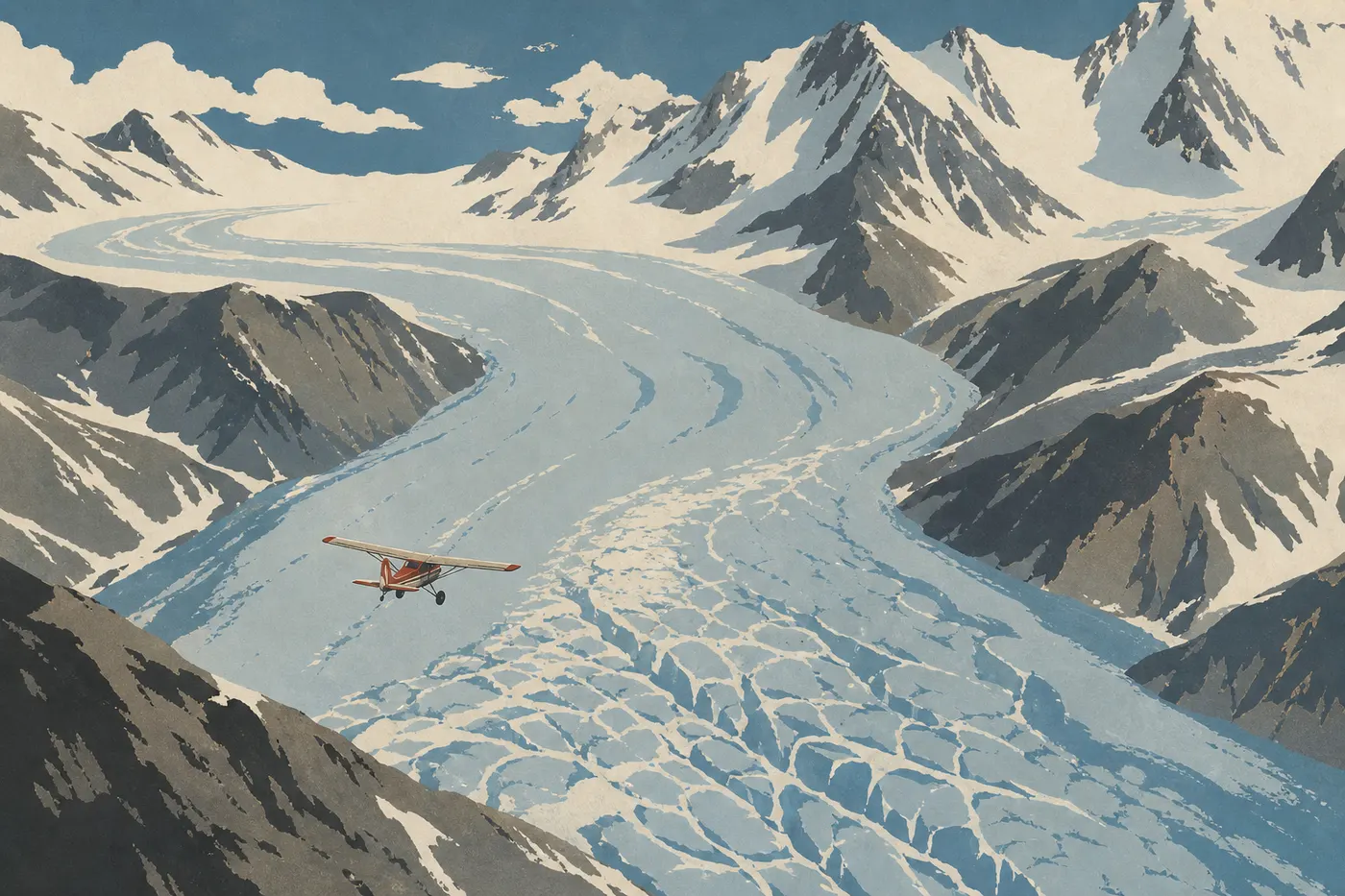
Several operators based in Gustavus offer scenic flights in small planes or floatplanes over the park. In 30 to 60 minutes, you can take in the entire icefield, fjords, and peaks reaching nearly 15,100 feet. Mount Fairweather, the highest point in the coastal range along the park's Pacific side, rises to 15,325 feet. The aerial view offers a perspective neither boat nor kayak can provide. You immediately grasp the vastness of the glacial landscape and the way glaciers have shaped it for centuries.
This kind of flight also works well for visitors with limited time or mobility. You don't have to spend 8 hours on a boat, and you can be back in Gustavus in less than an hour. Weather is still the limiting factor. On days with low clouds or fog, flights are canceled with no possibility of negotiation. Check our Weather page before planning this activity.
The Best Hikes in Glacier Bay
Glacier Bay isn't a park of long, marked routes. Almost all of its official trails are around Bartlett Cove, in the coastal conifer forest. This isn't an alpine hiking park like Zion or Glacier National Park in Montana. Dense vegetation and marshy ground limit the routes you can follow outside areas cleared by glacial retreat.
The two main marked trails starting from Bartlett Cove are Forest Loop Trail, about 1.9 miles and ideal for getting a feel for the boreal forest without much effort, and Bartlett River Trail, about 3.7 miles round-trip along the estuary and excellent for watching birds and bears. Both are accessible on foot from the lodge.
Beyond Bartlett Cove, the park allows off-trail hiking across most open ground, including pebble beaches, glacial moraines, and alpine meadows above tree line. This freedom is rare among American national parks and is one of the park's draws for experienced hikers. It also comes with a matching responsibility: no trail markers, no quick rescue, and wildlife including bears and moose. You must leave a trip plan at the visitor center for any outing lasting a day or longer.
Our Glacier Bay hiking guide details the routes, durations, difficulty levels, and recommended gear.
Other Activities for Different Travelers
Wildlife watching. Glacier Bay is one of the parks where land and marine wildlife share the same field of view. Brown and black bears visit the Bartlett Cove shoreline at low tide, looking for clams and, in fall, salmon. Bald eagles nest in the area's spruce trees and can be seen throughout the season. Orcas regularly travel through Icy Strait. For more, our Wildlife page lists the species found here and the best times to see them.
Sport fishing. Fishing is allowed in areas of the park that aren't protected. Chinook salmon, sockeye salmon, and halibut are the most sought-after species. An Alaska fishing license is required. Gustavus operators offer guided charter trips, the most practical option for visitors passing through. Regulations vary by area, so check with the visitor center before heading out with a rod and line.
Ranger programs. During the season, from late May to early September, NPS rangers offer evening talks at Glacier Bay Lodge, guided walks on Bartlett Cove's trails, and Junior Ranger programs. These activities are free and don't require reservations. They often include plenty of first-hand stories from the field.
Family visits. The boat tour works for kids as young as 7 or 8, as long as they're properly equipped with warm, waterproof, windproof clothing, even in July. Temperatures drop in the middle of the bay. Young children can manage Bartlett Cove's trails. Our Family page lists age-appropriate activities and practical advice for planning a trip with kids.
What to Do Around Glacier Bay
Glacier Bay pairs naturally with Juneau, Alaska's capital, just a 25-minute flight away. Juneau is a human-scale city of about 32,000 people, with no road connecting it to the rest of Alaska, and it has plenty to offer. You can reach Mendenhall Glacier by bus from downtown, walk to the glacier face, see the meltwater lake and nearby waterfall, and get a tangible sense of how quickly the ice is retreating. Compact and lively in summer, downtown Juneau has restaurants and museums covering the history of the gold rush.
Farther north, Skagway is the starting point for the White Pass and Yukon Route Railroad, a historic train that climbs toward White Pass and the Canadian border. It's worth the trip for train buffs and Klondike history enthusiasts.
The classic itinerary through southeastern Alaska, known as the Panhandle, connects Juneau, Glacier Bay, Haines, and Skagway by combining planes and Alaska Marine Highway ferries. We describe it in our complete Glacier Bay guide and in our guide to southeastern Alaska. Travelers arriving by cruise ship from Vancouver or Seattle can fit Glacier Bay into an Inside Passage itinerary that also includes Ketchikan and Sitka.
The Essentials: What to See First in Glacier Bay
Glacier Bay is in a category of its own. You don't drive through it or string together 19 miles of marked trails. You travel by boat, paddle, watch, and wait. That's exactly what makes it such a distinctive experience among American parks.
If we had to sum up the priorities, we'd start with the boat tour. Without it, you don't really understand the park. Next comes a morning at Bartlett Cove for coastal wildlife and ranger programs. Everything else, including independent kayaking, a scenic flight, off-trail hiking, and camping in the bay, adds another layer depending on your time and how much time you want to spend outdoors.
The question of whether Glacier Bay is worth the trip disappears as soon as the first icebergs drift toward you across water as black as ink.
Frequently Asked Questions
What can you see in Glacier Bay?
Glacier Bay is best known for its tidewater glaciers, which flow directly into the sea, including Margerie Glacier, known for its spectacular calving. Marine wildlife is everywhere during the season: humpback whales, sea otters, harbor seals, and bald eagles. Around Bartlett Cove, the coastal boreal forest offers a more terrestrial side of the park, with bears and birds as a bonus.
What is the main attraction in Glacier Bay National Park?
The park's main attraction is the full-day boat tour, which travels up the bay to the tidewater glaciers of West Arm. It's the central activity, requires no special experience, and gives you the best overall view of Margerie Glacier, Grand Pacific Glacier, and the marine wildlife.
Can you kayak in Glacier Bay?
Yes. Kayaking is one of the park's major activities, especially in Muir Inlet, the East Arm, and near Bartlett Cove. Kayak rentals are available at Bartlett Cove. In backcountry areas, a free NPS camping permit issued at the visitor center is required. Solid experience is essential because of katabatic winds and changing sea conditions.
Can you reach Glacier Bay by car?
Not from the mainland. You can reach the park only by plane from Juneau, about 25 minutes, or by seasonal ferry to Gustavus. A 10-mile road then connects Gustavus with park headquarters at Bartlett Cove. There are no other roads in the park beyond that stretch.
What can you do on Alaska's glacier road?
You explore Glacier Bay by boat and plane, not by road. No highway runs through the bay. For a road trip through glacial scenery, the Anchorage-to-Seward route toward Kenai Fjords National Park or the Richardson Highway to Valdez are better alternatives.
When should you visit Glacier Bay?
The main season runs from late May to early September, with July as the peak month. April, May, and June are generally the driest months. September and October are the wettest. Our When to Go page explains the advantages of each period for different activities.
Do you have to pay to enter Glacier Bay?
There is no entrance station or standard entrance fee at Glacier Bay. The organized boat tour costs money, as do guided activities such as kayaking and scenic flights. Camping at the Bartlett Cove campground and wilderness camping permits are free, but you must register at the visitor center.