
Black Canyon of the Gunnison Wildlife: What to See and Where to Look
Black Canyon of the Gunnison is more than a geological wonder. Its sheer walls, stunted oak groves, and the Gunnison River running 980 feet below form a complete ecosystem that's far more populated than you might imagine from the overlooks. Five species set the tone: the bighorn sheep (agile on the cliffs), mule deer (everywhere, at any hour), mountain lions (nocturnal and elusive), black bears (especially on the North Rim), and peregrine falcons (nesting on the sheer walls). With binoculars and an alarm set before dawn, every visit can turn into a memorable wildlife encounter.
Black Canyon of the Gunnison's Signature Wildlife
Bighorn Sheep (Ovis canadensis)
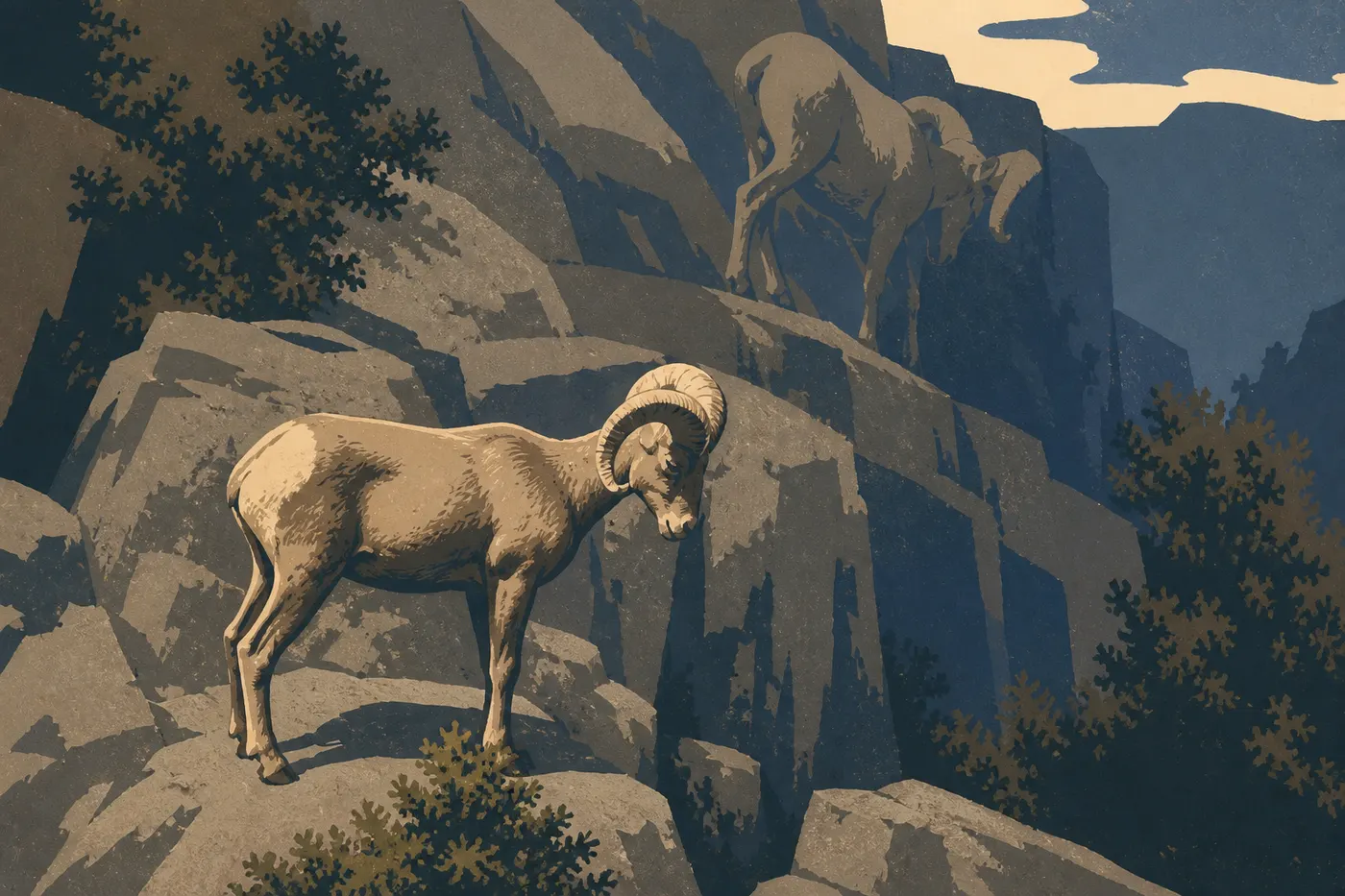
Bighorn sheep are Black Canyon's official acrobats. Their hard-edged hooves and flexible soles let them move across slopes where we'd be stuck in place. Males have full spiral horns that are easy to recognize, while females have short, straight horns. You'll most often spot them along the South Rim and on the slopes between the two rims, usually in groups of five to 15. Early in the morning, before 8 a.m., they head down toward wet areas before climbing back up.
Mule Deer (Odocoileus hemionus)
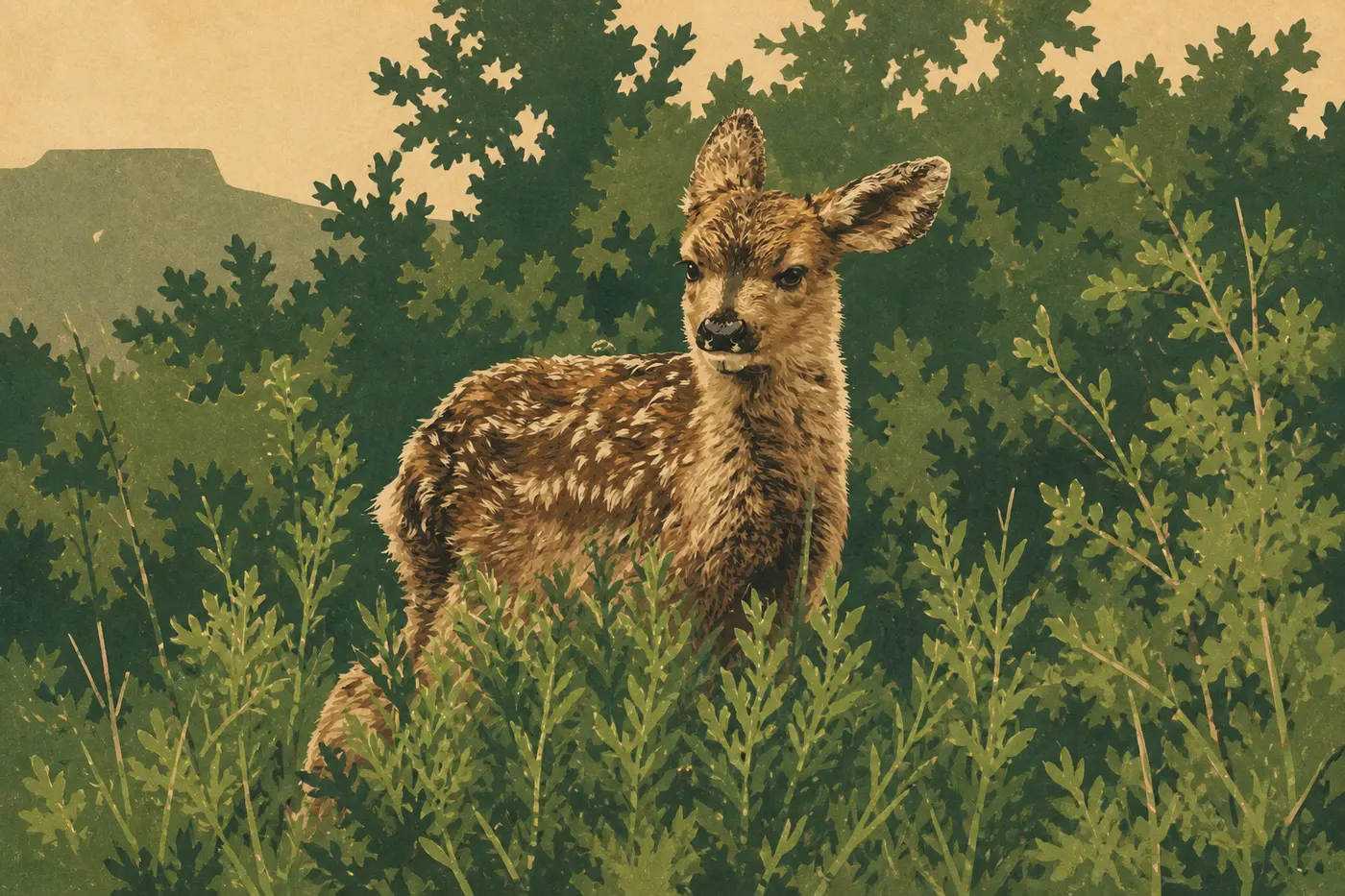
Mule deer are the animals you're most likely to see in the park, no matter the season. Their name comes from their large, upright ears, which resemble a mule's. Here's a useful identification detail: their antlers split into symmetrical forks, unlike those of white-tailed deer, whose antlers branch from a main beam. Look for them at dawn and dusk along the roads on both rims, sometimes just a few yards from the parking areas. Their near-constant presence makes them the best place to start when you're learning to spot local wildlife.
Black Bear (Ursus americanus)
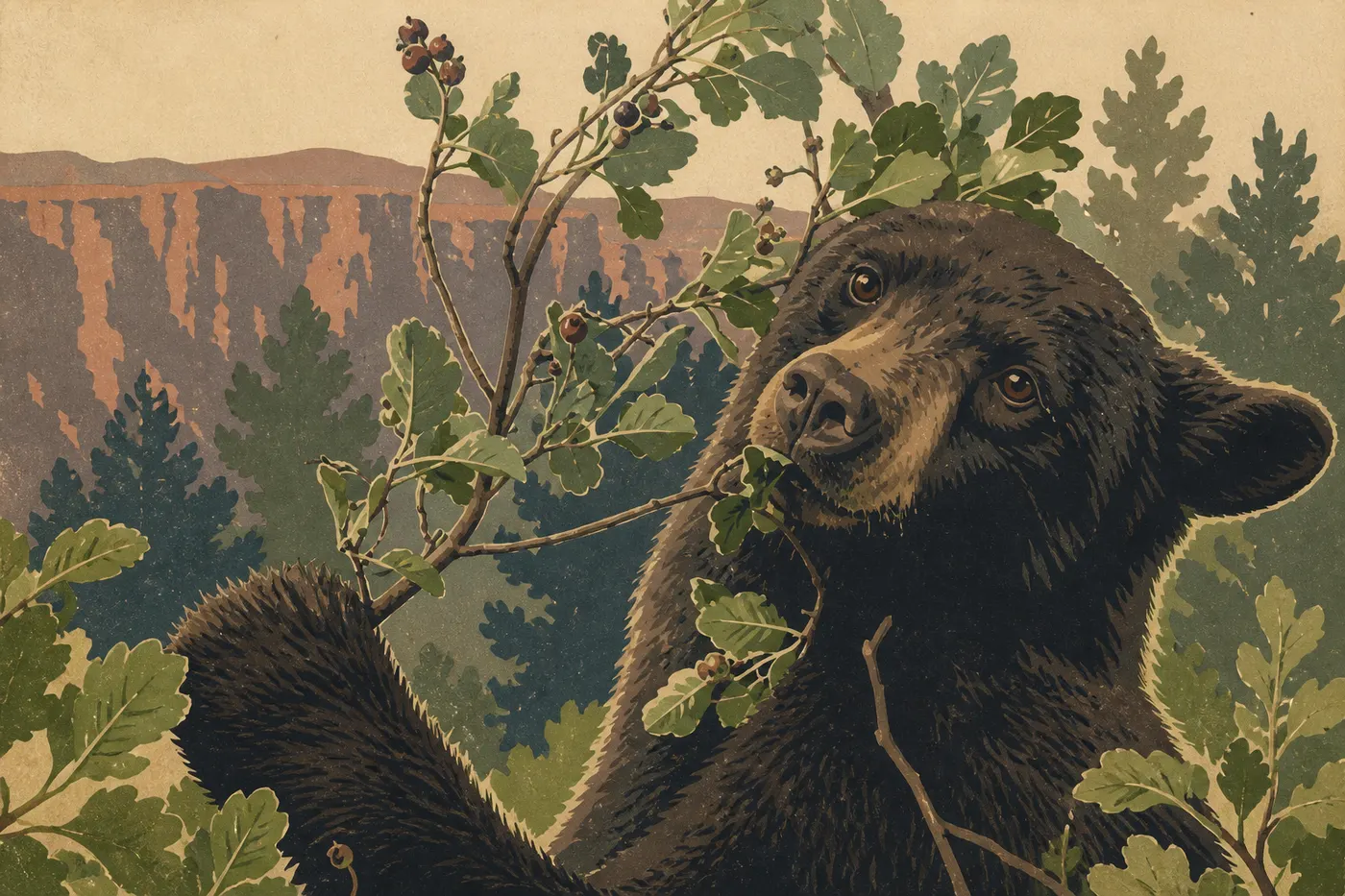
Despite its name, the Black Canyon black bear may be brown, cinnamon, or even blond, depending on the individual. Color isn't a reliable way to identify one. Black bears frequent the North Rim, which is more wooded and less visited than the South Rim, as well as the oakbrush on the middle slopes. Omnivores, they feed mainly on berries, grasses, insects, and carrion, depending on the season. They're active in the park from March through November and hibernate the rest of the year.
Mountain Lion (Puma concolor)
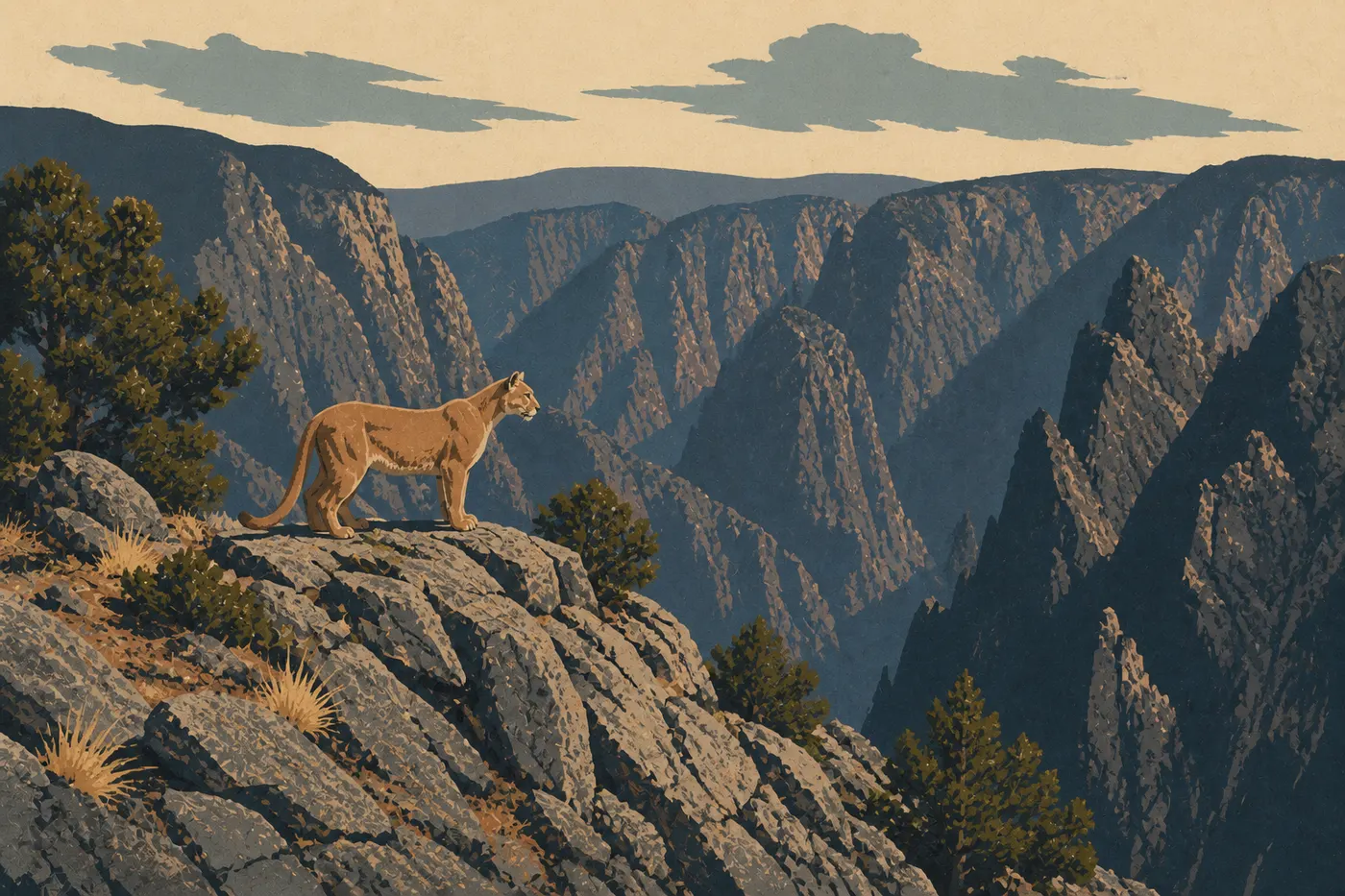
Mountain lions live in the park but are rarely seen face-to-face. These crepuscular and nocturnal hunters are experts at blending into the rocks. They mainly hunt mule deer and help regulate herbivore populations. During our drive on Gunnison Route at dawn, all we found were their round, four-toed tracks with no visible claw marks, a characteristic feline sign. If you catch sight of a tawny, long-bodied shape disappearing between two boulders, that's what you saw. A direct daytime sighting remains rare.
Peregrine Falcon (Falco peregrinus)
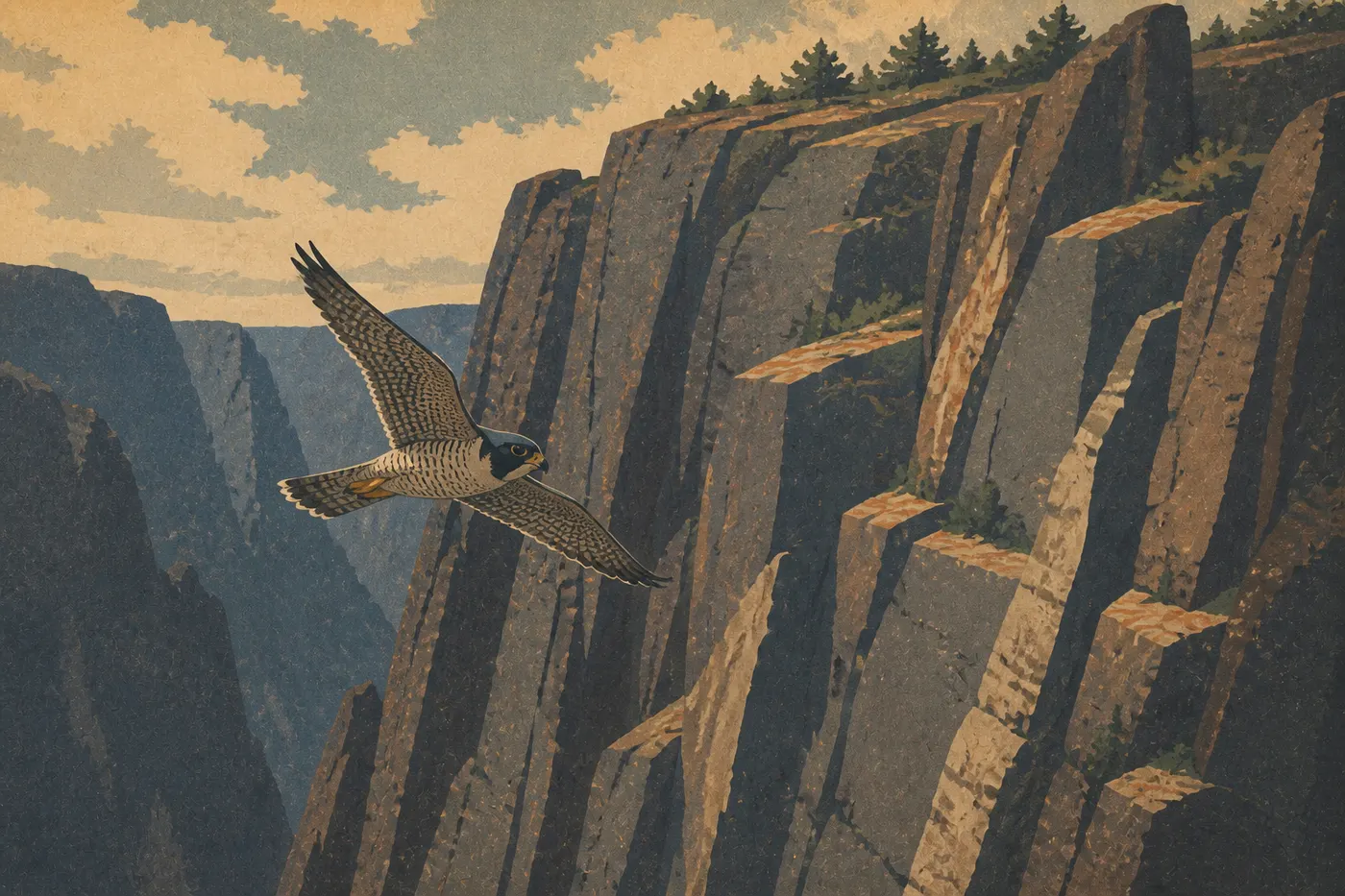
Black Canyon is a confirmed nesting site for peregrine falcons, one of the few birds of prey capable of using walls this steep for nesting. They don't build a nest; they use natural ledges. Their hunting dives can exceed 186 mph. From March through July, the NPS marks areas around nesting sites as closed to access. Respect those restrictions. Binoculars are essential for spotting one. Look for a flash of white and gray skimming the cliffs before pulling up sharply.
Where to See Wildlife in Black Canyon
South Rim: The overlooks at Gunnison Point, Chasm View, and Painted Wall View are the most accessible spots for mule deer and bighorn sheep. In the evening, deer often head down toward the parking areas. The picnic area at High Point produces regular sightings, including nesting songbirds in the pine woods. For trails along the best viewing areas, see our selection of Black Canyon of the Gunnison hikes.
North Rim: More remote and considerably less visited, it offers the best chance of seeing black bears in the dense oakbrush. North Vista Trail follows overlooks above the walls where peregrine falcons nest. You may also see American badgers (Taxidea taxus) and bobcats (Lynx rufus), which are active at dawn. North Rim Road usually closes in mid-November and reopens in early May.
Canyon bottom: The Gunnison River is home to North American river otters (Lontra canadensis), which were reintroduced in Colorado. Seeing one is a privilege. Access to the bottom via Gunnison Route and East Portal is technical and lightly traveled, giving the animals plenty of space. You may also encounter an American dipper (Cinclus mexicanus), a remarkable bird that dives and literally walks along the bottoms of swift streams.
In the air: The walls attract turkey vultures (Cathartes aura), which glide in wide circles at rim level, and black swifts (Cypseloides niger), which nest in vertical cracks.
When to Watch Wildlife in Black Canyon
Dawn and dusk remain the golden hours for mammals. Mule deer and bighorn sheep start moving as soon as the sun comes up. Mountain lions, which are strictly nocturnal and crepuscular, have left the trails long before you arrive if you set out after 8 a.m.
Nocturnal wildlife is abundant. Big brown bats (Eptesicus fuscus) emerge as night falls and hunt insects above the rims. Great horned owls (Bubo virginianus) haunt the cliff edges and give themselves away with a deep hoot after dark. The park is designated as an International Dark Sky area, so the South Rim overlooks are ideal for combining stargazing with listening for nocturnal wildlife.
For a complete month-by-month seasonal guide, see Black Canyon's weather windows and wildlife phenology.
Spring (April-May): Black bears emerge from hibernation, peregrine falcons nest, and bighorn sheep have their young. Summer: All species are active, but afternoon heat, reaching 90°F, drives mammals into the shade between 11 a.m. and 4 p.m. Fall: Mule deer rut in October, making for ideal viewing conditions. Winter: The North Rim closes, while wildlife remains present on the South Rim, which stays open 24 hours a day.
Predators and Large Animals in the Park
The mountain lion is Black Canyon's apex land predator. It regulates mule deer and bighorn sheep populations, maintaining a balance that benefits the ecosystem as a whole. Black bears occupy a similar place, but their mostly plant-based diet gives them a different role: seed dispersers, soil turners, and generous opportunists.
In the air, peregrine falcons dominate the avian food chain. Swainson's hawks (Buteo swainsoni) and golden eagles (Aquila chrysaetos) are also seen above the canyon, especially during spring and fall migration.
The largest land mammal seen in the area is the elk (Cervus canadensis), whose males can weigh 660 pounds. Elk frequent the area around the park and sometimes venture onto the rims in the fall.
Among reptiles, the prairie rattlesnake (Crotalus viridis) lives on sunny slopes. It's venomous but not aggressive if you don't surprise it. Keep at least 6 feet away, and never try to move it or photograph it from close range.
Watching Wildlife Safely
Minimum distances: Keep at least 82 feet away from deer, bighorn sheep, and other herbivores, and at least 295 feet from black bears and mountain lions. The NPS rule of thumb is simple: if an animal changes its behavior by stopping, looking at you, or changing direction, you're already too close. When peregrine falcons are nesting, always stay outside the park's marked areas.
Never feed wildlife: That includes golden-mantled ground squirrels (Callospermophilus lateralis), which are adorable but may carry bubonic plague. Human food conditions animals to approach visitors, which most often leads to euthanasia.
If you encounter a bear: Stay calm, speak in a firm voice, and never run. Back away slowly while facing the bear. If it charges, hold your ground. The vast majority of charges are bluffs. Use bear spray if the distance drops below 16 feet.
If you encounter a mountain lion: Don't run. Make yourself look large by opening your jacket and raising your arms, maintain eye contact, and speak loudly. Pick up children without bending down. If the animal attacks, fight back actively with anything you can reach.
For food storage, camping rules, and complete backcountry safety guidance, see all the information in the Black Canyon of the Gunnison guide.
In short: The five species you shouldn't miss in Black Canyon are bighorn sheep (South and North Rim at dawn), mule deer (ubiquitous and visible at any hour), mountain lions (nocturnal, with signs of their presence more likely than a direct encounter), black bears (North Rim, spring through fall), and peregrine falcons (sheer walls, March through July). An alarm set before sunrise and a pair of 8 x 42 binoculars are the best wildlife-watching gear.
Frequently Asked Questions
What animals live in Black Canyon of the Gunnison?
Black Canyon of the Gunnison is home to about 60 mammal species and more than 170 recorded bird species. The most representative include bighorn sheep, mule deer, black bears, mountain lions, peregrine falcons, river otters at the bottom of the canyon, big brown bats in the evening, and prairie rattlesnakes on sun-exposed slopes.
Are there mountain lions in Black Canyon of the Gunnison?
Yes. Mountain lions are present and are an integral part of the park's food chain. Direct sightings remain rare because they're crepuscular and nocturnal animals that are highly effective at hiding in rocks and brush. NPS camera traps confirm their regular presence.
What's the most common animal in Black Canyon?
Mule deer (Odocoileus hemionus) are the animals you're most likely to see. They're visible on both rims at any time of day, including right next to park facilities.
What's the largest animal in Black Canyon?
The male elk (Cervus canadensis) is the largest mammal seen in the area, weighing up to 660 pounds. Elk mainly frequent the area around the park. On the rims, an adult mule deer, weighing 200 to 330 pounds, is the largest animal you're likely to encounter regularly.
What are Black Canyon's predators?
The main land predators are mountain lions and black bears. In the air, peregrine falcons, golden eagles, and several hawk species help regulate bird and small-mammal populations. The prairie rattlesnake is the only venomous reptile found in the park.
What animals are out at night in Black Canyon?
Mountain lions, big brown bats, great horned owls, bobcats, and various rodent species are mainly active after sunset. The South Rim overlooks at nightfall are ideal for watching bats hunt. The park's quiet and lack of light pollution also make it easier to listen for nocturnal raptors.