
When to Visit Black Canyon of the Gunnison: Best Times, Seasons, and Access
Black Canyon of the Gunnison isn't a park you can visit on a whim. At more than 8,850 feet above sea level on the South Rim, conditions can shift from full sun to hail in less than an hour. Our team has returned several times, in May, September, and the middle of winter, and the conclusion is consistent. The best times to visit Black Canyon of the Gunnison are May-June and September-October. Temperatures are comfortable (50 to 77°F), both rims are accessible, and crowds remain manageable.
There's one key calendar detail to know first: the North Rim road generally closes in mid-November and doesn't reopen until early May. Aside from that limitation, the park is open 24 hours a day, year-round. To plan your entire trip, our complete Black Canyon of the Gunnison guide covers the basics.
Month-by-Month Climate
The park sits in western Colorado, between 7,200 and 8,850 feet above sea level depending on the rim. Daily temperature swings are significant. In summer, expect a 27°F difference between a cool morning and the afternoon peak. In winter, nighttime temperatures regularly fall below 14°F.
The table below gives you the essential reference points. For a 15-day forecast and real-time weather updates before your trip, check our Black Canyon of the Gunnison Weather page.
| Month | High (°F) | Low (°F) | Precipitation | What to Expect |
|---|---|---|---|---|
| January | 36 | 16 | Frequent snow | North Rim closed, very quiet off-season |
| February | 39 | 18 | Possible snow | North Rim closed |
| March | 46 | 25 | Variable | North Rim still closed, strong winds |
| April | 55 | 32 | Showers | North Rim closed (reopens in early May) |
| May | 64 | 39 | Light | Excellent, North Rim accessible |
| June | 75 | 48 | First thunderstorms | Very good, manageable heat |
| July | 84 | 55 | Frequent afternoon thunderstorms | Peak season, watch for storms |
| August | 81 | 54 | Persistent thunderstorms | Biggest crowds, use caution late in the day |
| September | 72 | 45 | Rare | Our favorite |
| October | 59 | 34 | Rare | Fall colors, quiet |
| November | 45 | 23 | Possible snow | North Rim closes mid-month |
| December | 36 | 14 | Frequent snow | North Rim closed, nearly deserted |
Black Canyon Of The Gunnison in January
January is the coldest month in the park. Highs hover around 28°F, and nighttime temperatures reach 9°F. The North Rim has been closed since mid-November, so only the South Rim remains accessible. Crowds are nearly nonexistent, and the nights are among the best in western Colorado for stargazing. The park is a certified Dark Sky Park, with virtually no light pollution. Mule deer frequent the areas around the parking lots, and red-tailed hawks soar over the canyon walls in clear weather.
Black Canyon Of The Gunnison in February
February remains very cold, with daytime temperatures around 34°F and nighttime temperatures around 12°F, and the North Rim stays closed. Snowfall is possible, turning the rims into a monochrome landscape of quiet beauty. Crowds are minimal, and Montrose accommodations offer their lowest rates of the year. Bring light traction devices, waterproof layers, and suitable gloves. Trails can be icy.
Black Canyon Of The Gunnison in March
March is an unpredictable transition month. Days warm to around 43°F, but snow can still fall at higher elevations, and wind gusts along the cliff edge sometimes reach 37 mph. Stay behind the guardrails at all times. The North Rim is still closed. By the very end of the month, the first wildflowers appear at lower elevations. It's a good choice for tight budgets if you bring suitable winter gear.
Black Canyon Of The Gunnison in April
Daytime temperatures rise to 54°F, while nights remain cool at around 28°F. Showers gradually replace snow, cottonwoods begin to bud, and the first flowers cover the rims. The North Rim is still closed and doesn't reopen until early May, depending on remaining snow. Crowds are moderate, and parking lots remain manageable even on weekends. It's a good value for visitors willing to bring shoulder-season gear.
Black Canyon Of The Gunnison in May
May is one of the park's two best windows. Temperatures range from 37 to 64°F, thunderstorms are still rare, and the North Rim generally reopens at the beginning of the month. It's also peregrine falcon nesting season along the vertical walls. If you arrive early at Chasm View or Painted Wall View, you're often rewarded with sightings. Morning light in the canyon creates oblique shadows across the black gabbro that photographers especially seek out.
Black Canyon Of The Gunnison in June
June is excellent for most visitors. Days reach 77°F, nights remain mild at 48°F, and both rims are fully accessible. The first monsoon thunderstorms begin to appear late in the month, especially in the afternoon. Crowds increase but remain lighter than in July and August. Ranger programs begin, and the rim trails are easy to hike without special equipment.
Black Canyon Of The Gunnison in July
July is peak season, with highs around 86°F. The main challenge is the afternoon monsoon pattern. Thunderstorms break over the high country almost every day, sometimes with impressive force. The safety rule is strict: at the first rumble of thunder, leave exposed areas immediately, including rim edges, the canyon bottom, and open ridgelines. Parking lots at the main overlooks are often full before 10 a.m. on weekends. Arrive before 9 a.m. or visit during the week.
Black Canyon Of The Gunnison in August
August is much like July, with daytime temperatures around 82°F, frequent afternoon thunderstorms, and the year's highest crowds. It's the busiest month, especially around Labor Day at the end of the month. Nights remain pleasant at 54°F, making camping comfortable. In the canyon bottom, temperatures run 9 to 18°F warmer than on the rim. Start early and return before 2 p.m.
Black Canyon Of The Gunnison in September
September is our favorite month. Thunderstorms ease noticeably, temperatures are ideal at 41 to 72°F, both rims are open, and crowds drop significantly. Elk enter the rut in the adjacent forested areas, and bears in hyperphagia frequent the edges of the woods. By the end of the month, the first cottonwoods begin to turn yellow. This is the window that checks the most boxes for every type of visitor.
Black Canyon Of The Gunnison in October
October is the month for fall colors. Cottonwoods and stunted oaks on the rims turn gold and orange, and sometimes red depending on elevation. Temperatures ranging from 30 to 57°F make it easier to walk without summer heat. Crowds are moderate, and rates in Montrose start to drop. The North Rim closes in mid-November. If you want to explore it, all of October is the last comfortable window.
Black Canyon Of The Gunnison in November
November marks the start of the off-season. The first snow settles at higher elevations, and temperatures drop to 39°F during the day and 18°F at night. The North Rim closes around mid-November depending on snow conditions. The first two weeks are your last chance to explore it before spring. On the South Rim, the main overlooks remain accessible, but winter gear becomes necessary.
Black Canyon Of The Gunnison in December
December is the quietest month. Temperatures hover around 30°F during the day and drop to 10°F at night. The North Rim is closed, so only the South Rim remains accessible. The park is nearly deserted on weekdays, offering a peaceful and powerful photographic experience with snow on the black gabbro and striking contrasts. Winter nights are among the best in western Colorado for stargazing. Montrose accommodations are at their lowest rates.
Black Canyon by Season
Winter (December, January, February)
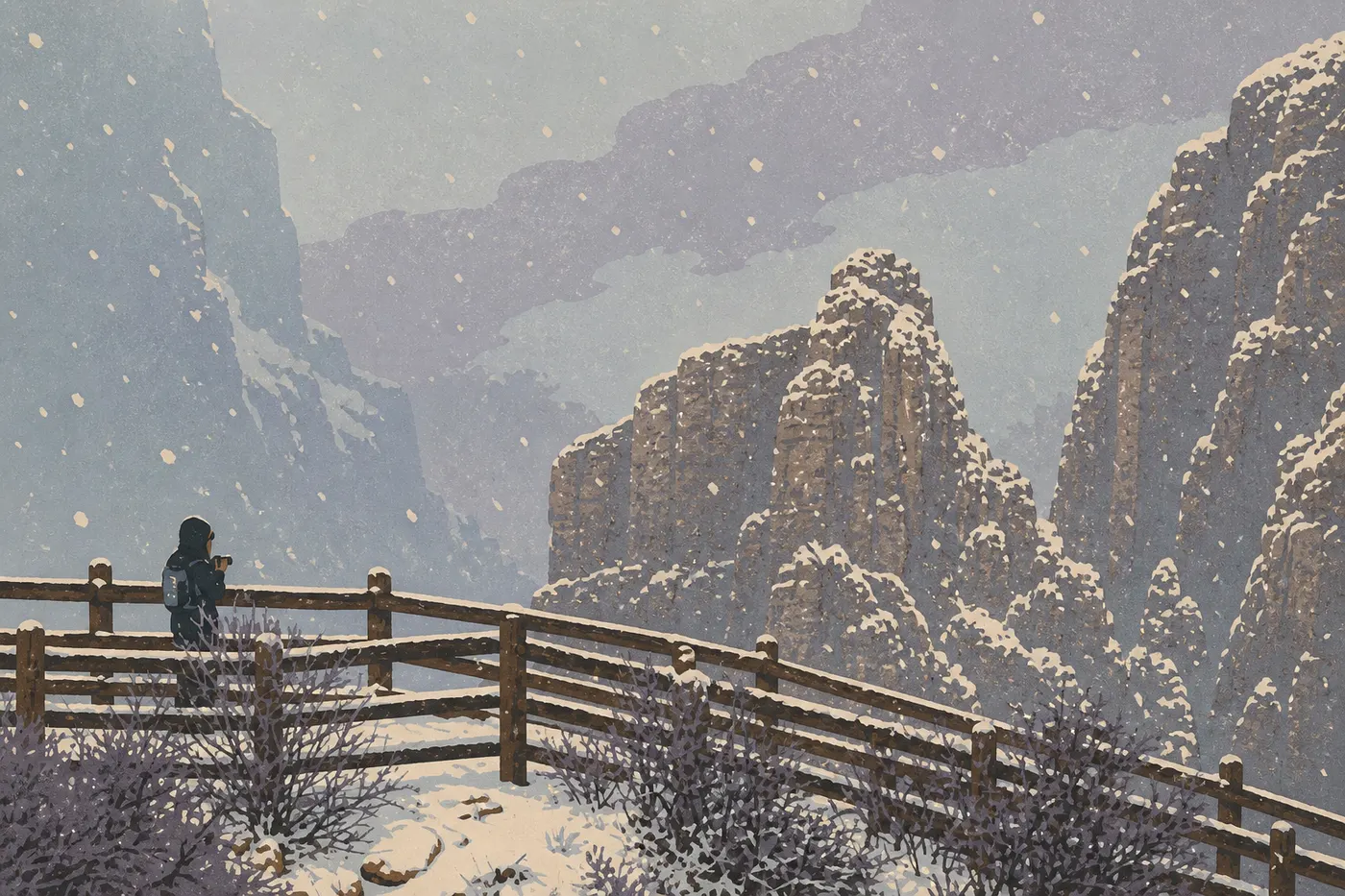
Black Canyon reveals a beauty in winter that few visitors know. Snow-covered and almost silent, it offers an experience far removed from the bustle of summer. The South Rim remains accessible 24 hours a day. After snowfalls, roads in the park are plowed, and you can drive to the main overlooks.
Temperatures are harsh, ranging from 16 to 39°F during the day, with nighttime temperatures dropping to 10°F. Proper gear is nonnegotiable: light traction devices for icy trails, waterproof layers, and suitable gloves. The North Rim has been closed since mid-November.
Wildlife-wise, mule deer frequent the areas around the parking lots, and red-tailed hawks soar over the canyon in clear weather. For stargazers, winter is the prime season. The park is a certified Dark Sky Park, and its light-pollution-free nights are among the finest in western Colorado.
Crowds: nearly nonexistent; Montrose accommodations offer their lowest rates.
Spring (March, April, May)
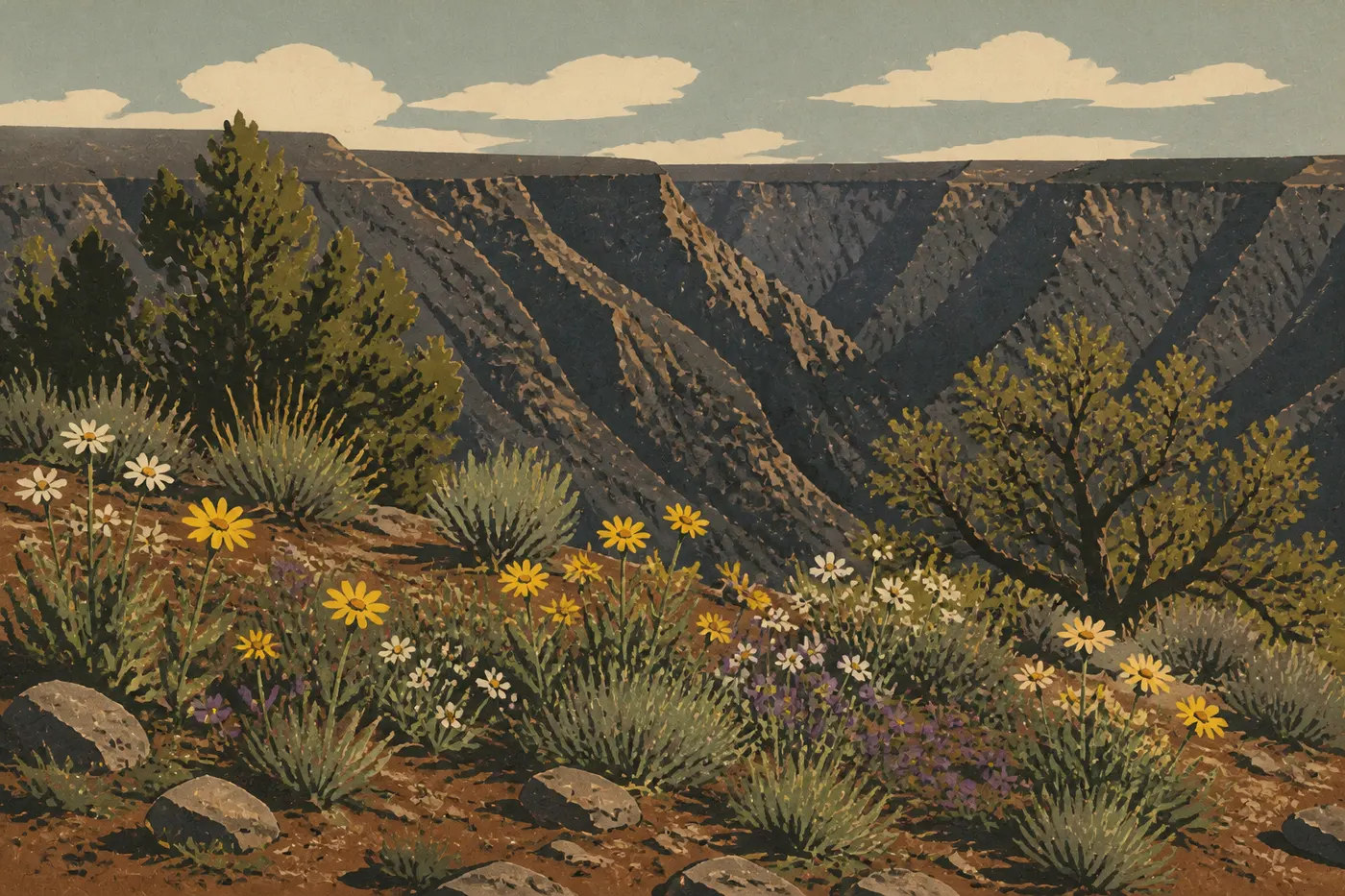
The canyon wakes up gradually. In March, snow still has a say at higher elevations, and wind gusts along the cliff edge can exceed 37 mph. Stay behind the guardrails at all times. April warms slowly, showers replace snow, and the first wildflowers appear at higher elevations.
May changes everything. North Rim Road reopens, generally in early May depending on remaining snow, temperatures range from 39 to 64°F, and thunderstorms are still rare. When we visited in May, the morning light in the canyon was made for photography, with long oblique shadows across the black gabbro and near-total silence.
Spring is also peregrine falcon nesting season along the vertical walls. Arrive early at Chasm View or Painted Wall View, and you're often rewarded with sightings.
Summer (June, July, August)
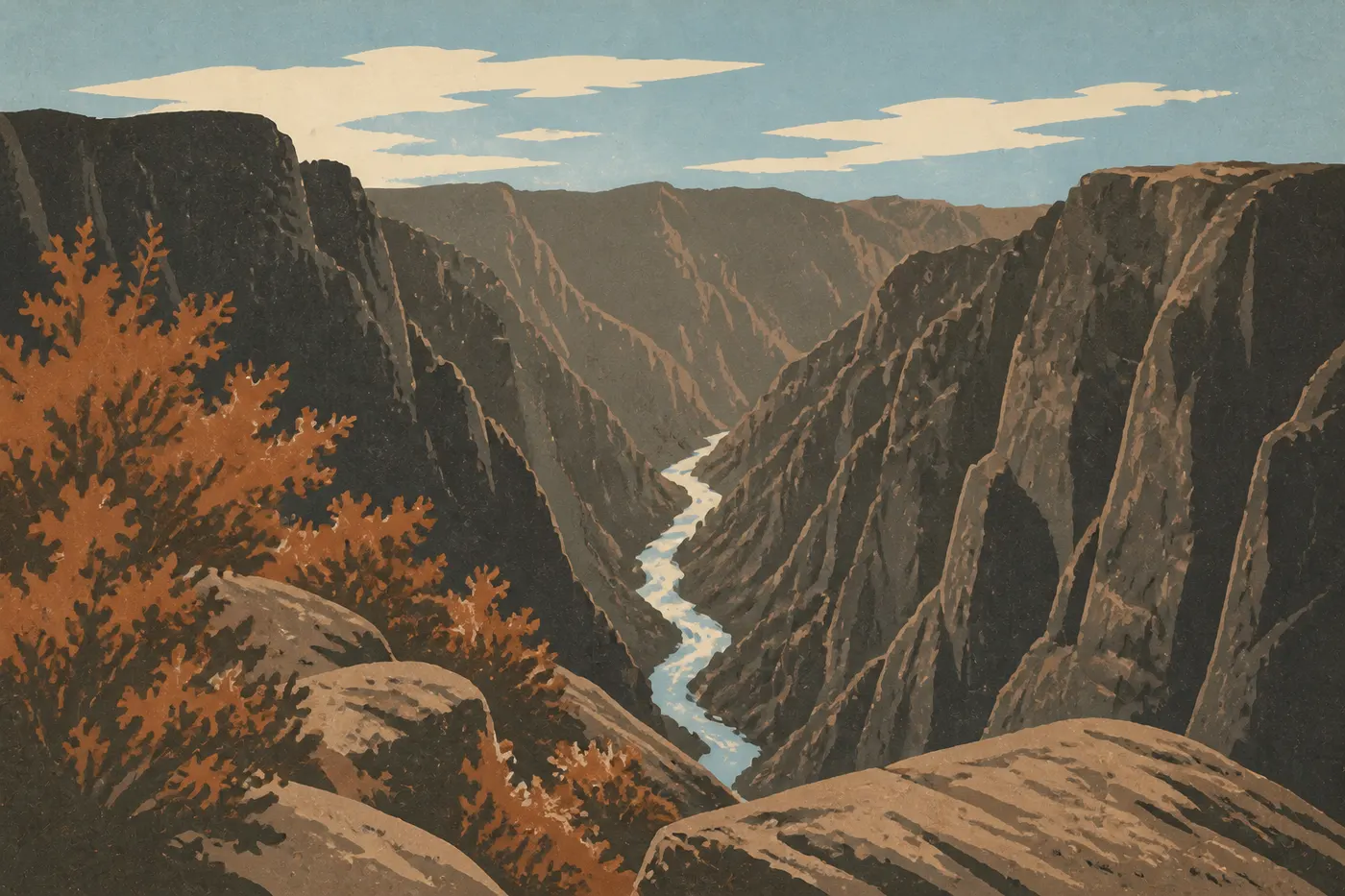
In summer, the park runs at full capacity. Days are long and hot, reaching 84 to 90°F in July, the main overlook parking lots fill by 10 a.m. on weekends, and the North Rim is open and accessible.
The main phenomenon to anticipate is the monsoon thunderstorms. Every afternoon in July and August, cumulonimbus clouds form over the high country and storms break out, sometimes with impressive force. The safety rule is strict: if you can hear thunder, leave exposed areas immediately, including rim edges and the canyon bottom. Lightning along the rock walls and open ridgelines poses a real danger.
Nights remain pleasant at 45 to 55°F, making camping a comfortable option. Sunrise from Gunnison Point or Dragon Point is well worth a 5 a.m. wake-up.
Fall (September, October, November)
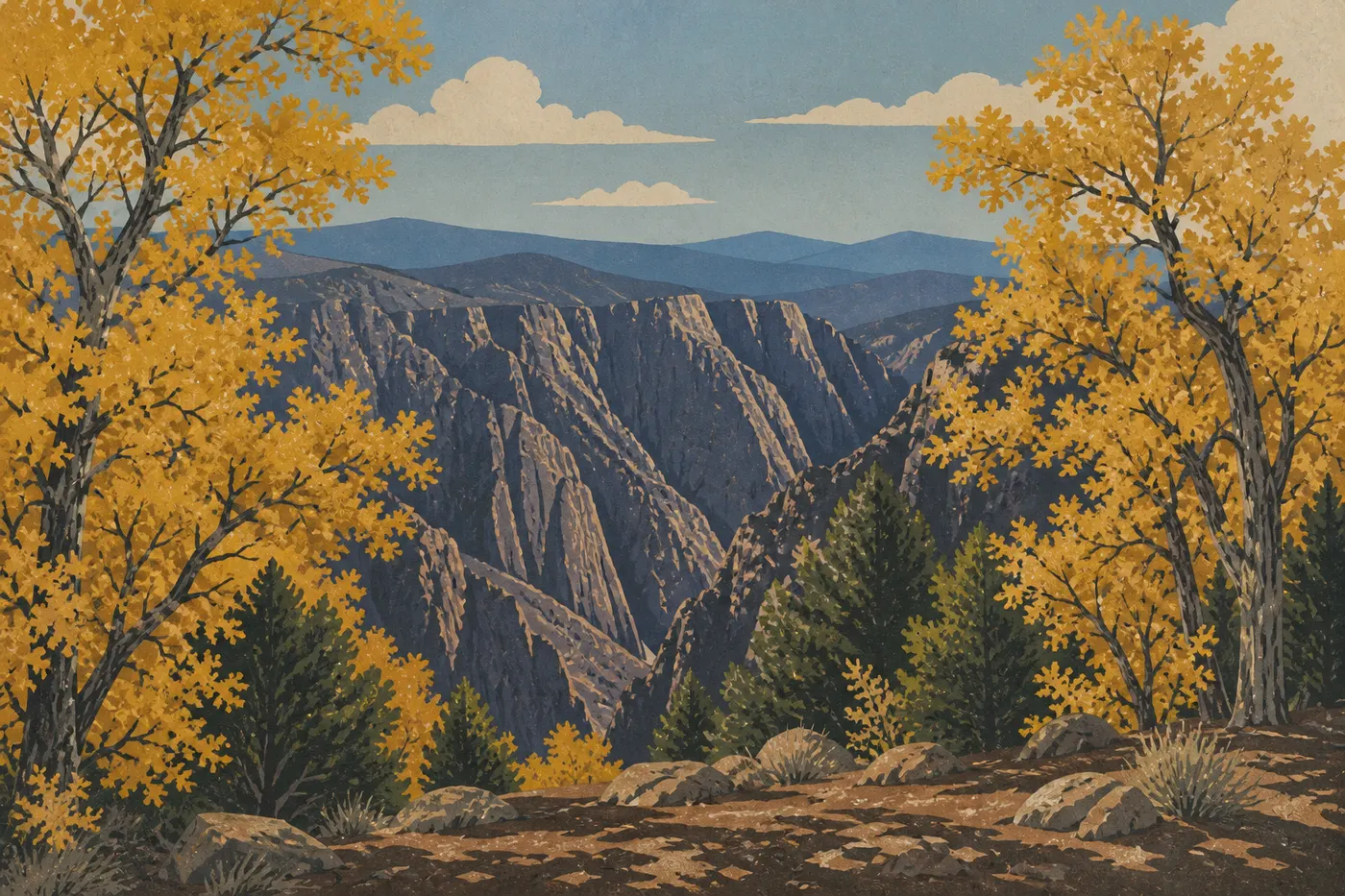
This is our favorite window. September combines the last of summer's mild weather with the gradual disappearance of thunderstorms. October brings the colors of cottonwoods and stunted oaks on the rims: gold, orange, and sometimes red depending on elevation. Temperatures ranging from 34 to 59°F, depending on the half of the month, invite you to walk.
Wildlife is especially active in fall. Elk enter the rut in the adjacent forested areas, black bears in hyperphagia frequent the edges of the woods, and mule deer are particularly easy to spot on both rims. For the most reliable viewing areas, the Black Canyon wildlife guide provides reference points by species and season.
The North Rim closes in mid-November. If you plan to explore it, aim for September or October, not later.
Crowds: When to Avoid Them
Black Canyon gets fewer visitors than Arches or Zion, but peak season is very real. The high point falls in July and August, with a notable increase on the weekends around July 4 (Independence Day) and Labor Day, the first Monday in September.
Here are the patterns by season:
- Very light crowds (December to March): the overlooks can be completely deserted on weekdays.
- Moderate crowds (April-May, October-November): the main parking lots fill by midmorning on weekends; arrive before 9 a.m.
- Peak season (June to August): on weekends, the Gunnison Point parking lot is often full before 10 a.m. Weekdays are much more comfortable.
Our advice works year-round: arrive at opening time or in the late afternoon. The light is better on the canyon walls, and parking spaces start opening up after 5 p.m.
Access and Roads by Season
Black Canyon of the Gunnison doesn't use a timed entry system. There's no required slot on Recreation.gov. You pay at the entrance: $30 per private vehicle, $15 per pedestrian or bicyclist, and $25 per motorcycle. The park's annual pass costs $55. For entrance fees and annual passes, the National Parks Fees & Passes page provides the key details.
The seasonal issue to watch is the North Rim. Its road closes in mid-November and doesn't reopen until early May, depending on snow conditions. Check opening conditions on the NPS website or call the visitor center before planning a late-spring or late-fall visit to the North Rim.
The South Rim is accessible year-round, but from November through March, a heavy snowfall can make park roads slippery for several hours before they're plowed. Winter tires or chains are recommended if you're visiting in the middle of winter.
For inner canyon routes, free self-registration at the South Rim visitor center is required before you set out. This isn't an online reservation, but a safety measure that lets staff locate you in case of an incident. For the full procedure and North Rim access, the Black Canyon of the Gunnison access guide covers both rims.
Best Time for Your Budget
The park itself is affordable at $30 per vehicle, but accommodations in Montrose, the main base 9 miles from the South Rim, are subject to seasonal pricing.
Off-season (December to March): Montrose hotels offer their lowest rates, and flights to Grand Junction, the closest airport about 56 miles away, cost less. The tradeoff is a closed North Rim and winter conditions to manage.
Shoulder season (April-May, October-November): the best value. Prices are in the middle range, visiting conditions are often better than in summer, and parking lots stay calm.
Peak season (June to September): accommodations in Montrose and Gunnison book several weeks ahead in July and August. If you're visiting in summer, book early. To compare hotels, lodges, and camping options, the Black Canyon of the Gunnison lodging guide covers every option for your budget.
When to Go Based on Your Interests
Hiking and the canyon bottom: May or September. Temperatures in the canyon run 9 to 18°F warmer than on the rim. In July, steep, unmarked descents are strenuous. For routes by difficulty and season, the Black Canyon hiking guide covers every trail.
Photography: the warm glow of low morning and evening light works in any month. In October, fall colors add a warm palette. In winter, snow on the black gabbro creates striking contrasts.
Wildlife viewing: spring, for nesting peregrine falcons and active mule deer, and fall, for elk in the rut and bears before hibernation. Check our Wildlife page for areas and times by species.
Families with children: June or early September, preferably on weekdays. Rim trails work well for children, ranger programs run in summer, and temperatures avoid the extremes. For kid-friendly activities and precautions along the cliff edges, the Black Canyon of the Gunnison family guide lists the essentials.
Tight budget: March-April or October-November. Fewer people, cheaper accommodations, and scenery that holds its own against peak season.
Stargazing: November through February. Certified Dark Sky skies, virtually no light pollution, and remarkably clear winter nights.
In Summary: The Best Time Based on Your Interests
| Interest | Recommended Months |
|---|---|
| Hiking and the canyon bottom | May, September |
| Photography | October, May; dawn and dusk year-round |
| Wildlife | April-May, September-October |
| Families | June or September (weekdays) |
| Budget | March-April, October-November |
| Stargazing | November through February |
| Avoiding crowds | Weekdays outside July-August |
Our overall verdict: September checks the most boxes. Thunderstorms ease, the light is beautiful, both rims are open, and crowds thin out. If you can only come in the middle of summer, visit on a weekday and reach the overlooks before 9 a.m.
For a day-by-day itinerary, see our Itinerary & Length of Stay page, which lays out one- or two-day plans depending on your pace.
The Worst Time to Visit Black Canyon Of The Gunnison
July and August combine the biggest drawbacks. Temperatures in the canyon bottom run 9 to 18°F warmer than on the rim, reaching as high as 95 to 104°F for hikers descending on inner canyon routes. Monsoon thunderstorms break out every afternoon with enough regularity to disrupt your plans. Rim edges and canyon descents become dangerous at the first rumble of thunder. On the South Rim, parking lots at the main overlooks are often full before 10 a.m. on weekends.
The July 4 weekend (Independence Day) and Labor Day weekend, the first Monday in September, are the two absolute peaks of the year. If you can't avoid these periods, arrive before dawn, avoid canyon-bottom trails in the afternoon, and accept that the main overlooks will be crowded. For most visitors, there's a much more comfortable alternative: May or September offer significantly better conditions with far fewer people.
Frequently Asked Questions
What is the best time to visit Black Canyon of the Gunnison?
The best times to visit Black Canyon of the Gunnison are May-June and September-October. These months combine comfortable temperatures (50 to 75°F), access to both rims, and moderate crowds. For a winter visit, the South Rim stays open year-round, but the North Rim closes from mid-November to early May.
Is Black Canyon worth visiting?
Black Canyon of the Gunnison is well worth the trip. Its vertical walls plunge more than 1,970 feet into a canyon so narrow that some sections see sunlight for only about 30 minutes a day. No photo really conveys the effect. You have to stand at the cliff edge to grasp its scale.
What's the climate like at Black Canyon of the Gunnison?
Black Canyon of the Gunnison has a high-elevation continental climate. Summer days are hot, reaching 86 to 90°F, with frequent afternoon thunderstorms from July through August. Winters are cold and snowy, with nighttime temperatures dropping to 10°F. Spring and fall offer the most stable conditions.
How long do you need to visit Black Canyon of the Gunnison?
Plan on a full day for the South Rim overlooks and rim trails. Two days let you add the North Rim, which is open from May to mid-November, and, for experienced hikers, a descent into the canyon bottom. Our Itinerary & Length of Stay page offers detailed plans based on your available time.
Can you visit Black Canyon of the Gunnison in winter?
Yes. The South Rim is accessible 24 hours a day year-round, including in January and December. The North Rim is closed from mid-November to early May. In winter, the park is nearly deserted, South Rim overlooks are plowed after snowfalls, and the nights are exceptional for stargazing in this certified Dark Sky Park. Bring light traction devices, waterproof layers, and sturdy shoes. Trails can be icy.
What is the least crowded month?
December and January are the least crowded months. The overlooks can be completely deserted on weekdays, and Montrose accommodations offer their lowest rates of the year. If you're looking for quiet without the most extreme cold, March and November also offer very light crowds with less demanding conditions.
When is peak season at Black Canyon of the Gunnison?
Peak season covers July and August, with two additional spikes around July 4 and Labor Day, the first Monday in September. In July and August, the main South Rim overlook parking lots are often full before 10 a.m. on weekends, and Montrose accommodations book several weeks ahead. Even in the height of summer, weekdays are much more comfortable.
What's the best season to visit the American West?
The best seasons to visit the American West are late spring, from May through June, and fall, from September through October. They avoid both summer's extremes and winter road closures. To plan a Colorado road trip that links several parks, our Road Trips and Regions guides provide the logistical reference points.