
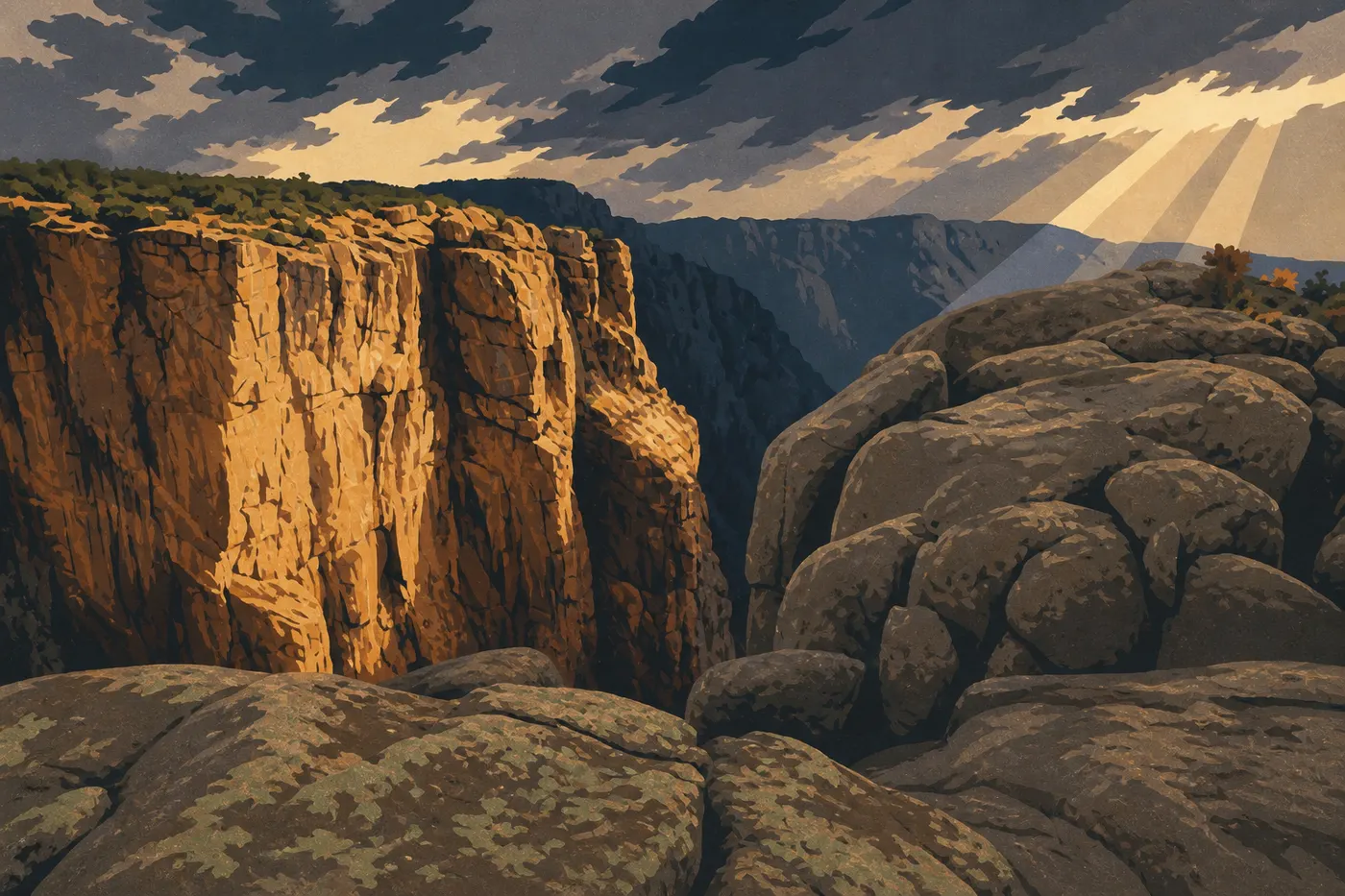
Black Canyon of the Gunnison Weather: Forecasts, Climate and Current Conditions
Black Canyon of the Gunnison sits more than 8,900 feet above sea level in the Colorado Rockies. That elevation changes everything. Summer days are warm, but nights stay cool. Winters are harsh, and the temperature swing between morning and afternoon can exceed 27°F even in the middle of July. In short, this is a dry continental climate with sharp contrasts, so you should always take the weather seriously.
Current readings are unavailable. See the seasonal averages farther down this page.
Open-Meteo readings · updating… · park time zone
Black Canyon of the Gunnison Climate Month by Month
The table below brings together climate normals for the canyon's south side (South Rim, about 8,900 feet). Use these figures as your planning baseline. They show what you'll typically find outside of exceptional weather events.
| Month | High | Low | Precip. |
|---|---|---|---|
| January | 28°F | 9°F | 30 mm |
| February | 34°F | 12°F | 25 mm |
| March | 43°F | 19°F | 35 mm |
| April | 54°F | 28°F | 40 mm |
| May | 64°F | 37°F | 45 mm |
| June | 77°F | 48°F | 35 mm |
| July | 86°F | 55°F | 55 mm |
| August | 82°F | 54°F | 55 mm |
| September | 72°F | 41°F | 40 mm |
| October | 57°F | 30°F | 35 mm |
| November | 39°F | 18°F | 30 mm |
| December | 30°F | 10°F | 28 mm |
July is the hottest month and also the wettest. The Southwest monsoon drives up precipitation totals with severe thunderstorms late in the morning. January brings the lowest temperatures, with nights regularly dropping below 14°F along the canyon rims.
Is Black Canyon of the Gunnison Cold? Records and Extremes
Yes, and often more than you expect. At 8,900 feet, the park is significantly colder than Montrose, the nearest town at 5,740 feet and 11 miles away. The daily temperature range can be surprising for visitors. In July, the same day can start at 50°F at dawn and peak at 86°F in midafternoon. In winter, wind makes the open canyon rims feel even colder, and there isn't any natural shelter.
What to Wear by Season
The absolute rule at Black Canyon is to dress in layers year-round.
Winter: An insulated coat such as a parka, long thermal base layers, waterproof gloves, and a warm hat are essential. Rim trails can be icy, so microspikes are strongly recommended, especially on shaded sections.
Spring: Wear a waterproof windbreaker as your outer layer, with a fleece or sweater underneath. Always bring an extra layer for cold mornings, which can catch you off guard in April.
Summer: Wear a breathable T-shirt and lightweight pants in the morning, and pack a light rain jacket for afternoon thunderstorms. It's essential starting in July. A hat, sunglasses, and SPF 50+ sunscreen are nonnegotiable at this elevation. Bring at least 2 liters of water per person. Colorado's dry air dehydrates you much faster than you might expect.
Fall: Follow the same approach as in spring, with colder conditions starting in October. By November, gloves and a warm hat are necessary again for morning outings.
Alerts and Conditions to Watch
Summer thunderstorms (July to mid-August): Cumulonimbus clouds can form above the Rockies in less than an hour. Stay off ridges and away from isolated trees as soon as the sky darkens to the west. On trails descending into the canyon, the climb back up takes longer than the descent. Plan to be back at the rim before 1 p.m.
Snow and ice (November to March): North Rim Road is officially closed from mid-November to early May. On South Rim, roads and parking areas can be icy even in the middle of the day. Check current conditions on the NPS website before you leave.
Heat at the bottom of the canyon: Trails that descend into the canyon, including Gunnison Route, expose you to much more extreme conditions than at the rim, especially in summer. Start early, carry more water than you think you'll need, and check trail conditions ahead of time. The Black Canyon of the Gunnison hiking guide explains the difficulty levels and actual climb-out times for each descent into the canyon.
Emergency closures: The NPS posts real-time alerts on its status page. A heavy snowfall can close trails or the access road without notice.
Frequently Asked Questions
What's the weather like at Black Canyon of the Gunnison right now?
Weather at Black Canyon of the Gunnison varies widely by season and time of day. For current conditions, check the forecast widget on this page. To plan ahead, the monthly table above shows seasonal normals.
Is Black Canyon of the Gunnison cold?
Yes. At 8,900 feet, winters are harsh, with nighttime temperatures reaching 9°F. Even in midsummer, nights and mornings stay cool, at 45°F to 61°F according to the NPS. Layers are essential year-round.
What should I wear to visit Black Canyon of the Gunnison?
Wear layers suited to the season year-round. In summer, a rain jacket in your pack is essential starting in July for afternoon thunderstorms, along with a hat and SPF 50+ sunscreen. In winter, an insulated coat, gloves, and microspikes are necessary on icy trails.