
Camping in Big Bend: 4 Campgrounds, Reservations, and Fees
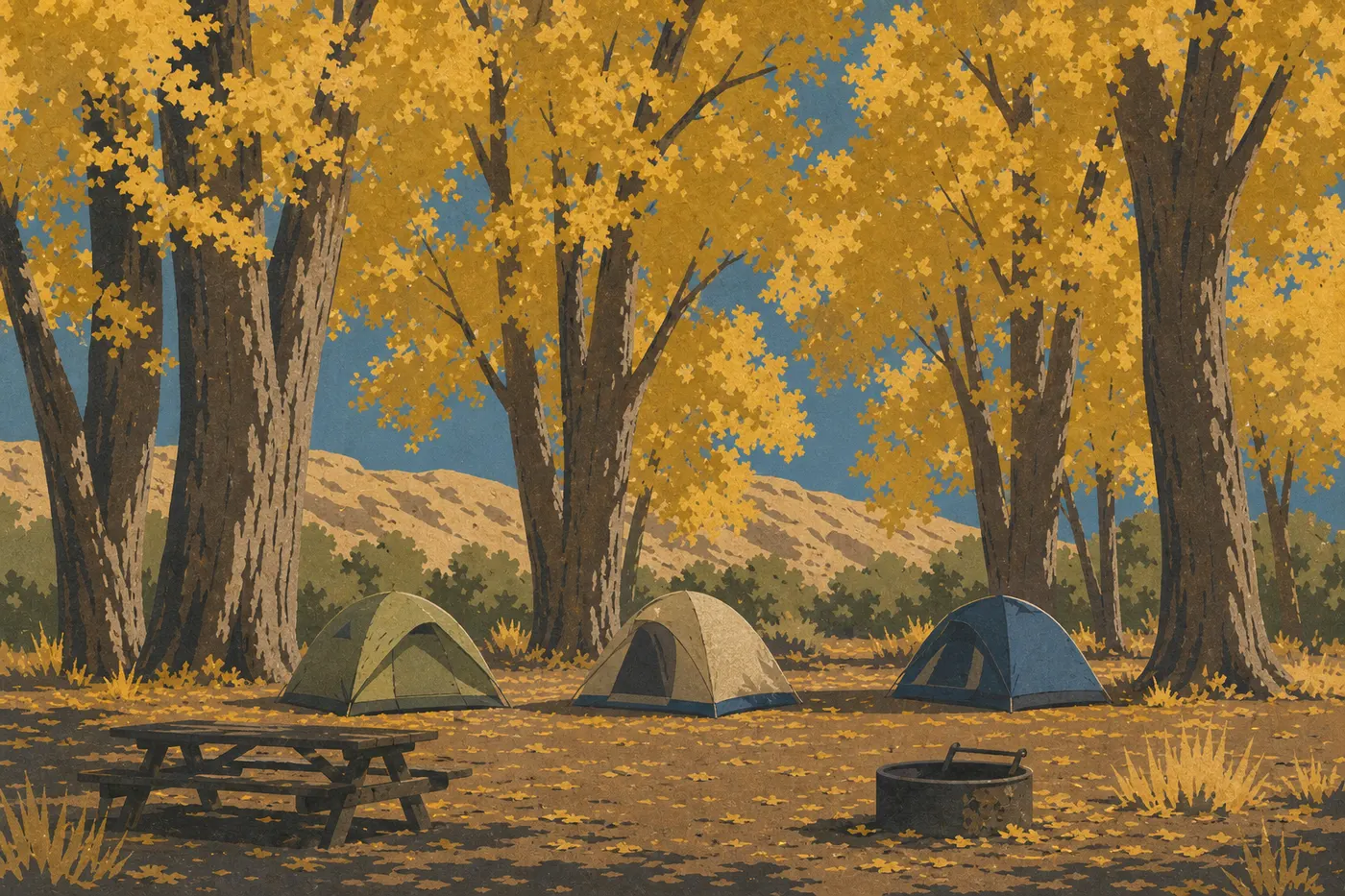
Big Bend offers four developed campgrounds inside the park, an extensive network of primitive backcountry sites, and private options just outside the desert. The short answer is yes, you can camp in the park, with 196 sites spread across four official campgrounds. Every site requires a reservation; there are no first-come, first-served sites. The predictable cost is $16 per night at the three campgrounds managed by the NPS, and $36 at the concession-operated campground with full hookups.
Campgrounds in the park (4)
- Campground Chisos Basin Campground recreation.gov · 56 sites Directions ↗
- Campground Rio Grande Village Campground recreation.gov · 93 sites Directions ↗
- Campground Cottonwood Campground recreation.gov · 22 sites Directions ↗
- Campground Rio Grande Village RV see NPS · 25 sites Directions ↗
 Base map © OpenStreetMap · © CARTO
 Big Bend campgrounds by the numbers
4 official campgrounds inside the park, 196 campsites in total, 196 of them reservable.
| Campground | Sites | Booking | Fee / night | Open | Amenities |
|---|---|---|---|---|---|
| Rio Grande Village Campground | 93 (4 group) | Reservation | from $16 | Year round | toilets, showers, potable water, dump station, camp store, bear lockers |
| Chisos Basin Campground | 56 (7 group) | Reservation | from $16 | Year round | toilets, potable water, dump station, camp store, bear lockers, cell service |
| Rio Grande Village RV | 25 (25 RV only, 25 electric hookups) | Reservation | from $36 | Year round | toilets, showers, potable water, dump station, camp store |
| Cottonwood Campground | 22 (1 group) | Reservation | from $16 | Closed May 1 to Oct 31 | toilets, potable water, camp store, bear lockers |
Source: National Park Service (NPS API), retrieved October 6, 2026. Fees and dates change: check the campground page before you go.
Can you camp inside Big Bend?
Yes, without any special restrictions. Big Bend National Park is open 24 hours a day, 365 days a year, including its entrances. Camping in the park is legal and the best way to immerse yourself in the landscape. There's one nonnegotiable rule: stay in a designated site or, in the backcountry, carry a valid permit. Camping outside authorized areas isn't allowed.
Campgrounds inside the park
Chisos Basin Campground
At 5,400 feet in the Chisos Mountains, this campground has one major advantage in summer: cooler temperatures. It's typically 18 to 27°F cooler than the desert below. The 56 sites, including 7 group sites, accommodate tents and RVs, with one important limitation: the winding access road limits vehicles to 24 feet in total length, including the tow vehicle and trailer. The campground has restrooms, running water, a dump station, a store, cell service, and bear-proof storage lockers. It's open year-round. Reservations are required through Recreation.gov.
Rio Grande Village Campground
At the bottom of the valley, along the Rio Grande and just a short distance from the Mexican border, this area has two sections with different fees and amenities.
The NPS-managed section has 93 sites, including 4 group sites, at $16 per night, with no electrical hookups. Amenities include restrooms, showers, running water, a dump station, a store, bear-proof storage lockers, and a laundry. During the high season from November through April, the campground runs at full capacity. In summer, extreme heat forces the NPS to reduce the number of open sites, so check availability. Reservations are required through Recreation.gov.
The concession area, Rio Grande Village RV, is operated by Chisos Mountains Lodge. It has 25 sites with full hookups, including water, electricity, and sewer, for $36 per night. Vehicles up to 38 feet are accepted. It has the same amenities as the NPS section, plus internet access. Reserve through chisosmountainslodge.com.
Its proximity to Boquillas Canyon makes this area an excellent base for exploring the eastern part of the park.
Cottonwood Campground
West of the park near Castolon, this 22-site campground, including 1 group site, is open only from November 1 through April 30. Extreme heat forces it to close from May through October. There are no electrical hookups, showers, or dump station. Available amenities are limited to restrooms, water, bear-proof storage lockers, and a nearby store. Reservations are required through Recreation.gov, up to 14 days before arrival.
RV vs. tent camping: which site should you choose?
If you're traveling in an RV or camper van, the right destination depends on your vehicle's length. Rio Grande Village RV accepts vehicles up to 38 feet and offers full hookups for $36 per night, making it the easiest option for large vehicles. Rio Grande Village Campground, the NPS section, works for RVs without hookups. Chisos Basin has a 24-foot total length limit, including the tow vehicle and trailer, but offers the most comfortable temperatures in summer. Cottonwood isn't suitable for RVs and closes from May through October. For questions about driving on park roads, dumping tanks, and getting water, see the Big Bend RV camping guide.
Tent campers can choose among the four campgrounds. Chisos Basin offers the best balance of comfort and scenery; Cottonwood appeals to travelers packing light, as long as they visit between November and April.
Camping nearby: campgrounds outside the park
When the park is full, the immediate area offers solid alternatives. In Study Butte, Big Bend Station has a small RV park with hookups, which is useful for RV travelers who arrive too late to reserve a site at Rio Grande Village. Farther west along FM 170, Big Bend Ranch State Park offers primitive sites in a dramatic setting, managed by Texas State Parks. The towns of Alpine and Marfa, an hour to an hour and a half away, add more campgrounds and RV parks. For rooms and lodge options, Big Bend hotels and lodges and the Big Bend lodging guide cover the full range.
Backcountry camping and wilderness camping
Big Bend is one of the few parks where backcountry camping remains accessible and lightly visited. It's allowed, but you need a required permit. You can get one at Panther Junction Visitor Center or at the park's smaller ranger stations for a modest fee. Primitive sites are scattered through the Chihuahuan Desert and the Chisos Mountains, with no infrastructure or services. Plan on at least 4 liters of water per person per day in summer, and more if you'll be doing strenuous activity. Routes and backcountry zones are detailed in the Big Bend hiking guide.
How and when to reserve a campsite in Big Bend
Reservations are required at all four campgrounds in the park. For Chisos Basin Campground and Rio Grande Village Campground, reservations open on Recreation.gov six months before your arrival date. Cottonwood Campground is also reserved through Recreation.gov, but only up to 14 days in advance. Rio Grande Village RV uses the concession's website, chisosmountainslodge.com. Be ready when reservations open if you're aiming for March or April: Chisos Basin fills within hours. Fall and winter, from November through February, are pleasant and far less crowded. Remember that Cottonwood closes every year on April 30. To find the best weather window, see the guide to when to visit Big Bend.
Fees: how much does a night of camping cost in Big Bend?
| Campground | Site type | Fee |
|---|---|---|
| Chisos Basin Campground | Standard (tent / RV up to 24 feet) | $16/night |
| Rio Grande Village Campground | Standard (tent / RV), no hookups | $16/night |
| Rio Grande Village RV | Full hookups (water, electricity, sewer) | $36/night |
| Cottonwood Campground | Standard (tent), Nov. to Apr. | $16/night |
| Backcountry | Permit per group | Pay at the visitor center |
These fees are separate from the park entrance fees, which are $30 per private vehicle or $15 per person entering on foot or by bicycle. The America the Beautiful Pass costs $80 per year, covers admission to all federal recreation sites, and pays for itself after your second park visit of the year. Our national parks fees and passes page explains entrance fees and the different passes.
Safety and best practices
Heat comes first. From May through August, temperatures in the Chihuahuan Desert regularly climb above 100 to 104°F by midmorning. Plan activities before 10 a.m. or after 5 p.m., carry at least 2 liters of water per hour of exertion, and never head out without a hat and sun protection.
Scorpions and snakes. Big Bend is home to the Arizona bark scorpion and several rattlesnake species, including the western diamondback. Always shake out your shoes and clothing before putting them on, and don't reach under rocks or into crevices.
Handling food. Black bears live in the park, especially around the Chisos area. Storing food in your vehicle's trunk or in the lockers provided at campgrounds isn't optional. Javelinas and raccoons are also highly opportunistic after dark. In the backcountry, a bear canister or a proper hang is essential. To learn more about local wildlife, see the Big Bend wildlife guide.
The Rio Grande. Don't swim across the river from Rio Grande Village. The international border runs through the middle of the river, and the current can be deceptive. The official ferry crossing to Boquillas, Mexico, is the only legal option.
Which campground is right for you?
You're tent camping and want scenery: Chisos Basin. Reserve as soon as the six-month window opens on Recreation.gov.
You're in a large RV: Rio Grande Village RV, with full hookups for $36 per night and room for vehicles up to 38 feet.
You want solitude: Cottonwood, available only from November through April with reservations up to 14 days in advance, or the backcountry. Come on a weekday outside March and April.
You're traveling with kids: Rio Grande Village Campground, which is easier to reach and has better amenities. The Big Bend family guide will point you toward age-appropriate activities.
Need a big-picture plan for your trip? Our complete Big Bend guide brings together everything from budget to itinerary.
Frequently asked questions
Can you go backcountry camping in Big Bend National Park?
Yes. Backcountry camping is allowed in Big Bend as long as you obtain a required permit from Panther Junction Visitor Center or a smaller park ranger station before setting out. Without this permit, spending the night outside a designated site isn't allowed.
Do you need a permit to camp in Big Bend?
A permit is required only for backcountry camping. For the park's four developed campgrounds, Chisos Basin Campground, Rio Grande Village Campground, Rio Grande Village RV, and Cottonwood Campground, no permit is needed, but every site requires a reservation. Use Recreation.gov for the three NPS campgrounds and the Chisos Mountains Lodge concession website for Rio Grande Village RV.
Does Big Bend offer RV hookups?
Yes. Rio Grande Village RV, operated by the Chisos Mountains Lodge concession, has 25 sites with full hookups, including water, electricity, and sewer, for $36 per night. It accommodates vehicles up to 38 feet. Chisos Basin Campground also accepts RVs, but total length can't exceed 24 feet, including the tow vehicle and trailer. Reserve through Recreation.gov for Chisos Basin and chisosmountainslodge.com for Rio Grande Village RV.
Where do Big Bend visitors stay?
Visitors stay at the park's four campgrounds, at Chisos Mountains Lodge, the only lodging inside the park, or in hotels, motels, and private campgrounds in nearby towns such as Terlingua, Study Butte, Alpine, and Marfa. Our Where to stay guide covers all the options.