
Big Bend National Park: The Complete Visitor Guide
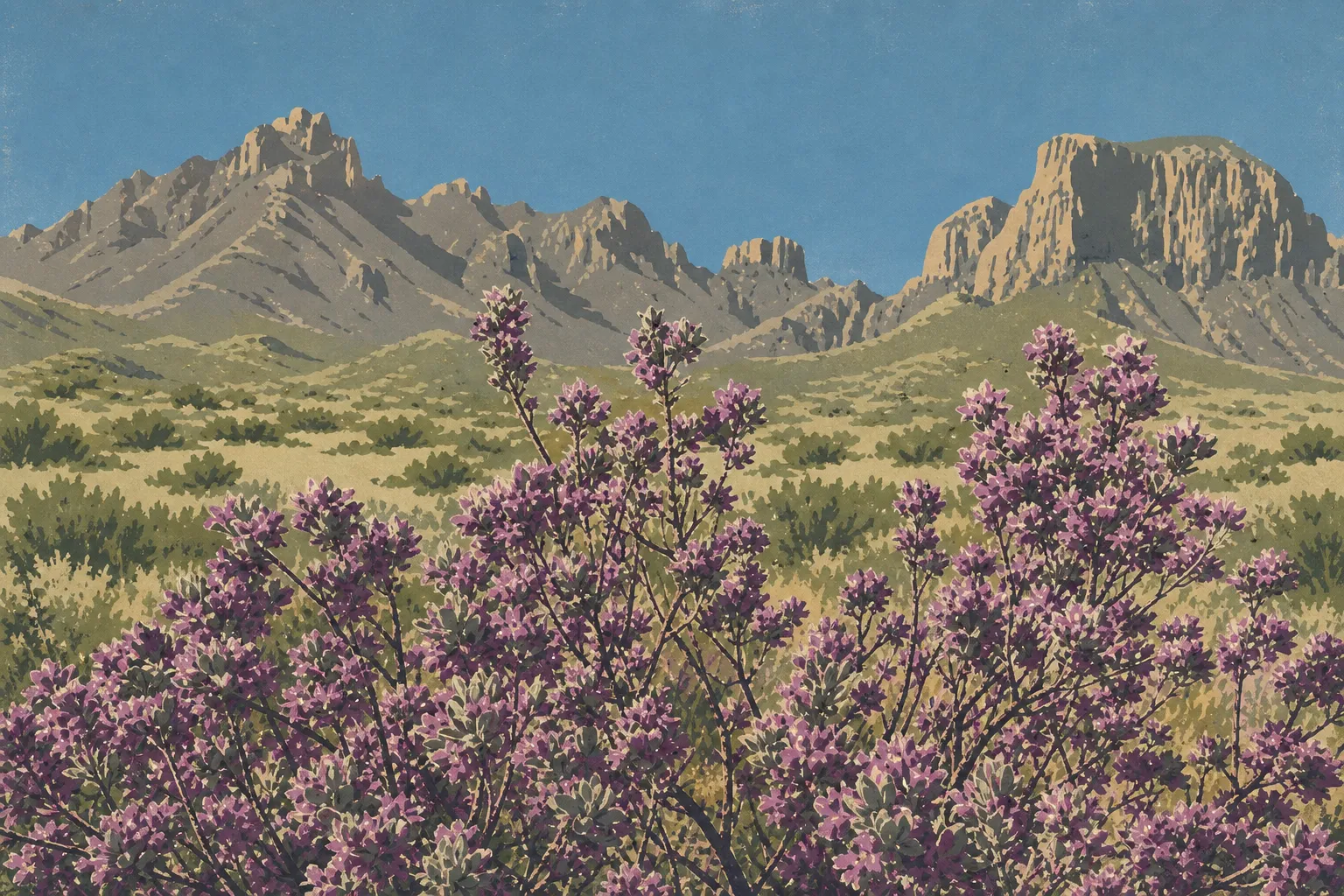
Big Bend is Texas in a way you might not expect: a vast desert, a mountain range rising right in the middle of it, and the Rio Grande tracing the border with Mexico at the bottom of dramatic canyons. The park's name fits it perfectly. Big Bend refers to the sweeping curve made by the river. Here's the honest warning: this park is far from everything, and that's exactly what makes it special. Plan on at least 2 to 3 days to experience its three sides, desert, mountains, and river, without rushing. The best time to visit runs from November through March, when the heat becomes manageable.
Below you'll find the essentials for planning your stay, organized by area, with links to our detailed pages when you want to dig deeper.
Big Bend at a Glance: Where the Park Is and How to Get There
Big Bend stretches across southwestern Texas along the Mexican border, in the Chihuahuan Desert. It's one of the most isolated national parks in the country. El Paso, the nearest major city, is several hours away, and there's no airport nearby.
You can reach the park only from the north, after a long drive through the desert from the small towns of Alpine, Presidio, or Marathon.
The park is open 24 hours a day, year-round, including its entrances, so you can arrive at night without a problem. Give yourself plenty of room for gas and supplies. Gas stations are scarce, and distances within the park stretch for tens of miles. For route details, nearby airports, and car rentals, see our Big Bend access guide.
Entrance Fees, Passes, and Reservations
Entry to Big Bend costs $30 per private vehicle and is valid for 7 days. If you're arriving on foot, by bicycle, or by motorcycle, the fee is $15 per person. The park's annual pass costs $55, so it quickly pays for itself if you're staying for a week or planning to come back.
One useful detail: the America the Beautiful pass ($80 per year), which covers all federal national parks, is accepted here. If your road trip includes several parks, that's the pass to get. Unlike some heavily visited parks, Big Bend doesn't require a timed entry reservation. You can enter freely. Campgrounds and some backcountry permits, however, must be reserved in advance. Our editorial page on Fees and passes explains entrance fees and the different passes.
Reservations, Permits, and Rules to Follow
Do You Need a Reservation to Enter the Park?
No. Big Bend has no daily entry quota. You pay when you arrive, or online ahead of time, and enter freely. Lodging and backcountry camping work differently.
For frontcountry campgrounds at Chisos Basin, Rio Grande Village, and Cottonwood, make your reservation through Recreation.gov. In March and April, they fill up weeks ahead of time. Outside the busy season, sites are often available without advance reservations, but it's better not to count on that during peak periods.
For Chisos Mountains Lodge, the only permanent lodging inside the park, book several months ahead. It is known to fill up by fall for the following spring.
Backcountry Camping Permits
Any night spent outside an official campground requires a backcountry permit. You can get one in person at the Panther Junction Visitor Center or the Chisos Basin Visitor Center. Online reservations are not available at the time of writing. The fee is $12 per group per night. Site numbers are limited to protect fragile areas.
Rules to Follow
Stay on marked trails in vegetated areas. Shortcuts and trail cutting damage the desert's fragile soils. Nothing leaves the park. Rocks, plants, animal bones, and all historic artifacts are protected by federal law. Drones are prohibited throughout the park. Campfires are restricted depending on the season and area, so check the current conditions as soon as you arrive at the visitor center. Pets are allowed only on paved roads and within 100 feet of them, and they're prohibited on hiking trails.
Our Practical Information, Rules & Safety page lists the complete rules and applicable penalties.
Getting Around Big Bend
There is no shuttle here. You visit Big Bend by car, period. The road network is straightforward, but distances are deceptive because the park covers a considerable area and the roads connect areas that are far apart.
Three roads organize most visits. The main road connects the north entrance to Panther Junction, the park's hub, with the visitor center and park offices, then climbs to Chisos Basin in the heart of the mountains. Ross Maxwell Scenic Drive heads southwest toward Santa Elena Canyon, with one viewpoint after another. Finally, the eastern road descends to Rio Grande Village along the river.
Keep in mind that some secondary roads, such as Old Maverick Road, require a high-clearance vehicle and sometimes four-wheel drive. Check with a visitor center before setting out. Our guide to getting around Big Bend covers road conditions, distances between areas, and actual drive times.
How Long Do You Need to Visit Big Bend?
Plan on 2 to 3 days for a well-rounded first visit. That's the minimum needed to experience the park's three settings without spending all day behind the wheel. With just one day, you'll have to choose between the mountains at Chisos Basin and the river at Santa Elena Canyon. With 4 to 5 days, you can add some excellent hikes, a stargazing outing, and time to slow down.
A schedule that works well includes one mountain day at Chisos Basin, one river and canyon day via Ross Maxwell Scenic Drive, and one desert day around Rio Grande Village. To build a day-by-day plan based on the time you have, see our day-by-day itinerary guide.
Plan your visit
What to See and Do in Big Bend
The park breaks down into several clearly distinct geographic areas. Here's a logical north-to-south order for visiting them.
Road trip journal · 5 areas
Persimmon Gap and the Northern Desert
This is where most visitors enter from Marathon. Persimmon Gap marks the park's northern gateway and the transition into the Chihuahuan Desert, with endless stretches of creosote, yuccas, and cacti. A first visitor center welcomes you with information. The crossing is long, but it sets the scene with colorful terrain and a true feeling of being at the end of the road.
Chisos Basin, the Mountainous Heart of the Park
In the center of the park, the Chisos Mountains form a cool island in the middle of the desert. The road climbs to Chisos Basin, a natural basin surrounded by peaks, where you'll find a lodge, campground, visitor center, and the park's most popular trailheads. Temperatures there are noticeably cooler than in the desert, by about 11 to 14°F. When we visited, the difference on the climb from Panther Junction was striking. We left the furnace behind and found an almost cool breeze. This is the area where we recommend staying if you can.
Ross Maxwell Scenic Drive and Santa Elena Canyon
This scenic road in the southwest strings together overlooks of the desert and mountains. It leads to Santa Elena Canyon, where the Rio Grande carved limestone walls hundreds of feet high. A short trail takes you into the canyon entrance, with the Mexican bank within easy reach on the opposite side. This is the park's postcard view and one of its most photographed spots.
Castolon and the Historic Southwest
Along the same road, the Castolon area preserves traces of the region's human history: former military and agricultural buildings that have been repurposed, reminders of life along the river before the park was created. It's a short but informative stop that helps explain the history of this borderland.
Rio Grande Village and the River to the East
In the east, Rio Grande Village is the park's lowest and hottest area, right along the river. You'll find a large campground, a short nature trail through the riverside vegetation, and historic hot springs along the water. It's also an excellent place to watch wildlife, especially at sunrise and sunset.
Each of these areas deserves time. To make sure you don't miss what matters to you, use our dedicated pages.
Explore the park
The Best Hikes in Big Bend
Hiking is the best way to experience Big Bend, as long as you match the effort to the heat. At Chisos Basin, several trails climb to views of the desert and Mexico, from easy outings to more demanding hikes. Lost Mine Trail is a reliable choice for a sweeping panorama without spending the whole day on the trail. Along the river, the short Santa Elena Canyon trail delivers maximum impact with minimal walking.
Always carry more water than you think you'll need, at least 4 liters per person for a long hike, along with a hat and sunscreen. Our Hiking page gives the distance, elevation gain, time, and difficulty level for every trail.
The detailed guide Big Bend Hiking: The Best Trails for Every Skill Level Big Bend's best hikes, with trail guides by area, difficulty levels, access… Read the guide →Wildlife and Plants to Look For
Big Bend is home to surprising biodiversity for a desert, including one of the greatest varieties of birds in any American national park. You may see javelinas, mule deer, roadrunners, and, with luck and discretion, signs of mountain lions or black bears in the Chisos Mountains. The river and its banks concentrate wildlife, especially during the cooler hours.
Two practical safety rules: never feed wildlife, and keep your distance, especially from javelinas, which can become aggressive near campgrounds. Desert plants, including cacti, agaves, and ocotillos, burst into bloom in spring. Our Wildlife page helps you identify species and gives you the right habits for watching them.
The detailed guide Big Bend Wildlife: What to See and Where to Find It Black bears, javelinas, mountain lions, and roadrunners Read the guide →When to Visit Big Bend
The best window runs from November through March, when the weather is mild and pleasant, with occasional overnight freezes and very rare snow. March is the busiest month: warm and sunny, but crowded. Summer, by contrast, is brutal. From May through August, the desert easily tops 100°F by late morning, and the heat becomes a serious safety issue. If summer is your only option, head for higher elevations in the Chisos Mountains, where temperatures are a few degrees cooler.
This is only a summary. You'll find month-by-month details, including temperatures and visitor levels, on our When to Visit page, and complete climate data on our Weather page.
The detailed guide When to Visit Big Bend: Best Times, Weather, and Seasons The best times to visit Big Bend are March-April for mild weather and blooms,… Read the guide →Where to Stay in Big Bend
There are three main options, depending on your plans. Inside the park, Chisos Basin lodge is the only permanent lodging. It's in high demand, so reserve well in advance. For camping, the park operates several campgrounds, from Chisos Basin in the mountains to Rio Grande Village along the river. Finally, the nearby towns of Study Butte, Terlingua, and Marathon offer hotels, motels, and rentals for those who prefer to stay outside the park.
Staying inside the park saves valuable time given the distances. To compare the options and book at the right time, see our Where to Stay guide, along with our Hotels and Lodges, Camping, and RV camping pages.
Stay in the park
Around Big Bend: Things to Do Nearby
The park doesn't end at its boundaries. Just west of it, Big Bend Ranch State Park offers equally spectacular scenery along the Rio Grande. The ghost town of Terlingua, a former mining center turned artists' village, is worth a stop for its atmosphere and sunset dining. Farther north, Marathon and Alpine make comfortable stops along the route. Many travelers include Big Bend in a larger road trip through west Texas. To keep going, explore our road trips and our guides by region.
Our Take: Is Big Bend Worth the Trip?
Yes, absolutely, as long as you're willing to accept its isolation. Big Bend isn't a park you pass through. You have to plan for it, and it rewards those who take their time. What stands out is the rare combination of three worlds, desert, mountains, and river, along with the silence and one of the clearest night skies in the United States, ideal for stargazing. This isn't a park to check off between two Texas cities. It's a place you visit for its own sake. If you love wide-open spaces without crowds and landscapes that make you feel like you're at the end of the world, it delivers.
Frequently Asked Questions
How Long Do You Need to Visit Big Bend?
Plan on at least 2 to 3 days to experience the mountains, desert, and river without spending all your time on the road. With 4 to 5 days, you can add some excellent hikes and an evening of stargazing. Details are in our Itinerary and Length of Stay page.
How Much Is the Entrance Fee for Big Bend?
The entrance fee is $30 per private vehicle, valid for 7 days, or $15 per person arriving on foot or by bicycle. The park's annual pass costs $55, and the federal America the Beautiful pass ($80) is accepted.
Can You Visit Big Bend by Car?
Yes. You visit Big Bend by car. There is no shuttle, and the park can only be explored by road. Some secondary roads do require a high-clearance vehicle or even four-wheel drive.
What Is the Best Time to Visit Big Bend?
The best time to visit Big Bend is from November through March, when the weather is mild. Avoid summer, from May through August, when the desert tops 100°F by late morning. See our When to Visit page for month-by-month details.
What Is the Best Area to Visit in Big Bend?
For a first visit to Big Bend, the best area is Chisos Basin in the heart of the mountains. It's cooler and has the lodge, a campground, and the most popular hikes. Add Santa Elena Canyon for the river and Rio Grande Village for the eastern desert.
Is Big Bend Worth Visiting?
Yes, Big Bend is worth visiting if you can accept its isolation and take your time. The park brings together desert, mountains, and river, with some of the clearest night skies in the country. It does require serious preparation because of the distances and heat.
The American Parks shop
Bring Big Bend home
Our park-inspired creations, made to order and shipped to your door.
Latest park news
- Big Bend: Border Project Under Review, Ground Work Paused Until Late OctoberConstruction is still on hold and no ground work is planned in the park before late October at the earliest, according to AP.
- Big Bend Closes Some Areas in Early October to Protect Bighorn SheepBig Bend has announced temporary closures of certain areas in early October as part of a wildlife management effort.