
Where to Eat in Big Bend: Restaurants in the Park and Nearby
Big Bend is one of the most remote national parks in the United States, set in the heart of the Chihuahuan Desert, about 185 miles from the nearest major city. Where to eat isn't a minor comfort question here. It's a serious logistical issue. In short, inside the park you'll find one sit-down restaurant at Chisos Mountains Lodge, two general stores for basic supplies at Rio Grande Village and Castolon, and nothing else. The real selection is outside the park, in the gateway towns of Terlingua and Study Butte, the closest options, or Marathon to the north.
Eating in the Park: Lodges, Restaurants, and Cafeterias
In a 1,252-square-mile park with no permanent residents, dining options are limited. That's part of the charm, and part of the challenge.
Chisos Basin: The Park's Only Sit-Down Restaurant
The Chisos Mountains Lodge Restaurant is the park's only full-service dining establishment. It's open every day from breakfast through dinner during the main season. The menu focuses on Tex-Mex and classic American fare, including burgers, enchiladas, hearty dishes, and homemade desserts. Nothing fancy, but it's decent and filling after a long hike. The dining room looks out over the Casa Grande Peaks. When we visited, I had breakfast facing the cliffs in the morning light, and that was more than enough.
Be careful during the busy season, from March through May. Seating is limited, and dinner waits can run longer than 45 minutes. If you're staying at the lodge, check whether your reservation gives you access to a priority seating window. For information about lodging, see the Big Bend hotels and lodges guide.
Rio Grande Village: The Eastern General Store
At the eastern end of the park, the Rio Grande Village general store sells snacks, canned goods, cold drinks, and a few grocery items. It's not a restaurant. Think of it as a lifeline for visitors exploring the Rio Grande area who didn't plan ahead for supplies.
Castolon: Groceries in a Historic Building
The Castolon area in the southwest is home to a general store housed in a historic building from the early 20th century. You'll find prepared sandwiches, cold drinks, and a limited selection of basic supplies. It's often the only place to resupply for visitors traveling along Ross Maxwell Scenic Drive.
Panther Junction: No Food Service
Panther Junction Visitor Center, the park's administrative hub, doesn't offer any food service. There are a few drink vending machines, and that's it. Don't count on getting a meal here.
Groceries and Picnics in the Park
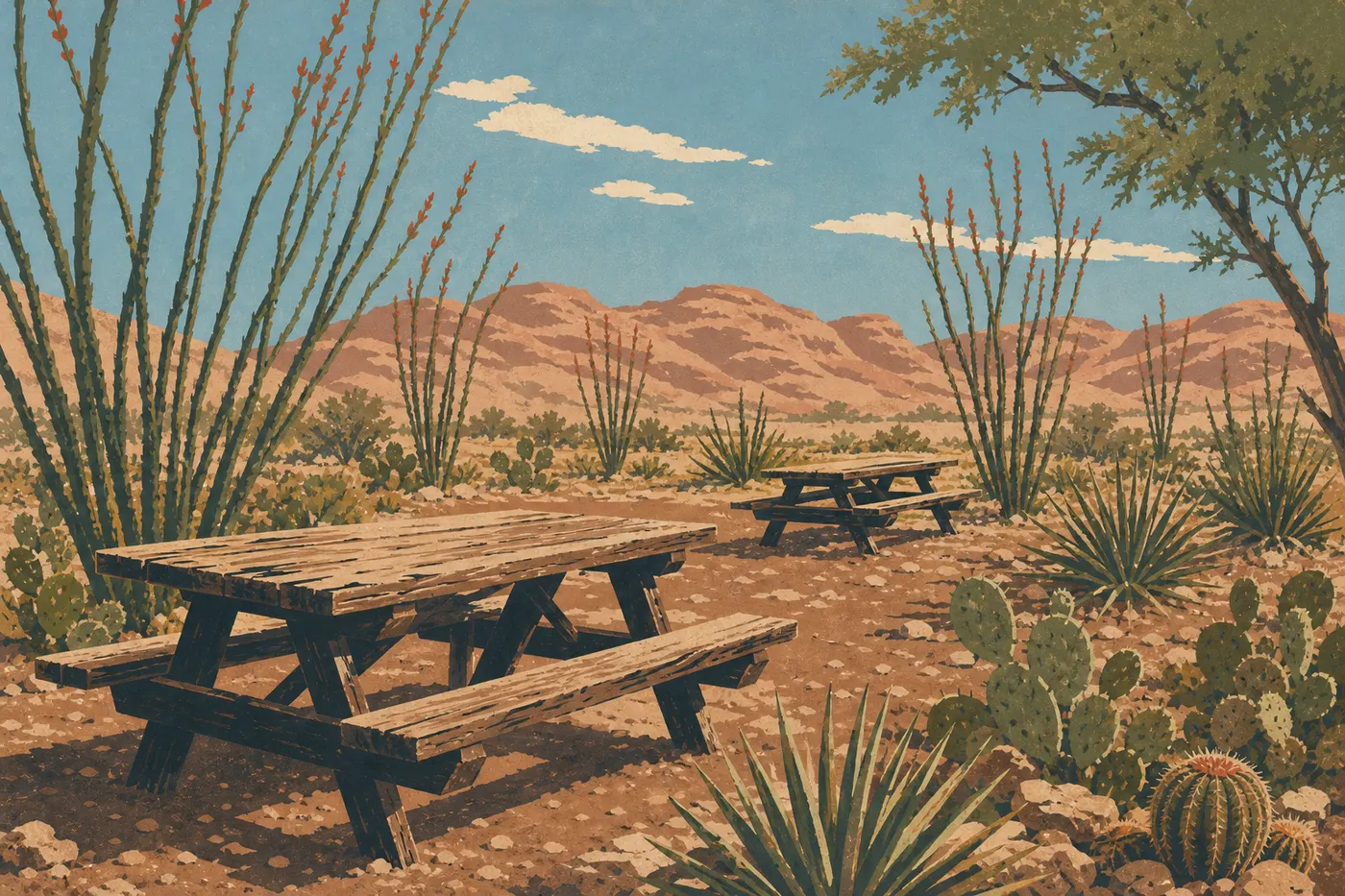
Packing a picnic is often the most sensible option in Big Bend, especially on long hiking days. Picnic tables are available in several areas, including Chisos Basin, Rio Grande Village, and Castolon. The general stores sell the basics, but supplies are limited and prices are higher. The best strategy is to shop outside the park in Study Butte, Marathon, or Alpine, depending on your entrance, before you arrive.
One absolute rule: never leave food exposed, even for a few minutes. Javelinas, also called collared peccaries, and other park wildlife have a nose for finding an abandoned sandwich on a table. The Big Bend wildlife guide explains how to behave around local wildlife.
Where to Eat Nearby: Gateway Towns
Terlingua and Study Butte: Headquarters for Hungry Visitors
Study Butte borders the park's west entrance. Terlingua, a former ghost town revived by tourism, lies a few miles away. Together, they offer the most accessible dining options from the park.
The Starlight Theatre Restaurant & Bar in Terlingua Ghost Town is the area's signature spot, with a distinctive Western setting, live music nearly every night, and Tex-Mex and grilled dishes. It often fills up during the busy season, so arrive early. La Kiva is a partly underground bar built into volcanic rock, with a patio and regular concerts. The food is decent, but most people come for the atmosphere. Study Butte also has a few cafés and snack bars for a quick break before you get back on the road.
To plan your trips between the park and these restaurants, the Getting Around Big Bend guide covers transportation options in the area.
Marathon: The Historic Stop to the North
About 62 miles north via US 385, Marathon is an essential stop if you're entering or leaving through this corridor. The Gage Hotel, a landmark building constructed in 1927, houses a restaurant serving refined Southwestern food in an authentic setting. It's the best choice for a quality dinner if you plan your day around it.
Alpine: The Widest Selection Nearby
About 81 miles northwest via TX 118, Alpine is the region's largest town. It has the area's widest selection of restaurants, including Mexican, American, and Texas barbecue, along with cafés, a well-stocked grocery store, and a pharmacy. If you're arriving by this route, this is your last chance to stock up properly before entering the park. Take advantage of it.
Our Picks by What You're Looking For
For a quick bite in the park: Castolon general store for a sandwich before Ross Maxwell Scenic Drive, or Rio Grande Village if you're exploring the east side.
For a sit-down meal after a hike: Chisos Mountains Lodge Restaurant. If you finish late in the Basin, you won't need to look farther.
For atmosphere and music: Starlight Theatre in Terlingua, preferably on a weeknight to avoid the weekend crowds.
For families: Study Butte, where several small restaurants welcome kids without any fuss. The Big Bend with kids guide has more practical advice for visiting with children.
For a meal with history: Gage Hotel in Marathon, where you can pair a well-prepared meal with a night away or a simple stop at a place that has welcomed Texas ranchers for a century.
A Big Bend Specialty Worth Trying
Big Bend sits on the Mexican border, in a region where two cultures have lived side by side for centuries. The dominant cuisine is Tex-Mex, with red chile enchiladas, barbacoa tacos, beef fajitas, and homemade guacamole. It's neither authentic Mexican food nor classic American cooking. It's a borderland blend with its own traditions.
Texas chili deserves special mention. Unlike common chili, the Texas version contains no beans. It's a spicy beef stew, often simmered for several hours. Terlingua is also known across the country for its annual chili championship, held every first weekend in November. It can be an event in itself if your schedule allows.
As for drinks, a cold Texas craft beer after a day in the Chihuahuan Desert, where temperatures regularly top 100°F from May through August, isn't a luxury. It's almost a medical prescription.
Practical Tips: Hours, Reservations, Budget, and Seasons
Hours: Chisos Mountains Lodge Restaurant opens early and closes relatively early in the evening. The general stores keep shorter hours and may close during the off-season. Check current hours on the official NPS website before planning your day.
Reservations: They're essential at the lodge during the busy season, from March through May, by phone or through the concessioner's website. Make reservations in advance at Gage Hotel in Marathon. Terlingua restaurants generally don't take reservations, so arrive early or be prepared to wait.
Budget: Plan on $15 to $25 per person for a full meal at the Lodge restaurant. Sandwiches and snacks at the general stores cost about $8 to $12. In Terlingua and Study Butte, menus typically run from $12 to $20 per person, before drinks. For an overview of entrance fees and passes, see the National Parks Fees & Passes page.
Season: Spring, from March through May, is the busy season, and every establishment gets plenty of business. Summer, from June through August, is extremely hot in the desert areas. Plan outings and meals for early morning or evening. Chisos Basin, at a higher elevation, is 9 to 14°F cooler than the desert floor. The When to Visit Big Bend guide explains the advantages and drawbacks of each season.
Water: It's nonnegotiable. Carry at least 4 liters per person per day of hiking. Dehydration is the park's leading medical risk, ahead of trail injuries.
In Brief: Where to Eat Based on Your Area of the Park
| Area | Option in the Park | Nearest Gateway Town |
|---|---|---|
| Chisos Basin | Lodge Restaurant (full meals) | Terlingua/Study Butte (about 30 min) |
| Rio Grande Village | General store (basic supplies) | Marathon (about 1.5 hours) |
| Castolon | Historic general store (sandwiches) | Study Butte (about 40 min) |
| Panther Junction | Vending machines only | Study Butte or Terlingua |
To build your itinerary around these meal stops, the Big Bend general guide and the Big Bend Itineraries guide provide the essentials.
Frequently Asked Questions
Where can you eat in Big Bend?
Inside the park, the only sit-down restaurant is Chisos Mountains Lodge Restaurant in the Chisos Basin area. Rio Grande Village and Castolon each have a general store with sandwiches and basic supplies. Outside the park, Terlingua and Study Butte on the west side have the best selection, especially Starlight Theatre. Marathon to the north and Alpine to the northwest round out the options.
What is there to do in Big Bend?
That question goes beyond dining. Hiking, stargazing, canoeing on the Rio Grande, and visiting historic sites are the main activities. The Things to Do in Big Bend guide covers them all.
What are the best hikes in Big Bend National Park? The signature trails include Lost Mine Trail, South Rim, and Boquillas Canyon, but there are plenty of options for every ability level. The Big Bend hiking guide covers each trail, including distance and elevation gain.
What national parks are in Texas?
Texas has two federally designated national parks: Big Bend National Park and Guadalupe Mountains National Park. Big Bend is the larger and more remote of the two.