
Zion Wildlife: Which Animals to See and Where to Find Them
Zion is home to more than 290 bird species, 75 mammal species, and around 30 reptile species in a single canyon. This isn't just scenery. It's a living ecosystem, stretching from the bottom of the Virgin River to the 7,900-foot sandstone cliffs.
Put these five iconic Zion animals on your list: the California condor (North America's largest flying bird, visible from the canyon's high points), the desert bighorn sheep (an acrobat on vertical cliffs), the mule deer (the park's most common animal, found throughout the canyon), the coyote (an opportunistic hunter you'll often hear before you see) and the peregrine falcon (which nests on the overhangs). Mountain lions also roam the park, but they're so elusive that you'll almost never see one.
Zion's Iconic Animals
California Condor
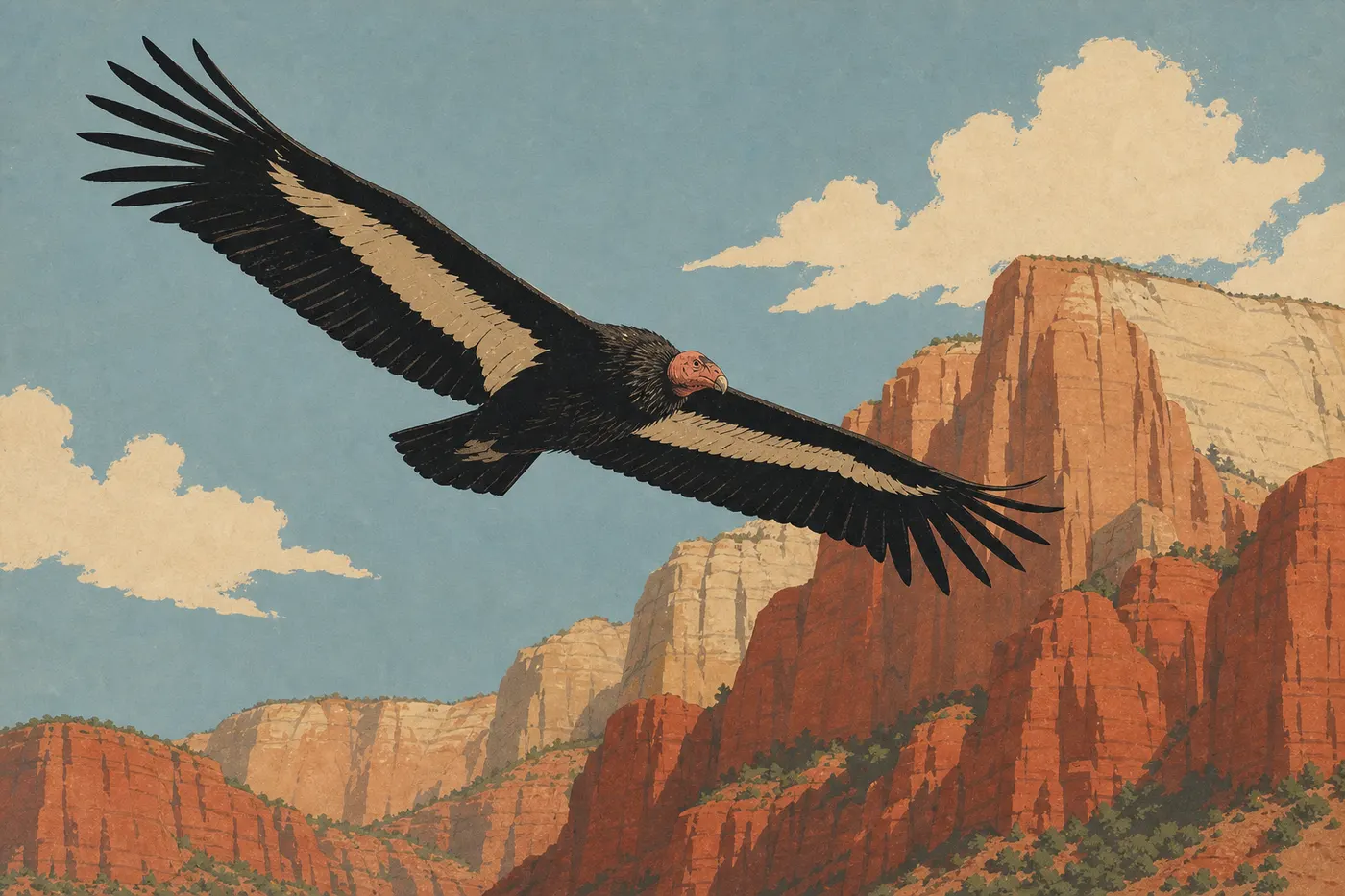
The California condor (Gymnogyps californianus) nearly went extinct in the 1980s. Its reintroduction to the Colorado Plateau, which began in 1996, is one of the most remarkable conservation successes in the United States. Adults can reach a wingspan of 9.5 feet and have a distinctive red-orange, bald head. Juveniles have black heads and white markings under their wings.
People often mistake condors for turkey vultures (Cathartes aura), which are much more common. Look at their size. Turkey vultures are about three times smaller, and their wings form a V when they land, while condors fly with their wings flat. Numbered wing tags from the monitoring program confirm a condor's identity.
In Zion, condors soar above Zion Canyon Scenic Drive, around Angels Landing, and near Canyon Overlook. Thermal currents start forming around 9 a.m. in summer, so look up and scan the cliffs then.
Desert Bighorn Sheep
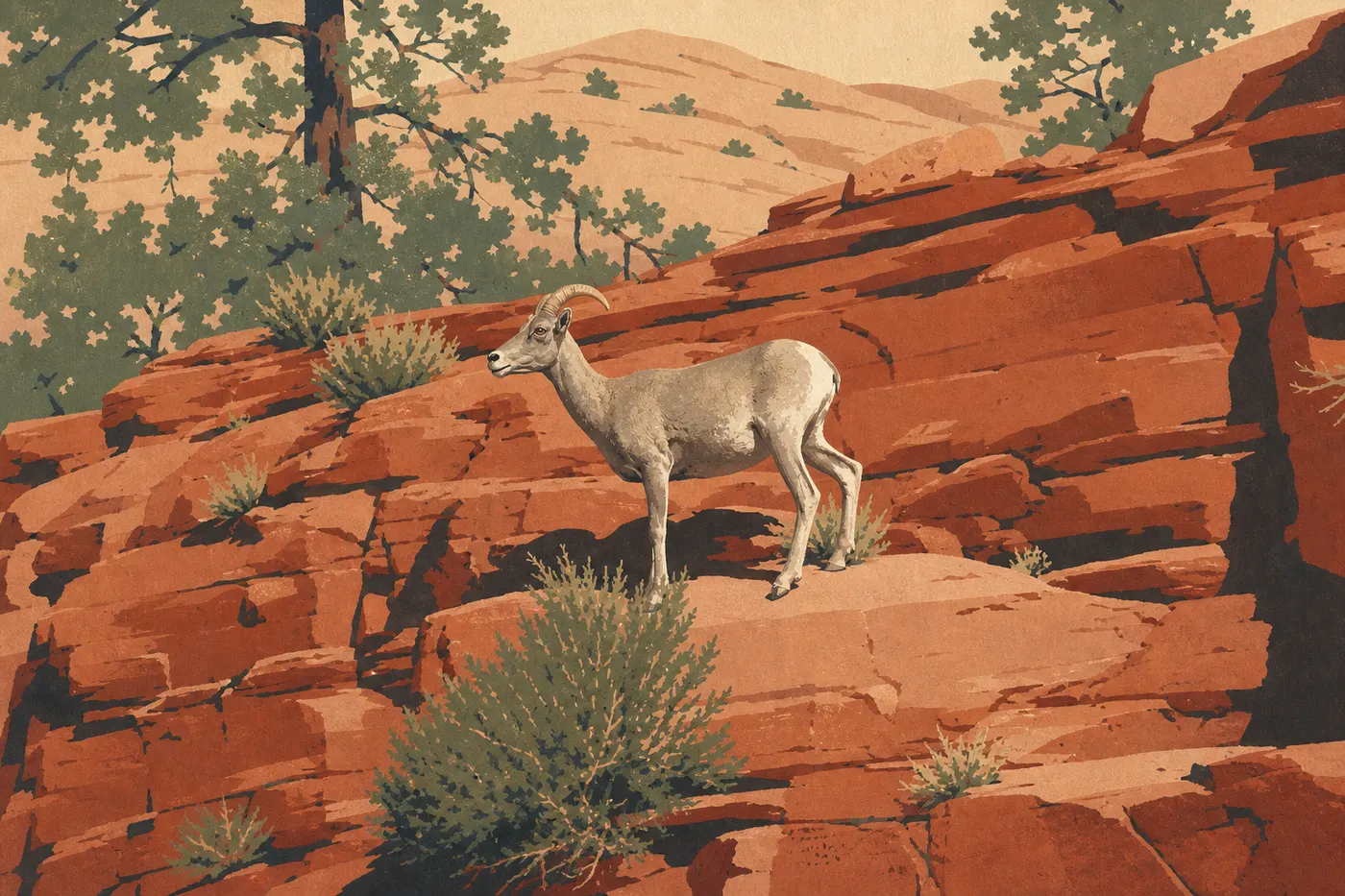
Desert bighorn sheep (Ovis canadensis nelsoni) move across nearly vertical cliffs with hard-edged hooves and soft pads. Adult rams have curled horns that can weigh up to 31 pounds on their own. Ewes have short horns that curve slightly backward.
You'll see them mostly on sunny, rocky slopes in the morning, around Court of the Patriarchs and near the Zion-Mount Carmel Tunnel. During the November and December rut, rams clash horn to horn. The impact can be heard hundreds of yards away in the canyon. Keep your binoculars trained on the ledges, the horizontal shelves in the rock. Bighorn sheep often stop there halfway up the cliffs.
Mule Deer
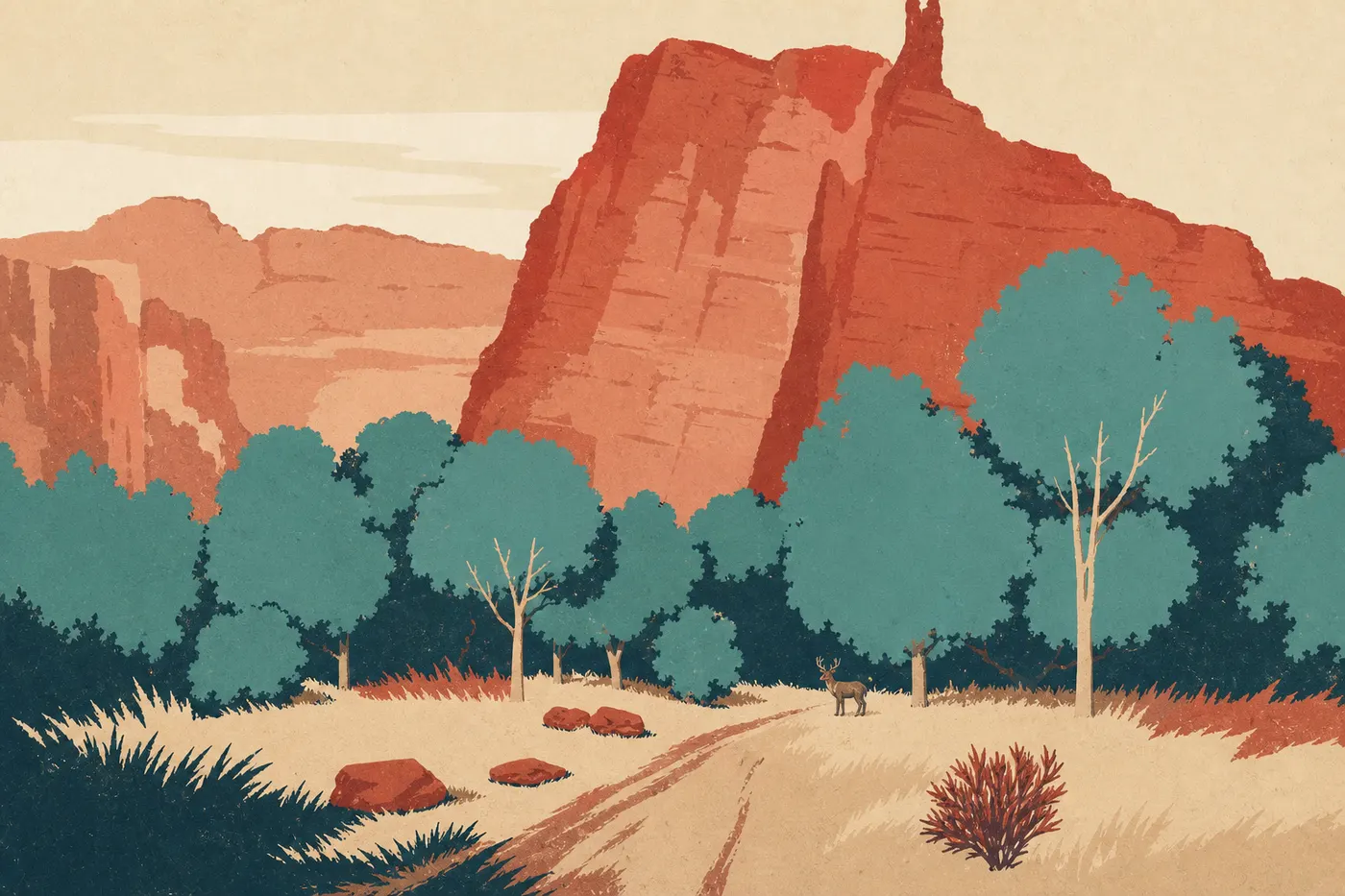
Mule deer (Odocoileus hemionus) are the animals you're most likely to see in Zion. Their large ears, which gave them their name, help them detect threats from a distance. You'll find them almost anywhere along the canyon floor, near the Visitor Center, on Pa'rus Trail, and at South Campground and Watchman Campground.
Does give birth in spring, from May through June. Don't approach a doe with a fawn. Even herbivores defend their young. If a deer stares at you, stops chewing, and raises its ears, you're too close. Back away calmly.
Coyote
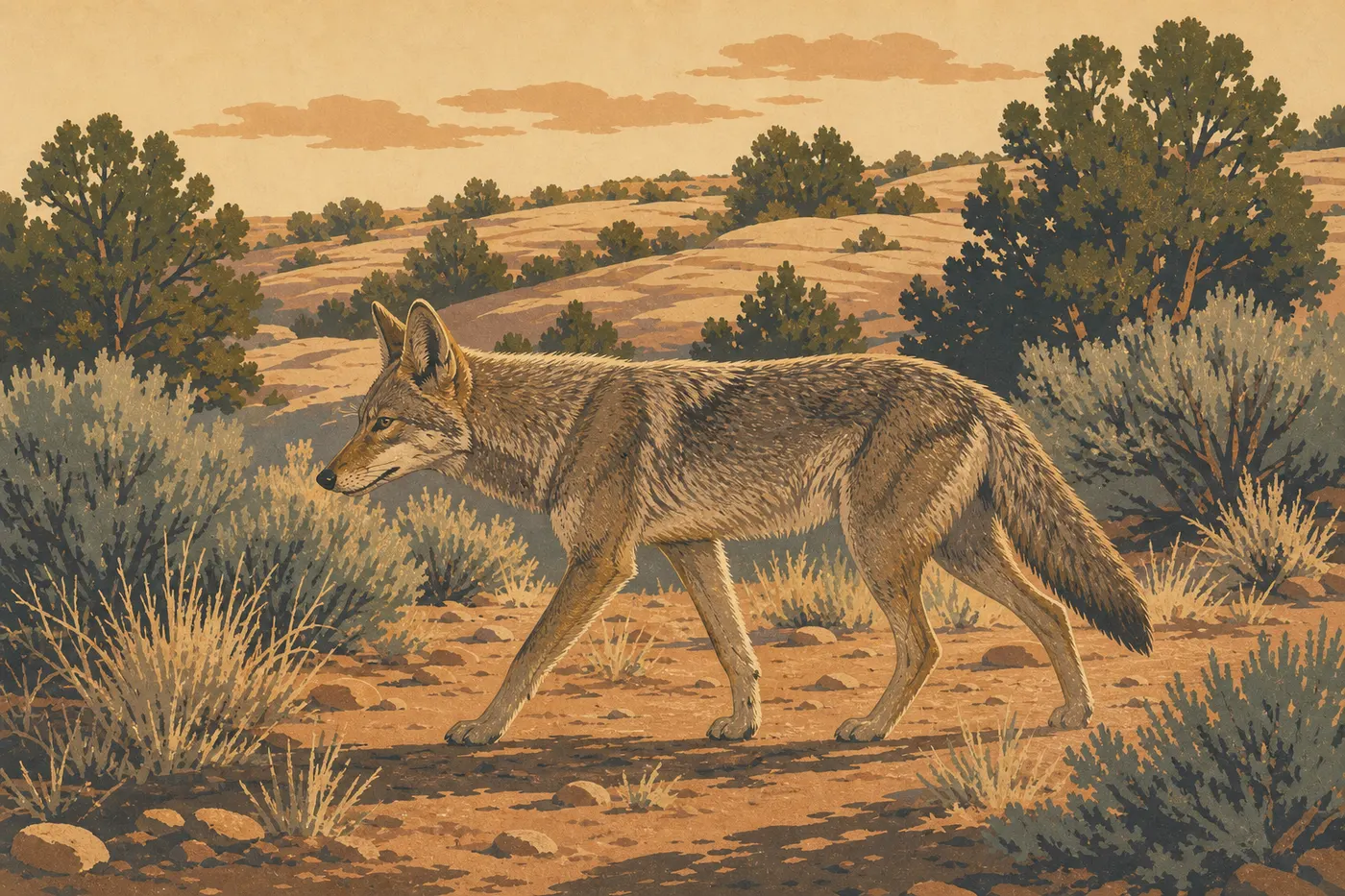
The coyote (Canis latrans) is both a predator and a scavenger. Its slender build, drooping tail, and pointed muzzle set it apart from a domestic dog. At night in the canyon, its cascading howls are one of Zion's unforgettable soundtracks.
Coyotes hunt rabbits, rodents, and lizards. They'll also wander toward picnic areas and parking lots whenever an opportunity arises, so never leave food unattended. A coyote fed by visitors loses its natural wariness and eventually has to be euthanized.
Peregrine Falcon
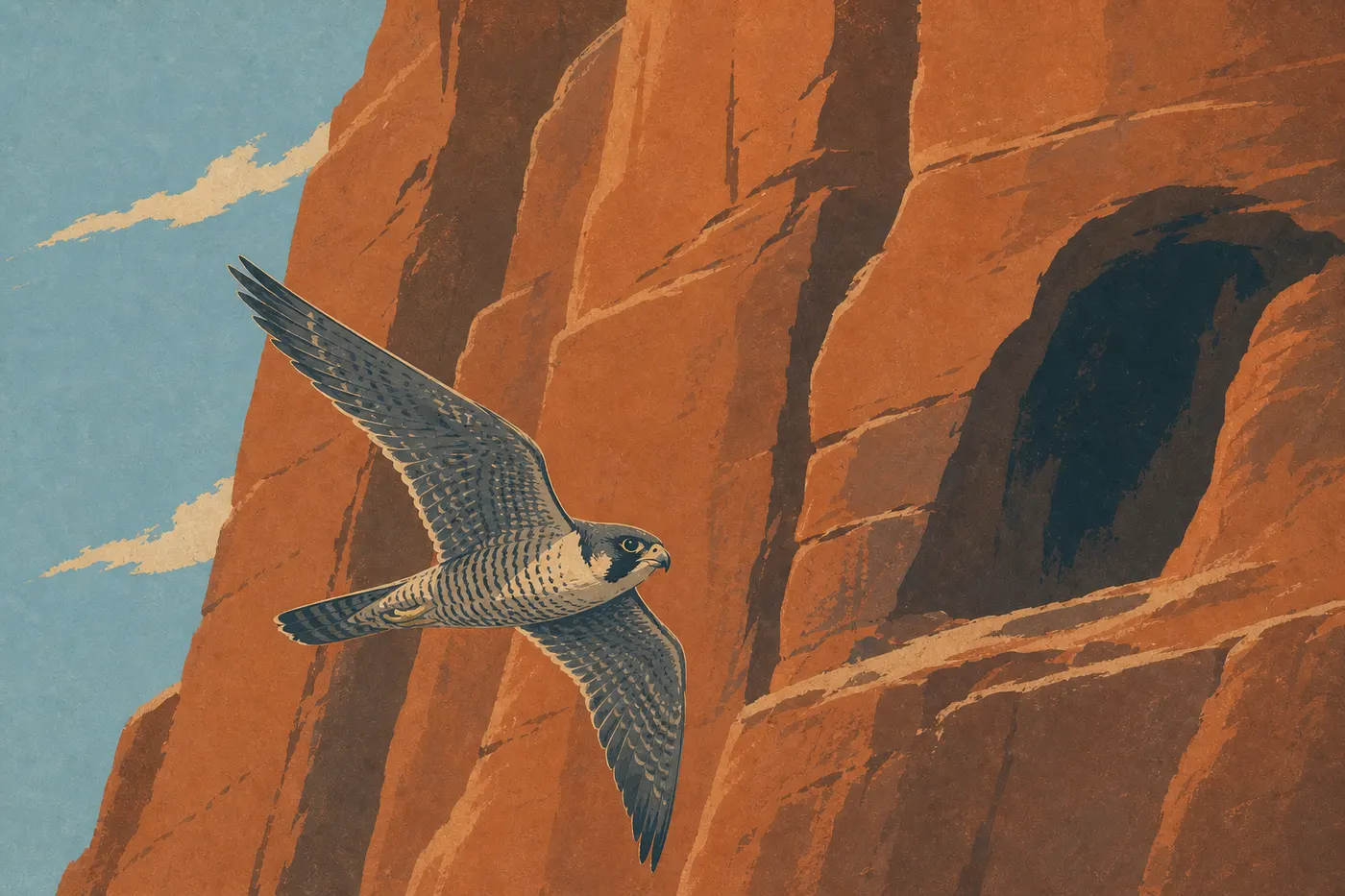
Peregrine falcons (Falco peregrinus) have nested on the canyon's high cliffs for decades. In a dive, they can exceed 186 mph. Their black hood, cream-colored belly streaked with brown, and compact build make them easy to recognize. Don't confuse them with merlins, which are noticeably smaller, or northern harriers.
From March through July, some trail sections near the cliffs temporarily close to protect incubating nests. Check current alerts in the Zion hiking guide before every outing. Outside nesting season, falcons hunt above Zion Canyon Scenic Drive and around Weeping Rock.
Where to See Wildlife in Zion
The canyon floor along the Virgin River is the most productive area early and late in the day. Pa'rus Trail is paved and accessible to strollers and wheelchairs, and follows the river to Watchman Campground. It's the ideal route for spotting deer, wild turkeys, and black-crowned night herons without much effort.
The rock walls around Court of the Patriarchs and the area beyond the Zion-Mount Carmel Tunnel are the best places to look for bighorn sheep. Scan the ledges halfway up the cliffs with binoculars. That's where the sheep spend the heat of the day.
Kolob Canyons, at the park's northwestern edge, sees far fewer visitors. When we visited in October, we watched a group of bighorn sheep cross the access road at sunrise, seemingly unfazed by the cars stopped to watch them. Forest wildlife, including rock squirrels and Steller's jays, is easier to spot here, too.
The Virgin River itself is home to the Virgin River chub, a critically endangered endemic fish listed under federal law. In the calm stretches between rapids, look at the sandy bottom. These small silver fish sometimes gather in schools visible to the naked eye.
When to Watch Wildlife
At dawn and dusk: Most of Zion's mammals are crepuscular. Get to Pa'rus Trail or Watchman Trail by 6:30 a.m. in summer to see deer before the day's heat arrives.
In summer: Temperatures in the canyon often climb above 100°F. Animals retreat into the shade or higher elevations during the hottest part of the day, from 11 a.m. to 4 p.m. Plan your outings accordingly. The Zion weather guide tracks heat waves and monsoon episodes, from mid-July through September, which also affect wildlife activity.
In spring (March through May): This is the richest season for wildlife. Migrating birds stop in the canyon, does nurse their fawns, and reptiles become active again with the first warm days.
In fall: The bighorn rut begins in November. Rams clash on the cliffs, and the sound of their horns carries far through the canyon. Cooler temperatures also make it easier to watch wildlife during the day.
At night: Gray foxes, ringtails, raccoons, and several bat species emerge after dark. Bats hunt insects above the Virgin River starting at sunset, and it's worth watching. Use a red headlamp to disturb the animals as little as possible.
For month-by-month details, see our When to Visit guide.
Predators and Large Animals in Zion
The mountain lion (Puma concolor) is Zion's top predator. It mainly hunts mule deer, especially at night. It's so elusive that direct sightings are extremely rare. Its round, clawless tracks, unlike coyote tracks, show up on muddy trails after rain. If you happen to encounter one, don't run. Make yourself look large, speak loudly, and back away slowly while maintaining eye contact.
The Great Basin rattlesnake (Crotalus lutosus) is the only venomous reptile regularly found in the park. It's active from March through October. Its triangular head and rattling tail are its two warning signals. On the trail, watch where you put your hands on rocks, and don't walk through tall grass without checking first.
Coyotes play a regulatory role by keeping rabbit and rodent populations in balance. You'll find them in almost every park habitat, from the canyon floor to the Kolob plateaus.
Golden eagles (Aquila chrysaetos) frequent the park's high country. Their nearly 6.5-foot wingspan and broad, parallel wings in flight distinguish them from the smaller, faster peregrine falcon.
How to Watch Wildlife Safely
The 75-foot rule: The NPS recommends staying at least 75 feet from any wild animal, including deer and squirrels. If an animal changes its behavior by raising its head, stopping, or backing away, you're too close. Move away without running.
Never feed wildlife: It's against federal law and can result in a fine. A fed animal begins to associate people with food, loses its natural wariness, and eventually has to be euthanized for “aggressive” behavior. This rule applies to large mammals as well as jays and squirrels.
Store food properly: At camp, use the metal food lockers provided at each site, or keep food inside your closed vehicle. Don't leave food in your bike panniers or in a bag on the ground.
On the trails: Make noise as you walk by talking or tapping your trekking poles to help prevent surprise encounters with a mountain lion. If you hear a rattlesnake, stop, locate it, and give it plenty of room as you go around.
In Brief: Species You Shouldn't Miss and Where to Find Them
| Species | Best Spot | Best Time |
|---|---|---|
| California condor | Angels Landing, Canyon Overlook | Morning (from 9 a.m.), thermal currents |
| Desert bighorn sheep | Court of the Patriarchs, Zion-Mount Carmel Tunnel | Dawn; rut (November–December) |
| Mule deer | Pa'rus Trail, South Campground | Dawn and dusk |
| Coyote | Watchman Trail, canyon surroundings | Dawn, dusk, night |
| Peregrine falcon | Zion Canyon Scenic Drive, Weeping Rock | Morning (outside nesting season: August–February) |
| Mountain lion | Tracks on muddy trails | Chance encounter (at night) |
| Great Basin rattlesnake | Sunny rocks, tall grass | March through October (daytime) |
Zion rewards visitors who slow down. The less rushed you are, the more wildlife you'll see.
Frequently Asked Questions
What's the most common animal in Zion National Park?
The most common animal in Zion National Park is the mule deer. You can spot them at almost any hour on trails along the canyon floor, around campgrounds, and near parking lots at dawn or in the late afternoon.
What animals are out at night in Zion?
Nocturnal wildlife in Zion includes coyotes, gray foxes, ringtails, raccoons, several bat species, and mountain lions. If you're out after sunset, a red headlamp disturbs wildlife less than a white light.
What predators live in Zion?
Zion's main predators are mountain lions, which sit at the top of the food chain, coyotes, peregrine falcons, and golden eagles. The Great Basin rattlesnake is the only venomous reptile regularly found on the trails.
What's the largest animal in Zion?
The largest land animal in Zion is the mountain lion, which can weigh up to 200 pounds for an adult male. In terms of wingspan, the California condor is unmatched, with a wingspan of 9.5 feet.