
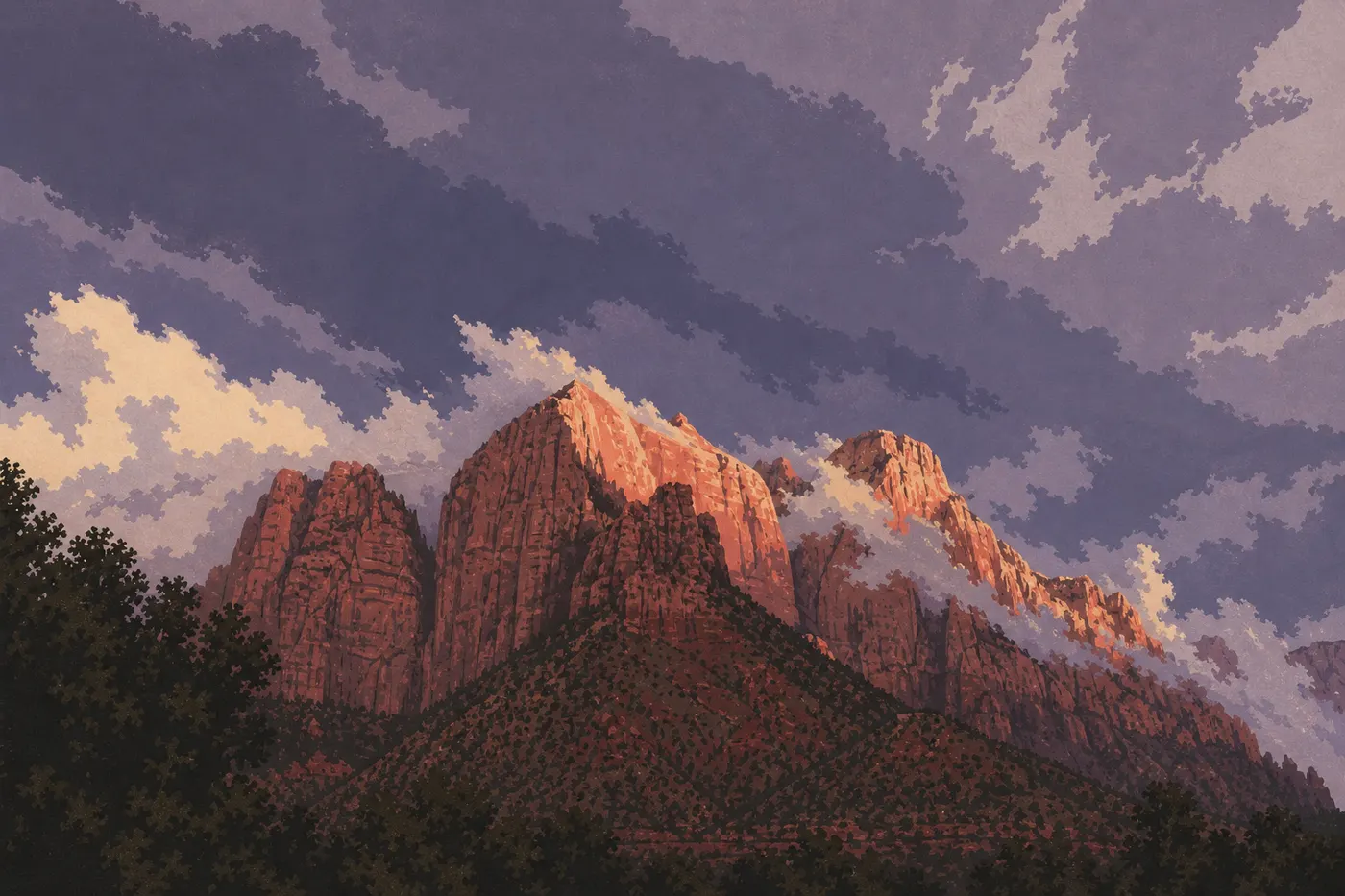
Zion Weather: Forecasts, Climate, and Current Conditions
Zion Canyon packs two distinct climates into a small area. The canyon floor sits at 3,900 feet, where temperatures regularly top 100°F in July, while plateaus reaching 8,500 feet get snow in winter. The daily temperature swing often exceeds 31°F between dawn and midafternoon. In short, expect a continental semi-arid climate, blazing-hot summers, mild valley winters, and monsoon weather from mid-July through September. Spring (April–May) and fall (October–November) offer the best balance of comfortable weather and moderate crowds.
Current readings are unavailable. See the seasonal averages farther down this page.
Open-Meteo readings · updating… · park time zone
Zion Climate Month by Month
The averages below apply to the canyon floor around Springdale (3,700 feet). The plateaus, including Angels Landing and Observation Point, are consistently 9 to 14°F colder.
| Month | Low | High | Precip. |
|---|---|---|---|
| January | 25°F | 50°F | 1.5 in. |
| February | 28°F | 55°F | 1.5 in. |
| March | 36°F | 63°F | 1.5 in. |
| April | 43°F | 72°F | 1.2 in. |
| May | 52°F | 82°F | 0.7 in. |
| June | 61°F | 93°F | 0.5 in. |
| July | 70°F | 100°F | 1.0 in. |
| August | 68°F | 97°F | 1.2 in. |
| September | 57°F | 90°F | 0.7 in. |
| October | 45°F | 75°F | 1.0 in. |
| November | 34°F | 61°F | 1.2 in. |
| December | 27°F | 50°F | 1.2 in. |
June is the driest month of the year, with 0.5 inches of precipitation. July and August climb to 1.0 and 1.2 inches as the monsoon arrives, bringing sudden late-day thunderstorms and an immediate flash-flood risk in narrow canyons.
Does Zion Get Cold or Hot? Records and Extremes
Both. The canyon floor traps heat between its sandstone walls. Summer highs sometimes reach 108°F during heat waves, and monsoon humidity makes them even more punishing. On the other hand, winter nights on the plateaus fall below 14°F, something travelers from the southern United States don't always anticipate. The daily swing exceeds 31°F in spring and fall, so keep that number in mind when packing.
What to Wear by Season
Spring and fall. Dress in three layers: a technical T-shirt, a lightweight fleece, and a waterproof windbreaker. Mornings start out cool, while afternoons can climb above 68°F. Wear waterproof hiking shoes if you're entering The Narrows or hiking after rain.
Summer. Wear lightweight, breathable clothing. Avoid cotton, which holds onto sweat. Bring a wide-brimmed hat and at least SPF 50 sunscreen. Start major hikes before 8 a.m. and return by 11 a.m., or wait until 4 p.m. to head out. Carry at least 3 liters of water per person for a 4-hour outing. The canyon walls block the wind and make the heat feel worse.
Winter. Bring an insulated coat, a warm hat, and gloves for the first hours of the day. If you're heading onto the plateaus after a snowfall, pack microspikes, small traction chains, because high-elevation trails can be icy. Hiking The Narrows isn't recommended from November through March without a proper wetsuit. Water temperatures in the Virgin River drop to 39–50°F during that period.
Weather Alerts and Conditions to Watch
Zion faces two distinct weather hazards that shouldn't be underestimated.
Flash floods. The limestone plateau above the canyon funnels runoff within minutes of a thunderstorm, even one far away. Before entering The Narrows or any other slot canyon, check National Weather Service (NWS) alerts for the area and the closure signs at the trailhead. A flash flood can occur under clear skies on the canyon floor if a storm hits the plateau 9 to 12 miles away.
Lightning. In summer, leave ridgelines and exposed areas such as Angels Landing, Observation Point, and West Rim Trail by 1:30 p.m. Thunderstorms most often develop between 2 and 5 p.m.
Road closures mainly affect the Zion-Mount Carmel Highway on the east side of the tunnel and Kolob Canyons Road after heavy snowfall. Check road conditions on the official NPS website before each day trip from November through March.
Frequently Asked Questions
What is the climate like in Zion National Park?
Zion has a continental semi-arid climate, with blazing-hot summers (often above 100°F in July), mild winters on the canyon floor, an active monsoon from mid-July through early September, and consistently wide daily temperature swings.
When should you not visit Zion National Park?
July and August bring the most punishing heat, monsoon thunderstorms with flash-flood risk, and the year's largest crowds. You can still visit by adjusting your schedule, starting before 8 a.m. and returning before 11 a.m., and checking NWS weather alerts every day.
Are there venomous snakes in Zion?
Yes. Great Basin rattlesnakes are present and active from spring through fall in warm weather. If you're bitten, call 911 and stay still. The Zion wildlife guide covers responsible wildlife-viewing practices.