
Yellowstone with Kids: What to Do and How to Plan Your Trip
Yellowstone works for families from the earliest ages. Even babies can enjoy it in a baby carrier on the boardwalks or in a stroller on flat sections. The park combines erupting geysers, wildlife visible to the naked eye, and accessible boardwalks, so every age group has something to marvel at without kids needing to be especially active. The logistics do require serious planning, especially during peak season. Here's what you need to know to make your trip a success.
Why Visit Yellowstone with Kids
Yellowstone isn't a park you should put off until your kids are "old enough." It's exactly the opposite.
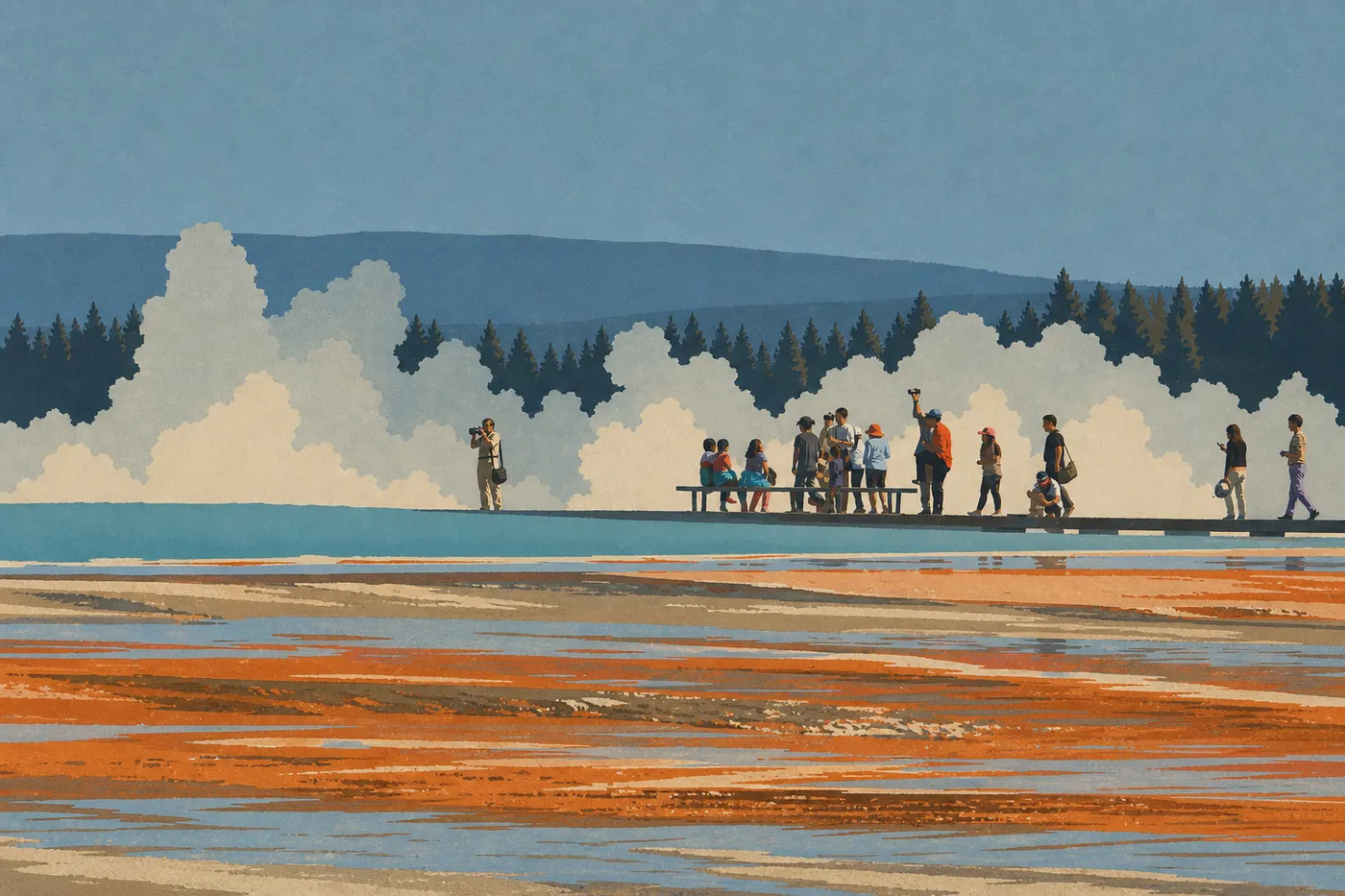
A geothermal show that needs no explanation. Old Faithful erupts roughly every 90 minutes, sending a column of water more than 165 feet into the air. Kids don't need any cultural context to be impressed. Grand Prismatic Spring, with its concentric rings ranging from turquoise blue to brick orange, looks like an alien planet seen from the atmosphere. These are images that stick with them.
Real wildlife visible from the road. Hundreds of bison in Hayden Valley, black bears spotted along the edge of Lamar Valley, elk crossing the road without a care: Yellowstone offers what African game reserves charge a fortune for, without a safety net or a mandatory guide.
Infrastructure designed for families. Stroller-friendly boardwalks around the geysers, visitor centers with interactive exhibits, the Junior Ranger program, restrooms at the main stops: the NPS designed the park for groups with children, and it shows.
The world's first national park, established in 1872, Yellowstone covers nearly 3,500 square miles, mostly in Wyoming. There's room to spread out, and that makes all the difference with kids.
Is Yellowstone Good for Kids? What Age Is Best?
Yellowstone works for kids of any age, as long as you adjust the activities to their abilities.
Babies and toddlers up to age 3 can ride in a baby carrier on the boardwalks or in a stroller on the flat sections of the geothermal basins. Most routes around the geysers are paved or boardwalked.
Between ages 4 and 7, kids are often at the ideal age: they understand safety rules, react to wildlife, and ask endless questions. The Junior Ranger program gives them a concrete goal for the entire trip.
Starting at age 8, hikes of 3 to 5 miles become manageable, and the geology starts to fascinate them. Teens especially enjoy Lamar Valley at dawn for wolf watching. It's hard to beat that kind of experience in the wild.
One thing to watch for is the sulfurous vapor from the thermal areas, which can be intense. Kids who are very sensitive to smells may find it overwhelming. Try a short area first before making it a priority for the trip.
When to Visit with Kids: The Easiest Season for Families
July and August are the easiest months: pleasant temperatures, with highs regularly topping 70°F, all roads open, and every service operating. The tradeoff is that this is peak season. Old Faithful's parking lots fill up by 9 a.m., and finding a campsite without a reservation is practically impossible.
June offers a good compromise. Crowds thin out slightly, the meadows are green, and streams are swollen with snowmelt. A few secondary roads may still be closed early in the month.
September is our recommendation for flexible families: fewer people, golden light, and active animals before winter. Days remain pleasant, but nights get cold, sometimes dipping below freezing late in the month. Bring extra layers for nights in the campground.
Yellowstone's weather is unpredictable year-round. It can snow in July, and a summer thunderstorm can drop temperatures by more than 18°F in an hour. Keep a rain jacket and fleece in your pack, even in midsummer. No exceptions.
→ To choose your travel window month by month, see our When to Visit Yellowstone guide and Yellowstone weather forecast.
How Many Days to Plan for a Family Trip
Three days is the bare minimum for checking off the highlights without ending up exhausted. Four to five days let you set your own pace, fit in wildlife mornings such as a dawn start in Lamar Valley, leave free time for the Junior Ranger program, and avoid rushing from one site to the next.
Six days or more make sense if you're combining Yellowstone with Grand Teton to the south, or if you're traveling with young children who need long breaks and recovery time.
→ Our Yellowstone itineraries lay out day-by-day plans based on trip length and group size.
What to Do in Yellowstone with Kids: Our Picks
Of the dozens of sites throughout the park, these are the ones we choose for family trips: spectacular for kids, accessible without major exertion, and made safer by boardwalks or overlooks.
Old Faithful and the Upper Geyser Basin
This is the essential stop. Arrive 20 minutes before the eruption. Approximate times are posted at the visitor center and in the official NPS app. Find a seat on the wooden benches and let the column of water put on the show. Around Old Faithful, the Upper Geyser Basin's boardwalk network lets you spend one to two hours watching other active geysers, with interpretive signs kids can follow. Allow a half day for this area alone.
Grand Prismatic Spring
The largest hot spring in the United States. The colors visible from the edge of the boardwalk are already striking, but the overlook trail, a short but steep walk, reveals the iconic aerial view. On cool days, watch for steam that can block the view and startle young children.
Hayden Valley and Lamar Valley for Wildlife
These two open valleys are the park's best wildlife-viewing spots. You'll find herds of bison, coyotes, elk, and sandhill cranes, plus bears and wolves in Lamar Valley if you're lucky and patient. Bring binoculars. They turn a blurry sighting into a memorable encounter.
Mammoth Hot Springs
The stepped travertine terraces look like a science-fiction movie set. You can explore easily by car and on foot along the boardwalks, and the lower terraces are stroller-friendly.
the Grand Canyon of the Yellowstone
Lower Falls plunges into a canyon lined with yellow and orange walls, from an impressive height. The view from Artist Point is one of the most photographed in the park. Avoid the edges with very young, restless children. The ground around the overlooks is uneven.
→ Our What to Do in Yellowstone page covers every site, with practical details and suggested visit times.
Easy Family Hikes (Short, Little Elevation Gain, Stroller-Friendly)
Yellowstone isn't a park where the best family experiences require long hikes. The boardwalks and short trails in the geothermal areas are enough to fill several days.
Fountain Paint Pot boardwalk (about 0.5 miles): mud pots, geysers, and hot springs all come together on this very short loop. Ideal at the end of the day with tired little ones.
Mystic Falls Trail (about 3.1 miles round-trip): the park's best-known family trail. Conifer forest, a river, and a waterfall at the end. Works for strong walkers as young as 6 or 7, but isn't stroller-friendly.
→ Our Yellowstone hiking guide covers every trail, including difficulty, elevation, and seasonal conditions.
The Junior Ranger Program
The Junior Ranger program is one of the NPS's best ways to get kids involved in their visit. Pick up the activity booklet at the visitor center, or download it from the NPS website, and fill it out during your stay with wildlife observations, geyser questions, and field notes. Then show it to a ranger. The ranger swears the child in, and the child receives an official metal badge and certificate.
It gives kids a goal during the visit and turns a day of moving from site to site into a real mission. At Yellowstone, the booklet comes in several age levels, starting at age 4. Rangers are patient and enthusiastic, even when a child explains that a geyser is "like a volcano with a cough."
Allow five to ten minutes per activity in the booklet. Three to four days of sightseeing give you enough time to complete it comfortably without sacrificing the rest of your plans.
Safety with Kids
Yellowstone isn't an amusement park. The risks are real and specific, and knowing them helps you manage them calmly.
Thermal areas. Water in some basins can exceed 194°F. Serious accidents almost always happen the same way: someone steps off the boardwalk. The rule is nonnegotiable. Stay on the boardwalks, don't run, and don't touch the water. Explain this to your kids in plain language before you arrive at the site.
Bison. They're the park's most dangerous animals, not because they're inherently aggressive, but because they're unpredictable and can run more than 30 mph. The required minimum distance is 25 yards. If a bison approaches your vehicle, stay inside with the engine running and wait for it to pass. Never get out to photograph a bison up close.
Bears. The minimum distance is 100 yards. Bear spray is strongly recommended whenever you leave the boardwalks and heavily visited areas. Teach your child not to run if a bear is spotted.
Elk and moose. They're dangerous during the rut in September and October, and females with calves can be dangerous in spring. Don't approach any wild animal in Yellowstone, even one that looks calm.
Thunderstorms. They can move in within minutes on summer afternoons. Take shelter in a building or vehicle when lightning strikes, and avoid open areas and ridgelines.
→ Our Yellowstone safety rules are covered in detail in our complete guide, along with emergency contacts and the numbers to call from inside the park.
Where to Stay with Kids (In or Around the Park)
Staying in the park lets you enjoy dawn and dusk without long entrance lines. Book as early as possible. Lodging inside the park starts filling as soon as reservations open in January.
→ Our Where to Stay in Yellowstone guide covers every option, availability, and typical rates. You can also see our pages on hotels, campgrounds, and RV camping.
Meals and Breaks with Kids
Every major area has a food outlet, and the general stores let you put together a picnic. Pack a day bag with water, snacks, and a backup meal for each day. Kids who wait an hour for a restaurant table late in the afternoon at a national park usually aren't at their best, and neither are their parents.
→ Our Where to Eat in Yellowstone page lists the park's restaurants, cafeterias, and grocery stores, with updated hours.
Family Budget
Park admission costs $35 per private vehicle and is valid for seven consecutive days, regardless of how many people are in the car. Children under 16 enter free on foot or by bicycle.
If you're visiting several national parks on the same trip, as many people do around Yellowstone, the America the Beautiful pass covers admission to all national parks and federal recreation sites for one year. It quickly pays for itself after two or three parks. The park also offers its own annual pass for $70.
The biggest expenses are still lodging, which you should book early because in-park rates rise quickly, and gas. The park covers nearly 3,500 square miles, and the distances between sites are long.
→ Our National Park Fees and Passes guide explains all pricing options and discounts available to families.
What to Combine with Yellowstone When Traveling with Kids
Yellowstone pairs naturally with Grand Teton National Park, 56 miles to the south. The drive takes about 1.5 hours, and the scenery is completely different, with jagged mountains and a glacial lake. Crowds are also slightly lighter. With kids, a cruise on Jackson Lake is an easy and memorable addition.
Farther south, Jackson Hole offers a well-equipped resort town with restaurants for every budget, family activities such as rodeo and summer sledding, and a good base for exploring Grand Teton.
For a longer road trip, the Grand Circle parks in the West, including Arches, Bryce Canyon, and Zion, can be added in another week. Our Road Trip guide offers ready-made itineraries with recommended family stops.
Is Yellowstone Worth It with Kids?
Yes, without question, and for a simple reason. Yellowstone is one of the few places in the world where nature puts on the show by itself, without a narrator, a screen, or special effects. A geyser exploding, a bison passing ten yards from the car window, a spring with impossible colors: kids don't need anyone to explain why it's impressive. They see it, and they remember it.
The logistics are demanding, the distances are long, and prices are high. But the wonder-to-effort ratio remains among the best of any American national park. Book early, plan for the weather, choose the right season, and let the park do the rest.
Our complete Yellowstone guide brings together all the practical information you need to plan your trip from start to finish.
Frequently Asked Questions
Is Yellowstone good for families?
Yellowstone works for families with kids of any age. Babies can ride in carriers on the boardwalks, 4- to 7-year-olds can get the most out of the Junior Ranger program and short trails, and teens experience wildlife watching like a real expedition.
Is Yellowstone worth visiting with kids?
Yellowstone is absolutely worth visiting as a family. Erupting geysers, bison within binocular range, and one-of-a-kind geothermal landscapes create an immediate sense of wonder without requiring any advance understanding. The NPS infrastructure, including boardwalks, Junior Ranger, and visitor centers, is designed with kids in mind.
What's the best time to visit Yellowstone with kids?
July and August are best for convenience, since everything is open and the weather is stable. September is best for the atmosphere, with fewer people, golden light, and active animals. Our When to Visit Yellowstone guide explains the advantages and drawbacks of every month.
What is there to do in Yellowstone with kids?
Top activities in Yellowstone with kids include watching Old Faithful and exploring geothermal basins on the boardwalks, wildlife watching in Hayden Valley and Lamar Valley, short hikes such as Artists Paintpots, Fountain Paint Pot, and Mystic Falls, and the Junior Ranger program. Our What to Do in Yellowstone page covers every site and suggested visit times.
How long does it take to visit Yellowstone with a family?
Plan on at least three days for Yellowstone's highlights with a family, and four to five days for a comfortable pace that includes wildlife mornings and free time. Our Itinerary and Trip Length page offers detailed plans based on the time you have available.