
Yellowstone Wildlife: What Animals to See and Where to Find Them
Yellowstone is home to some of the most spectacular wildlife in the Northern Hemisphere. Five species take center stage: the plains bison, grizzly bear, gray wolf, elk, and pronghorn. If you see only these five, the trip is already a success, but the park has plenty more to offer, from 300 bird species to coyotes, black bears, and river otters. The bison is still the most common animal. It's hard to drive through Lamar Valley or Hayden Valley without coming across a herd.
Yellowstone's Iconic Wildlife
Plains Bison
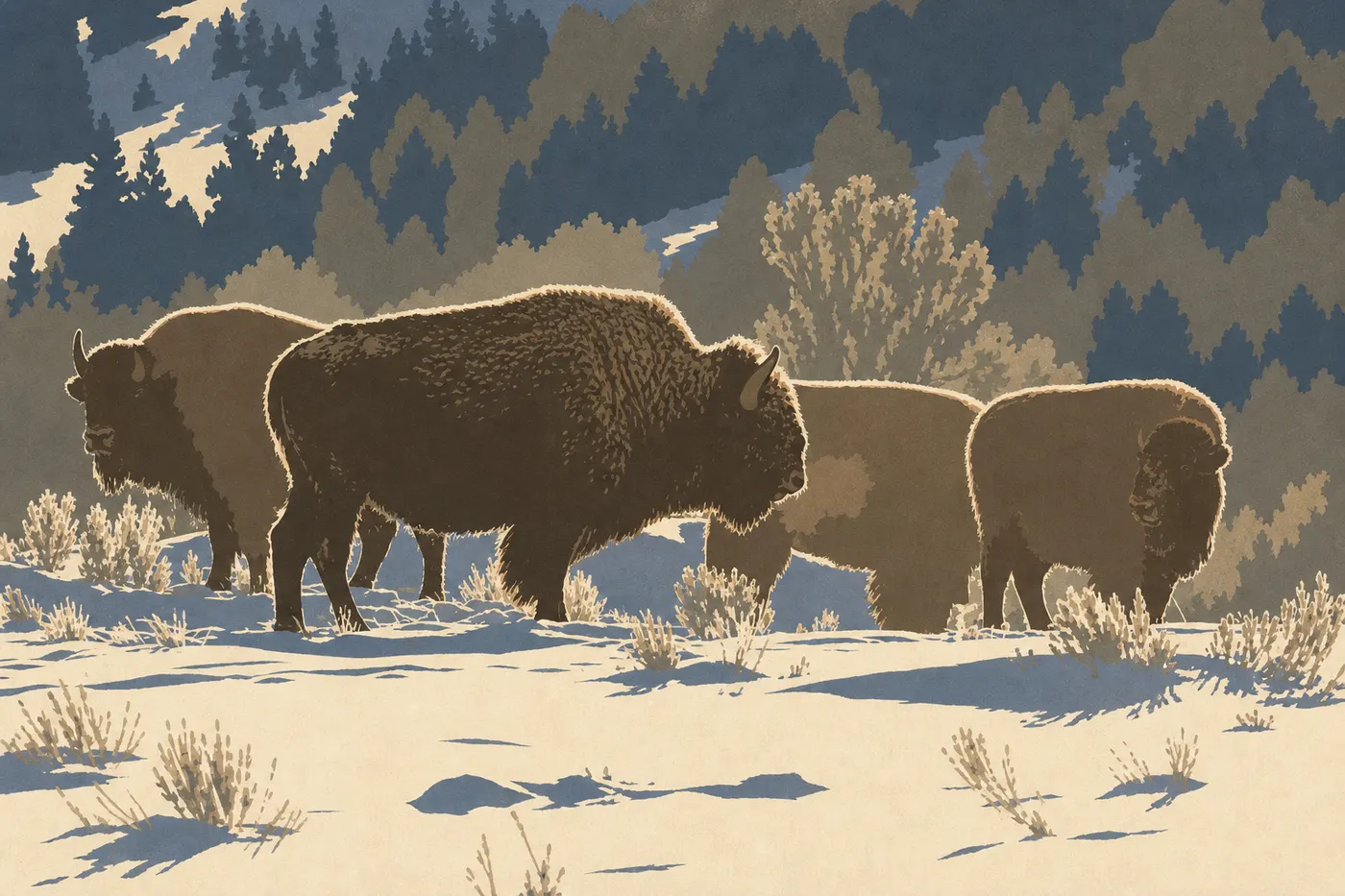
The bison (Bison bison) is the park's undisputed icon. Yellowstone is home to one of the only wild, genetically pure herds in the United States, numbering between 4,500 and 5,000 animals according to the NPS's annual counts. An adult male can weigh up to 2,000 pounds. Its silhouette is unmistakable, with a prominent hump and massive head. Bison travel in tight herds during the winter, then spread out across the meadows as the snow melts. July and August are the rutting season. Bulls grunt, charge, and fight in a noisy, unpredictable spectacle that means you need to stay at least 75 feet away.
Where to see them: Hayden Valley, Lamar Valley, the Firehole River, and Pelican Valley. The road between Madison and Old Faithful regularly creates bison jams, with lines of cars held up by the herd, so allow extra time.
When: Year-round. Calves are born from April through May, and the rut takes place in July and August.
Grizzly Bears
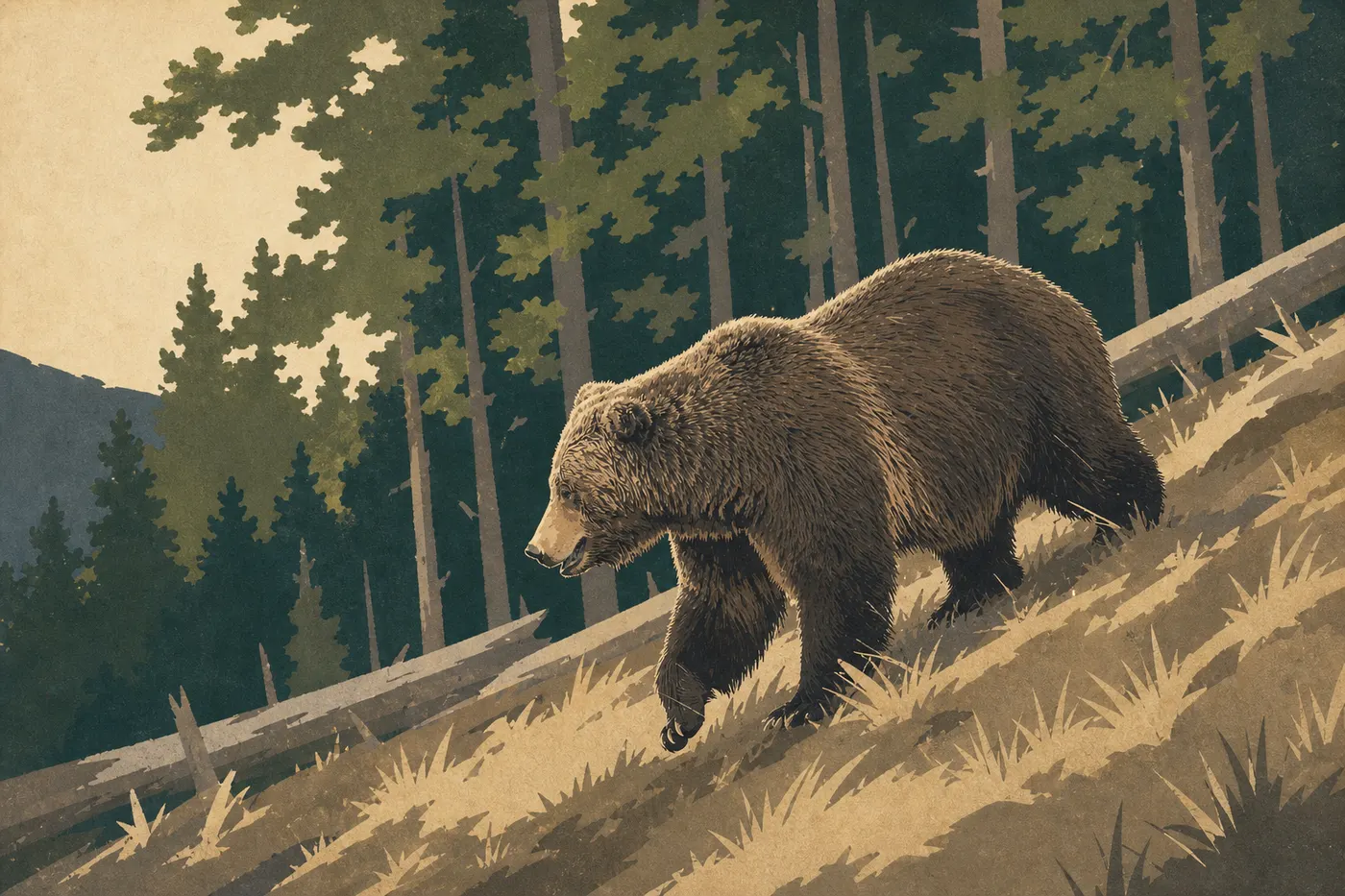
The grizzly bear (Ursus arctos horribilis) is the park's most powerful predator. An estimated 700 grizzlies live in the broader Yellowstone ecosystem, known as the Greater Yellowstone Ecosystem. An adult can weigh 550 to 770 pounds. Its coat ranges from blond to dark brown, often with a silvery tint on the back that explains the English name grizzly. An omnivore, it spends much of the summer digging up roots, turning over rocks for insects, or feeding on elk carcasses.
Where to see them: Lamar Valley and along the Lamar River, the Hayden Valley area, and the Dunraven Pass area. Early morning and evening are best. Binoculars and a spotting scope are essential, and watching from the road is often your best option.
When: April through November. After emerging from hibernation in early spring, grizzlies are active and visible.
Telling Black Bears and Grizzlies Apart
The two species share Yellowstone, which causes a lot of confusion. Three reliable clues can help:
| Feature | Black Bear | Grizzly |
|---|---|---|
| Muscular shoulder hump | Absent | Present and visible from a distance |
| Muzzle profile | Straight | Concave |
| Front claws | Short and curved | Long, up to 4 inches, and straight |
Color alone isn't enough. A black bear may be cinnamon brown, and a grizzly may be almost black. Look for the prominent shoulder hump. It's the most visible feature from a vehicle.
Gray Wolves
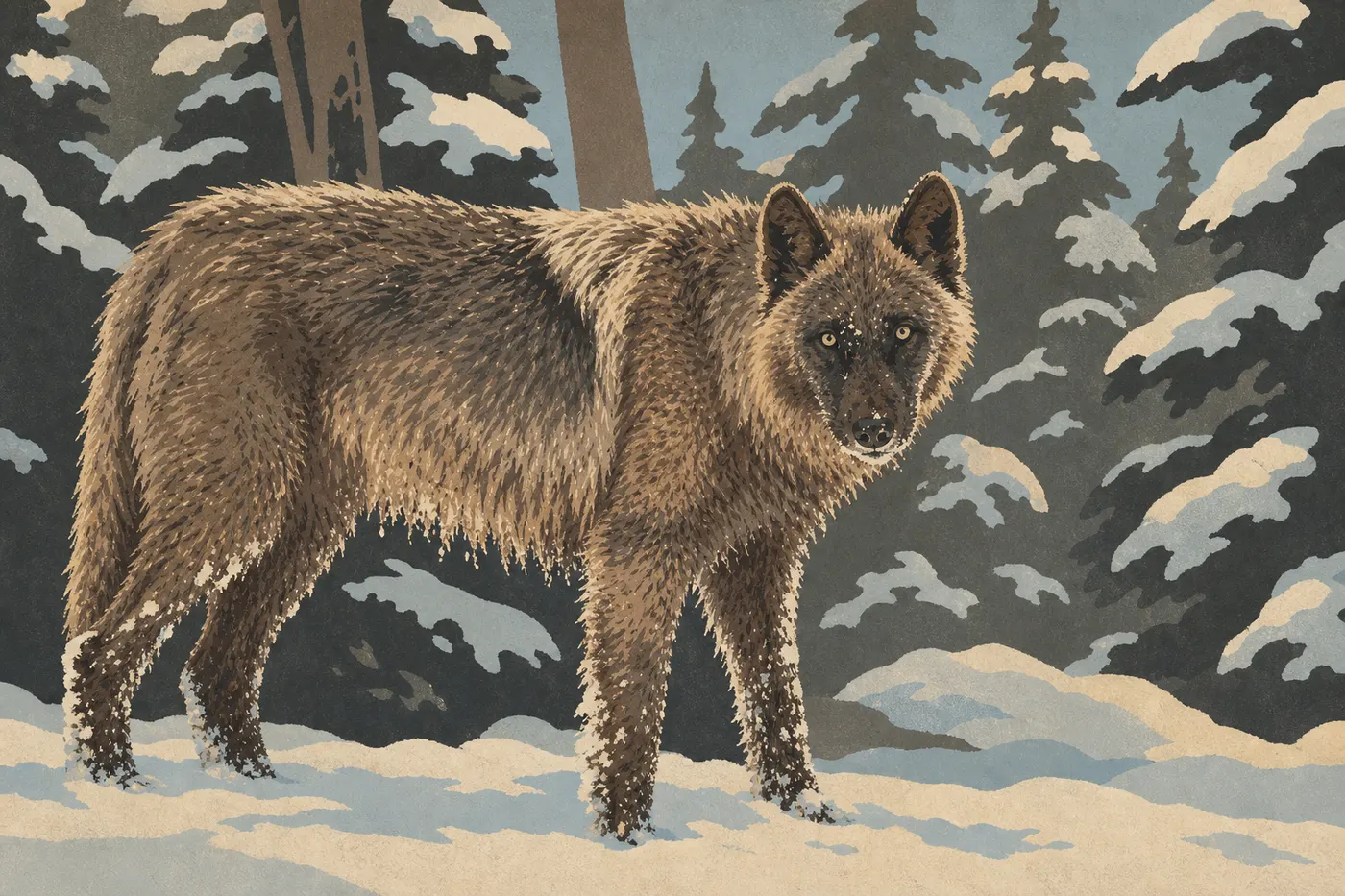
Gray wolves (Canis lupus) were reintroduced to Yellowstone in 1995 after being absent for 70 years. Today, about 100 wolves in roughly 10 packs roam the park. Their return triggered a spectacular ecological chain reaction. By regulating elk, they allowed riverside vegetation to regenerate and helped stabilize riverbanks. The Lamar Canyon pack is the one visitors see most often. Regulars in Lamar Valley get there before dawn to watch them hunt.
Where to see them: Lamar Valley, by far the best spot, and the Slough Creek area. An 80× spotting scope is recommended.
When: Year-round, but winter and early spring are ideal because of the snow, more active packs, and sparse vegetation.
Elk
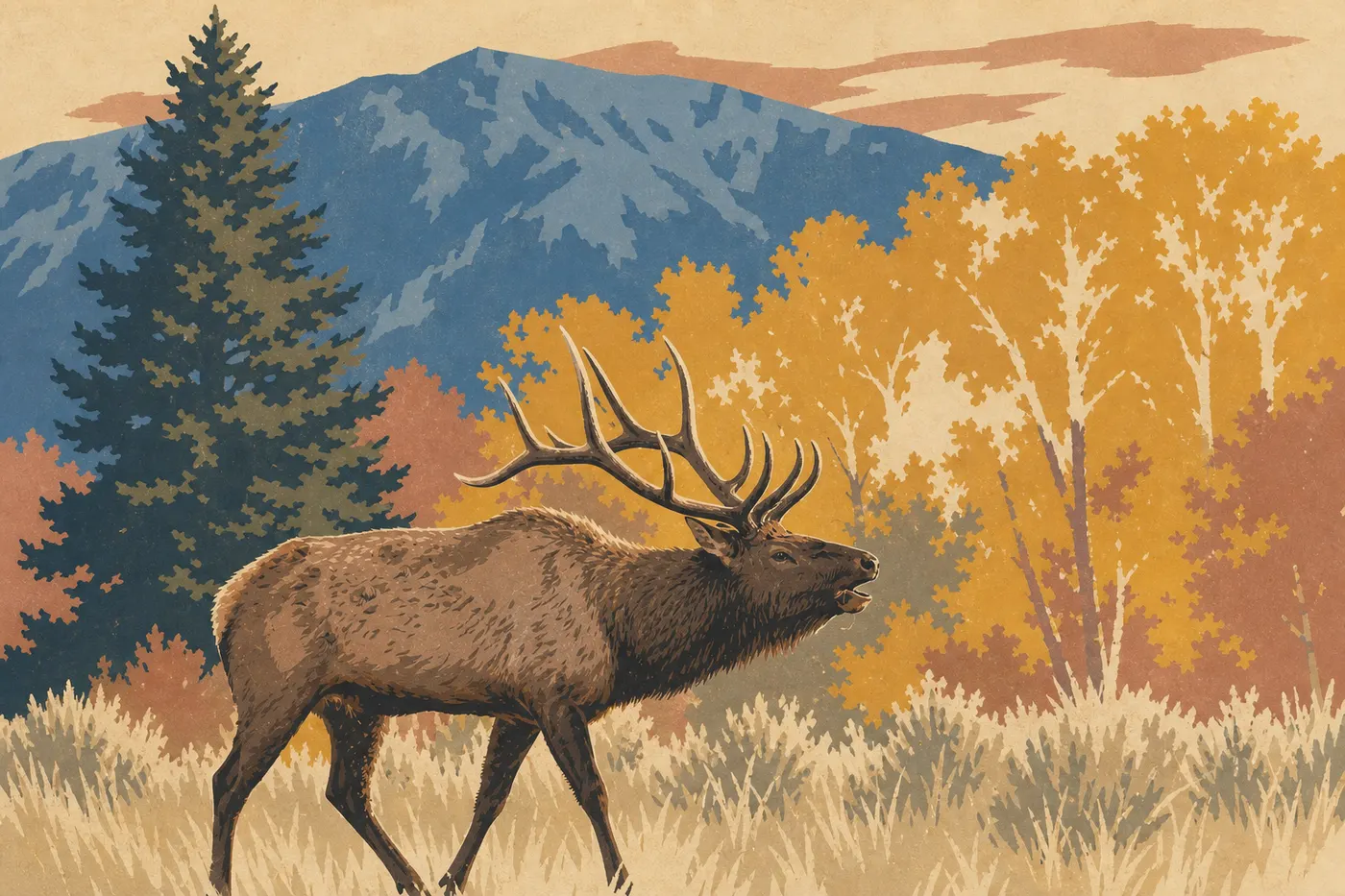
Elk (Cervus canadensis) are the park's most abundant deer species, with several thousand animals. An adult male can weigh more than 660 pounds and carry antlers more than 3 feet long. The fall rut, from September through October, is a striking sight. Bulls bugle loudly, and clashes between antlers echo through the valleys. Females and calves can be seen in open meadows starting in spring.
Where to see them: Madison Junction, Mammoth Hot Springs, Norris Geyser Basin, and along the Firehole River.
When: Year-round. The fall rut is one of the park's most impressive wildlife events.
Pronghorn
The pronghorn (Antilocapra americana) is the fastest land animal on the continent, reaching speeds of up to 55 mph. Yellowstone's population is smaller than in other parts of the West, but herds are common in open areas. Its tawny coat, sharply contrasted with white, is instantly recognizable.
Where to see them: Open meadows in Lamar Valley and around Gardiner near the North Entrance.
When: Spring through fall. They move to lower elevations in winter.
Where to See Wildlife in the Park
Yellowstone covers about 3,500 square miles, so driving around at random isn't an option. A few areas account for most wildlife sightings.
Lamar Valley (in the park's northeast): Regulars call it the "Serengeti of North America." Bison, wolves, grizzlies, coyotes, eagles, and the rest of the cast are all here. The road follows the Lamar River for about 19 miles, with frequent pullouts where you can stop safely.
Hayden Valley (in the center of the park, between Canyon Village and Fishing Bridge): A marshy meadow crossed by the Yellowstone River. Large bison herds, frequent grizzlies, and waterfowl such as American white pelicans and sandhill cranes are common here.
Mammoth Hot Springs: Accessible year-round. Elk herds appear during the shoulder seasons, and coyotes can be seen on the lawns.
Madison Junction and the Firehole River: Bison, river otters, ducks, and trumpeter swans.
Norris Geyser Basin: A less-visited area with good elk sightings and occasional black bears.
To plan your outings, several wildlife-viewing trails in Yellowstone run right through areas with high animal densities.
When to Watch Wildlife
The golden rule is to go at dawn and dusk. Large mammals such as bison, elk, and bears are active early in the morning and late in the afternoon, then rest in the shade during the hottest hours. Arriving at sunrise in Lamar Valley dramatically improves your chances of seeing wildlife.
By season:
- Spring (April–May): Bison calves and elk calves, bears emerging from hibernation, and returning migrations. Weather is unpredictable, and snow is possible through June.
- Summer (June–August): Wildlife is spread out and harder to spot in tall vegetation. Bison rut in July and August. Roads are at their busiest.
- Fall (September–October): The elk rut, bears preparing for winter by feeding heavily, and golden light. This is the season our team recommends.
- Winter (November–March): Wolves and bison are easier to see against the snow, and crowds are nearly nonexistent, but access to roads is limited. Temperatures often fall below 0°F at night.
For month-by-month weather details and opening periods, the Yellowstone seasons guide covers everything in depth.
Yellowstone's Predators and Large Animals
The grizzly bear is Yellowstone's apex land predator. Next come the gray wolf, a pack hunter that specializes in elk and weakened bison, and the coyote (Canis latrans), an opportunist seen throughout the park.
The cougar (or mountain lion, Puma concolor) is present but rarely seen. Nocturnal and elusive, it mainly hunts deer at night. Daytime encounters are exceptional.
Among birds of prey, the bald eagle can be seen along waterways, especially around the Yellowstone River. Peregrine falcons and ospreys nest in the park.
As for the largest animals, the bison takes the prize, with adult males weighing up to 2,000 pounds. A bull elk can weigh 660 to 990 pounds. An adult grizzly weighs between 330 and 770 pounds, depending on the season.
How to Watch Wildlife Safely
Yellowstone is a wild park, and its animals are neither trained nor domesticated. The NPS is clear: visitors are injured every year because they fail to keep a safe distance. These rules are nonnegotiable.
Official minimum distances:
- 75 feet from all large mammals, including bison, elk, deer, pronghorns, and black bears.
- 330 feet from bears, including grizzlies and black bears, and from wolves.
- If an animal changes its behavior, such as standing up, stopping its meal, or looking at you, you're too close. Back away immediately.
Never feed wildlife. An animal conditioned to human food almost always ends up being euthanized. The rangers' phrase sums it up: "A fed bear is a dead bear."
On trails: Travel in a group, with at least three people recommended in bear country, and make noise as you walk so you don't surprise a grizzly at close range. Carry bear spray where you can reach it, not at the bottom of your pack. Keep it on your belt. It's more effective than a firearm if a bear charges.
In your vehicle: If an animal blocks the road, turn off the engine and wait. Don't honk. Bison in particular can charge a vehicle without warning.
Never get between a mother and her young, whether it's a sow and her cubs or a cow elk and her calf.
For general park safety, including thunderstorms, geothermal hazards, and emergencies, our complete Yellowstone guide lays out all the protocols.
In Short: Wildlife You Can't Miss and Where to Find It
| Species | Best Spot | Best Time |
|---|---|---|
| Bison | Hayden Valley, Lamar Valley | Year-round; rut in July and August |
| Grizzly | Lamar Valley, Hayden Valley | April–November, early morning |
| Gray wolf | Lamar Valley | Winter and spring, at dawn |
| Elk | Mammoth, Madison Junction | Year-round; rut in September and October |
| Pronghorn | North Entrance (Gardiner), Lamar Valley | Spring through fall |
| Cougar | Anywhere, but elusive | Night; daytime encounters are rare |
| Bald eagle | Yellowstone River, lakes | Spring through fall |
Before any outing, check the NPS website for road closures and current wildlife alerts, and use the complete Yellowstone guide to plan your entire trip.
Frequently Asked Questions
What are Yellowstone's five iconic animals?
Yellowstone's five iconic animals are the plains bison, grizzly bear, gray wolf, elk, and pronghorn, the local "Big Five" found in the park's broad valleys.
What is the most common animal in Yellowstone National Park?
The most common animal in Yellowstone is the plains bison. The park is home to a herd of 4,500 to 5,000 animals, and it's nearly impossible to drive through Hayden Valley or Lamar Valley without seeing one.
What is the largest animal in Yellowstone?
The largest animal in Yellowstone is the plains bison. Adult males can weigh up to 2,000 pounds. Bull elk, weighing up to 990 pounds, and adult grizzlies, weighing up to 770 pounds, round out the podium.
What predators live in Yellowstone?
Yellowstone's main predators are the grizzly bear, the apex land predator, gray wolves, coyotes, and cougars. In the air, bald eagles and ospreys hunt fish in the park's lakes and rivers.
What animals are out at night in Yellowstone?
The cougar is the most strictly nocturnal species. Coyotes, raccoons, river otters, and many rodents are also active after sunset. Bears and bison may move around at night as well, especially during Yellowstone's short summer nights.
Where do Yellowstone's animals go in winter?
Most large herbivores, including bison, elk, and pronghorns, migrate to lower-elevation areas with less snow, sometimes outside the park. Grizzlies hibernate from October or November through March or April. Wolves remain active year-round and are easier to see against the snow, making winter the best season to watch them in Lamar Valley.
Do these animals leave Yellowstone before a volcanic eruption?
No, according to the NPS and the seismologists who monitor Yellowstone. This viral rumor, spread after videos showed bison running along a road, misinterprets ordinary migratory behavior. No scientific data supports the idea of an animal exodus warning of an eruption. The park's geothermal and seismic sensors are the only reliable indicators.