
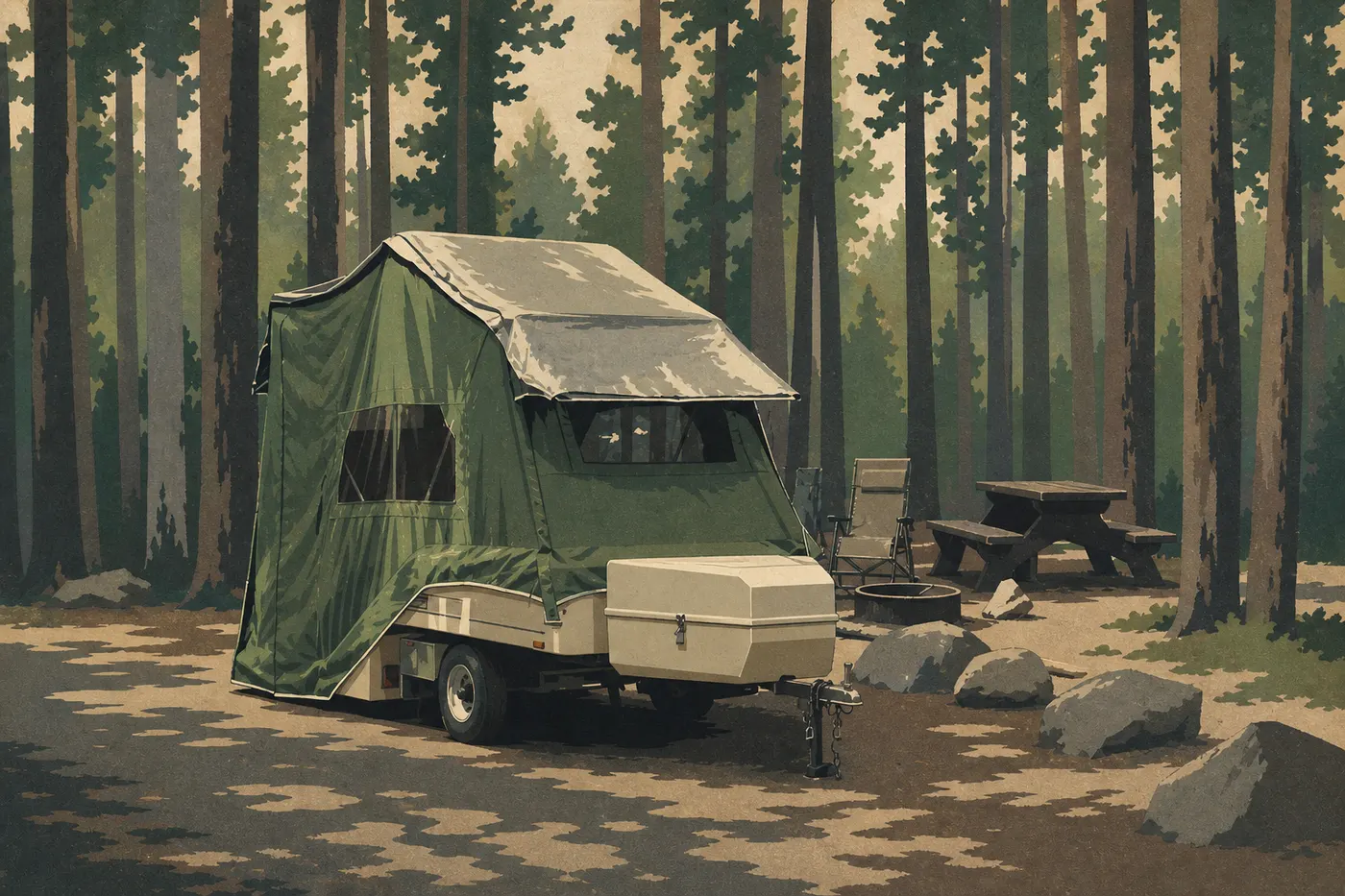
Yellowstone by RV: Campgrounds, Rules and Practical Tips
You can easily visit Yellowstone by RV. In fact, it is one of the best-equipped national parks in the country for RVs. Twelve campgrounds accommodate RVs, but only one offers full hookups (electricity, water, and sewer): Fishing Bridge RV Park. The number-one rule is to book months ahead for summer, or you may find yourself without a site.
Can you drive and camp in an RV at Yellowstone?
Absolutely. Yellowstone covers nearly 3,500 square miles in northwestern Wyoming. It was the world's first national park, established in 1872. The Grand Loop Road, the main loop, runs for about 143 miles and is fully paved and suitable for standard-size RVs. Five entrances provide access to the park. All allow RVs, although some close outside the main season. The opening conditions for each Yellowstone entrance vary by season.
Admission costs $35 per vehicle and is valid for 7 days. If you're visiting several parks during your trip, the $70 annual America the Beautiful Pass quickly pays for itself. The pass options are detailed in the guide to national park fees and passes.
As for the season, the main roads open from May through early November for wheeled vehicles. The West Entrance (West Yellowstone) is usually accessible starting on the third Friday in April. In winter, you can enter only by snowmobile or snowcoach, so RV trips are limited to the warmer months.
RV restrictions and regulated roads
Yellowstone's main roads pose no particular problems for standard RVs. Still, it's worth knowing a few things before you set out.
- Speed limits: 45 mph on the main roads and 25 mph in villages and congested areas. Bison can cross without warning, so obeying the speed limit is as much about animal safety as it is about road safety.
- Parking: Parking lots at the most popular sites (Old Faithful, Grand Prismatic Spring, and Lamar Valley) have spaces for long vehicles, but they fill up fast. When we visited in August, the Grand Prismatic parking lot was full by 8:45 a.m. Arrive before 9 a.m. or come back after 5 p.m.
- Beartooth Highway (US-212): This spectacular approach from the northeast climbs above 10,800 feet and includes hairpin turns. It's not recommended for RVs longer than 26 to 30 feet or for drivers who aren't used to mountain roads.
- Secondary roads: Some roads leading to overlooks or picnic areas have “No RV” signs or length restrictions. Check the official NPS map before you turn onto them.
The park's official campgrounds
Nine of Yellowstone's twelve campgrounds accept RVs. Here are the main ones, along with what you really need to know.
Fishing Bridge RV Park
The only campground with full hookups (30/50-amp electricity, water, and sewer). It's reserved for hard-sided units only. Tents and pop-up campers aren't allowed because of grizzly bear safety concerns in the area. It's on the north shore of Yellowstone Lake, a short walk from the Fishing Bridge Visitor Center. Reservations are required through Recreation.gov. In July and August, it fills up weeks in advance.
Madison Campground
An ideal central location at the intersection of the roads to Old Faithful, Norris, and West Yellowstone. There are no hookups, but generators are allowed from 8 a.m. to 8 p.m. The campground accepts RVs up to about 40 feet, with pull-through sites available. It's one of the park's most sought-after campgrounds, so book early.
Canyon Village Campground
Close to the Grand Canyon of the Yellowstone and its dramatic waterfalls. There's a section for RVs, plus access to village services such as a grocery store, restaurant, and pay showers. A good balance of comfort and nature for families.
Bridge Bay Campground
The park's largest campground by number of sites, along the shore of Yellowstone Lake. It has many pull-through sites for long units, plus access to the marina for boat rentals. There are no hookups.
Grant Village Campground
In the southern third of the park, a short distance from West Thumb. Showers are available on site. A good base for continuing south to Grand Teton.
Mammoth Hot Springs Campground
Open nearly year-round, making it the only campground with such a long season. It's 5 miles from the North Entrance and has a distinctive atmosphere. Elk regularly wander among the sites. Some sites have tighter RV length limits.
Reservations vs. first-come, first-served
Madison, Canyon, Bridge Bay, Grant Village, and Fishing Bridge can be reserved through Recreation.gov up to six months in advance. Norris, Indian Creek, Pebble Creek, and Lewis Lake operate largely on a first-come, first-served basis. That's an appealing option outside July and August, when demand drops.
Seasonal opening dates and exact rates for each campground are listed in the Yellowstone camping guide.
Dispersed camping and areas around Yellowstone (boondocking)
Dispersed camping is prohibited inside the national park. The surrounding national forests, however, offer dispersed campsites that are free or nearly free:
- Gallatin National Forest: North and west of the park, with easy access from West Yellowstone.
- Shoshone National Forest: To the east, via Cody (Wyoming), with mountain views and genuine peace and quiet.
- Caribou-Targhee National Forest: West and south of the park, convenient from the West Entrance.
These forests are also a solid backup when the park is full. Grand Teton and the surrounding Wyoming area complement a Yellowstone trip well, and the regional guides cover these destinations.
Sewer, water, and services (dump stations)
Yellowstone's RV facilities are well planned:
- Dump stations: Available at Fishing Bridge RV Park, Canyon, Madison, and Grant Village. A fee applies if you're not camping there.
- Drinking water: Spigots are available at all the main campgrounds. Fill your tank before heading into remote areas.
- Fuel: Gas stations are located at Canyon, Fishing Bridge, Grant Village, Mammoth, and Old Faithful. Diesel isn't available everywhere, so check before entering the park.
- Propane: Available for refills at Canyon Village and Grant Village.
Which campground should you choose?
| Profile | Our recommendation |
|---|---|
| Full hookups are essential | Fishing Bridge RV Park |
| Central location with access to the whole park | Madison |
| Lake views | Bridge Bay or Grant Village |
| Grand Canyon of the Yellowstone | Canyon Village |
| Off-season or extended opening | Mammoth Hot Springs |
| Low budget and peace and quiet | Surrounding national forests |
Renting an RV to visit Yellowstone
If you're not traveling in your own vehicle, major platforms such as Cruise America, Outdoorsy, and RVshare offer RVs from Denver, Salt Lake City, or Bozeman, the closest air hubs to Yellowstone. Expect to pay $150 to $300 per day depending on the size and season, excluding fuel.
Here are a few things to check before signing:
- Vehicle size: A 23- to 26-foot Class C offers the best balance of maneuverability and comfort in Yellowstone. Class A motorhomes measuring 36 to 39 feet make parking at popular sites more difficult.
- Unlimited mileage: Essential for a road trip in the American West.
- Pet policy: Extra fees are common if you're traveling with a dog, so check in advance.
- Insurance: Get full coverage. Mountain roads leave little room for error.
To compare an RV, lodge, or town lodging, the Yellowstone lodging overview compares all the options.
RVs and pets, budget, and reservations: what to know
Pets: Dogs are allowed in the park on a leash no longer than 6 feet, but only on roads, in parking lots, and at campgrounds. They're prohibited on trails, boardwalks, and in thermal areas. At Fishing Bridge, even campers with dogs are turned away because it is a designated grizzly bear area. Never leave a pet alone in a closed vehicle in hot weather.
Site fees: Expect to pay $20 to $30 per night at a campground without hookups, and $50 or more at Fishing Bridge. Add the $35 per-vehicle entrance fee, or use the America the Beautiful Pass if you're visiting several parks.
When to book: For July and August, log on to Recreation.gov exactly six months before your arrival. The best sites disappear within minutes. In September, competition drops significantly and the weather is often still excellent.
Food safety: Anything edible or scented, including food, deodorant, and toothpaste, must be stored in campground bear boxes or inside a locked vehicle. This is a regulation, not a suggestion.
In summary: our Yellowstone RV plan
An RV trip through Yellowstone is an experience we recommend without hesitation, as long as you plan the logistics ahead of time. Here's our four-step plan:
- Book Fishing Bridge if full hookups are essential, six months ahead with no exceptions.
- Choose Madison or Canyon for dry-camping nights: Pull-through sites, a central location, and services close by.
- Reach popular parking lots before 9 a.m. with a large vehicle, or come back in the late afternoon.
- Spend one night in a national forest (Gallatin or Shoshone) to get some peace and quiet away from the park crowds.
For what comes next, including itineraries, wildlife, geology, and hikes, our complete Yellowstone guide gives you the big picture.
Frequently asked questions
Can you camp at Yellowstone?
Yes, you can camp at Yellowstone. The park has twelve campgrounds with more than 2,000 sites in all, and nine accommodate RVs. Fishing Bridge RV Park is the only one with full hookups (electricity, water, and sewer). The other campgrounds offer dry camping.
Can you park an RV anywhere in Yellowstone?
No. You can't park an RV just anywhere in Yellowstone because free parking is prohibited in the park. Popular sites have designated spaces for long vehicles, but they're limited and fill up early in the morning. Arrive before 9 a.m. or wait until late afternoon.
Which campground should you choose in Yellowstone?
The right campground depends on your priorities. Choose Fishing Bridge RV Park for hookups, Madison for a central location, Bridge Bay or Grant Village for lake views, and Canyon for the Grand Canyon of the Yellowstone. The summary table above can help you choose based on your needs.
What's the best time to visit Yellowstone?
The best time to visit Yellowstone by RV is July and August for the weather and access to all the sites, but that's also when crowds peak. September often offers the best balance, with fewer people, the first fall colors, and comfortable temperatures. The Yellowstone season-by-season calendar covers each month of the season when roads are open to wheeled vehicles.