
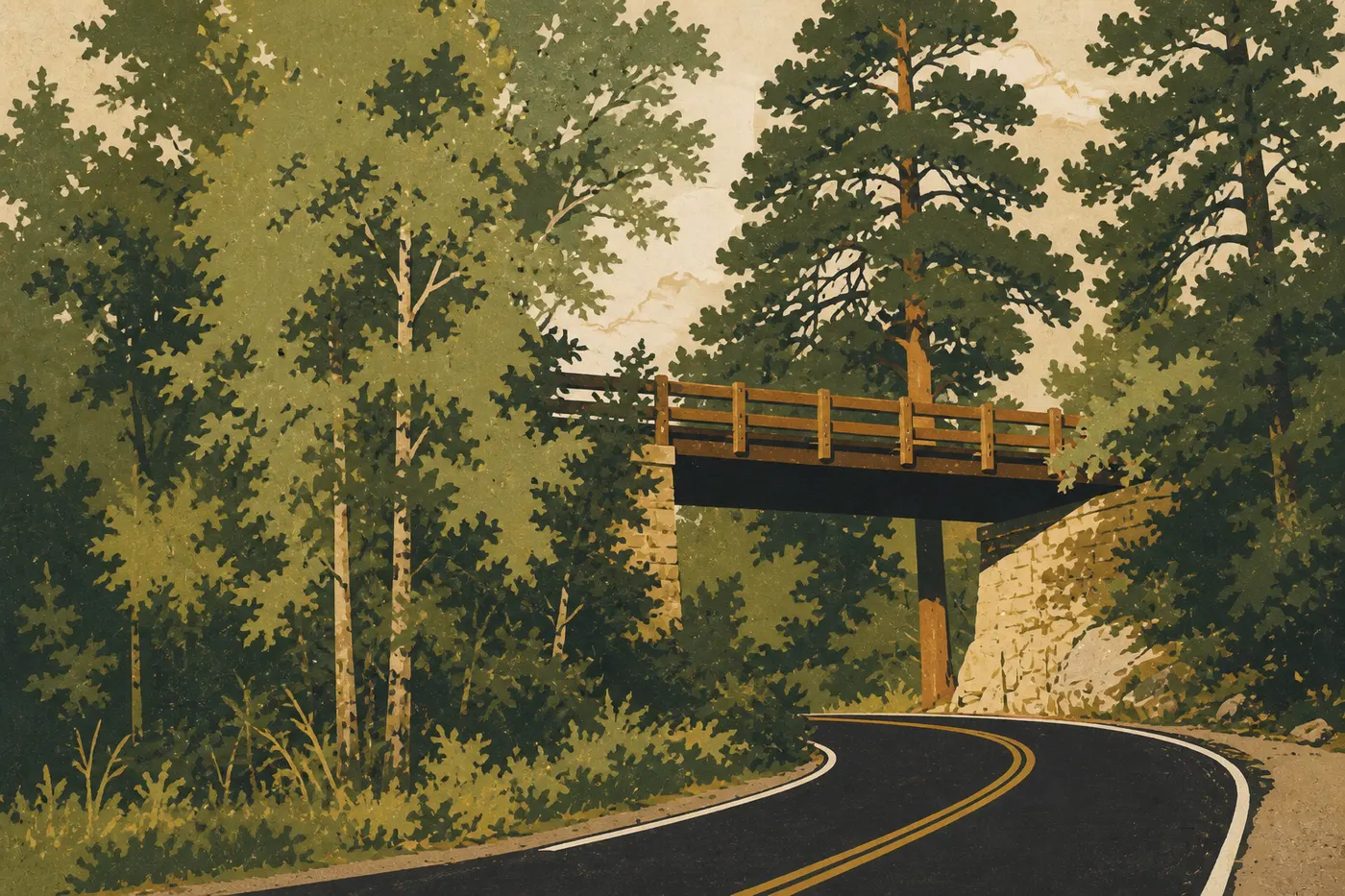
Getting Around Wind Cave: Roads, Shuttles, and Parking
Wind Cave is a compact park, but it helps to understand the layout before you arrive. One main road serves the park, and all cave tours leave from the Visitor Center. The short version: you'll need a car. Wind Cave doesn't have a shuttle. You enter through the only entrance station on US Highway 385, drive freely on the park roads, and walk from the parking lot to the Visitor Center for your underground tour.
To reach Wind Cave from Rapid City, Denver, or Mount Rushmore, see the guide to getting to Wind Cave for detailed routes, distances, and drive times.
Cave tours can be booked through Recreation.gov, and time slots fill up quickly in July and August. For entrance fees and annual passes, the National Park Fees & Passes section covers the essentials.
Getting Around the Park
By Car
A car is the only practical way to explore Wind Cave. The paved road network stretches for about 12 miles inside the park. The main scenic road crosses open prairie and passes several prairie dog towns. Bison, elk, pronghorn, and white-tailed deer regularly appear along the roadside.
The speed limit on park roads is 35 mph. Follow it carefully. Bison cross without warning, and they always have the right of way. If a herd blocks the road, turn off your engine and wait for it to move on its own. Don't honk, and don't get out of your vehicle.
By Shuttle
Wind Cave doesn't have a shuttle. Unlike Zion or the Grand Canyon South Rim, you can drive your own vehicle on all park roads that are open. There's no need to plan your day around bus schedules. You're completely on your own for exploring the surface.
By Bike
Park roads are open to cyclists, but they're narrow and shared with cars. There are no dedicated bike lanes. Riding the scenic road can be enjoyable early in the morning, before traffic picks up. Stay alert. Bison don't distinguish between a cyclist and a pedestrian. Wind Cave isn't a park we recommend as a top choice for a cycling trip.
Where to Park
The park's main parking lot is at the Visitor Center, directly accessible from US Highway 385. It accommodates passenger vehicles, RVs, and vehicles with trailers.
Additional parking areas are located at the main trailheads and picnic areas. Capacity is limited. During the busy season in July and August, arrive before 10 a.m. to make sure you find a space at the most popular spots. In the late afternoon, lots empty out quickly after 5 p.m. if you can shift your visit later.
Wind Cave has no parking reservation system or parking tag. Parking is included with park admission.
Distances and Drive Times Between Areas
Wind Cave is a compact park. From the Visitor Center, the main trailheads and wildlife-viewing areas are 5 to 15 minutes away by car. You won't need to recalculate dozens of miles as you would at Yellowstone.
In practice, you can fit in a cave tour in the morning, a picnic, and a wildlife drive in the afternoon without complicated logistics. Our Wind Cave itinerary includes a sample schedule with actual drive times between stops.
Special Cases: RVs, Vans, Accessibility, and Pets
RVs and camper vans. Elk Mountain Campground, the park's only campground, welcomes RVs. Check length restrictions before booking. The main scenic road is suitable for standard-size vehicles, but some secondary turnoffs aren't recommended for long vehicles.
Accessibility. The Visitor Center is accessible to people with reduced mobility. The NPS offers accessible cave tours, with an elevator providing access to the cave entrance. Call 605-745-4600 directly to check which time slots are wheelchair accessible on the date of your visit.
Pets. Pets are allowed in the park on a leash, up to 6 feet long, in surface areas such as roads, parking lots, and picnic areas. They aren't allowed in the cave or on designated trails. If you're traveling with a dog, plan ahead. Someone in your group will need to stay with the animal during the cave tours.
Practical Mobility Info: Fuel, Cell Service, and Apps
Fuel. There are no gas stations inside the park. Fill up before entering, in Hot Springs to the south or Custer to the north. Both towns are less than 30 minutes from the Visitor Center. It's not a major inconvenience, but don't enter the park with your fuel gauge on empty.
Cell service. Coverage is partial and variable throughout the Black Hills. Inside the park, dead zones are common, especially in the hollows. Before you leave, download maps for offline use with the NPS App, Google Maps, or Maps.me. If you're planning a hike, save your GPX track in advance. Check the Wind Cave weather forecast before leaving your lodging. Summer hailstorms can close park roads without warning.
NPS App. The official NPS App includes offline maps, Visitor Center hours, road conditions, and park alerts. It's free and works without a connection once you've downloaded the content.
Frequently Asked Questions
How can I visit Wind Cave National Park?
Visiting Wind Cave mainly means driving. You enter the park via US Highway 385, park at the Visitor Center, and join a guided cave tour. Reservations through Recreation.gov are recommended. You can explore the park's surface, scenic roads, and trails at your own pace.
How far is Wind Cave from Custer?
Wind Cave is about 22 miles south of Custer, a 30- to 35-minute drive on US Highway 385. The two sites are easy to combine in one day from the Black Hills.
Which is better, Jewel Cave or Wind Cave in South Dakota?
They're two separate parks with different atmospheres. Wind Cave is known for its boxwork formations, rare honeycomb-like limestone structures, and its wild surface landscape with free-ranging bison. Jewel Cave stands out for its stalactites and sheer size. If you only have one day, choose based on your priority: wildlife and prairie at Wind Cave, or geological depth at Jewel Cave.
What is the history of Wind Cave National Park?
For the park's history, its creation, and its geological features, the Wind Cave guide provides the full context.