
Wind Cave by RV: Campgrounds, Rules, and Tips
The short answer. Yes, you can visit Wind Cave National Park and spend the night in an RV. The park has one official campground, Elk Mountain, with no electric hookups or running water. The main limitation to plan for is the maximum length allowed at each site, so check before setting out in a long vehicle.
Wind Cave is a manageable-size park tucked into the Black Hills of South Dakota. It draws far fewer visitors than Yellowstone or Zion, which is exactly what makes it a good RV destination: manageable roads, uncrowded camping, and bison and pronghorn right outside your window. Our complete Wind Cave guide covers the big picture. Here, we're focusing on RV logistics.
Can you drive and camp in an RV at Wind Cave?
The answer is yes, with no major caveats. Most visitors cross the park on US Highway 385, a standard two-lane highway that poses no problem for typical RVs. The Visitor Center, the required starting point for cave tours, sits about 0.5 miles west of the highway.
The park's internal roads remain accessible to standard-size RVs. There are no low-clearance tunnels and no formally prohibited road sections for RVs on the main road network. That is a major difference from parks such as Zion or Glacier, where restrictions are strict.
RV restrictions and regulated roads
Wind Cave doesn't have the dramatic restrictions found at Zion's Mount Carmel Tunnel or Glacier's Going-to-the-Sun Road. Here are the points to know:
- Maximum site length: Elk Mountain Campground has a length limit that varies by site. If your vehicle is longer than 30 to 33 feet, check Recreation.gov or call 605.745.4600 to confirm that a compatible site is available before you leave.
- Day-use parking: The Visitor Center and trailhead parking lots are designed for cars. If you're driving a large RV, look for a space at the end of a row or arrive early in the morning. Parking outside marked areas is prohibited.
- Speed: The park's internal roads have a 45-mph speed limit. In practice, you'll often drive more slowly because bison cross the road without warning, and you have to give them room.
- No special permit is required to enter the park with an RV, unlike some parks that require permits for oversized vehicles.
Official campgrounds in the park
Elk Mountain Campground
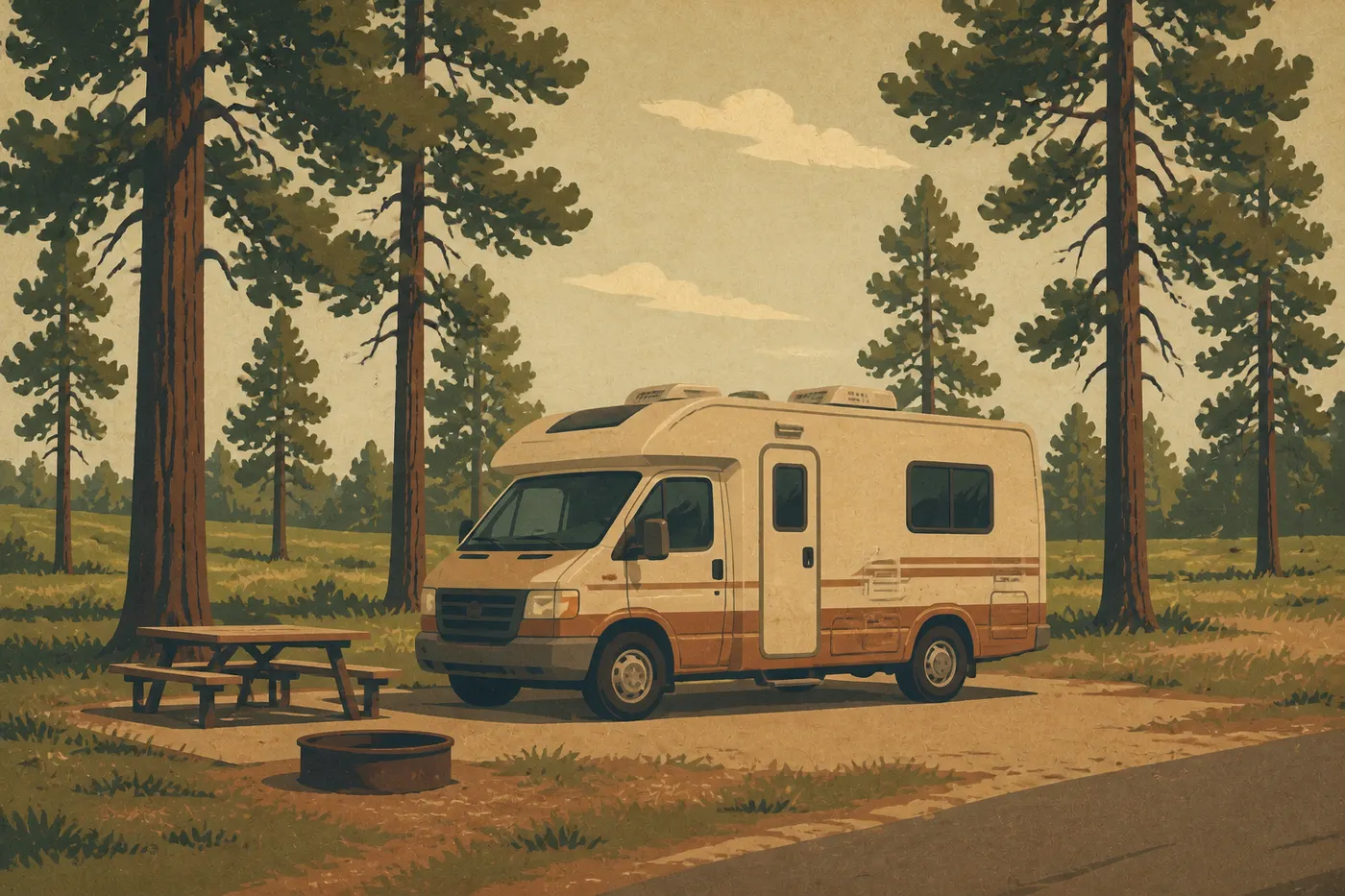
This is the only campground managed by the NPS at Wind Cave, and it covers the basics. There are about 60 sites, some of them suitable for RVs, in a pleasant setting of open grasslands and ponderosa pines.
Amenities:
- RV sites (confirm the maximum size directly with the park for your vehicle)
- No electric, water, or sewer hookups (fully dry camping)
- Drinking water available at the central spigot during the summer season
- Flush toilets in summer and vault toilets in winter
- Picnic tables and fire grates at every site
Reservations and rates: Some sites can be reserved through Recreation.gov, while the rest are first come, first served. The rate is around $20 per night. The campground is officially open year-round, but winter conditions, including sometimes-snowy roads and overnight temperatures below 14°F, make stays from December through February demanding. Check current Elk Mountain rates and the reservation policy before you leave.
Our advice: Arrive midweek, outside U.S. school holidays. Sites fill quickly over Labor Day weekend, the first weekend in September. On the other hand, on a Tuesday in mid-September, you can almost always find a good site without a reservation.
Dispersed camping and areas around Wind Cave (boondocking)
Boondocking inside the national park is prohibited. The surrounding Black Hills do offer several solid alternatives for campers who prefer to stay off the grid.
Black Hills National Forest: The national forest surrounding the park to the north and west opens its forest roads to RVs that are compact enough. Dispersed camping is free in areas without special regulations. You'll need a reliable GPS for the tracks, and you should leave with full tanks.
Buffalo Gap National Grassland: To the east and south, this federal grassland managed by the USDA also allows dispersed camping in certain areas. The terrain is flat and exposed to the wind, and solitude is guaranteed. It's best left to RVers who appreciate a bare-bones setup.
Custer State Park: About 12 miles north, this South Dakota state park offers several campgrounds with amenities, some of them with electric hookups. It's a comfortable alternative for large RVs. Plan on paying a separate entrance fee. Our Black Hills guide explains how to include Custer in a regional itinerary.
Dump stations, water, and services
Because Elk Mountain is a dry campground, there is no dump station inside the park. Handle all your water and dumping needs outside the park.
Dump station: The closest stations are in Hot Springs, about 11 miles south, and Custer, about 22 miles north. Several private campgrounds and service areas in both towns offer this service, usually for a few dollars.
Fresh water: Fill your tanks in Hot Springs or Custer before entering the park. Water at the campground isn't guaranteed outside the summer season.
Supplies and fuel: Hot Springs has a grocery store and gas stations. For a wider selection, Rapid City, about 47 miles north, has all the major chains.
Which campground should you choose?
Since Elk Mountain is the only campground in the park, the real question is whether to stay inside the park or on its outskirts.
- You want to be as close to the cave as possible: Choose Elk Mountain, without hesitation. Evening cooking over the fire grates, with bison grazing 650 feet away, makes dry camping well worth it. Reserve early in summer.
- You have a long RV and need electric hookups: Stay at Custer State Park or a private campground in Hot Springs, then make a day trip to Wind Cave, a 20- to 30-minute drive away.
- You're traveling with family: Elk Mountain remains the best choice for a close-up wildlife and cave experience. For kid-friendly underground tours, see our tips in the Wind Cave family guide.
- You're taking a Black Hills road trip: Spend one night at Elk Mountain, then continue to Custer and Mount Rushmore. Our two- to three-day Black Hills itinerary lays out this route.
Renting an RV to visit Wind Cave
If you're flying in, Rapid City (airport code RAP) is the closest airport, about 62 miles north. That's where you'll find most of the RV rental agencies serving the Black Hills.
What size should you choose? For Wind Cave, a 20- to 26-foot RV, such as a Class B or small Class C, is ideal. You'll have easy access to sites and simple maneuvering in secondary parking lots. Class A motorhomes longer than 33 feet are allowed on US Highway 385, but day-use parking at trailheads is more difficult.
Compare insurance options before signing, and check whether the generator is included. For nights at Elk Mountain without hookups, a generator or solar setup makes a real difference.
RVs, pets, budget, and reservations: what to know
Pets: Dogs are allowed in the park and at the campground, as long as they stay on a leash no longer than 6 feet. They aren't allowed inside the cave or on most marked trails. Plan to leave them at the campground during underground tours.
Total budget: Plan on the site fee, around $20 per night, plus park entrance fees. Check our Fees & Passes page for current rates and to see whether the America the Beautiful Pass, valid at all U.S. national parks, makes sense for your itinerary.
When to reserve: Wind Cave is less crowded than its neighbors, but RV sites remain limited. From July through mid-August, check Recreation.gov as soon as the reservation calendar opens. Outside the summer peak, arriving on a weekday before 2 p.m. is usually enough to find a site.
Weather to expect: June through August nights can sometimes drop below 50°F, and afternoon thunderstorms are common, with possible hail. Fall offers a pleasant window, with daytime temperatures between 59°F and 68°F and a sharp drop in visitation. In winter, snowfall can close part of the campground. Our Wind Cave weather guide breaks down what to expect month by month.
In summary: our Wind Cave RV plan
Wind Cave is easy to access, without the clearance restrictions found in the big Western parks. The only official campground, Elk Mountain, is basic but well located: dry camping, quiet surroundings, and wildlife within sight. For a larger RV or a more comfortable stay, Hot Springs and Custer State Park expand your options a short drive away.
The winning combination is arriving midweek, reserving ahead through Recreation.gov for summer, and entering the park with full tanks. The cave and bison take care of the rest.
Frequently asked questions
Where can you park an RV at Wind Cave National Park?
The only official campground is Elk Mountain Campground inside the park. For daytime parking, use the Visitor Center and trailhead parking lots. With a long vehicle, choose a space at the end of a row and arrive early.
Can you camp in a regular car at Wind Cave?
Yes. Car camping in a regular vehicle is allowed at Elk Mountain Campground as long as you occupy a reserved or assigned site. No separate sites specifically designated for sleeping in a car are listed.
Can you visit Wind Cave by RV?
Yes. The park roads and US Highway 385, which crosses the park, are accessible to standard RVs. No tunnel or low-clearance section makes driving difficult. Before leaving, check the maximum length accepted at Elk Mountain for your vehicle.
Can you park an RV anywhere in the park?
No. Parking is allowed only in marked areas, including official parking lots and campground sites. Parking off the road or on the grassland is prohibited and can damage sensitive ecosystems.
How much does an RV campsite cost at Wind Cave?
The rate at Elk Mountain Campground is about $20 per night. Park entrance fees are additional if you don't have an America the Beautiful Pass. For entrance fees and annual pass rates, see the national parks Fees & Passes page.
What is the best time to visit Wind Cave by RV?
The ideal window runs from mid-May through mid-October. Fall, especially September and October, combines lower visitation, mild days, and fewer thunderstorms. Our guide to the best times to visit Wind Cave explains the advantages of each season.