
U.S. Virgin Islands by RV: Campgrounds, Rules, and Tips
The good news is that you can sleep in an RV in the U.S. Virgin Islands. The catch is that this national park is unlike any other in the NPS system. St. John covers just 20 square miles and is accessible only by car ferry from St. Thomas. Its roads climb tight switchbacks and weren't built for 30-foot rigs. Here, the ideal RV looks more like a compact camper van than a Class A. Once you plan your trip with that in mind, everything falls into place.
Can You Drive and Camp in an RV in the U.S. Virgin Islands?
Yes, but getting to St. John requires one essential step: taking the car ferry from Red Hook, on the east side of St. Thomas. First, fly into St. Thomas through Cyril E. King Airport (STT), then cross to Cruz Bay, St. John's main port. The crossing takes about 20 minutes. Ferry capacity is limited, and departures become less frequent outside peak hours. Plan ahead, especially from December through April.
Once you're on the island, two realities become clear right away. Traffic drives on the left, a legacy of the archipelago's colonial history. Roads are narrow and often lack shoulders, with hairpin turns climbing as high as 1,000 feet. A compact van or camper van under 20 feet can manage without too much trouble. Longer vehicles require constant attention, and some trailhead parking areas simply won't be accessible.
RV Restrictions and Roads
There are no permit-controlled tunnels on St. John, unlike at Zion or Great Smoky Mountains, but the island's practical limitations matter just as much.
North Shore Road (Route 20), which serves park beaches including Cinnamon Bay and Trunk Bay, is manageable in a van. Roads leading to the southern areas around Coral Bay and Lameshur Bay narrow considerably. Some sections aren't recommended for vehicles over 16 feet.
Trailhead parking areas are often small overlooks carved into the edge of a cliff and designed for rental cars. With a camper van, always check the maximum length posted at the entrance. For vehicles over 23 feet, we recommend leaving the RV at Cinnamon Bay and exploring the island by rental car or shared taxi, both common options on St. John.
Official Park Campgrounds
Cinnamon Bay Campground
Cinnamon Bay is the only campground inside Virgin Islands National Park. It sits along a bay on the north shore of St. John, just a few yards from one of the archipelago's finest beaches. When we visited, I understood why the waterfront sites go first: the sunrise over the bay is worth the trip on its own.
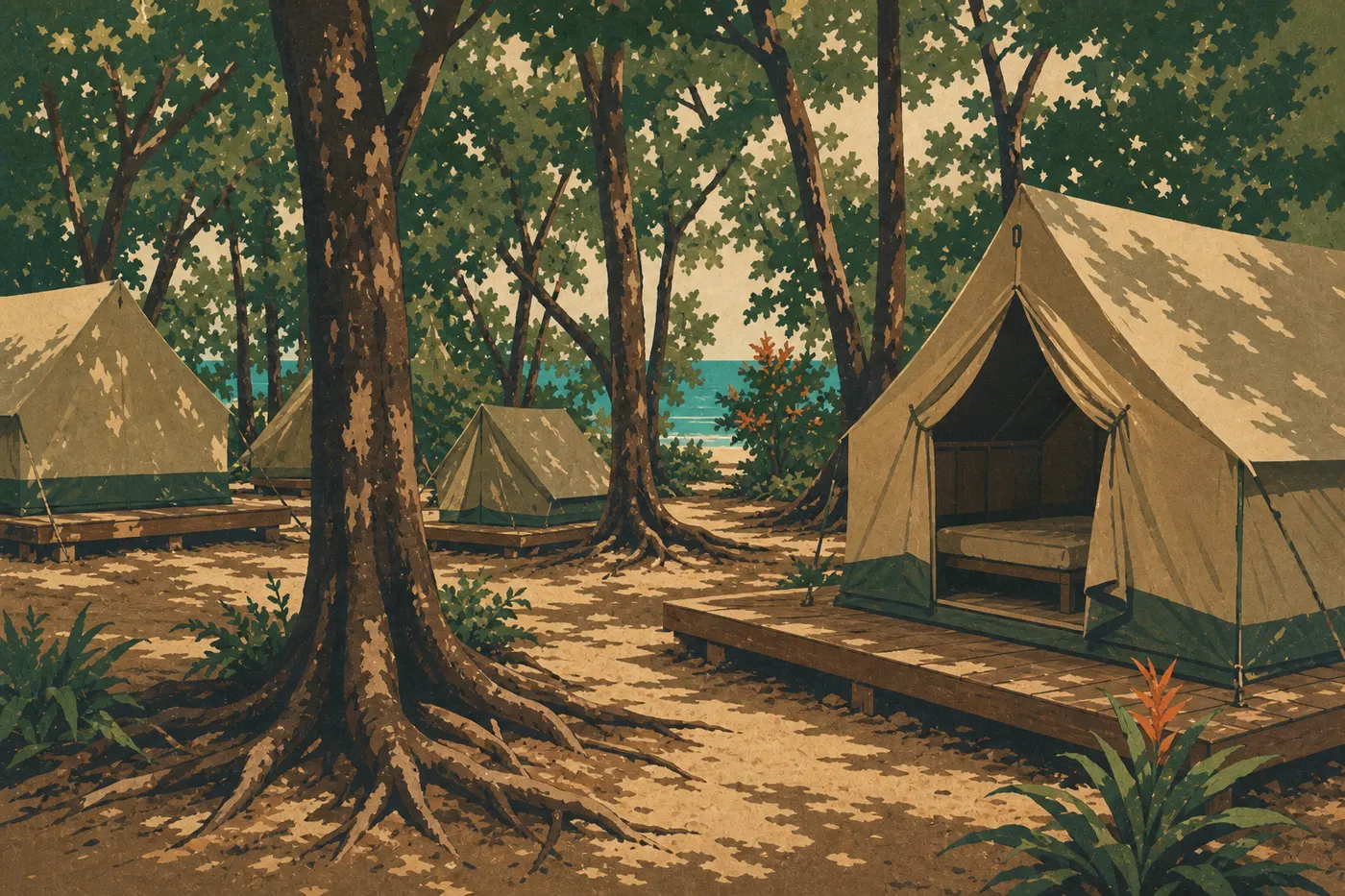
The campground offers bare sites for visitors with their own gear, along with platform eco-tents and solid-walled cottages. It has no RV sites with electrical or water hookups. A self-contained van with solar panels and an onboard water tank is the best fit here.
Rates vary by site type and season. Check Recreation.gov or the concessioner's website for current prices. Book well in advance because sites fill quickly during the dry season. Cruz Bay Visitor Center is open Monday through Thursday from 8:15 a.m. to 4 p.m. and Friday from 8:15 a.m. to 1:30 p.m. It's closed on weekends, July 4, Thanksgiving, and Christmas.
Boondocking and Areas Around the Park
Boondocking is virtually nonexistent on St. John. The island is small, undeveloped land belongs almost entirely to the national park or private owners, and overnight parking outside official campgrounds is prohibited in the park.
There are a few private campgrounds on St. Thomas, but the island is much more developed. They offer a fallback if Cinnamon Bay is full: you sleep on St. Thomas and take the ferry over for a day trip to the national park.
The BLM lands and national forests that allow boondocking on the mainland have no equivalent in the U.S. Virgin Islands. The other lodging options in the U.S. Virgin Islands (hotels, villas, and lodges) are covered in the dedicated guide if you'd like to mix up your overnight stays or skip camping.
Dump Stations, Water, and Services
This is the tricky part of RV travel in the U.S. Virgin Islands: as far as we know, St. John has no public dump station dedicated to RVs. Cinnamon Bay Campground has restrooms and water spigots for campers, but you need to empty a converted vehicle's gray and black tanks before boarding the ferry.
On St. Thomas, RV services remain limited. If you rent your van from a local specialist, the agency generally handles dumping when you return the vehicle. With a personal vehicle, ask marinas or private campgrounds on St. Thomas, which sometimes offer this service.
Practical rule: arrive on the island with empty wastewater tanks and enough capacity to last your entire stay on St. John.
Which Campground Should You Choose?
Since Cinnamon Bay is the park's only campground, the real question is what kind of site you want and where you'd like to be within the campground.
Water view and immediate beach access: Waterfront sites are the most popular. They're also the first to go when reservations open. If the view matters to you, reserve it first.
Families with kids: You can snorkel right from Cinnamon Bay Beach, with no driving or intermediate trail required. For young children, that's a real advantage. The U.S. Virgin Islands family guide lists activities suited to younger visitors in the park.
Hikers: The Cinnamon Bay Trail trailhead starts right at the campground. Park the van once and explore on foot for several days. Check the hikes from Cinnamon Bay guide for routes starting in the northern area.
To explore the south coast around Coral Bay and Lameshur Bay, plan to travel from Cinnamon Bay by rental car or shared taxi.
Renting an RV to Visit the Park
Renting a large RV on the mainland and shipping it to the U.S. Virgin Islands isn't realistic. No widely available marine transport service connects the mainland with the USVI for recreational vehicles.
The local solution is a camper van. A few agencies operate on St. Thomas and offer compact vehicles suited to the archipelago's terrain. Peer-to-peer rental platforms such as Outdoorsy and RVshare also list vans in the USVI. Filter your search for St. Thomas.
Before you book, check two things without exception: the vehicle's length, under 20 feet for comfortable driving on St. John, and the electrical system's capacity. Solar panels or a lithium battery are essential when there are no hookups.
RVs, Pets, Budget, and Reservations: What to Know
Pets: Pets are allowed in the park on a leash no longer than 6 feet. They're not allowed on beaches or in the water. Check Cinnamon Bay Campground's pet policy when you reserve because concessioner rules may differ from NPS rules.
Budget: As of this writing, Virgin Islands National Park doesn't charge a standard entrance fee. Check current rates on the NPS website before you leave. The car ferry from Red Hook, however, is an expense to include in your budget from the start.
Reservations: Cinnamon Bay reservations are made through Recreation.gov, often several weeks ahead during peak season. The reservation window usually opens six months before your arrival date.
Weather and hurricanes: Trade winds shape the winter climate, bringing steady breezes and little rain. Summer is wetter and marks hurricane season, from June through November. Check NPS alerts before any summer trip, and don't commit to a reservation without a cancellation option between June and November. The U.S. Virgin Islands weather calendar summarizes the seasons month by month.
In Summary: Our U.S. Virgin Islands RV Plan
Fly to St. Thomas (STT), take the car ferry to St. John, rent a compact van under 20 feet, and book a bare site at Cinnamon Bay. That's the setup that works for this park. Top off your water and power before boarding, reserve several weeks ahead, and remember that traffic drives on the left. With those basics covered, you're ready for a smooth stay in one of the few truly island-based national parks in the United States. For the big picture, the U.S. Virgin Islands guide lays out the basics for visiting the park.
Frequently Asked Questions
Can you camp in an RV in the U.S. Virgin Islands?
Yes, you can camp in an RV, including a compact van or camper van, at Virgin Islands National Park. The only campground inside the park is Cinnamon Bay on St. John, and it has no sites with electrical hookups.
Can you visit the U.S. Virgin Islands in an RV?
You can visit Virgin Islands National Park in a van or compact camper van under 20 feet. You must reach St. John by car ferry from Red Hook on St. Thomas. The island's roads are narrow and steep, so large Class A RVs aren't suited to its terrain.
Can you park an RV anywhere in the U.S. Virgin Islands?
No. Overnight parking outside official campgrounds is prohibited in the national park. Trailhead parking areas are small and aren't suited to long vehicles. Cinnamon Bay Campground is the only legal overnight base on St. John.
Where are RVs prohibited in the U.S. Virgin Islands?
Roads in southern St. John around Lameshur Bay aren't recommended for vehicles over 16 feet. Scenic overlooks and trailhead parking areas can't easily accommodate RVs over 20 feet.
How much does a campsite cost in the U.S. Virgin Islands?
Cinnamon Bay rates vary by site type, from bare sites to eco-tents and cottages, and by season. Check Recreation.gov for current prices. The U.S. Virgin Islands seasonal guide explains the low- and peak-season periods to help you plan your budget.
What's the best time to visit the U.S. Virgin Islands in an RV?
The best time to visit the U.S. Virgin Islands in an RV is the dry season from December through April, with steady trade winds, little rain, and no tropical cyclone risk. It's also peak season, so reserve Cinnamon Bay as early as possible. The When to Visit the U.S. Virgin Islands guide covers the advantages of each month.