
Where to Stay in Virgin Islands: In the Park, Gateway Towns, and Campgrounds
For a visit to Virgin Islands National Park, Cruz Bay is the go-to base. The village welcomes ferries from St. Thomas, opens directly onto the park, and has nearly every service on St. John. The park covers about 60% of the island, so you get the full natural setting as soon as you step off the boat, whether you stay in town or in the heart of the park. Plan on two to four nights to enjoy the trails, snorkeling spots, and beaches without rushing. For a day-by-day plan, see our Itinerary & Length of Stay page.
Where to stay: towns, lodges and campgrounds (1)
- Campground Cinnamon Bay Beach and Campground see NPS · 121 sites Directions ↗
 Base map © OpenStreetMap · © CARTO
 ⚠ Gateway town & Lodge data is undergoing editorial review.
Should You Stay in the Park or Outside It?
The choice looks different here than it does at Yellowstone or Zion. St. John is a small island measuring 20 square miles, and the park covers most of it. Either way, you'll be surrounded by nature. The decision really comes down to three types of travelers.
You want to be as close to nature as possible, without a car. Cinnamon Bay, inside the park, is the place for you. Wake up surrounded by tropical vegetation, snorkel just steps away, and enjoy direct access to the Caribbean Sea without a layer of tourist infrastructure between you and the water.
You prefer restaurants and services in the evening. Stay in Cruz Bay. The park is a ten-minute walk or taxi ride away, and you'll have plenty of dining options after a day of hiking.
Your budget or availability leaves you with no choice on St. John. Charlotte Amalie, on St. Thomas, remains a workable option if you're willing to take a ferry every morning. The hotel selection is broader and rates are more affordable, but the daily round-trip quickly becomes a logistical burden.
Staying in Virgin Islands National Park: Lodges and Park Accommodations
Cinnamon Bay Resort
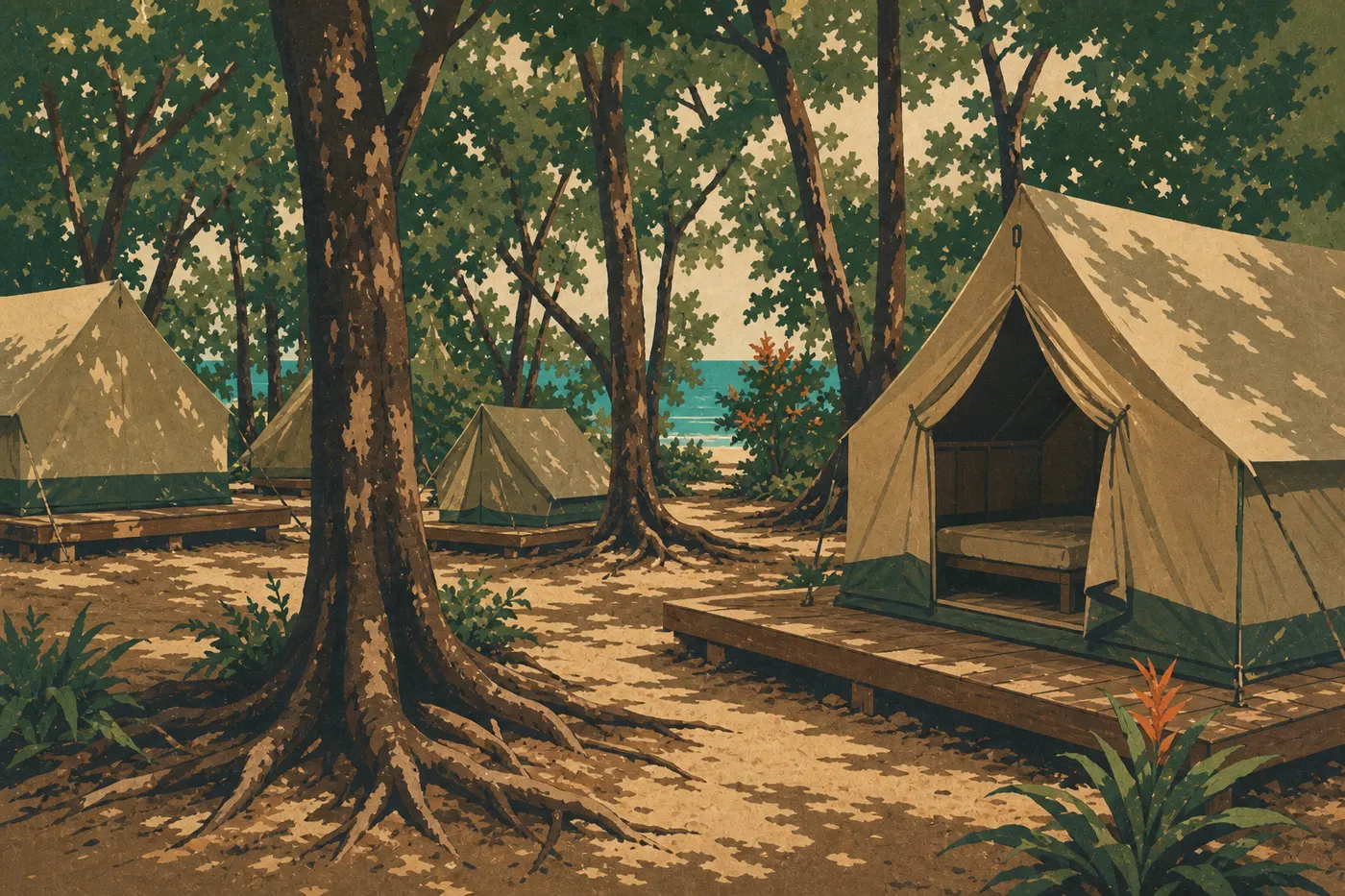
Cinnamon Bay is the only lodging option inside the park. The property offers solid-walled cottages and furnished tents on wooden platforms set directly on the beach of the same name, on the island's north shore. It reopened after Hurricane Irma in an eco-resort format, with solar power, deliberately minimal furnishings, and a self-consciously jungle-meets-beach atmosphere.
Comfort is intentionally limited. Most accommodations don't have air conditioning, there's no pool, and there are no screens. In return, you get immediate access to one of the island's finest beaches and nights beneath Caribbean stars, far from light pollution.
Availability disappears quickly, especially from December through April. Book several months ahead. For accommodation types, current rates, and cancellation policies, see our Hotels & Lodges page.
Camping in Virgin Islands National Park
Cinnamon Bay is also home to the park's main campground. Bare sites are for travelers who bring their own tent, while platform tents offer a middle ground between traditional camping and a solid-walled accommodation.
The facilities are basic but functional, with showers, restrooms, and a covered cooking area. Fresh water is precious on the island, so don't waste it.
Reservations are required. The campground is operated by the park concessioner, and sites can be reserved online several months ahead for peak season. There is no first-come, first-served system. Without an advance reservation, you may arrive to find no site available.
If you've considered bringing an RV, keep in mind that narrow roads, mountainous terrain, and the lack of suitable port infrastructure for transporting a large vehicle make that option practically impossible here. Our RV page covers the alternatives. For everything else related to outdoor lodging, see our Camping page.
Where to Stay Around Virgin Islands National Park: Gateway Towns
Cruz Bay (St. John)
Cruz Bay is where ferries from St. Thomas arrive and the park's natural gateway. The village has nearly all of the island's businesses, including grocery stores, pharmacies, restaurants, and car and boat rental agencies. The atmosphere is Caribbean and laid-back, without an overly polished tourist feel.
Accommodations range from family-run guesthouses to boutique hotels overlooking the harbor. On one visit to Cruz Bay, I stayed in a small family home two blocks from the ferry dock. I had coffee on the terrace at sunrise, walked to the park in ten minutes, and ate dinner in town. It's the setup that works best on this island.
Who is it for? Every type of traveler, from families and solo travelers to couples. It's the option with the fewest surprises.
Coral Bay (St. John)
Coral Bay lies on the eastern side of the island, about 20 minutes from Cruz Bay along a winding road through the park. Life here feels much more local and slower-paced. A few guesthouses, rental villas, and a legendary bar make up most of the lodging scene.
Who is it for? Travelers who want to escape the bustle of Cruz Bay and find a nearly untouched side of St. John, with direct access to eastern beaches such as Salt Pond Bay and Lameshur Bay. A car is essential in Coral Bay because taxis are scarce on this side of the island.
Charlotte Amalie (St. Thomas)
Charlotte Amalie is the capital of the U.S. Virgin Islands and the region's hub, with an international airport, major chain hotels, a cruise port, and duty-free shopping. You'll find everything that's missing on St. John, including rooms at significantly lower rates.
The trade-off is the trip to the park. You have to take the ferry from Red Hook, on St. Thomas's east coast, to Cruz Bay. The crossing takes about 20 minutes, and ferries run regularly, but the daily round-trip adds a real constraint to every day of sightseeing. Ferry schedules and fares between St. Thomas and St. John are summarized in our guide to getting to Virgin Islands.
Who is it for? Travelers combining a day or two in the park with time exploring St. Thomas, or those on a tight budget who couldn't find availability on St. John.
When to Book Your Stay at Virgin Islands National Park
The golden rule is simple: book as early as possible. St. John deliberately keeps its lodging capacity limited. During peak season, from December through April, the best properties sell out six to twelve months ahead, and Cinnamon Bay is often the first to disappear from availability calendars.
Hurricane season officially runs from June through November, peaking in August and September. Prices drop by 20% to 40%, depending on the property, but some accommodations close temporarily and water activities may be suspended for several days at a time. Our When to Go page explains the seasonal trade-offs for different travel styles.
Lodging Budget: How Much Does It Cost to Stay at Virgin Islands National Park?
Virgin Islands is an expensive destination. Almost everything is imported to the island, and peak-season demand regularly exceeds supply. Here are typical peak-season ranges, from December through April.
| Option | Typical nightly range |
|---|---|
| Cinnamon Bay campground site | $35 to $65 |
| Furnished platform tent (Cinnamon Bay) | $100 to $160 |
| Guesthouse or studio in Cruz Bay | $150 to $300 |
| Boutique hotel in Cruz Bay | $250 to $500 |
| Rental villa (Coral Bay and surroundings) | $300 to $800 |
| Chain hotel in Charlotte Amalie (St. Thomas) | $120 to $250 |
These ranges drop by 20% to 40% in the off-season.
Our Recommendation Based on Your Travel Style
First visit, two to three nights. Cruz Bay, without a doubt. The logistics are easy, the park is close at hand, and there's plenty to do in the evening. It's the setup that gives you the best balance of comfort and access to the park's sites.
Family with kids. Cruz Bay for everyday convenience, or Cinnamon Bay if you book well in advance. Cinnamon Bay Beach is calm, shallow, and ideal for children. Our Family Travel page covers age-appropriate activities.
Nature-focused traveler seeking total immersion. Cinnamon Bay, either the campground or the resort. Wake to tropical birdsong and go snorkeling before breakfast. This is where you'll experience the park from the inside, without a filter.
Tight budget. A hotel in Charlotte Amalie and a daily ferry to St. John. It's less convenient, but the savings can reach $150 per night compared with Cruz Bay properties.
Couple seeking peace and quiet. A villa in Coral Bay, a rental car, and the eastern beaches, which are nearly deserted much of the time. To round out your itinerary, our Hiking and Things to Do pages list spots away from the crowds.
Frequently Asked Questions
Where should I stay to visit Virgin Islands National Park?
Cruz Bay (St. John) is the most convenient base. It's where the ferries arrive, at the park entrance, with all the essentials close by. The option in the heart of the park is Cinnamon Bay Resort and Campground, on the island's north shore.
Is it better to stay in the park or outside it?
Staying at Cinnamon Bay, inside the park, offers total immersion in nature and is ideal if you prioritize peace and proximity to the beach. Staying in Cruz Bay is more convenient for families, travelers who want restaurants in the evening, and anyone traveling without a car.
What is the closest town to Virgin Islands National Park?
Cruz Bay is St. John's main village and the park's immediate gateway. Charlotte Amalie, the capital of St. Thomas, is a 20-minute ferry ride from Red Hook.
What is the best town to stay in for visiting Virgin Islands National Park?
Cruz Bay is the standard choice, with easy logistics, an authentic Caribbean atmosphere, and immediate access to the park. Coral Bay suits travelers looking for more solitude and a more local feel.
How long do you need to visit Virgin Islands National Park?
Two to four nights give you time to cover the highlights without rushing. Our Itinerary & Length of Stay page lays out plans based on the number of days you have.
When is the best time to visit Virgin Islands National Park?
Our complete answer is on our When to Go page. In short, peak season from December through April brings the most reliable weather, but rates and crowds are at their highest.