
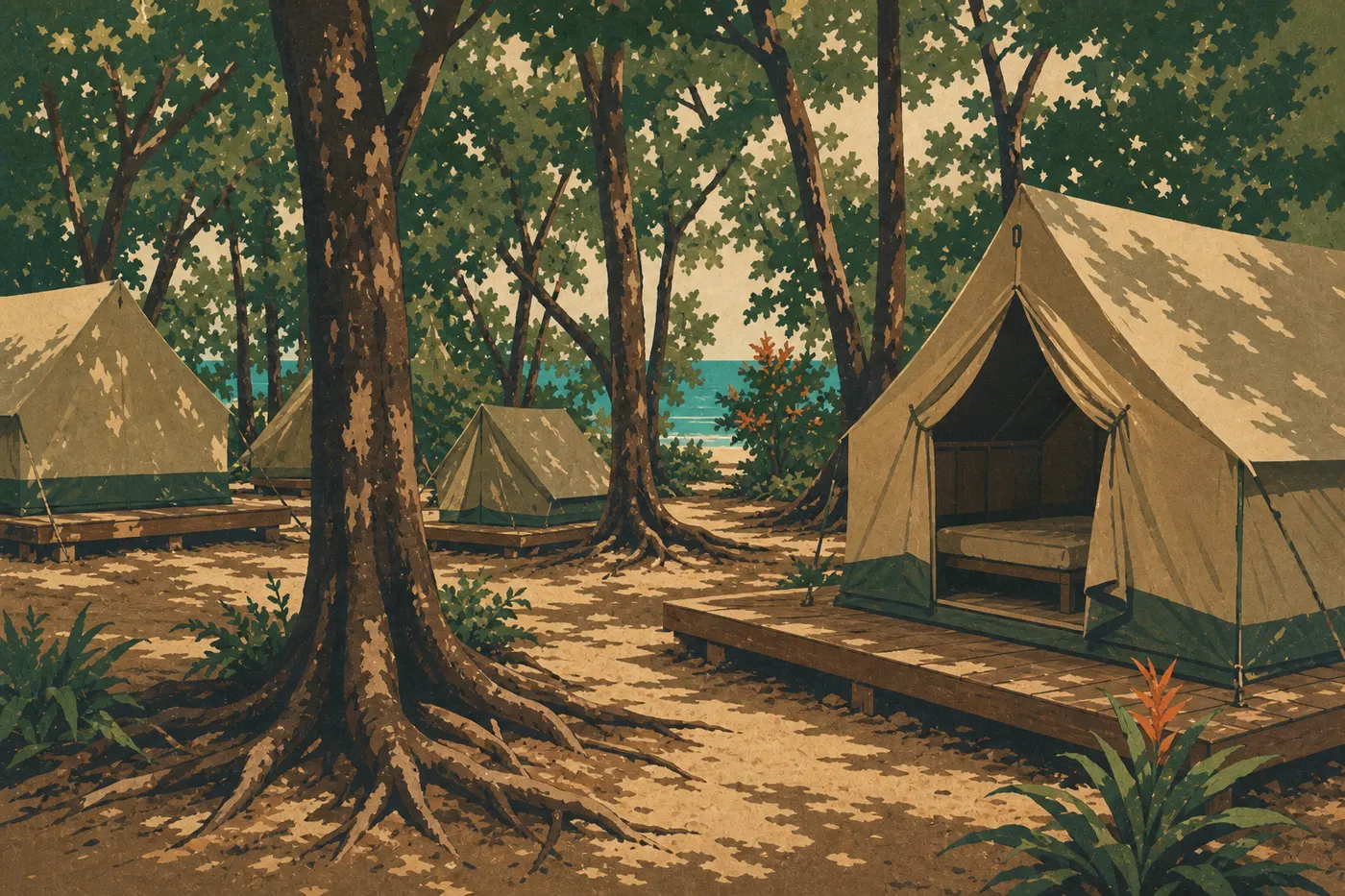
Camping in the U.S. Virgin Islands: Cinnamon Bay, 121 Sites, Reservations and Rates
Camping in the U.S. Virgin Islands means sleeping a few yards from the Caribbean Sea, with a coral reef within snorkeling distance. The national park covers two-thirds of St. John and has just one NPS-managed campground: 121 sites, all by reservation, at $50 a night. Island logistics, booking windows, seasonal closures, here's everything you need to know before you reserve.
The short version: yes, you can camp in Virgin Islands National Park. The only official campground is Cinnamon Bay Beach and Campground, with 121 sites at $50 a night. Reservations are required. Backcountry camping is not allowed.
Campgrounds in the park (1)
- Campground Cinnamon Bay Beach and Campground see NPS · 121 sites Directions ↗
 Base map © OpenStreetMap · © CARTO
 Virgin Islands campgrounds by the numbers
1 official campgrounds inside the park, 121 campsites in total, 50 of them reservable.
| Campground | Sites | Booking | Fee / night | Open | Amenities |
|---|---|---|---|---|---|
| Cinnamon Bay Beach and Campground | 121 (31 tent only, 90 electric hookups) | Reservation | from $50 | toilets*, showers*, potable water*, dump station*, camp store*, bear lockers*, cell service* |
Source: National Park Service (NPS API), retrieved October 6, 2026. Fees and dates change: check the campground page before you go.
Can you camp inside Virgin Islands National Park?
Yes. The park has one NPS-managed campground, Cinnamon Bay Beach and Campground, on St. John's north coast. Outside this site, the park does not allow camping or overnight stays anywhere within its boundaries.
To get there, fly into Cyril E. King Airport (STT) on St. Thomas; St. John has no airport. A taxi or rental car takes you to the Red Hook terminal on the west side of St. Thomas, where you can catch the ferry to Cruz Bay. The guide to getting to St. John covers all the transportation options.
Campgrounds in the park
Cinnamon Bay Resort & Campground
Cinnamon Bay Beach and Campground sits on one of the best beaches on St. John's north coast. You have direct access to the sea, shore snorkeling, and forested tropical hills in the background.
The campground has 121 sites in two categories: 31 tent-only sites and 90 sites with electrical hookups. Every site requires a reservation, and none are available on a first-come, first-served basis. The rate is $50 a night, regardless of site type.
The facilities cover the basics and more: restrooms, showers, running water, a dump station, a store, laundry, cell service, and internet access. The campground also has secure food lockers. There are no bears on St. John, but raccoons and mongooses, an invasive species, roam around the campsites at night. These lockers are just as useful here as they are in a mainland park.
Cinnamon Bay Beach and Campground is open from November through August. The site closes every year in September and October.
RV or tent camping: what to know in the U.S. Virgin Islands
RV travel is almost impractical on St. John. The roads are narrow, winding, and seriously steep. Cinnamon Bay is not designed for large vehicles. If you rent a vehicle on St. Thomas, choose a compact 4WD.
For campers without a lot of heavy gear, the 90 sites with electrical hookups let you run a fan or a small air conditioner, which makes a real difference on a night in the tropics. The 31 tent-only sites work well for self-sufficient campers who bring all their own gear and want to pay the lowest possible site rate. Both categories cost the same $50 a night.
Camping nearby: options outside the park
The Coral Bay area on the east side of the island has private campgrounds with a range of options. They are a good backup when Cinnamon Bay is full, especially during the high season.
St. Thomas has more lodging, but you won't get the national park atmosphere. For lodges and hotels, our guide to hotels in the U.S. Virgin Islands lists the options in the area.
Backcountry camping and dispersed camping
Virgin Islands National Park does not allow dispersed camping or backcountry camping. The ecosystem is too fragile, with dry tropical forest, mangroves, and protected coral reefs, and the park is too small to support a wilderness permit system. Trails are for day hikes. The guide to hiking on St. John covers the main trails, elevation gains, and durations.
How and when to book a campsite in the U.S. Virgin Islands
Make reservations directly through the official Cinnamon Bay Beach and Campground website. Every site requires a reservation.
The high season runs from December through April, and all 121 sites fill quickly as soon as dates open. Log on early if you're aiming for December or January. Important reminder: the campground is closed in September and October. Don't book during those months.
November, May, and June generally offer better availability. June through August overlaps with hurricane season, so you'll need to stay a little more alert. Our Weather page covers the main climate trends month by month.
Rates: how much does a night of camping cost in the U.S. Virgin Islands?
The rate at Cinnamon Bay Beach and Campground is $50 a night. It applies to all 121 sites: the 31 tent-only sites and the 90 sites with electricity cost the same.
Always check the current rates on the official reservation website before confirming. For an overview of your trip budget, our complete guide to Virgin Islands National Park covers entrance fees and other expected costs.
Safety and good practices
Wildlife: there are no bears in the U.S. Virgin Islands, but raccoons and mongooses, an invasive species, roam around the campsites at night. Use the secure lockers available on site. Don't leave anything on the picnic table.
Mosquitoes: they're present year-round and most active at dawn and dusk. Bring repellent containing DEET.
Sun and hydration: the park lies at about 18° north latitude. Apply SPF 50+ sunscreen in the morning, wear a hat, and carry plenty of water on every outing.
Hurricanes, June through November: if severe weather threatens, the park may order the campground evacuated within a few hours. Monitor NOAA forecasts and NPS alerts throughout your stay.
Snorkeling around the campground: wear light fins to move away from the rocks without touching the coral. Don't swim alone.
Which campground should you choose?
Self-sufficient tent camper: choose a tent-only site at Cinnamon Bay, with 31 available. Bring a sleeping pad suited to tropical humidity and use the food lockers.
Traveler who wants electrical hookups: choose one of the 90 sites with hookups, all at the same $50 rate. A fan or small air conditioner makes a big difference on a night in the tropics.
Family with kids: Cinnamon Bay Beach and Campground is the only choice inside the park. The store, laundry, and showers on site make the logistics much easier. Our guide to visiting the U.S. Virgin Islands with kids offers more advice for this kind of trip.
Tight budget or Cinnamon Bay is full: try the private campgrounds around Coral Bay, on the east side of St. John.
The golden rule remains the same: book early. Cinnamon Bay Beach and Campground is the park's only campground, its 121 sites are limited, and St. John attracts visitors from around the world. The earlier you plan, the more choice you'll have.
Frequently asked questions
Can you camp in the U.S. Virgin Islands?
Yes, you can camp in the U.S. Virgin Islands inside the national park, but only at Cinnamon Bay Beach and Campground on St. John. The site has 121 sites at $50 a night. Private campgrounds are also available outside the park, especially around Coral Bay.
Where is Cinnamon Bay?
Cinnamon Bay is on the north coast of St. John, about a 15-minute drive from the Cruz Bay ferry dock, inside Virgin Islands National Park. It is the park's only NPS-managed campground, with 121 sites.
How do you reserve a site at Cinnamon Bay?
Reserve through the official Cinnamon Bay Beach and Campground website. Every site requires a reservation, and none are available without booking ahead. During high season, from December through April, the 121 sites fill quickly. Reserve as soon as dates open.
How much does a site at Cinnamon Bay cost?
The rate is $50 a night for every site. The campground has 31 tent-only sites and 90 sites with electricity, all at the same rate. Check availability on the official reservation website before planning your trip.
Is the campground open year-round?
No. Cinnamon Bay Beach and Campground closes every year in September and October. It is open from November through August. Plan your trip outside the closure period, and keep hurricane season, from June through November, in mind if you're booking in summer.