
Theodore Roosevelt NP Weather: Month-by-Month & Packing List
Theodore Roosevelt National Park stretches across the Badlands of North Dakota, a continental, semiarid region where summer temperatures reach 91°F and winter temperatures drop below 5°F. Here's the first thing to know: May and June, along with September, bring the mildest temperatures, little precipitation, and beautiful light on the ocher formations. The park stays open 24 hours a day in winter, but snow can close roads without warning.
Current readings are unavailable. See the seasonal averages farther down this page.
Open-Meteo readings · updating… · park time zone
Theodore Roosevelt's Climate Month by Month
The table below shows climate averages for the Medora area, the gateway to the park's South Unit.
| Month | Low | High | Precipitation |
|---|---|---|---|
| January | 1°F | 27°F | 0.47 in |
| February | 9°F | 32°F | 0.43 in |
| March | 19°F | 46°F | 0.71 in |
| April | 32°F | 61°F | 1.26 in |
| May | 45°F | 72°F | 2.05 in |
| June | 55°F | 84°F | 2.56 in |
| July | 63°F | 91°F | 1.89 in |
| August | 61°F | 90°F | 1.73 in |
| September | 46°F | 77°F | 1.30 in |
| October | 34°F | 63°F | 1.10 in |
| November | 18°F | 41°F | 0.67 in |
| December | 7°F | 28°F | 0.47 in |
The park gets less than 15.7 inches of precipitation a year, so this is a dry region. June is the wettest month, but showers are usually brief and intense rather than spread throughout the day.
Is Theodore Roosevelt Really That Cold? Records and Extremes
Yes. North Dakota is one of the coldest states in the continental United States. In winter, wind chill can fall below -31°F in sustained winds. At the other extreme, summer heat waves can push temperatures above 104°F on the plateaus.
What often surprises visitors is the daily temperature swing during the shoulder seasons, with differences of up to 45°F between morning and afternoon. A cool 41°F morning can turn into an 82°F afternoon in May. Bring layers you can take off or put back on along the way.
What to Wear at Theodore Roosevelt by Season
Winter. Layering is essential: thermal underwear, a midweight fleece, a waterproof windproof coat, a hat, warm gloves, and wool socks. Exposure to wind on the plateaus can cause frostbite in less than an hour.
Spring. Wear layers with a compact waterproof jacket. Weather changes quickly, so always bring a windbreaker, even under clear skies.
Summer. A wide-brimmed hat, SPF 50 sunscreen, and at least 2 liters of water per person per outing. Closed-toe trail shoes are essential. The Badlands' volcanic and sedimentary rocks are unforgiving on sandals.
Fall. Start with the same basics as in spring, but add a warm jacket by mid-October. Overnight freezes return in late September. Our Theodore Roosevelt hiking guide identifies the best hikes for each season and set of conditions.
Alerts and Conditions to Watch
The park is open 24 hours a day, every day of the year, including all three units: the South Unit in Medora, the North Unit along Highway 85, and Elkhorn Ranch Unit. Conditions can still deteriorate quickly.
In winter, heavy snow can close roads without warning. The South Unit's Scenic Loop Drive, a 28-mile scenic loop, is usually affected first. Check road closure alerts on the NPS website before every outing.
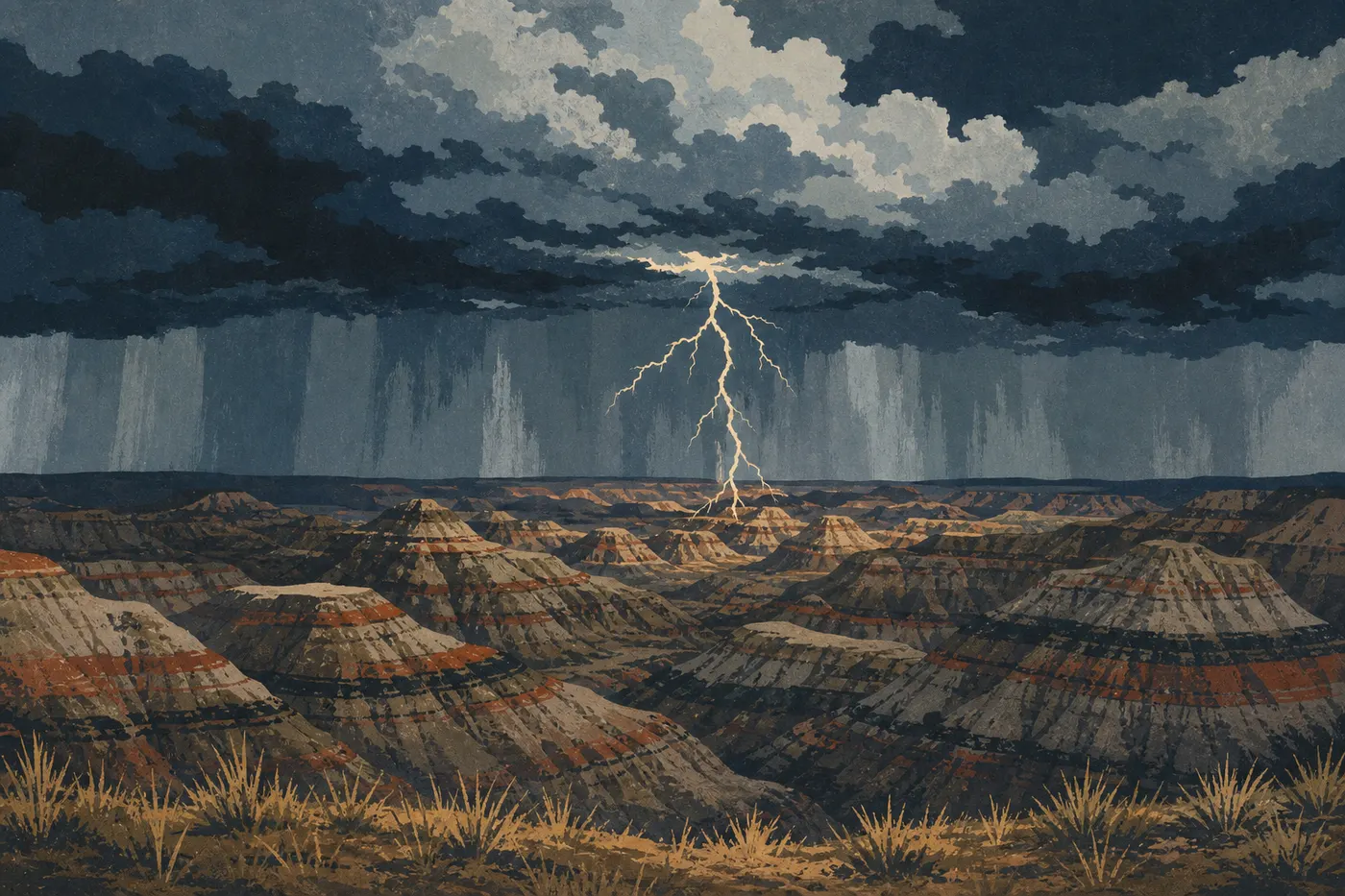
Summer thunderstorms sometimes cause flash floods in Badlands drainages. When a thunderstorm warning is active, avoid low-lying areas, narrow canyons, and exposed high points.
Frequently Asked Questions
What's the weather like at Theodore Roosevelt right now?
Theodore Roosevelt has a continental climate with no ocean to moderate it: hot summers, with highs of 86 to 95°F, and harsh winters, with nighttime lows of 5°F and below. During the shoulder seasons, conditions can change quickly in the Badlands of North Dakota, sometimes within a few hours.
Is Theodore Roosevelt cold?
Yes. Winters are long and severe in the Badlands of North Dakota. From December through February, daytime highs rarely rise above 32°F, and nighttime temperatures regularly fall below 5°F, made to feel even colder by sustained winds.
What should I wear to visit Theodore Roosevelt?
In summer, wear a wide-brimmed hat, SPF 50 sunscreen, and bring at least 2 liters of water per outing. During the shoulder seasons, wear layers and a waterproof windbreaker. In winter, full cold-weather gear, including an insulated coat, hat, gloves, and thermal underwear, is essential from November through March.
What is Theodore Roosevelt's climate like?
The climate is semiarid and continental, with hot, dry summers punctuated by afternoon thunderstorms, long and very cold winters, and little precipitation, less than 15.7 inches a year, with a peak in June. Daily temperature swings can reach 45°F during the shoulder seasons.