
When to Visit Theodore Roosevelt: Best Seasons, Weather, and Timing
Theodore Roosevelt National Park stretches across the badlands of North Dakota, a landscape of striped buttes, golden grasslands, and colorful ravines that remains one of the least visited in the entire national park system. There are no timed-entry tickets and no required reservations. The park is open 24 hours a day, 365 days a year. What changes from season to season is the weather, road conditions, and wildlife activity.
The best times to visit Theodore Roosevelt are May-June and September-October, when temperatures stay comfortable (59 to 84°F), wildlife is especially active, and crowds are much lighter than in the heart of summer. July and August work too, but the heat means starting at dawn and managing your water supply carefully. Winter is for experienced travelers. Some secondary roads close after snowfall, and temperatures regularly drop below 14°F.
Month-by-Month Climate
The park sits in the semi-arid Great Plains, with low annual precipitation (about 13.8 inches), abundant sunshine, and summer thunderstorms that are as brief as they are intense. The table below summarizes average conditions. For detailed forecasts and the real-time widget, visit our Weather page.
| Month | High (°F) | Low (°F) | Typical conditions |
|---|---|---|---|
| January | 36 | 9 | Deep winter, snow, roads may close |
| February | 41 | 12 | Intense cold, wind-limited access |
| March | 50 | 23 | Gradual thaw, highly variable conditions |
| April | 61 | 34 | Early spring, first prairie flowers |
| May | 72 | 45 | Greenery, very active wildlife, light crowds |
| June | 82 | 55 | Warm, brief storms, young bison visible |
| July | 90 | 61 | Peak season, dry heat, early starts recommended |
| August | 88 | 59 | Still hot, beautiful late-day light |
| September | 77 | 48 | Ideal: wildlife, light, quiet |
| October | 63 | 36 | Fall colors, crowds thinning |
| November | 46 | 23 | Winter transition, possible first snow |
| December | 36 | 12 | Winter, almost no visitors |
Theodore Roosevelt in January
January is the harshest month of the year. Highs rarely rise above 27°F, and nights often fall below 1°F under a biting plains wind. Some secondary roads close after snowfall, sometimes for several days at a time. Visitor numbers are close to zero, so you'll have the park almost entirely to yourself. Bison and wild horses remain present and stand out easily against the snow.
Theodore Roosevelt in February
February looks much like January: daytime temperatures reach 32°F at best, nights fall to 9°F, and the wind persists. Paved roads usually remain passable, but secondary roads depend heavily on recent precipitation. This is the quietest month of the year, with almost no visitors. The Badlands' colorful formations under snow create photographic scenes you won't find at any other time of year, for those willing to accept the conditions.
Theodore Roosevelt in March
March marks the start of the thaw, but conditions remain unpredictable. Temperatures range from 19°F at night to 46°F during the day, and repeated freeze-thaw cycles leave unpaved roads muddy and difficult. Visitor centers gradually begin reopening on spring schedules. The first migratory birds return and the prairie shows its first signs of life, but the tourist season hasn't started yet.
Theodore Roosevelt in April
April brings spring fully into the Badlands. Daytime temperatures reach 61°F, the first wildflowers add color to the prairie, and wildlife activity picks up in earnest. Female bison begin calving in late April. The reddish, cinnamon-colored calves start appearing in the grasslands. Paved roads are passable and visitor centers return to their seasonal schedules. Crowds remain light.
Theodore Roosevelt in May
May is the park's most overlooked month, with ideal hiking temperatures (45 to 72°F), greenery still covering the landscape, and few visitors. It's the peak of calving season, with reddish bison calves, wild horse foals, and young prairie dogs around their burrows. All paved roads are open, campgrounds are back in operation, and every service is available. May's softer light, compared with July, is excellent for photography.
Theodore Roosevelt in June
June combines comfortable temperatures (55 to 84°F) with abundant wildlife. Afternoon thunderstorms are frequent but brief. They cool the air and light up the buttes with dramatic color. Crowds increase without reaching July levels, and all services are open in both units. This is the best month for families, with manageable heat, easy-to-spot animals, and accessible campgrounds.
Theodore Roosevelt in July
July is peak season. Temperatures reach 91°F on exposed buttes, and crowds peak in the South Unit. Start your hikes before 7 a.m., finish by 10 a.m., and save the overlooks for sunrise or sunset. Plan on at least 2 liters of water per person. The North Unit, 68 miles to the north, offers the same scenery with far fewer people.
Theodore Roosevelt in August
August extends July's conditions (61 to 90°F), with crowds easing slightly toward the end of the month. Late-day light across the Badlands is especially beautiful. The striped formations turn gold and orange before sunset. Take the same precautions as in July for heat and hydration. Bison herds remain easy to spot from the roads.
Theodore Roosevelt in September
September is our top recommendation for most travelers. Temperatures fall to 46-77°F, crowds drop noticeably from summer levels, and wildlife is highly active before winter. Mule deer enter the rut in early October, but bucks are already visible along the prairie edge by late September. All services remain open. Fall light on the colorful buttes is the best of the year.
Theodore Roosevelt in October
October extends the ideal window with beautiful light and fall colors in the wooded draws. Temperatures range from 34°F at night to 63°F during the day, which is perfect for hiking. The mule deer rut peaks in early October, and bucks are easy to spot early in the morning along the prairie edge. The first snow can arrive as early as mid-October, without closing paved roads. Lodging in Medora offers rates well below summer prices.
Theodore Roosevelt in November
November ushers in the off-season. Temperatures plunge to 18°F at night and reach only 41°F during the day, while the first freezes close some secondary access roads. Visitor centers shorten their hours, and some close on weekdays. Visitor numbers are close to zero. For solitude seekers, this is a distinctive month. Wildlife gathers in smaller areas, the Badlands take on a new palette with the first snow, and the park feels entirely removed from the outside world.
Theodore Roosevelt in December
December brings full winter: 7°F at night and 28°F at best during the day. Several secondary roads close after snowfall, sometimes for several days. Almost no one visits the park this month, creating an extraordinary experience for well-equipped travelers. Bison and wild horses are still around and easy to spot against the white landscape. Full winter gear, traction devices for icy trails, and extra water and provisions in the vehicle are all essential. Winter in the Badlands leaves no room for shortcuts.
Theodore Roosevelt Season by Season
Winter (December to February)
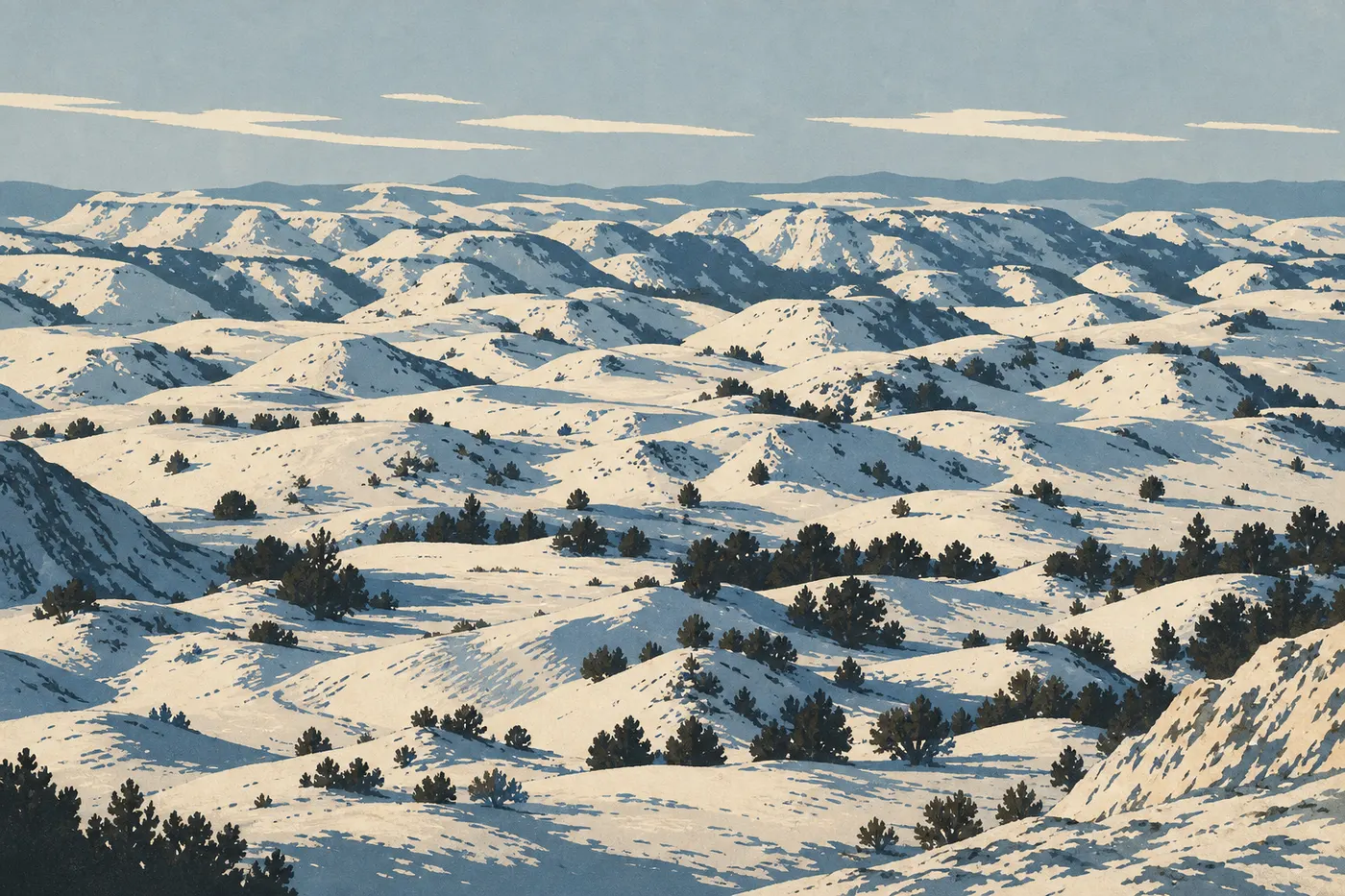
Snow-covered Badlands create a landscape all their own. Low-angle light on the colorful buttes, absolute silence, and bison moving head-down through the wind make for a visit you won't forget. Conditions are serious, though. Temperatures regularly fall between 14°F and -4°F, intensified by a plains wind that gives no one a break.
The park officially stays open year-round, but some secondary roads, especially in the North Unit and the roads toward the Elkhorn Ranch Unit, may close for several days after a snowfall. Check road conditions on the NPS website before you leave.
Wildlife doesn't migrate. Bison remain in the park during winter and often gather near wind-swept areas, where they're easier to see against the white background. Wild horses are also present throughout the season. Bring serious winter gear, traction devices for icy trails, and extra water and food in the vehicle.
Spring (March to May)
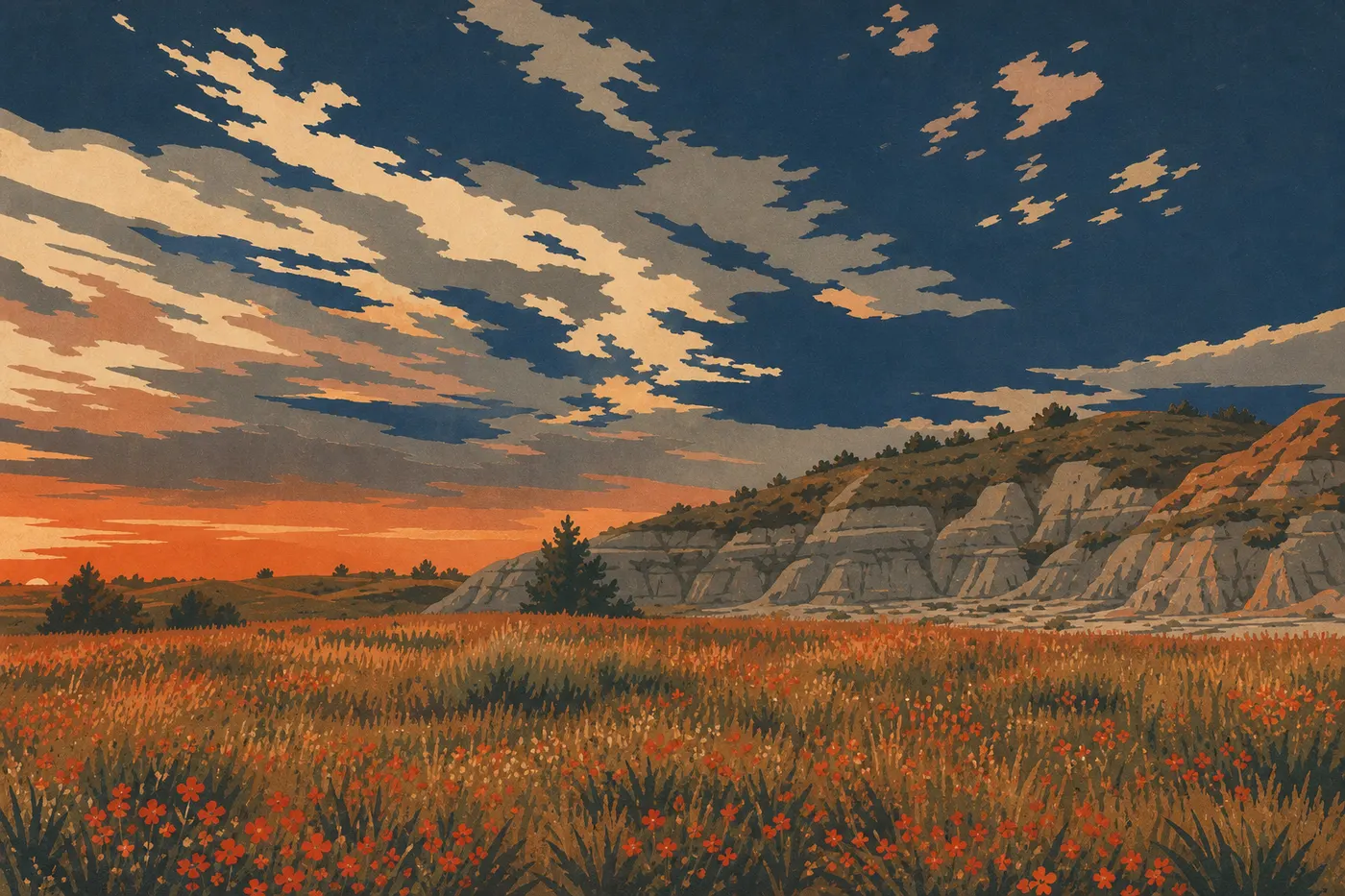
March is still unstable, with freeze-thaw cycles that make some roads muddy and slippery. Unpaved roads in the secondary units can remain impassable into April. In April, the prairie wakes up: the first wildflowers appear, the light changes, and wildlife activity returns.
From our perspective, May is the most overlooked month on the calendar. The vegetation is still green, the Badlands don't stay that way for long, temperatures are perfect for hiking, and visitors are still few. It's also calving season. Female bison give birth in April and May, and the reddish, cinnamon-colored calves are easy to spot in the grasslands. Prairie dogs resume their frantic activity around their burrows, and pronghorn are visible almost everywhere.
Visitor centers reopen on their seasonal schedules in spring, and all paved roads are generally passable by May.
Summer (June to August)
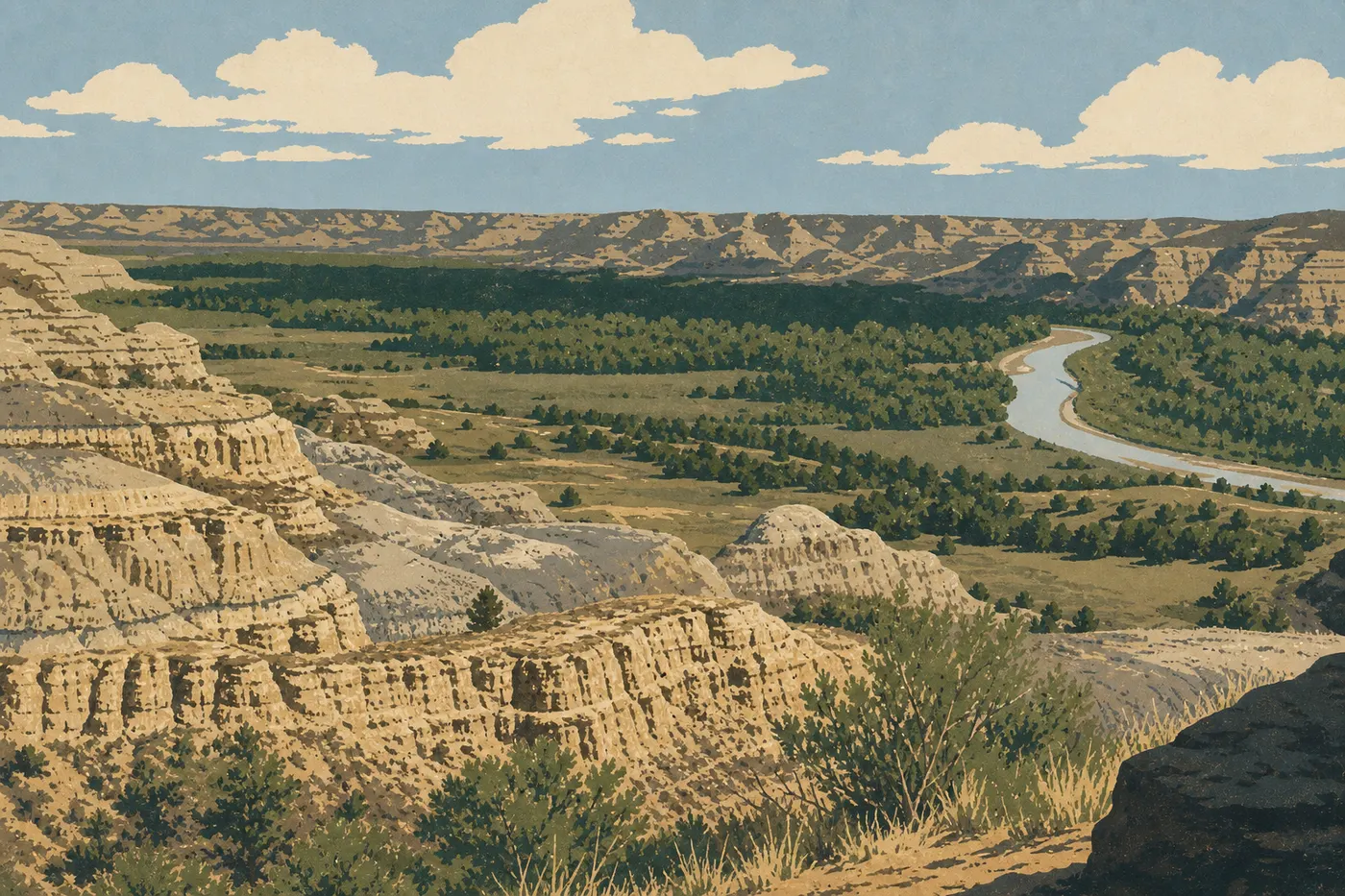
June is the ideal transition. Temperatures rise to 77-82°F, but the heat remains manageable and afternoon thunderstorms bring relief. July and August regularly push past 90°F on exposed buttes. That doesn't rule out a visit, but it does change how you'll organize your day.
Our midsummer advice is simple: start at dawn, before 7 a.m.; finish your hikes by 10 a.m.; take a shady break in the middle of the day; and return in the late afternoon, when the light is best for photos. Carry at least 2 liters of water per person for any trail longer than 2 hours.
Bison sometimes form herds of several dozen animals and cross the roads without warning. Stay in your vehicle with the engine off and wait for them to clear the road. The required minimum distance is 75 feet. This is a safety rule, not a suggestion.
Crowds peak in July and August. The South Unit's Scenic Loop Drive and its main overlooks, including Painted Canyon and Boicourt Overlook, fill up quickly during the day. The North Unit, 68 miles to the north, offers the same scenery and wildlife with far fewer people.
Fall (September to November)
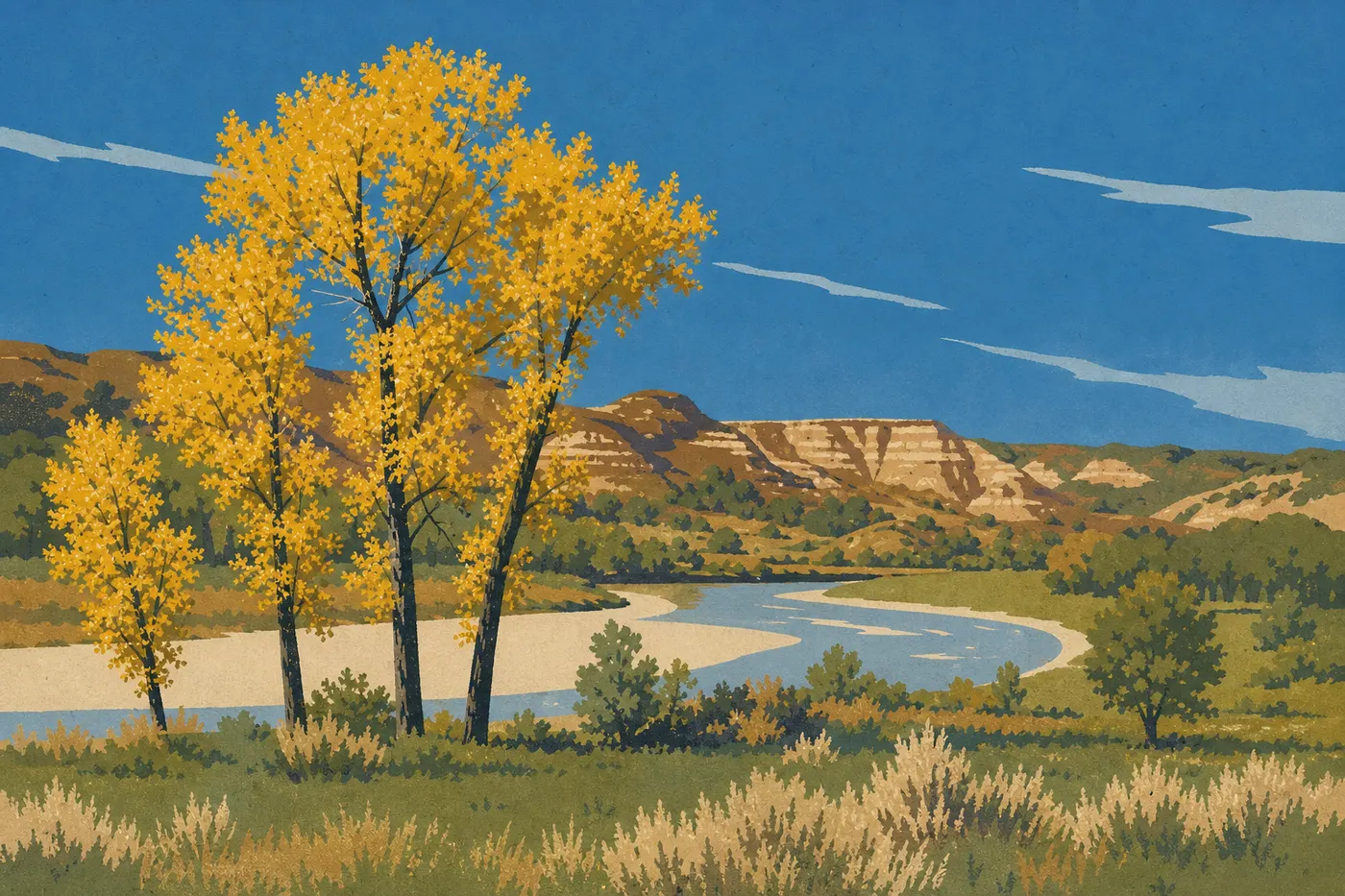
September brings every advantage together: temperatures drop to 68-77°F, crowds thin out considerably, wooded draws take on fall color, and wildlife is highly active. Mule deer enter the rut in early October, so bucks show themselves more easily and more often along the prairie edge in the early morning.
October extends the ideal window with beautiful light, but the first snow can arrive by mid-month. Roads remain open, though the weather becomes less predictable. November marks the start of winter. Some secondary access roads close, and visitor centers shorten their hours.
Crowds: When to Avoid Them
Theodore Roosevelt National Park welcomes about 700,000 visitors a year, a modest figure compared with the major parks of the West. Visitors concentrate heavily in summer and in the South Unit, at the Medora entrance.
| Period | Crowd level |
|---|---|
| July-August | Peak season, parking lots full by midday |
| June and September | Moderate, very manageable |
| May and October | Low to moderate, pleasant conditions |
| November to April | Very low to almost nonexistent |
If you're visiting in July or August and want to avoid crowds, two strategies work well. First, head to the North Unit, which consistently sees fewer visitors than the South Unit despite comparable scenery. Second, start your hikes before 8 a.m. and save the overlooks for sunrise and sunset.
July weekends bring the heaviest crowds. Visiting on a weekday, even in peak season, makes a noticeable difference.
Best Time for a Budget-Friendly Trip
Theodore Roosevelt remains one of the most affordable parks in the national park system. Lodging in Medora, the gateway to the South Unit, doesn't reach the prices found in Moab or Jackson Hole. Still, rates vary.
In April-May and October-November, hotels in Medora and the surrounding area offer rates substantially below July prices, sometimes 30 to 50% less for the same service. The park's campgrounds, available in both main units, generally remain open from May through October. You usually won't need to book far in advance except in midsummer.
The $30 entrance fee per vehicle pays for itself by your second visit with the park's $55 annual pass. If you're visiting several national parks in one year, the $80 America the Beautiful pass covers all federal recreation areas and pays for itself by your third park. For entrance fees and annual passes, see the National Parks Fees & Passes page.
For seasonal lodging options, including campgrounds, see our Where to Stay guide and our Camping page.
Which Season Fits Your Travel Style?
Wildlife watching. May-June for calving season, including reddish bison calves and wild horse foals. September-October for the mule deer rut and more concentrated wildlife before winter. Bison, wild horses, and prairie dogs are present year-round.
Hiking and trails. May and September are our two best bets. July-August heat doesn't make hiking impossible, but it requires strict timing and careful water management. For trail details by unit, see our Hiking page.
Landscape photography. The golden hour in September and October, shining across the striped buttes, is hard to beat. In summer, get up before 6 a.m. Morning light on the Badlands formations is beautiful before the heat washes out the atmosphere. Winter offers unusual compositions with snow and bison in the mist, for those willing to accept the conditions.
Families. June or September. Choose June for easy-to-spot young animals and still-tolerable temperatures. Choose September for reasonable heat, lighter crowds, and highly active wildlife. Our Family page lists kid-friendly activities in both main units.
Budget travelers. April-May or October. Cheaper lodging, light crowds, and no compromise on scenery.
In Summary: The Best Time for Your Travel Style
| Travel style | Recommended period |
|---|---|
| Wildlife (calving) | May-June |
| Wildlife (rut, concentrated) | September-October |
| Comfortable hiking | May and September |
| Photography (light and colors) | September-October |
| Families | June or September |
| Budget | April-May, October |
| Solitude and wild winter | December to March |
| Best overall compromise | September |
To plan your visit in detail, the park's complete guide brings together all our resources by topic.
The Worst Time to Visit Theodore Roosevelt
July is the most demanding month for a comfortable visit. Temperatures regularly exceed 90-91°F on exposed buttes, heat builds in the shady ravines as early as 10 a.m., and crowds peak in the South Unit. Overlook parking lots fill by midday, and the Scenic Loop Drive carries most of the summer traffic. Nothing makes a visit impossible if you adjust your schedule, but July is the only month that requires planning the other seasons don't.
The other period to approach carefully is December-January. Roads may be closed, temperatures can fall below 5°F with wind chill, and services are reduced or closed in both units. This isn't a reason to stay away for properly prepared and equipped travelers, but it's a visit that leaves no room for improvisation.
Frequently Asked Questions
What is the best time to visit Theodore Roosevelt National Park?
The best times to visit Theodore Roosevelt are May-June or September-October, when temperatures are comfortable, wildlife is especially active, and crowds are moderate. September combines all these advantages with remarkable fall light across the Badlands.
Is Theodore Roosevelt National Park worth visiting?
Theodore Roosevelt is well worth the trip for anyone drawn to wide-open spaces and wildlife. It's one of the few national parks where you can see bison, wild horses, mule deer, pronghorn, and prairie dogs in the same panorama, often from the road and without crowds.
What's the climate like at Theodore Roosevelt?
The climate at Theodore Roosevelt is semi-arid and continental, with hot, dry summers (up to 95°F), harsh winters (regularly below 14°F), and mild but changeable springs and falls. Annual precipitation remains low, at around 13.8 inches. For month-by-month details and forecasts, see our Weather page.
How long do you need to visit Theodore Roosevelt? Two days let you cover the South Unit properly from Medora. You'll need three to four days to add the North Unit and, if you choose, the Elkhorn Ranch Unit. Our Itinerary & Length page offers sample plans for different amounts of time.
What's the best season to visit the American West?
For the American West in general, spring (April-June) and fall (September-October) offer the best conditions in most parks. Theodore Roosevelt, in the Great Plains, follows the same pattern. Our Regions guides offer pointers for combining Theodore Roosevelt with a broader itinerary.
When is the best time to visit North Dakota?
The best time to visit North Dakota is May through September, with the most comfortable conditions in June and September. These months offer the best conditions for Theodore Roosevelt and the state's other sites, with hot but often windy summers across the plains.
Can you visit Theodore Roosevelt in winter?
Yes. The park is open year-round, including winter. Paved roads usually remain passable, but some secondary roads close after snowfall, sometimes for several days. Temperatures regularly range from 14°F to 1°F. A winter visit is memorable for well-equipped travelers. Bring full winter gear, traction devices, and extra provisions in the vehicle.
When is peak season at Theodore Roosevelt?
Peak season runs from July through August, with the busiest period in July. That's when parking lots in the South Unit and the main overlooks, including Painted Canyon and Boicourt Overlook, fill quickly around midday. The North Unit remains considerably quieter even in peak season, and weekday visits feel very different from weekends.
What is the least busy month at Theodore Roosevelt?
January and February are the least busy months, with almost no visitors. If you're looking for solitude outside winter, March-April and November offer less punishing conditions with very low visitation. Outside July and August, Theodore Roosevelt remains remarkably quiet compared with the major parks of the American West.